
When Mount Vesuvius erupted in 79 AD, choking the skies with ash and rock, few Romans living in its shadow could have foreseen the catastrophe about to unfold.
For centuries, the volcano had been a silent giant, its slopes lush with vineyards and farmland, feeding the prosperous towns below. But in a matter of hours, everything changed.
A towering column of superheated ash and gas shot miles into the sky before collapsing in deadly waves of pyroclastic flow.
Entire towns – Pompeii, Herculaneum, Stabiae – were swallowed, their people entombed in a suffocating blanket of volcanic debris. It was a sudden and total annihilation. Yet, paradoxically, it was also an act of preservation.
For hundreds of years, archaeologists have painstakingly uncovered and studied these sites – brushing away the ash and pumice to catalogue frescoes, map streets and analyse ruins – especially when it comes to Pompeii.
And yet, even after centuries of excavation, so many of its secrets have remained just out of reach. That is, until now.
According to Dr Gabriel Zuchtriegel, director general of the archaeological park in Pompeii, we could be entering a new era of discovery in this small corner of Italy. “It’s a very interesting moment in archaeology, history and in general,” he says.
Trowels and brushes can only take you so far. Scientists are now turning to the most advanced tool of the modern age: artificial intelligence (AI).
With AI’s ability to decode ancient texts, reconstruct lost structures and analyse evidence at an unprecedented scale, we are on the brink of uncovering details about Roman life that were thought to be lost forever.
Here are the two biggest mysteries it’s going to reveal first.
The Herculaneum scrolls
Perhaps the most exciting application of AI in the study of Vesuvius’s aftermath – and arguably one of the greatest breakthroughs in the study of antiquity – has its origins not in Pompeii but in the smaller, wealthier town of Herculaneum, around 15km (9 miles) up the coast.
Nowhere is Herculaneum’s affluence more apparent than in the Villa of the Papyri, an opulent coastal estate that would not be out of place among the modern mansions of Malibu.
In 1750, inside this remarkable estate, archaeologists unearthed the largest collection of statues ever recovered from a single classical building. But something far more valuable was hidden away: a vast library of ancient scrolls.
The excavators discovered more than a thousand papyrus scrolls, the only surviving library from the classical world – though, initially, they mistook the scrolls for logs as they were carbonised by the searing heat of Vesuvius’s eruption.
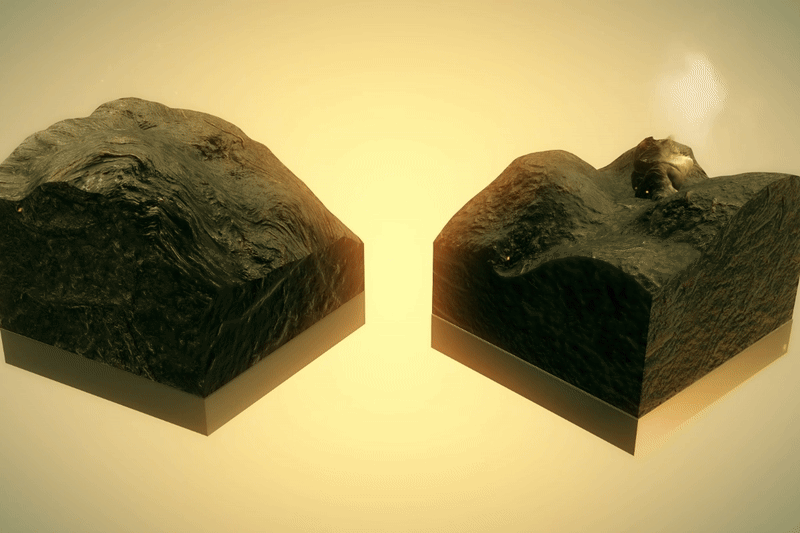
Much of our knowledge of the ancient world comes not from direct sources but from copies passed down through centuries of transcription, such as Homer’s The Odyssey and Virgil’s The Aeneid.
To find even one original ancient text is extraordinary; to find hundreds is almost beyond comprehension.
But there was one crucial problem: how to read them. The Herculaneum scrolls resembled lumps of charcoal rather than literary masterpieces. Any attempt to physically unravel them destroyed them.
Over the centuries, various methods were tried – some yielding faint glimpses of text – but always at the cost of further damage.
From what little could be deciphered, scholars determined that many of the texts belonged to the philosopher Philodemus of Gadara.
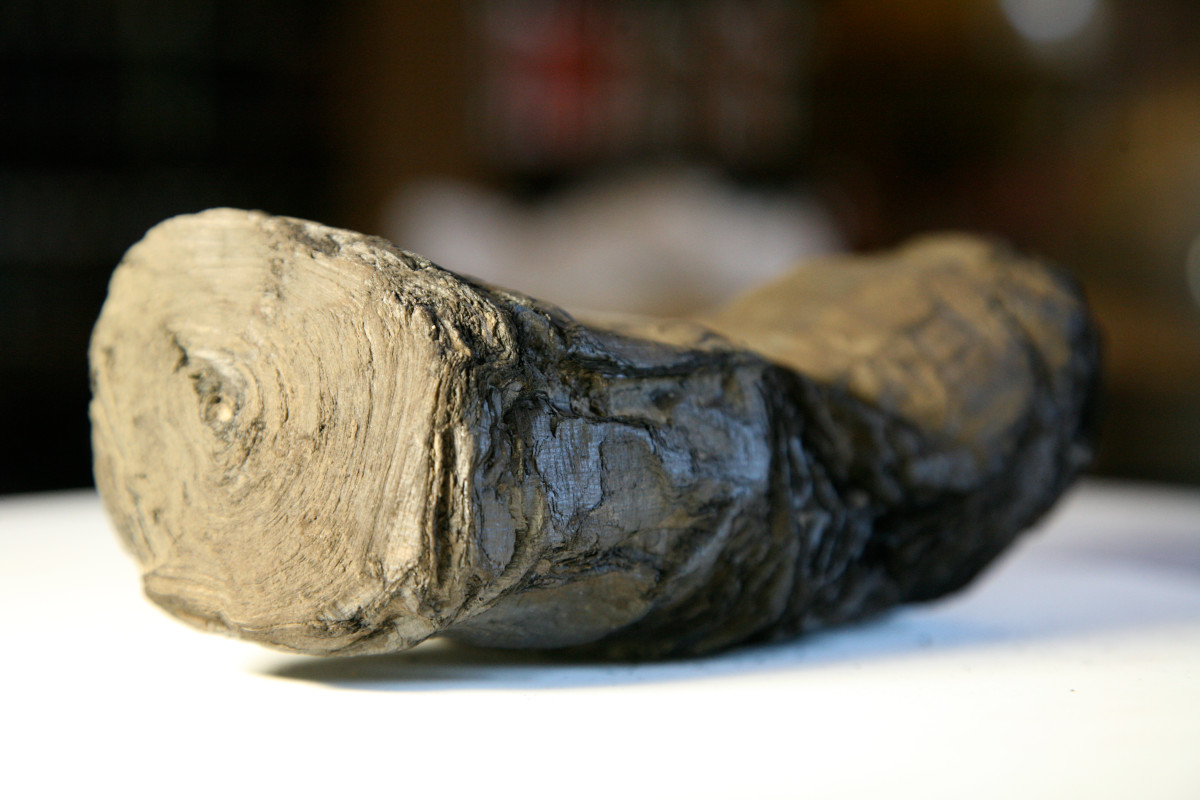
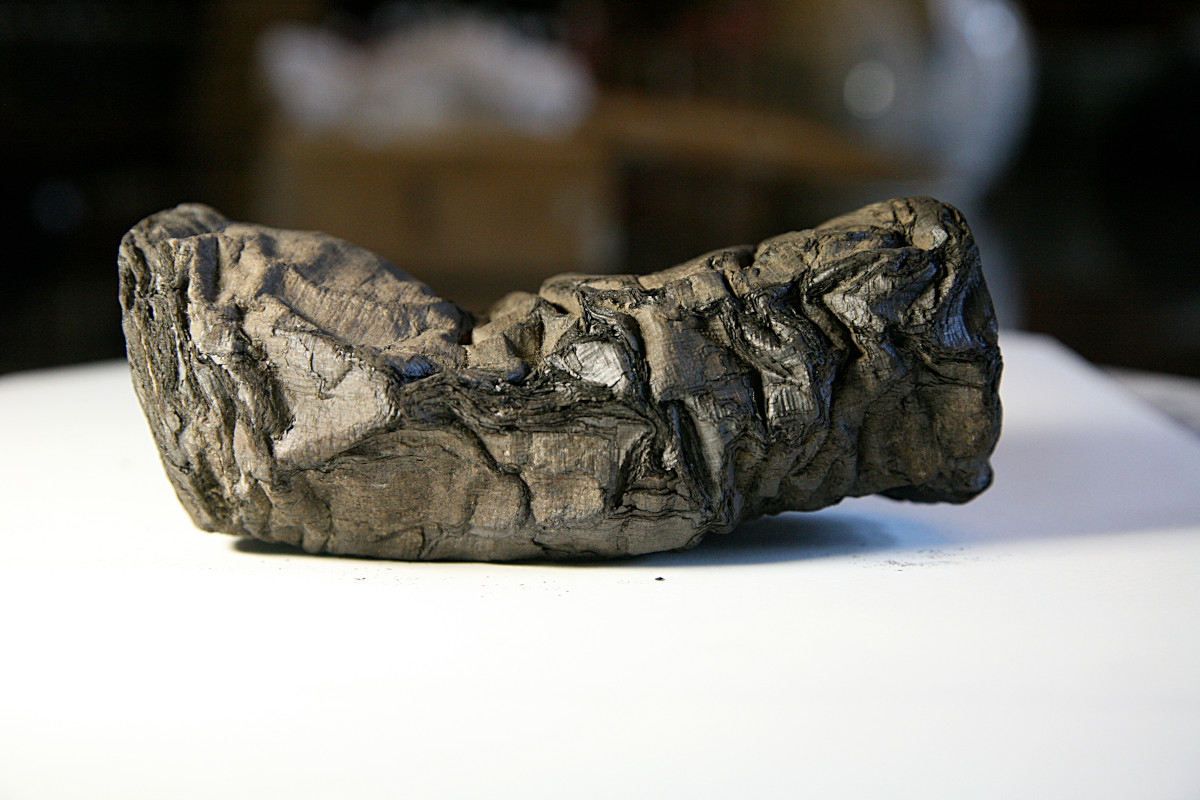
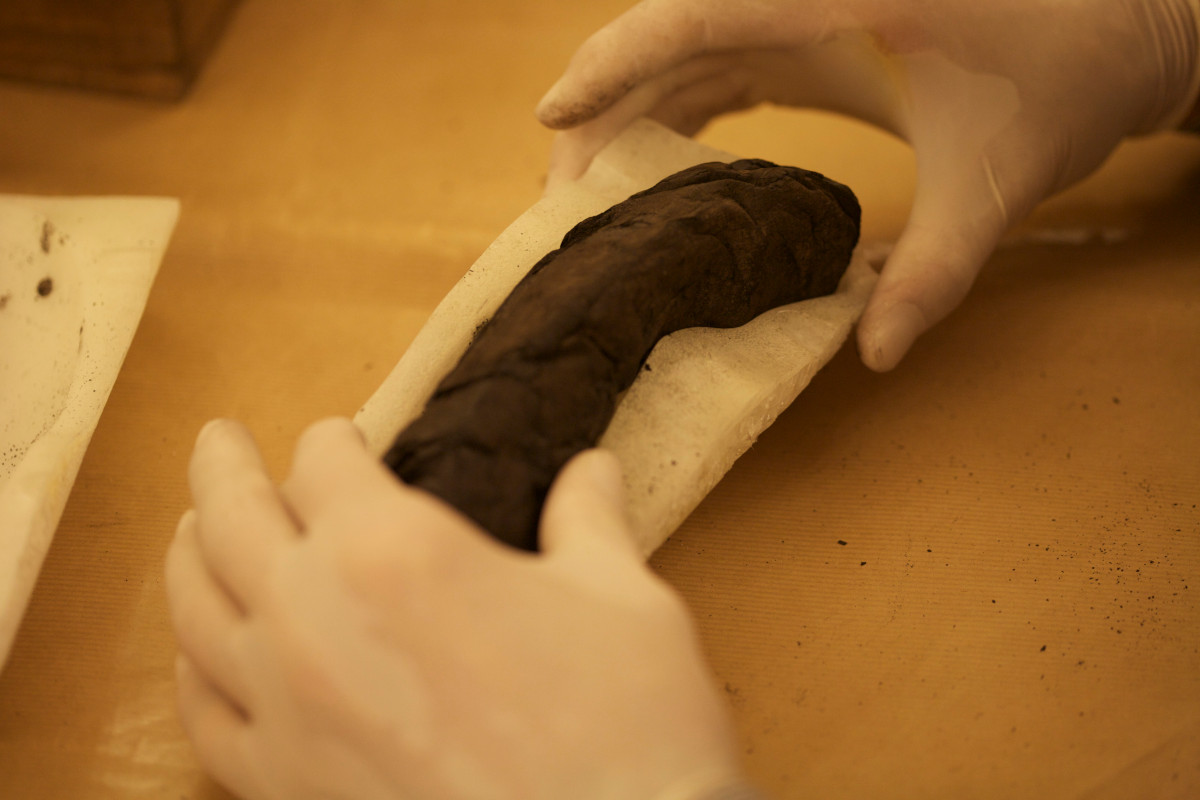
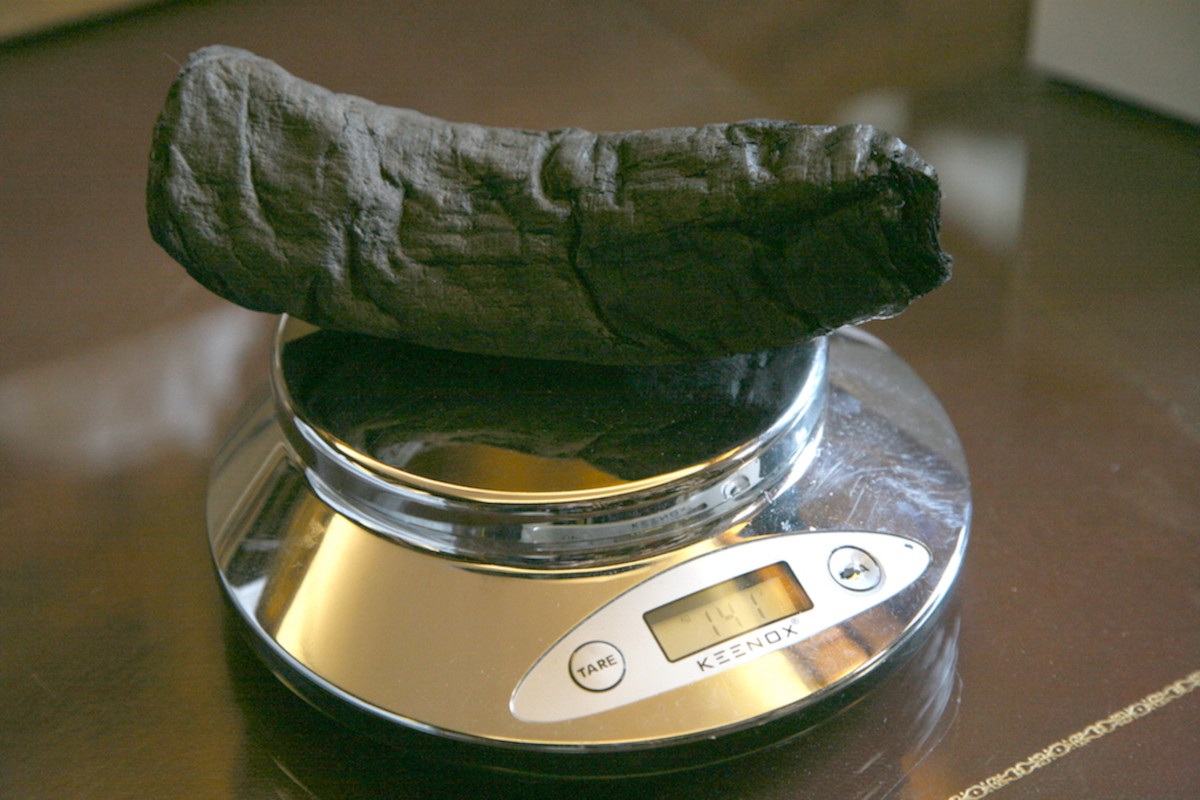
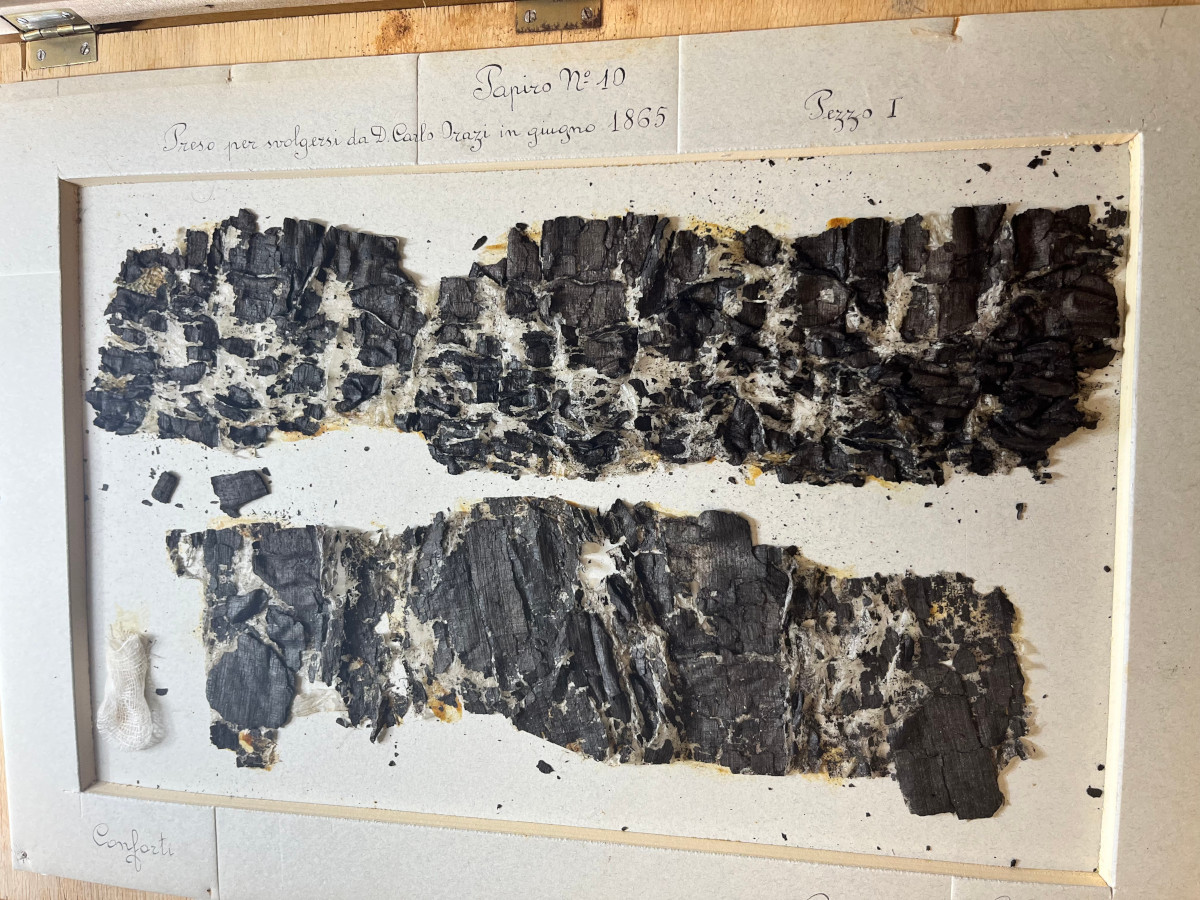
(Images 1–2) Carbonised scrolls recovered from Herculaneum resemble wooden logs; (3–4) The Vesuvius Challenge selected one of these scrolls for researchers to try to digitally ‘unwrap’; (5) A scroll when physically rather than digitally unrolled
Then, nearly 300 years later, in 2023, a new technological revolution was set in motion: the Vesuvius Challenge.
A cash-prize competition, the Vesuvius Challenge was designed to incentivise researchers to figure out how to digitally ‘unwrap’ and read the scrolls.
“What started the whole thing was an evolution of technology around the theme of digital restoration,” says Prof Brent Seales, a computer scientist at the University of Kentucky, in the US, and co-founder of the challenge.
“In other words: imaging something as it is, then making a digital model and restoring that model into something better.”
Seales had been working on digital restorations since the 1990s, developing methods to restore damaged manuscripts of everything from the Old English epic poem Beowulf to Homer’s The Iliad, an ancient Greek poem.
“While we were working on flattening other texts, it occurred to us that we could do complete unwrapping,” he explains.
This insight led Seales and others to turn their focus to the Herculaneum scrolls. Could the case be cracked open after all? The answer, as it turned out, waited at the end of four stages:
Step 1: Scanning
The first step involves capturing ultra-high-resolution scans of the scrolls using a particle accelerator. These work in much the same way as a CT scan in a hospital, only the details seen are thousands of times finer.
This process, known as X-ray tomography, generates X-ray images from different angles, constructing a detailed three-dimensional model of the scroll’s interior.

Step 2: Virtual unwrapping
The real challenge begins here: digitally separating the scroll’s tightly coiled layers. But these aren’t simply rolled up like those of a newspaper or magazine – they were crushed, fused and contorted by the eruption’s heat.
Some would have stretched over 10m (33ft) when they were written, meaning when rolled they contain dozens of overlapping layers.
“If I rolled up a piece of paper in a normal way and showed you that cross-section, it would be very easy for you to figure out which layer was which because you would just see a nice cylinder for each wrap,” Seales says.
But papyrus, woven from crosshatched fibres, pulls apart unpredictably. Combined with centuries of damage, this makes identifying layers a painstaking task.
To manage this, scrolls are tackled in sections. Each is separated virtually and flattened using software, then pieced together like an ancient puzzle, creating a digital reconstruction of the papyrus surface.
Step 3: Ink identification
This is where AI comes into play. The carbonised papyrus and ink are virtually indistinguishable to the human eye – but not to an algorithm trained to detect microscopic differences in surface texture.
Machine learning models are fed existing examples of inked regions.
Then, as they’re given more and more examples, the models identify the parts of papyrus where the shape is distorted due to the ink, revealing letters invisible to the naked eye.
Step 4: Reading the scrolls
Once the ink is detected, human experts step in. Seales says that in the future the model might be able to help with word recognition, but as it stands AI will ‘hallucinate’ and make up meaning where there isn’t any.
So, currently, the models simply identify where the ink is, not what it says. It’s up to papyrologists and classicists to interpret the meaning.
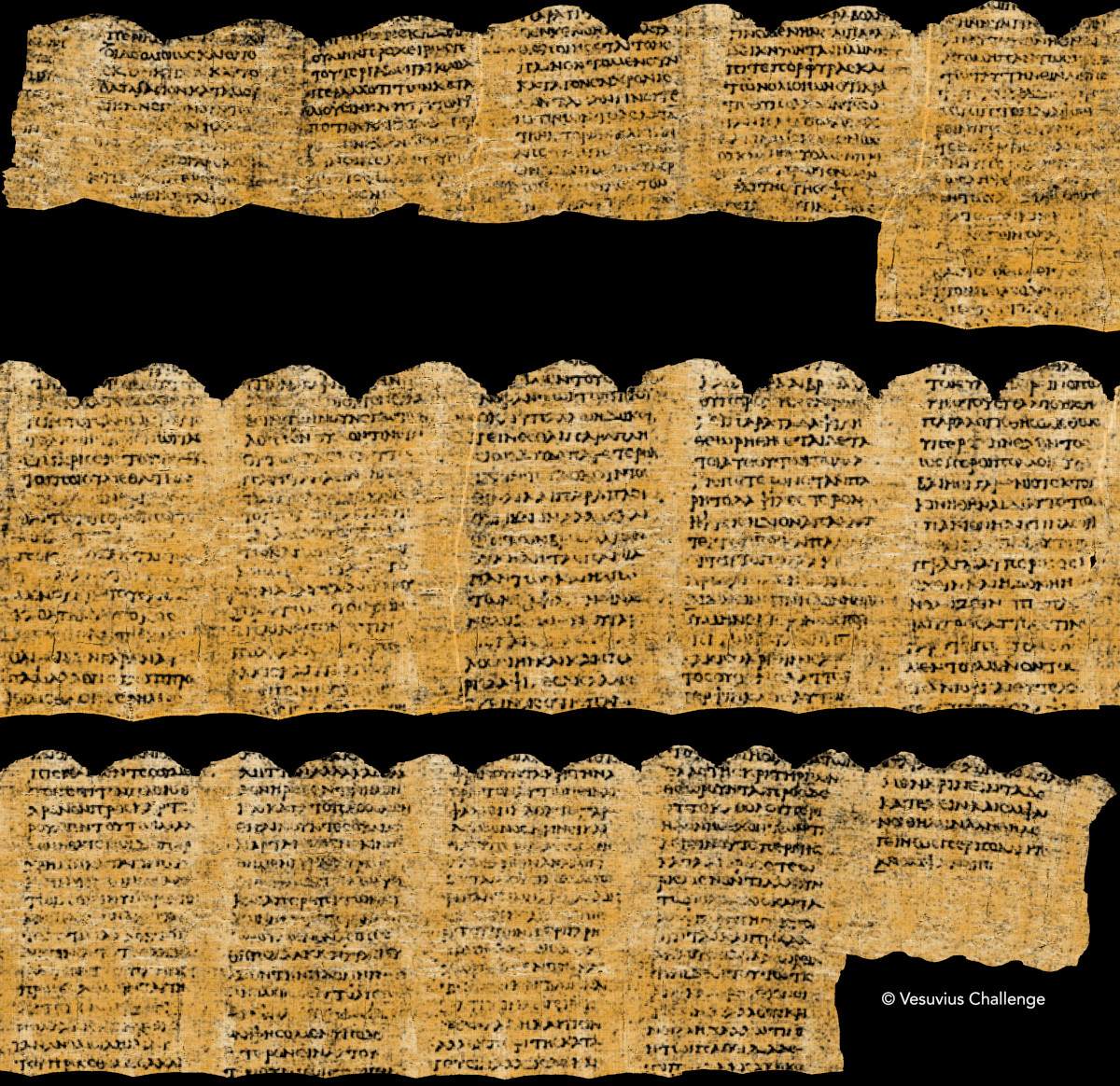
With the process now defined, all that was left to do was figure out how to quickly and cheaply unravel the hundreds of scrolls from the villa. (Easy enough, right?)
The first major breakthrough came in late 2023 when teams successfully read 15 columns of Greek text from the innermost part of a scroll.
“I was very sceptical whether this would ever work out,” says Dr Kilian Fleischer, a papyrologist at the University of Tübingen, in Germany, and board member of the Vesuvius Challenge. “But in late 2023, we had proof of concept.”
Yet the challenge is far from over. While a major development, 2023’s discovery only accounted for five per cent of one scroll. Seales estimates there are over 400 they could apply this method to.
And while an initial breakthrough came fast, others have been harder to come by.
“[In 2024] there was a little bit of progress but not as much as I had hoped,” Fleischer says. “There were no new big portions of text – but there was a lot of work in the background.”
It may be less thrilling, but the background work is certainly needed. Virtual unwrapping, for one, remains a labour-intensive process, requiring further automation.
To speed things up, the Vesuvius Challenge team was aiming to scan 100 scrolls by the end of 2025, feeding more data into the models that will improve both unwrapping and ink detection.
Naturally, the project targeted the easiest scrolls first, meaning that as they get to the more damaged and compressed scrolls, the technology will match them with increased sophistication.
“We think we’re going to read them all,” Seales says. “This could be the biggest cache of material from the ancient world in human history. And it’s all because of technology.”
What’s more, a tantalising question remains to be answered: could more scrolls still be hidden within the buried villa?
The texts revealed so far seem to consist mostly of Epicurean philosophy (a system of thought based on the teachings of Greek philosopher Epicurus, who promoted happiness via moderation and tranquillity), suggesting that the library was a technical collection rather than a general one.
Some speculate that a much larger library – the real library – lies yet undiscovered.
If so, it might contain anything from early Christian writings to original works by Virgil (the ancient Roman poet and friend of Philodemus – who owned most of the scrolls that have so far been discovered) or other lost masterpieces of Roman literature.
But archaeologists have to strike a delicate balance between digging for more and conserving what’s already been uncovered.
“I think it’s a little bit like knowing where the door to King Tut’s tomb is, but never opening it,” Seales says.
The door is there. And within a matter of one or two years, we may just have the key.
Read more:
- Archaeologists have unlocked new secrets of life in Pompeii
- The ancient baths of Pompeii were outrageously filthy, study finds
- Incredibly preserved bodies of two men discovered in Pompeii
An ancient, giant jigsaw
Back down the coast in Pompeii, a different team of scientists are gradually piecing together the clues of another ancient mystery.
Even the most dedicated puzzle enthusiasts might hesitate before tackling a challenge like this: more than 10,000 fragmented, non-uniform pieces, with many more likely lost forever.
This is the daunting reality faced by archaeologists working to reconstruct the frescoed ceiling of the House of the Painters at Work, a masterpiece of Pompeian art that, after miraculously surviving Vesuvius, was ultimately destroyed by bombing in the Second World War.
Like so many treasures of antiquity, its remnants have spent decades locked away in storerooms.
Completing the puzzle would do more than deliver the satisfaction of solving a problem – and even the promise of reviving a mark of beauty and cultural heritage.
It also means unlocking a toolkit to take on similar wonders across the world.
Enter the RePAIR project – short for Reconstructing the Past: Artificial Intelligence and Robotics meet Cultural Heritage. Launched in 2021, this ambitious European initiative was set to conclude in October 2025.
Its mission is to use cutting-edge AI and robotics to digitally reassemble frescoes, including the House of the Painters at Work, before handing the final reconstruction process over to a robot that will physically piece together the fragments.
“Our dream one day is that archaeologists can find a bunch of fragments of artwork while excavating, lock them in a room, and then come back the next day to find them reassembled,” says Prof Marcello Pelillo, a professor of computer science at Ca’ Foscari University of Venice, in Italy, and a key figure in the project.
The first step is to scan and create three-dimensional digital replicas of each fresco fragment. As of writing, over 1,000 have been imaged.
It’s a slow, painstaking process, and at this stage, unlike the scrolls, it’s entirely manual. “In the future, we want to have an automatic robotic system doing the scanning as well,” Pelillo says.
Once digitised, the game really begins. Puzzle-solving algorithms have been around for years, but they typically rely on strict constraints: uniformly shaped pieces, no missing parts and a flat, two-dimensional structure.
When the team initially tested one of these algorithms on the fresco fragments, in Pelillo’s words, the attempt “failed miserably.” They had to change tack.
That new approach was inspired by a concept in psychology known as the ‘good continuation principle’. Also called the law of continuity, the theory suggests that humans instinctively perceive things that align to be part of a continuous pattern.
In other words: our brains dislike abrupt breaks and jagged edges.
When the scientists applied this principle to the AI’s puzzle-solving method, the algorithm saw the fresco fragments more like a human would – shifting its focus from merely matching the shapes and colours of pieces to identifying the natural continuity of lines, patterns and imagery.
It’s not just human psychology that gives the AI an edge.
The fresco pieces have also been scanned using hyperspectral imaging, which captures data from a range of wavelengths beyond what the human eye can see. This allows the AI to detect degraded pigments, revealing details lost over time.
“What we’re doing here is totally new,” Pelillo says. “For the first time, we’re making use of this principle in puzzle solving, and the results so far have been pretty encouraging.”
Once the digital reconstruction has taken shape, the robot steps in. Using its mechanical arms and hands, it translates the AI’s digital solution onto the real puzzle, physically moving the fragments into place.
While the robot isn’t yet exact, its role is invaluable – it provides archaeologists with a tangible layout of the fresco as the reconstruction progresses.
Importantly, human experts remain a crucial part of the process. The AI operates within a ‘human-in-the-loop’ system, meaning archaeologists provide feedback and refinements, guiding the algorithm toward a final, accurate solution.
The project didn’t see a fully restored fresco by the time its first phase ended in late 2025, but it has already succeeded in reconstructing several sections of the work.
“At the moment, we’re working on small sections, but given the opportunity, we hope to solve the entire fresco,” Pelillo says.
And beyond Pompeii? “All over the world, there are museums and archaeological parks filled with thousands of unsolved fragments – frescoes, mosaics and so on.
"These are puzzles that are simply impossible for humans to solve unaided. We want to give archaeologists the tools to do this automatically.”
If successful, the impact could be enormous. Long-forgotten stories, buried beneath the ash of Vesuvius or hidden in the storage rooms of museums, might finally be pieced back together – one fragment at a time.
Read more:
