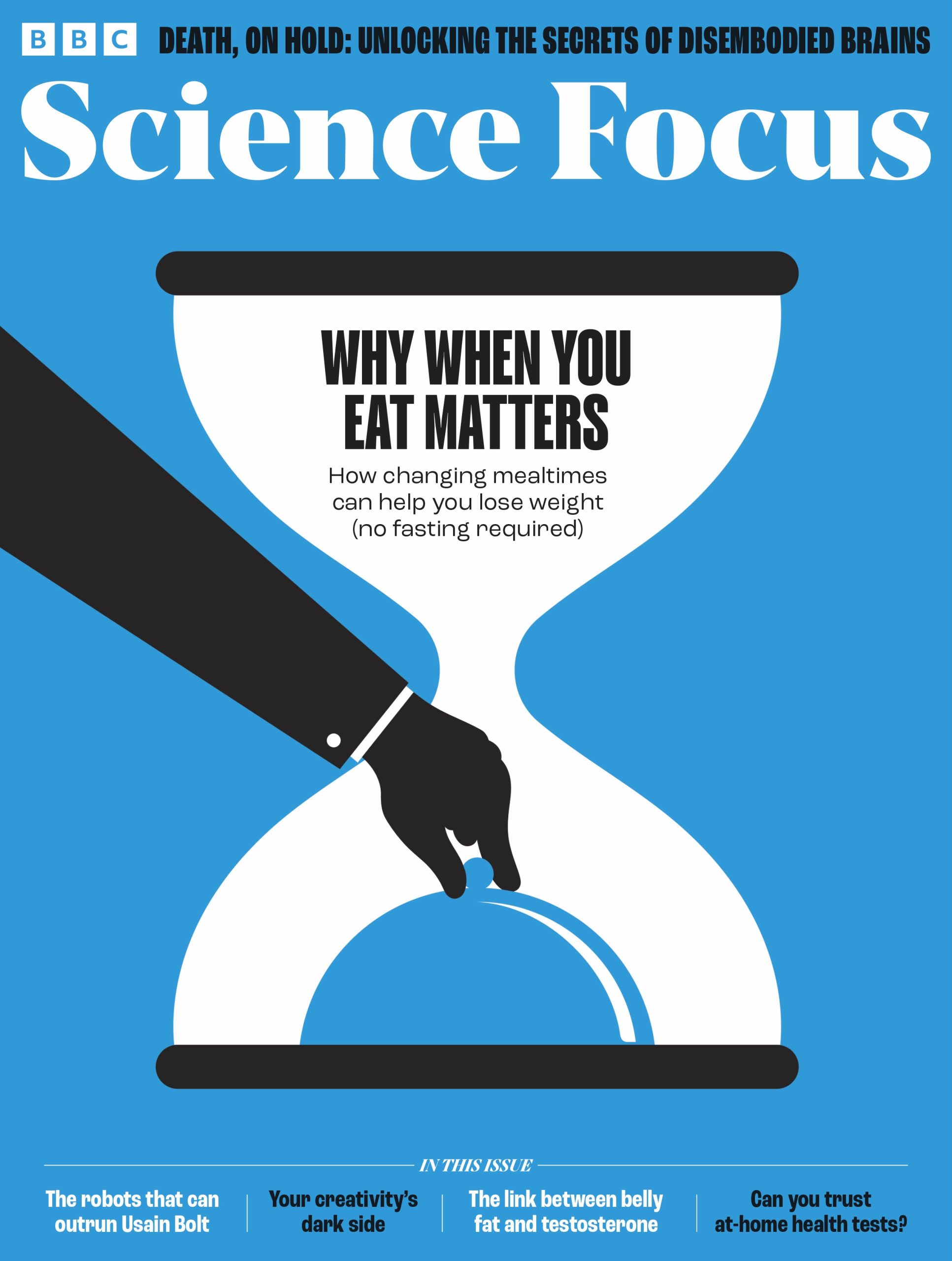
New issue: Why when you eat matters

There is no light quite like the one inside my fridge. It makes everything look delicious, especially when I’m gazing in at the contents considering a midnight feast. But it’s not just a trick of the light. If my eyes settle on the leftovers from dinner, for instance, I know that in the few hours since they were on the table, the flavours will have had a chance to marry and meld even further. They’ll be richer, they’ll be fuller. They’ll taste… different. The thing is, the leftovers aren’t the only thing that’s different now that the clock’s struck midnight. I am too. Or rather, my metabolism is. And if I were to launch into those tasty-looking leftovers now, my body wouldn’t deal with the food the same way as it did earlier in the day. Were I to eat this food during daylight, sugars would be shifted through my system fairly swiftly. But eating it in the evening means those same sugars are going to hang around longer, causing a higher-than-normal blood sugar spike and a corresponding insulin response. Fat in the food is also more likely to get stored instead of being burned as fuel. Worse still, chances are it’s getting stored as visceral fat wrapped around my organs, instead of comparatively less-harmful subcutaneous fat just beneath my skin. And that’s all before considering how submitting to the delights of this midnight snack could upset my body clock, potentially throwing other spanners into the works of my general health for days to come. Now, I’m no hypochondriac and I’m not neurotic about food. But all these are real concerns – for everybody, not just me. It’s also a concern for the scientists who study the effects food has on our bodies. They’re discovering that when we eat matters almost as much as what we eat. The name they’ve given this clock-related phenomenon is chrononutrition, and you can find out how it’s changing our approach to mealtimes in this issue.


A picture of the cover of BBC Science Focus magazine

Testosterone levels

Age might not be the only factor linked to low testosterone. Here's how to combat declining testosterone levels, and the lifestyle changes that can help.

At-home blood tests

How reliable are at-home health tests? We tried five from Numan, Hum2n, Regenerus and Better You to see how much you can find out from a finger prick.

Resurrecting brains

Yes, you read that right. Scientists in the US have found a way to restore brain function after death. It has the potential to revolutionise drug testing… and a lot more besides.

Electric trucks

Transport is slowly transitioning to electric. Forget the imposing pick-up trucks of today... could one of these electric trucks be in your future?

Plus

  • GLP-1s: Promising new research suggests that taking GLP-1 drugs could slow the process of biological ageing.
  • Creativity: Why are some people more creative? The answer might lie in the dark side of their personalities.
  • Q&A: Your questions answered by our team of experts. This month: Does time really fly when you’re having fun? Why do zebras have stripes? If the apocalypse hits, can I just live off a supermarket? Why do leaves turn red and gold in autumn? Why is the poop emoji a spiral? Is modern medicine affecting my gut microbiome? And more…

Issue 438 on sale Thursday 22 October 2026

Subscribe to BBC Science Focus Magazine

Don’t forget that BBC Science Focus is also available on all major digital platforms, including Apple News. We also have versions for Android and an iOS app for the iPad and iPhone.

This website is owned and published by Our Media Ltd. www.ourmedia.co.uk
© Our Media 2026