
The Black Death was the most catastrophic pandemic in human history. Between 1347 and 1353, up to half of Europe's population – some 50 million people – died after being infected with the bacterium Yersinia pestis.
But as the human population plummeted, something unexpected happened – plant biodiversity tanked alongside it. At face value, this is odd.
According to the contemporary narrative, when humans disappear and nature is given the space and time that it needs to recover, it rebounds with verve. Six hundred and fifty years ago, however, that wasn’t the case.
Instead of doing better, plant life did worse. It was almost as if the plants were experiencing a pandemic of their own.
The cause, however, was not a bacterium, but something else.
To assess how plant diversity in Europe has changed over the last 2,000 years or so, Jonathan Gordon from the University of York and colleagues studied a huge collection of fossilised pollen grains. The data revealed a story in three parts.
Between 0 and 1300 AD, plant diversity in Europe increased, growing through the rise and fall of the Western Roman Empire, continuing into the early Middle Ages, and then peaking just before the Black Death.
Then the pandemic hit, and for 150 years, plant diversity nosedived, only to recover as human populations increased. And the common factor? Cereal.
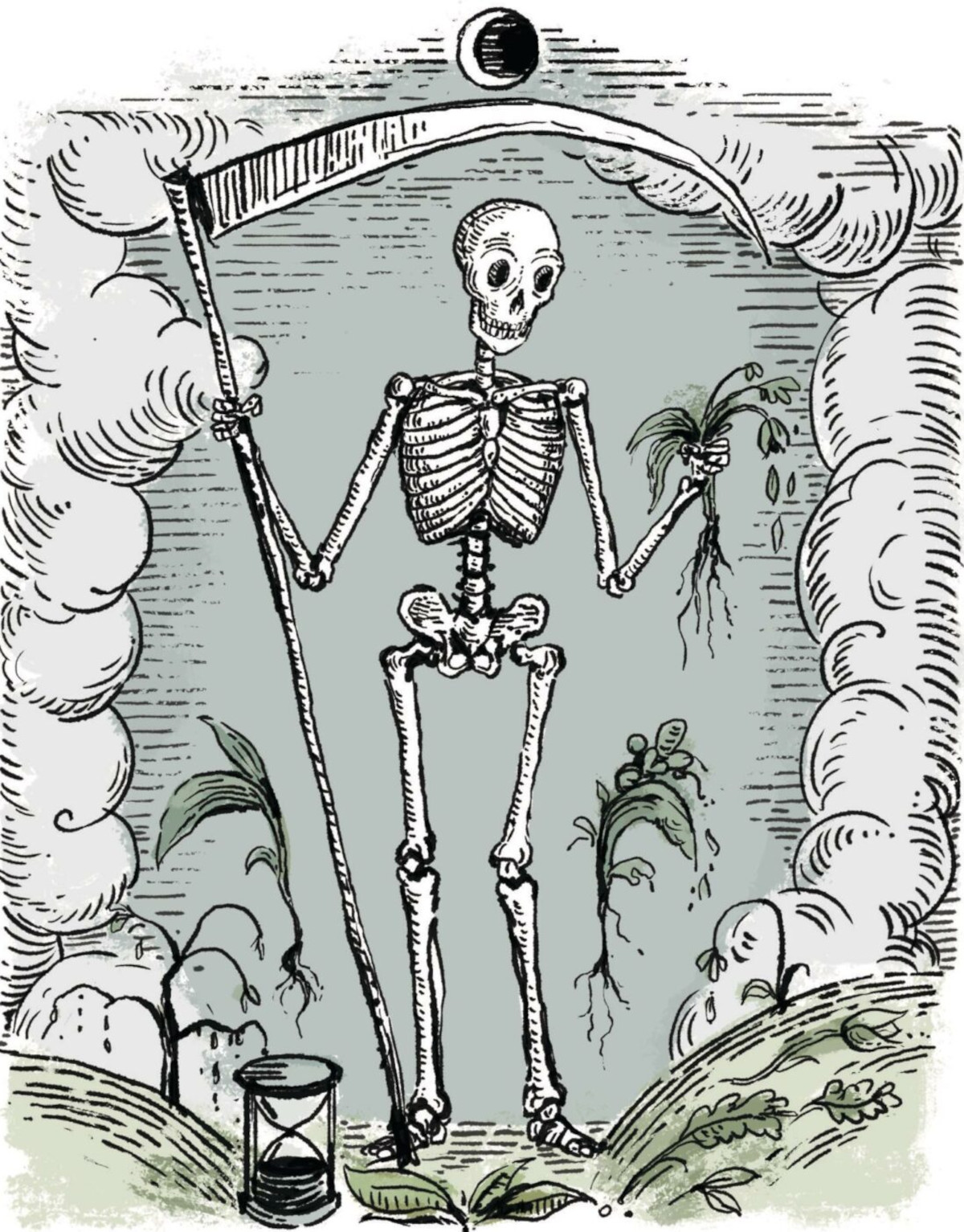
Before the Black Death, agriculture was on the up. Then, as the pandemic unravelled, so did agriculture. Farmland became abandoned and cereal crops were left unsown.
Published in Ecology Letters, the study found that the biggest losses of plant diversity occurred in the areas most affected by land abandonment. Put another way: in the old days, agriculture was good for biodiversity.
The findings are in stark contrast to the situation today, where the intensification of agriculture is a key driver of biodiversity loss. It makes sense, however, when you think about how farmers use their land.
Today, agriculture is dominated by monocultures. Farmers typically focus on a single crop species, which is often treated with pesticides and fertilisers.
This is bad for the environment as it pollutes the landscape and stymies the growth and survival of wild plants and animals.
Contrast this with medieval times, when there were no industrial pesticides and fertilisers. Instead of monocultures, mixed planting was the norm.
Strips of cereal crops rubbed shoulders with patches of dirt, deliberately fallow (temporarily unsown) fields, bits of woodland and areas of rough grazing pasture.
The result was a mosaic landscape, with a diverse range of habitats for plant and animal life to thrive.
So, there are two take-home messages. The first is that policies that seek to boost biodiversity by leaving nature to its own devices may not be as effective as hoped.
Gordon points out that many of the most biodiverse locations in Europe are those with a history of low-intensity, mixed agriculture.
And the second is that, if we want to learn the hard lessons of pre-industrial farmers, agriculture and wildlife don’t have to be mutually exclusive.
This article is an answer to the question (asked by Joyce Palmer, Westminster) 'Did plants have a Black Death too?'
To submit your questions, email us at questions@sciencefocus.com, or message our Facebook, X, or Instagram pages (don't forget to include your name and location).
Check out our ultimate fun facts page for more mind-blowing science
Read more:
