
There once was a stray Boston Terrier crossbreed called Stubby who served in the US Army during the First World War, where he warned soldiers of gas attacks and located wounded men.
He served for 18 months, participated in 17 battles and became one of the world’s most decorated war dogs. He received one gold medal, two Purple Hearts and a promotion to the rank of sergeant.
Scour the history books and it’s not hard to find stories of other canine heroes – dogs who put their own lives on the line to save others. But where are all the cats?
Answer: lying on a radiator, looking superior.
Cats are infamously aloof and self-interested.
To find out how likely they really are to help people, researchers from Eötvös Loránd University in Budapest, Hungary, devised an experiment where they pitted cats, dogs and two-year-old toddlers against each other.
The study was carried out in the home, where the unwitting guinea pigs watched as the human scientist hid an object.
Sometimes the item was a dish scrubber, of no interest to the kids and pets, and sometimes it was a favourite toy or food – much more interesting!
Then the scientist stood back and a ‘person of interest’ – the child’s parent or animal’s owner – started to look for it.
In an Oscar-worthy performance, the caregiver then fretted and fussed, repeating “Oh no, I can’t find it! What should I do now?” But would the witnesses help?
It didn’t matter what the object was, more than 75 per cent of the dogs and the children either gestured towards the hidden item or went to retrieve it.
They didn’t have any special training. There wasn’t anything in it for them. They were, it seems, just happy to help.
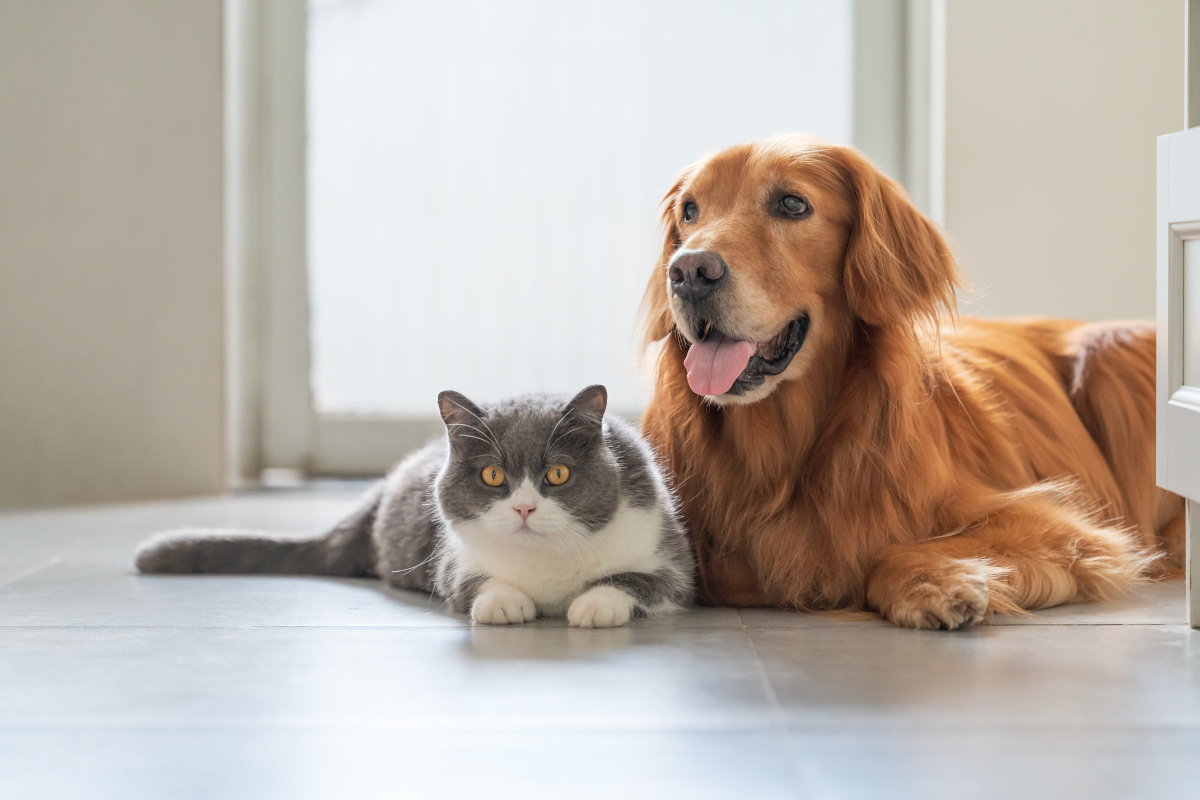
Cats, on the other hand, only ‘helped’ their owner if there was something in it for them. The only time they got off their backsides was when a treat or toy went missing, and even then, only 40 per cent of the cats approached or looked towards the hidden item.
What’s not clear in this setup, however, is whether the cats didn’t understand the problem and didn’t care or did understand the problem and didn’t care. If it’s the former, then they’re clueless. If it’s the latter, then they’re selfish.
Intuitively, because my cat looks like she knows everything and still doesn’t help me, I plump for the second option. But perhaps this isn’t her fault.
The ancestors of dogs, grey wolves, were already social, cooperative animals.
The wild ancestors of domestic cats, meanwhile, were solitary beasts. Then humans came along and started to selectively breed them, not just for physical characteristics, but for behavioural ones too.
So, it’s possible that we may have selectively bred selflessness into dogs, a species that was already inclined towards the trait, but spectacularly failed to achieve the same goal in cats.
Either way, the take-home message is clear. If you lose your keys, don’t expect your cat to help you find them. Ask your dog instead.
This article is an answer to the question (asked by Thomas King, Leicester) 'How selfish are cats?'
To submit your questions, email us at questions@sciencefocus.com, or message our Facebook, X, or Instagram pages (don't forget to include your name and location).
Check out our ultimate fun facts page for more mind-blowing science
Read more:
