Prior to the invention of electric lighting in the 19th century, humans had been generating artificial light – by burning wood, wax, oil or gas – for hundreds of thousands of years.
And for hundreds of millions of years before that, living organisms had been using chemical reactions to generate light.
Known as ‘bioluminescence’, the production of light by living organisms involves a reaction between a light-emitting compound, called ‘luciferin’, and an enzyme, called ‘luciferase’.
During the reaction, luciferase adds an oxygen molecule to luciferin, converting it into its excited state. When the oxygen molecule is released, light is generated in the process.
Different species or groups of organisms have their own versions of this light-generating duo, but the basic chemical process is the same.
Some animals can generate light themselves, while others make use of symbiotic bacteria to produce light for them.
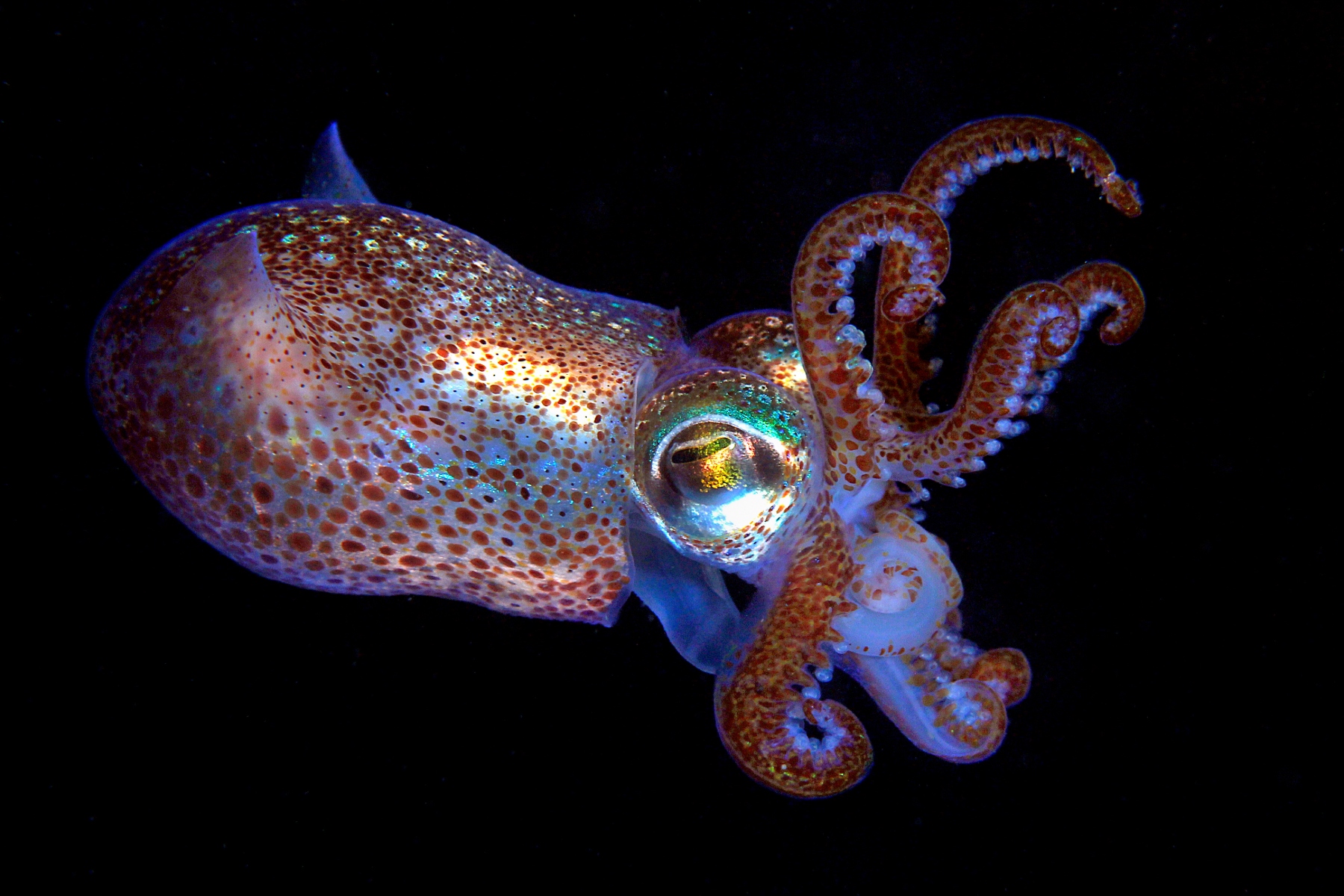
For example, Hawaiian bobtail squid host bioluminescent bacteria in a specialised light organ, controlling when and where the bacteria light up to suit their needs.
Bioluminescence is surprisingly widespread in the natural world, particularly in the ocean. Tiny single-celled creatures called dinoflagellates create glittering light shows on the ocean’s surface when they are disturbed.
If you’re lucky, you might get to witness this dramatic display if you look down at the water from the bow of a ship at night.
But the best light shows are happening below the surface. It’s thought that up to around 90 per cent of deep-sea creatures can generate their own light, especially those living at depths of more than 1,000m (3,281ft).
No light from the surface can reach this ‘midnight zone’, but bioluminescent organisms light up in a variety of blue and green hues – wavelengths that travel furthest in water.
The ability to generate light internally is an incredibly ancient phenomenon.
A 2024 study found that the first bioluminescent creatures on Earth were marine invertebrates called octocorals, which lived some 540 million years ago. Since then, bioluminescence has evolved independently over 90 times.
Animals use bioluminescence in a variety of ways. Some, like the bobtail squid, use it for camouflage known as ‘counterillumination’. By lighting up their underside, they can make their silhouette almost invisible to predators below.
Anglerfish have a bioluminescent lure that attracts unsuspecting prey. And a few deep-sea fish actually use their bioluminescence to help them see – they emit a red light that makes their prey easier to spot.
Other species use light to attract a mate or startle predators.
Humans have also found plenty of uses for bioluminescence. For example, the enzyme luciferase is commonly used in genetic engineering and biomedical imaging.
In 2026, researchers at the University of Colorado Boulder, in the US, managed to trick bioluminescent algae – which usually emit short bursts of light – into glowing continuously for up to 25 minutes.
This article is an answer to the question (asked by Sam Pearson, Gloucester) 'Can you make light without electricity?'
To submit your questions, email us at questions@sciencefocus.com, or message our Facebook, X, or Instagram pages (don't forget to include your name and location).
Check out our ultimate fun facts page for more mind-blowing science
Read more: