
They weren’t named man’s best friend for nothing – we’ve long known that dogs have an uncanny ability to understand and communicate with humans. But new research suggests that your pup may be able to read your emotions from the expression on your face.
The study, published in the journal iScience, found that not only are dogs able to identify happiness on a human face, there’s also evidence – for the first time – that dogs can distinguish negative facial expressions too.
Initially, eight participating pups had their brains scanned while looking at photographs of strangers with happy faces. The pictures made the pooches’ temporal cortex and caudate nucleus – the brain regions associated with higher cognitive and reward processing – light up.
Later, to understand how dogs differentiate between positive and negative expressions, researchers showed 12 dogs photographs of people displaying a range of emotions, including happiness, anger, fear and sadness. The temporal cortex-caudate nucleus network only responded to joyful faces.
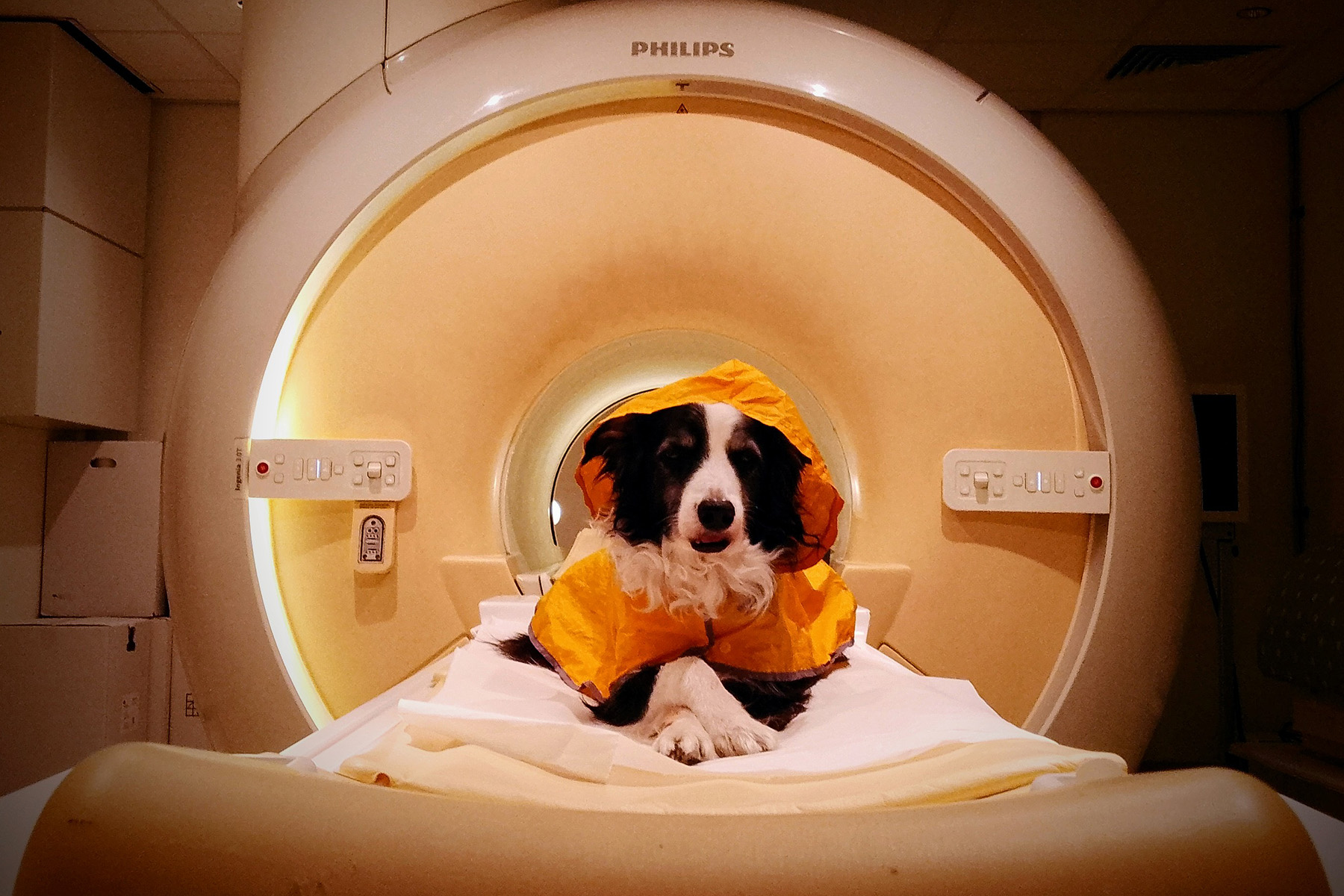
A more complex analysis of the whole brain found specific patterns of activity that indicated the dogs were able to tell the difference between an angry, sad or fearful expression.
“Humans are really good at picking up small details on the face, and so are dogs,” says first author Raúl Hernández-Pérez from the University of Vienna.
“This makes dogs very interesting. By studying their brains, we can understand what adaptations have developed to support their remarkable social and emotional understanding of humans.”
What’s perhaps most impressive is that, in a real-life environment, dogs are also able to tap into a human’s body language, voice and scent to gauge emotion. But it seems they don’t necessarily need to in order to bond and connect.
“I would like people to see dogs as emotional beings,” says Laura Cuaya, who also worked on the study. “They have evolved with us to understand our expressions and cooperate with us, and recognising that can change how we communicate with and care for them.”
Read more:
