
Earth’s first animals weren’t great at reproduction, scientists have revealed. In fact, they were so bad at it that life’s diversity was actually held back for millions of years. It was only when stress and competition led to the arrival of sexual reproduction that the pace of evolution increased.
For the study, researchers from the University of Cambridge studied fossils from the oldest-known animals on Earth, which lived around 574 million years ago. These animals reproduced asexually, creating offspring from only a single parent’s genes.
Reported in the journal Nature Ecology and Evolution, the new study goes some way to explaining a question palaeontologists have long been asking: why animal life remained relatively unchanged on Earth for millions of years.
Some of the earliest creatures were Fractofusus (though they looked more like ferns than animals) which existed during the Ediacaran period between 635 and 539 million years ago.
They didn’t appear to have mouths, organs or limbs, but are believed to have absorbed nutrients from the water around them. They reproduced asexually by sending out clones via runners – just like modern strawberry plants do.
“Life was pretty nice during the Ediacaran, so the need for sex was rather limited,” says lead author Dr Emily Mitchell from Cambridge’s Department of Zoology. “There was relatively little competition, so there was no real pressure to change anything.”
Mitchell and her team studied fossils from Mistaken Point in Newfoundland, one of the world’s richest sources of fossils from the Ediacaran era.
They built a computer model to simulate how animal communities might have behaved under certain conditions and used it to examine why early animal communities had relatively few species.
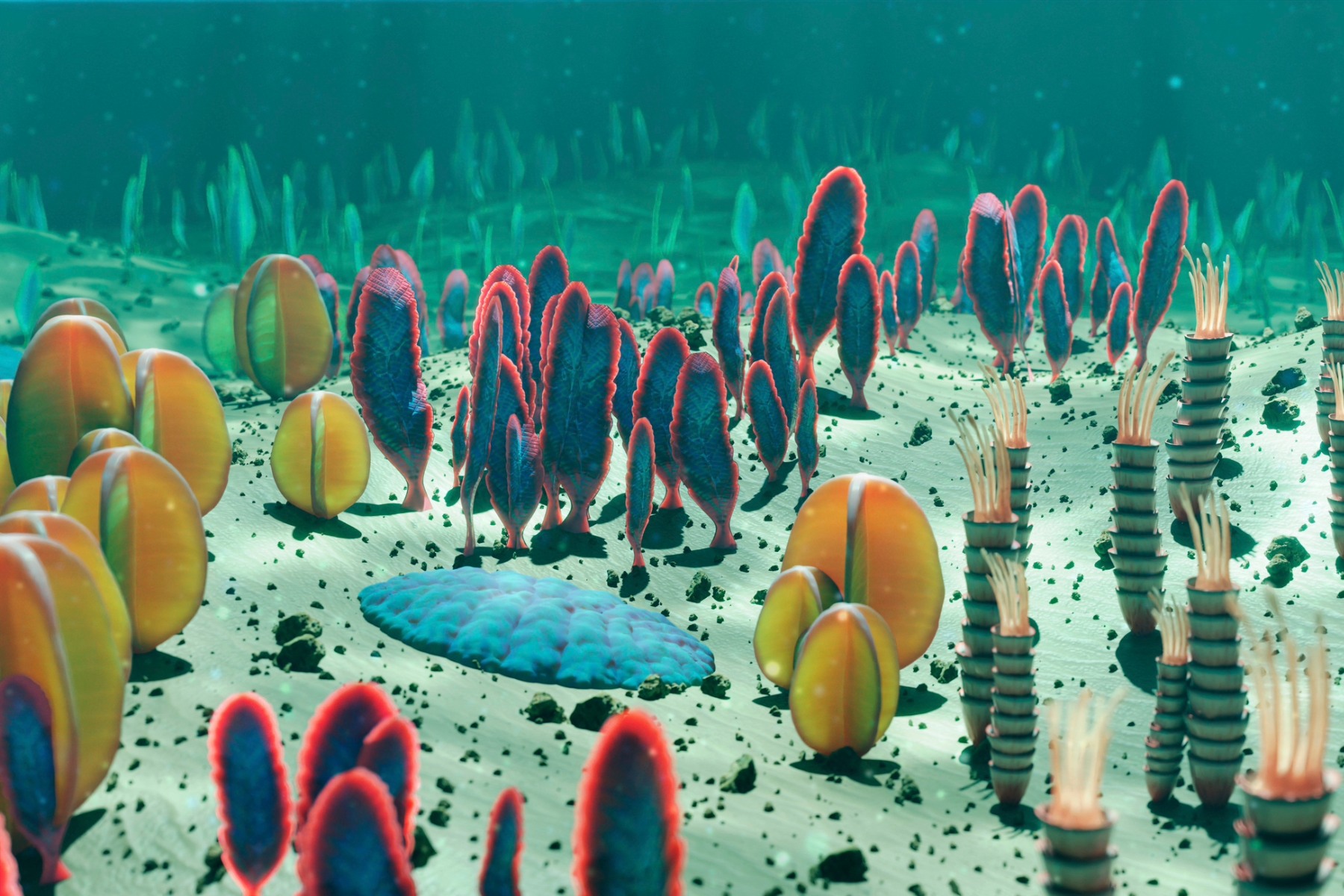
Animals during the Ediacaran period lived in rich waters, where competition for resources was limited. As they spread from the deep ocean to shallower areas of water, they would have faced more pressures, including tides, storms, shifting temperatures and changing nutrient levels.
“Stress essentially leads to sexual reproduction, and when that happens, we can see a massive increase in dispersal distances as animals attempt to colonise new areas due to an increase in competition,” says Mitchell.
As these animals adapted to new habitats and new modes of reproduction, diversification of species increased too. This process accelerated further in the following Cambrian period, when animals became mobile.
Read more:
