
Think of hyenas and you may picture opportunistic creatures, such as the ones in The Lion King, who simply follow lions and feed off their scraps. But that image is wrong, new research suggests.
Instead, scientists who fitted GPS collars to animals in Namibia and Botswana concluded that in fact it is the lions – especially the males – that approach hyenas, not the other way around.
The findings, published in the journal Frontiers in Ethology, suggest the relationship between the animals is much more complex than has long been believed.
The collars were fitted to 17 lions and 14 hyenas, and fed back GPS signals every 5 minutes during the day and 30 minutes at night. This allowed scientists to follow the animals over 17,500sq km (6,757sq miles).
Dr Nancy Barker, of the University of KwaZulu-Natal, was prompted to conduct the study after researching brown hyenas for her Master’s and suspecting there was more to the lion-hyena dynamic than met the eye.
Looking at thousands of interactions, she found that male lions consistently approached hyenas, which then retreated, sometimes over many kilometres. Female lions appeared much more ambivalent, however.
“Hyenas genuinely do exploit lion kills – that reputation is earned, and we saw hyenas successfully take food from female lions in both of our study systems,” says Barker. “But being drawn to a kill is not the same as being safe next to a lion.”
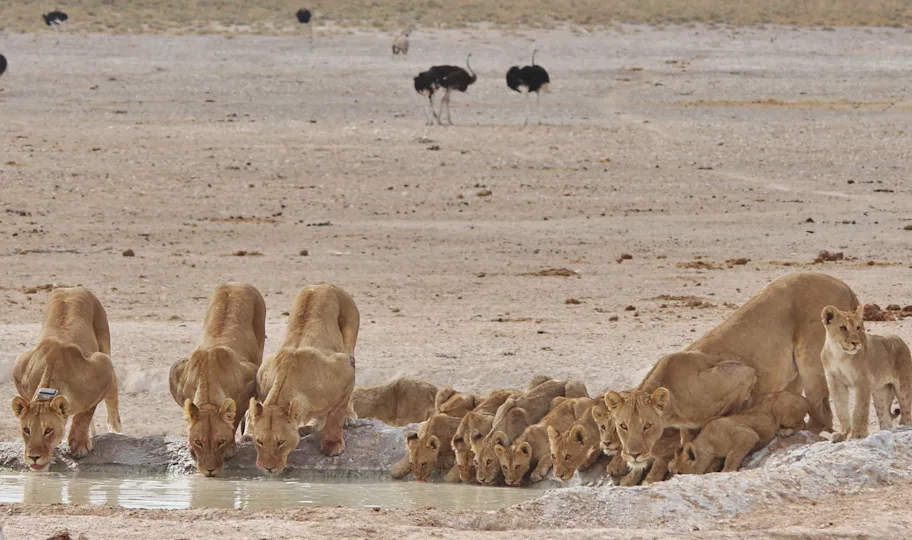
The study did not look at why it was that lions approached hyenas, but Barker suggests the lions were curious about their rivals or wanted to assert dominance, and perhaps followed them as they gave clues as to where to find kills.
Barker says her research left her surprised at what had been missed – and what may be missed in future.
“If something this basic was invisible in the best-known species, imagine what we still don't know about the predators being persecuted and removed from landscapes around the world,” she says.
“Every time a carnivore population is eradicated, we lose behaviours and relationships that science hasn't even documented yet, and we lose them permanently.”
Read more:
