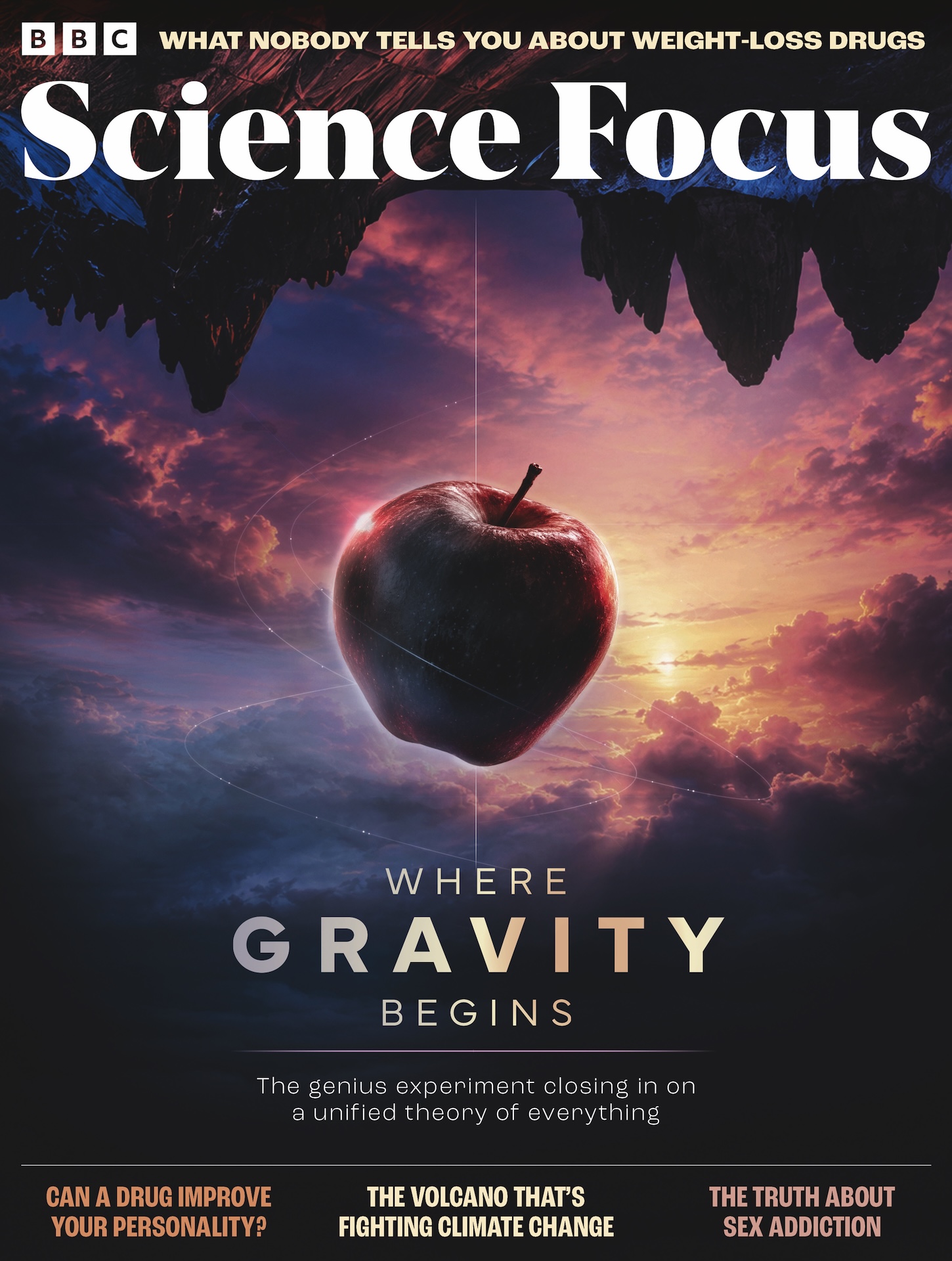
New issue: Where gravity begins

This is normally the place where I would talk about an incredible experiment, a test of gravity and the hunt for a theory of everything. But I’m given pause by the recent passing of Sir Patrick Stewart. He was just an actor, you might say, not a scientist, so why talk about him here? I think most of us would agree that art – and yes, science fiction and acting are both arts – has taught the world more about science than any newspaper or magazine. We all knew him as Captain Jean-Luc Picard, a singular, erudite voice who navigated the morality of a complicated and chaotic Universe. Picard taught the world a thing or two: that male role models could come in all shapes and sizes, that humility makes great leaders and that mistakes aren’t weaknesses. But there’s a greater lesson I once learned from Patrick Stewart. In 2013, he gave a speech to the Oxford Union – and thankfully you can watch the whole thing on YouTube (bit.ly/SirPSOxfordAddress). Patrick was there to talk about the importance of art, and of acting, and so he read out the words of Karl Paulnack, an American pianist, teacher and speaker. One of the most profound musical compositions, Paulnack said, is A Quartet for the End of Time, written by French composer Olivier Messiaen. In 1940, Messiaen was captured by German forces and taken to a prisoner-of-war camp. There, he was lucky enough to meet a sympathetic prison guard, who gave him the pen and paper upon which he composed this piece of music. It was performed by a cellist, a violinist and a clarinettist who were imprisoned with him. Given what we know about life in the camps, said Paulnack, why would anyone waste their energy writing or playing music? They had barely enough to stay warm and escape torture. So why bother with music? The only conclusion is that art is essential to life. Art, he said, was a part of survival. It’s one of the ways we say: I am alive and my life has meaning. Karl Paulnack’s words, as shared by Patrick Stewart – as good a theory of everything as I’ve ever heard.


Psychedelics

Psychedelics have shown promise as a treatment for anxiety and depression, but could the mind-altering drugs also alter your personality?

When AI take over the world

Assuming humanity survives when the machines take over, what happens next?

What's it like being on GLP-1s?

What can you really expect to go through when you start taking GLP-1 drugs? And are they worth it? An obesity expert who’s on one explains…

The discoveries that defined 2026

Top up your pub quiz knowledge and revisit the breakthroughs that surprised everyone over the last 12 months, from a surprising way to slash your dementia risk, to a weird shrinking planet and the real reason as to why the T.rex had such tiny arms.

Plus

  • Best gadgets of 2026: BBC Science Focus editor, Daniel Bennett, rounds up the weirdest and wildest tech released over the last 12 months.
  • Not so fun-guy: Scientists have found a dangerous new strain of drug-resistant fungus... and there might be more out there.
  • Q&A: Your questions answered by our team of experts. This month: Do men really have bigger brains? What’s the weirdest thing we do without realising? Why is growing up so scary? How do you refuel a nuclear submarine? Could you ever deal a shuffle of cards that’s never existed before? What’s the oldest seed that can still grow? And more…

Issue 439 on sale Tuesday 24 November 2026

Subscribe to BBC Science Focus Magazine

Don’t forget that BBC Science Focus is also available on all major digital platforms, including Apple News. We also have versions for Android and an iOS app for the iPad and iPhone.

This website is owned and published by Our Media Ltd. www.ourmedia.co.uk
© Our Media 2026
