
A controversial new surgical procedure could help reverse symptoms of Alzheimer’s disease, scientists claim.
Known as deep cervical lymphatic-venous anastomosis (dcLVA), the surgery aims to improve the drainage of waste from the brain by rerouting lymphatic vessels in the neck.
Demand surged after footage of patients recovering from the surgery went viral on Chinese social media, with people paying upwards of £24,000 ($30,000) for the operation.
Chinese regulators restricted it to formal clinical-trial settings last year, citing a lack of high-quality randomised evidence, and the technique’s pioneer, microsurgeon Prof Qingping Xie, was arrested in late 2025 for insurance fraud, though no charges have been publicly announced.
Despite the extraordinary claims surrounding the surgery, whether it actually works remains unclear. So far, there’s no robust evidence that it can alter the course of Alzheimer’s and researchers have warned against its widespread use before larger, controlled clinical trials are completed.
How it works
Alzheimer’s is the most common cause of dementia, contributing to 60–70 per cent of cases worldwide, according to the World Health Organization, and affecting roughly 57 million people.
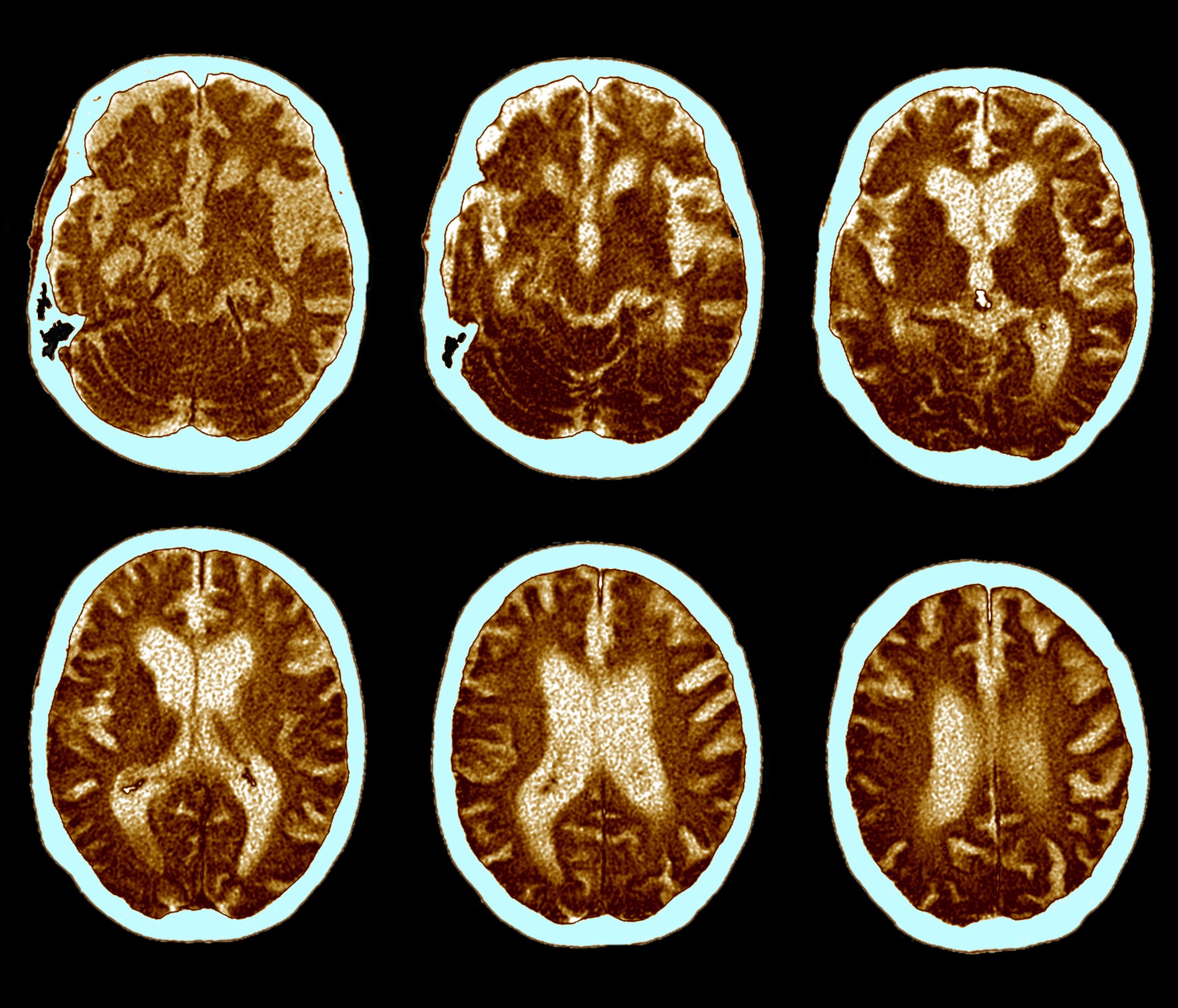
At its root is a slow build-up of damage inside the brain. “During the disease, clumps of pathological proteins called amyloid-beta and tau accumulate in the brain, causing the dysfunction and death of neurons,” said Prof Tara Spires-Jones, director of the Centre for Discovery Brain Sciences at the University of Edinburgh and author of Fighting for Our Minds: The Neuroscience of Defeating Dementia.
This neurodegeneration impairs cognitive function, often manifesting as difficulty thinking and an inability to make new memories. As the disease progresses, it increasingly affects a person’s ability to complete everyday tasks and activities.
Scientists have developed medications – including drugs that target and clear amyloid-beta proteins from the brain – to slow its progression and manage symptoms, but there is no known cure. Perhaps the biggest challenge is that the disease can start taking hold years before a person shows any symptoms at all.

The new surgery targets this build-up of amyloid-beta directly. Surgeons connect small lymphatic vessels in the neck to nearby veins, giving fluid that would normally drain slowly through the lymphatic system a faster route into the bloodstream.
“Imagine the brain as having a sophisticated plumbing and waste-removal system,” said Prof Roslyn Bill of Aston Institute for Membrane Excellence at Aston University in Birmingham – who has no link to the procedure pioneered by Prof Xie.
“Fluid moves through and around the brain, helping to transport substances away from brain tissue. Some of that drainage ultimately reaches lymphatic vessels and lymph nodes in the neck.”
The theory is that improving this ‘downstream drainage’ could allow amyloid-beta and other waste products to be cleared from the brain more effectively, potentially slowing or reversing the damage.
Thin evidence, big claims
The dcLVA procedure was first described in a Chinese journal in 2022 and has since been performed thousands of times in hospitals across China. But research has not kept pace: studies published so far have been small and single-site, and none of them has involved a clinical trial.
The largest study to date, published in the journal Alzheimer’s & Dementia earlier this year, followed 139 people with severe Alzheimer’s disease who underwent the surgery. It recorded modest to average improvements in cognitive function and in biomarkers linked to the disease, with changes emerging within six months.
Patients showed increased spontaneous speech and social engagement, more efficient completion of daily tasks, more stable mood and, in some cases, heightened recognition of loved ones.
The study had one key limitation, though: there was no control group (a comparison set of similar patients who didn’t have the surgery), making it hard to know how much of the improvement was down to the operation itself.
“That makes it difficult, at this stage, to know how much of the observed improvement was directly attributable to the surgery,” said Bill.
“Without appropriate control groups, it’s hard to separate the effects of the surgery from other influences, including differences in patient care and the natural variability of symptoms.”
Researchers also don’t yet know what risks the surgery carries, what’s biologically driving any improvement, or whether it could be delivered safely and consistently outside a small number of specialist centres.
“A procedure might be effective in a highly specialist centre, but that doesn’t automatically make it a realistic treatment for the millions of people affected by Alzheimer’s,” Bill said.
What happens next
Controlled trials of the technique are now getting underway in China, the US and South Korea, involving the comparison groups that earlier studies lacked.
Dr Jonathan Kipnis, professor of pathology and immunology at Washington University in the US, led the team that first mapped the brain’s lymphatic system just over a decade ago. He said the underlying biology behind dcLVA was plausible, even though the surgery itself remains unproven.
“There’s substantial experimental evidence that lymphatic drainage from the brain changes with ageing, and that manipulating this system can influence brain function,” he said.
“We also have new experimental data from our laboratory that makes me optimistic that improving downstream lymphatic drainage can have meaningful effects. But that’s very different from saying that this particular surgery has been proven to treat Alzheimer’s. It hasn’t, at least not yet.”
Bill said the trials would help answer that question. “If the trials show that improving lymphatic drainage can produce sustained benefits, then surgery could potentially become one component of treatment for selected patients,” she said.
“The exciting thing is that it gives us a completely different biological lever to investigate,” she added. “The challenge now is to find out whether pulling that lever actually changes the course of the disease.”
Read more:
