
Pompeii is a tale that you’ve probably heard before. It’s one of the most famous from the ancient Roman world: a deadly volcanic eruption that destroyed an entire city – now an eerie tourist site and archaeological treasure trove.
But, while many of us vaguely know what happened when Vesuvius erupted in 79 AD, there’s still so much we could learn from this tragedy.
From forgotten villages to the resilience of the human spirit, here are the lessons of Pompeii that the experts wish we all knew.
1. Don't blame the lava
When you think ‘volcano’, you probably think ‘lava’ too – so, it makes sense to assume that hot rivers of lava were to blame for the tragedy at Pompeii.
But that’s a misconception, according to archaeologist Dr Darius Arya, who recently appeared in National Geographic’s Pompeii: Out of Time with Tom Hiddleston, now on Disney+.
He says that people may be under the assumption that: “‘Oh my god, the city was buried with lava.’ No, it wasn’t. We’d have nothing to see. Lava destroys everything, so that’s one of my pet peeves.
“It was because of the different kinds of ash that buried Pompeii that we actually have a relatively easy excavation, and such good preservation.”
Indeed, volcanologist Prof Chris Jackson – from Imperial College London, as well as the Pompeii TV series – adds that if the biggest threat to Pompeii’s residents had been lava, they would’ve had much less to worry about.
“Lava, generally speaking, travels incredibly slowly,” says Jackson.
“If you were of average physical ability, you could outrun most lava flows. Even if you weren’t, it’d be fine. That’s one of the things that people often get wrong.”
If lava wasn’t the culprit, then why did so many people die? It was a combination of ashfall – and something far more deadly.
Jackson explains that rising magma inside the volcano caused gas bubbles to push against the solid rock above, eventually bursting upwards.
According to volcanological studies, Vesuvius launched a column of rock, ash and gas about 30km (close to 100,000ft) up into the air as it erupted – that’s three times higher than most planes fly.
That material gradually spread out to fill more of the sky until, on a summer’s day in Italy, everything went dark.
“We have this documentation of day turning to night and birds falling out of the sky,” says Jackson.
“There was so much ash filling the air that people wouldn’t have been able to see where they were going – a creeping darkness in the middle of the afternoon.”
That ash began to rain down on the buildings below and eventually caused some of the roofs below to cave in, killing people underneath them.
But worse was yet to come. Jackson explains: “Eventually, the energy coming out of the volcano wasn’t able to sustain that huge mass of material, and the column started to collapse.”
Hot rock, ash and gas now came crashing down the side of Vesuvius onto the towns below, Jackson says.
“By hot, I mean several hundred degrees Celsius,” he adds. “By fast, I mean 100–200km/h (62–124mph). By gassy, I mean sulphur dioxide, which would burn your eyes and lungs. It would have been like standing in hell – but not for long.”
These devastating waves of gas are called pyroclastic flows, and they killed anything in their path almost instantaneously. Rather than lava, it was these flows – as well as falling ash – that buried Pompeii.
“That’s what eventually preserved all those very famous bodies,” says Jackson. “The buildings themselves were under several metres of ash, but also sediments coming from these pyroclastic flows.”
2. Prolonged blast
Pyroclastic blasts sound utterly terrifying, quickly killing everything in their path – but the eruption of Vesuvius was a much slower process than you might imagine.
“There had been earthquakes 17 years before,” says Jackson. “It’s not often talked about. Pompeii was still being rebuilt following those earlier earthquakes, but they hadn’t linked those earthquakes to the volcano.”
Between 62 and 79 AD, Arya says that some people left Pompeii, explaining:
“A lot of the houses in Pompeii were converted into shops, so that means it was already a little depopulated. They had been through real devastation, so some people relocated.”
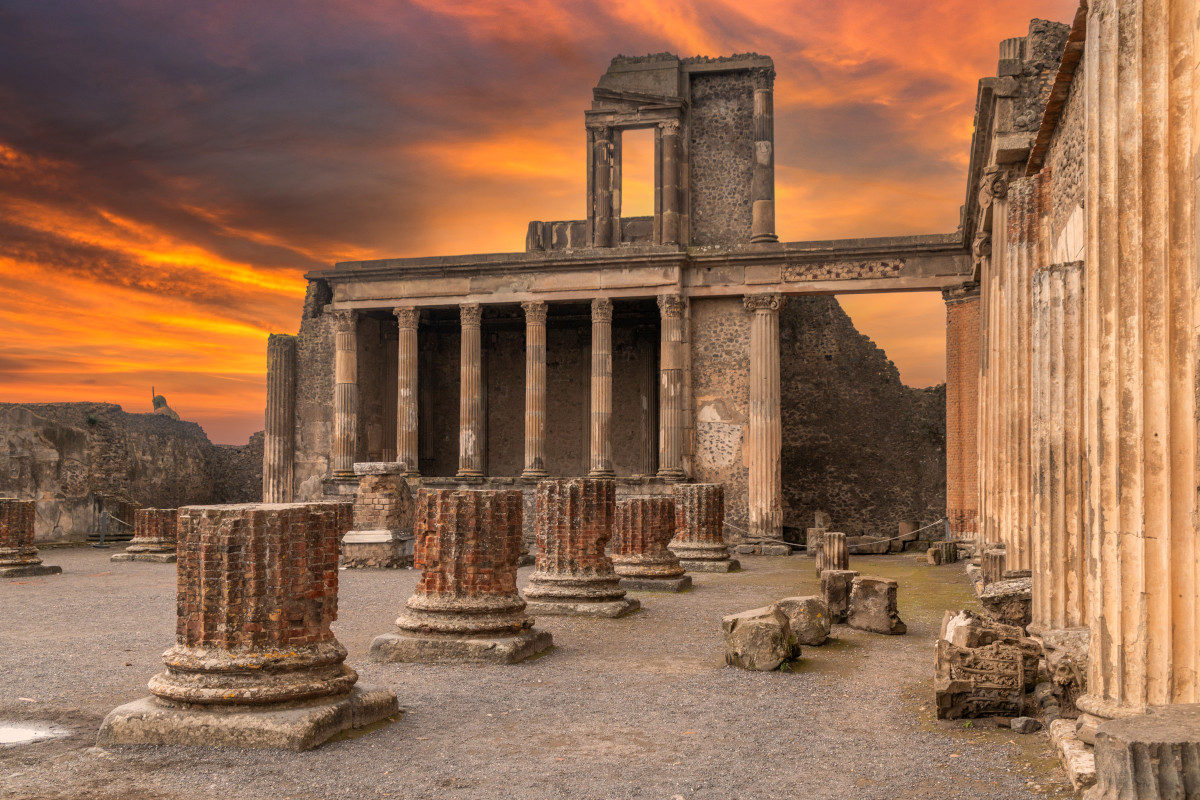
Then, in the four days leading up to the eruption, there was another series of earthquakes as magma began to ascend through the volcano. Some fled – but many stayed.
“They didn’t understand the physical link between rising magma, breaking rocks, earthquakes and a volcanic eruption,” Jackson explains.
Then came the eruption and the enormous column of material in the sky.
“People would have stopped and stared at it,” Jackson says.
“It would have taken some time for the sound to travel to them. They’d have seen this thing going up, then heard this big blast, then felt the shock wave in their chest.”
Pompeii experienced several hours of ashfall before the pyroclastic blasts arrived – so residents had more time to leave Pompeii than you might have imagined.
That’s why, says Jackson, it’s vital that today we understand the relationship between earthquakes and volcanoes, and can properly evacuate those at risk.
“Vesuvius is an incredibly well-monitored volcano nowadays,” he adds. “If it erupted tomorrow, we’d know it was going to happen, and we’d act accordingly.”
3. Other towns
Pompeii may be the most famous example of the devastation caused by Vesuvius in 79 AD, but it’s far from the only place that was affected.
“There’s so much more than Pompeii,” says Arya. “Pompeii is the hook. Pompeii is the name. But Pompeii doesn’t exist in a bubble.
“There’s a whole series of communities. There’s Stabia, which not enough people go to. You can visit a lot of seaside villas throughout the Bay of Naples.”
There are even the remnants of an ancient farm about a mile from Pompeii, he continues, where a pig and a couple of trees have been preserved.
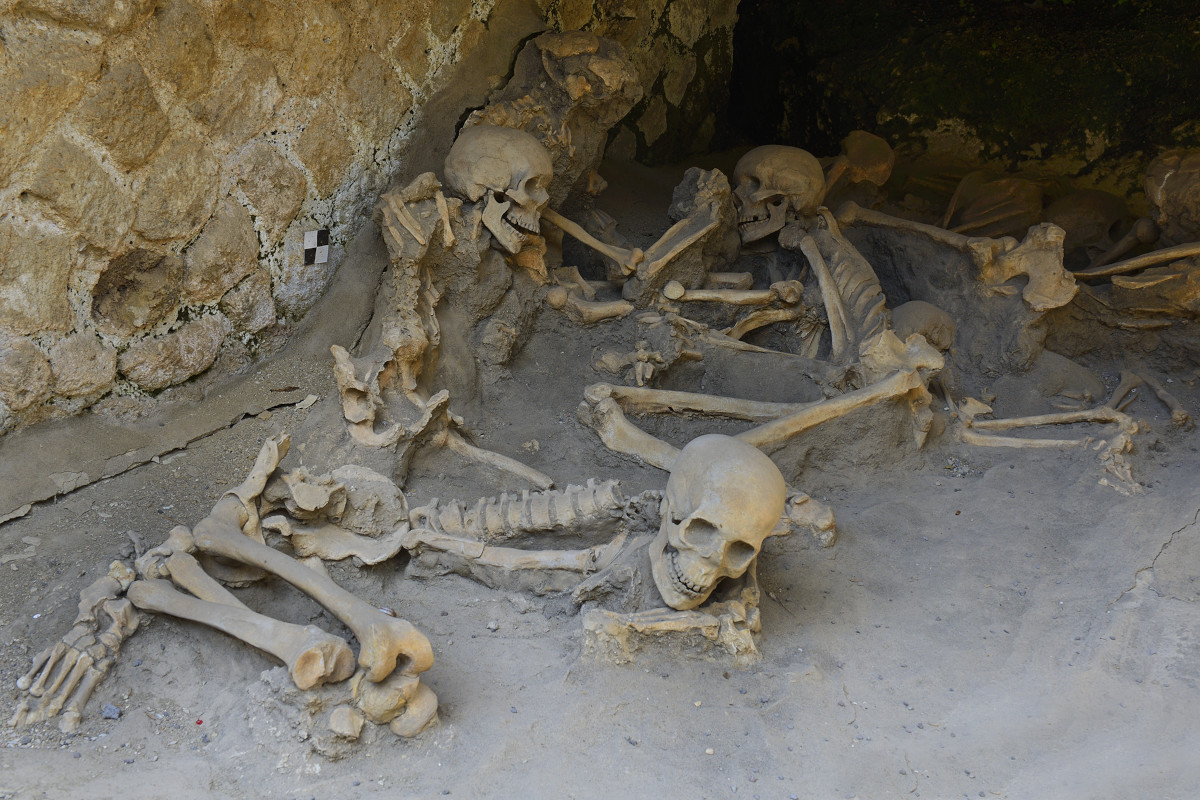
But the biggest town that was hit by Vesuvius’s eruption – aside from Pompeii – was Herculaneum, situated even closer to the volcano than the city.
While residents of Pompeii experienced a few hours of ashfall, Herculaneum had much less time to escape before deadly pyroclastic surges hit.
“In Herculaneum, the eruption was much more violent,” says Arya. “Also, the material hardened like concrete, and so it’s harder to excavate and most of it is still buried – but it’s much better preserved.”
Read more:
- Pompeii: past, present and future
- Archaeologists have unlocked new secrets of life in Pompeii
- The ancient baths of Pompeii were outrageously filthy, study finds
4. Staying the same
Nearly 2,000 years have passed since Vesuvius erupted and, in many ways, the world is totally different. But, at the same time, Pompeii and similar sites show us that humans haven’t changed all that much.
Arya says that these sites give us a snapshot into an ancient world with unrivalled clarity.
“In Pompeii, we have little idols in shrines,” he says.
“We have loaves of bread in the oven. This is what everyone was doing at that moment: cooking, cleaning, praying, fraternising, dining. Their kids were at school and playing.”
We can even see this similarity in how the people of Pompeii reacted to the crisis, according to survival psychologist Dr Sarita Robinson – associate dean at the University of Lancashire, who was also featured in the National Geographic series.
For instance, in 2017 when Mount Agung was about to erupt in Bali, Indonesia, 100,000 people were urged to evacuate but only 40,000 left promptly.
“People didn’t want to leave their homes, their livelihoods, their families,” explains Robinson. “So, the Indonesian authorities were having to forcefully evict people from the area.
“Although we’ve got a lot more technology, and more help and support, behaviours that were evident in 79 AD still happen today.”
5. Much to discover
If you’ve ever visited Pompeii, you’ll know the site is enormous – and you’d be forgiven for assuming that archaeologists have found all there is to find. But that’s not true.
“It’s endless,” says Arya. “A number of new excavations have revealed more information. There’s always going to be something new.”
It’s not just novel artefacts that we have to thank for recent discoveries, but technological advancements too.
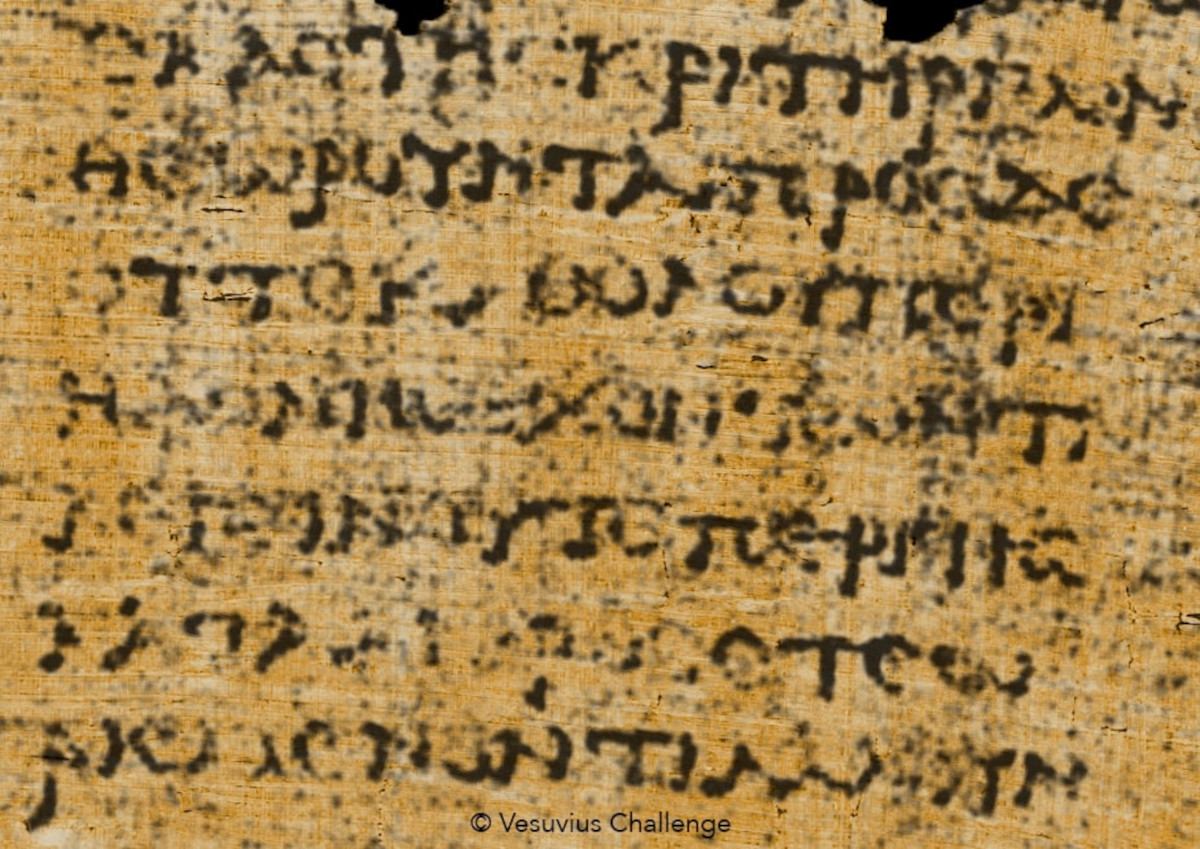
Notably, scrolls that were found burnt in Herculaneum’s ancient library have begun to be digitally unravelled and deciphered with AI – according to a study that has not yet been peer-reviewed.
As part of the Vesuvius Challenge, a scroll that was once too fragile to open has now been read in its entirety.
“That’s revelatory,” says Arya. “The ones that still are to be opened could literally be anything, and it would be great if they were texts that we don’t have.”
6. Volcanoes bring life
The 79 AD eruption is irrefutably a story of destruction, but Jackson says it’s a mistake to see volcanoes as solely harmful.
“We often think of volcanoes as these killers,” he says. “But one reason people live on volcanoes in these locations is because they bring life. They generate fertile soils, and the life there is incredibly ecologically diverse.
“Without these things, our lives would be impoverished. So, we shouldn’t just see them as being a negative force on Earth.”
7. A survival story
Similarly, Pompeii was not simply a site of death. A lot of people died – but a great many also survived.
“I think the story of survival from Pompeii is one of the most incredible things,” says Jackson. “The people who managed to escape, and that oral narrative of what occurred, I think is really powerful.”
Archaeologists may have found thousands of bodies at the site, Arya explains, but there are so many more that are missing.
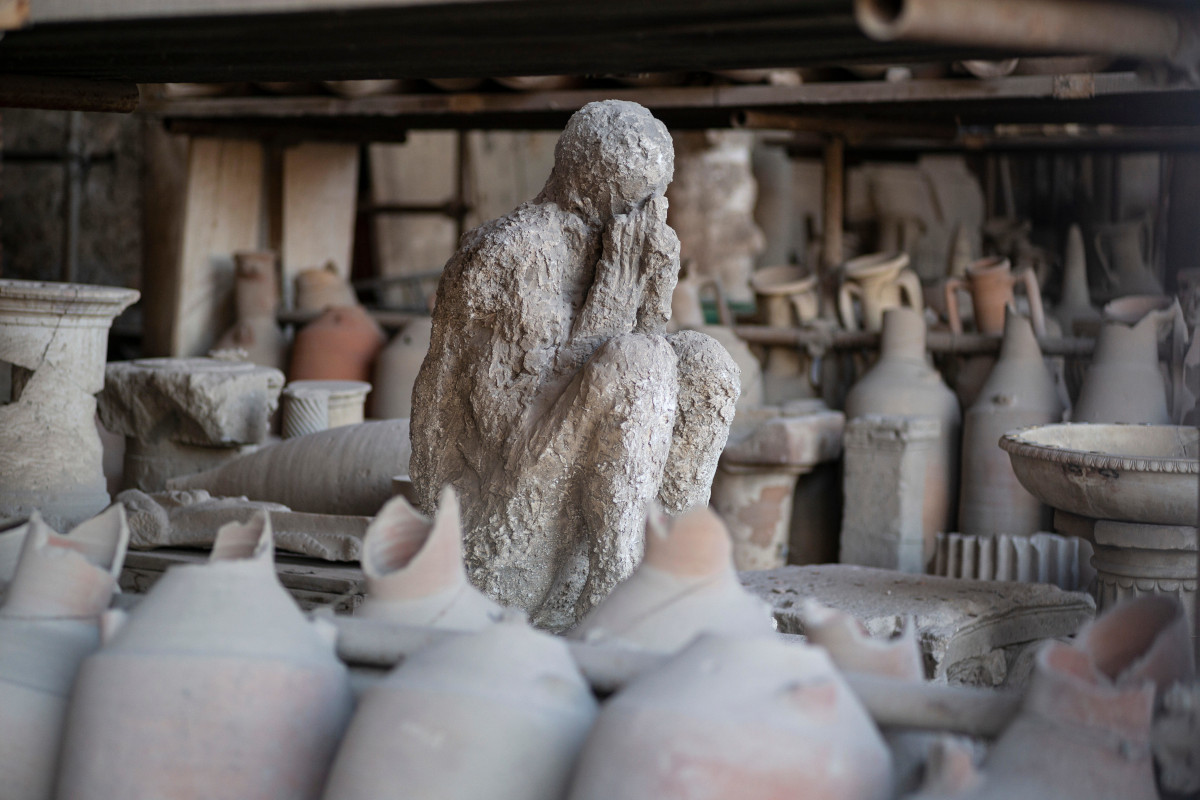
“Pompeii was a city of about 20,000,” he says, referring to a contested estimate. “Two-thirds have been excavated at this point, and we have found around 1,300 bodies – the casts in Pompeii.”
These iconic casts were created in the 1860s, when archaeologist Giuseppe Fiorelli poured plaster into voids left by decomposed bodies in hardened ash. That’s why we can still see the eerie figures today.
But Arya says the numbers don’t add up. “Where are the rest of the bodies?” he asks. “Statistically, we should have found more bodies, but they’re not there. Where are they? They left.”
In the years leading up to the eruption, in response to earthquakes days before and as ash was falling from the sky, the residents of Pompeii escaped.
“I think something that comes through in the stories of Pompeii, and from all the research that I’ve done, is that humans are really resilient,” says Robinson.
“There’s no getting around the number of deaths that happened in Pompeii – but there was survival, there was resilience and there was growth afterwards.
“People did go on to recover and set up new lives. These disasters were horrendous, but humans pick themselves up, dust themselves down and carry on.”
Read more:

