When reactor 4 of the Chernobyl Nuclear Power Plant exploded in April 1986, it triggered one of the worst nuclear disasters that humanity has ever seen.
The explosion and the fire that followed released huge quantities of radioactive material into the atmosphere, spreading radioactive contaminants across 100,000km² (38,610 sq miles) of land in the Soviet Union and Europe.
Hundreds of thousands of people were evacuated, while the disaster left a lasting legacy for human health, the environment and the future of nuclear power.
Yet amid the devastation, something remarkable emerged. The abandoned reactor and the surrounding Exclusion Zone became an accidental long-term experiment unlike anything scientists could ever have created deliberately.
Over the past four decades, researchers have uncovered surprising insights into chemistry, evolution and the extraordinary resilience of life under extreme conditions.
Here are some of the weirdest discoveries scientists have made at Chernobyl:
The Elephant's Foot
The Elephant’s Foot is a 2.2-tonne lump of melted material that formed beneath reactor 4.
As the reactor core overheated, temperatures climbed above 1,600°C (2,912°F), causing the uranium fuel to melt and mix with the reactor’s zirconium alloy cladding surrounding the fuel rods, along with the steel, concrete, sand and silica from the reactor building itself.
The result was a molten glass-like lava that flowed through the damaged reactor before eventually cooling and solidifying into the brown, wrinkled structure known as the Elephant’s Foot.
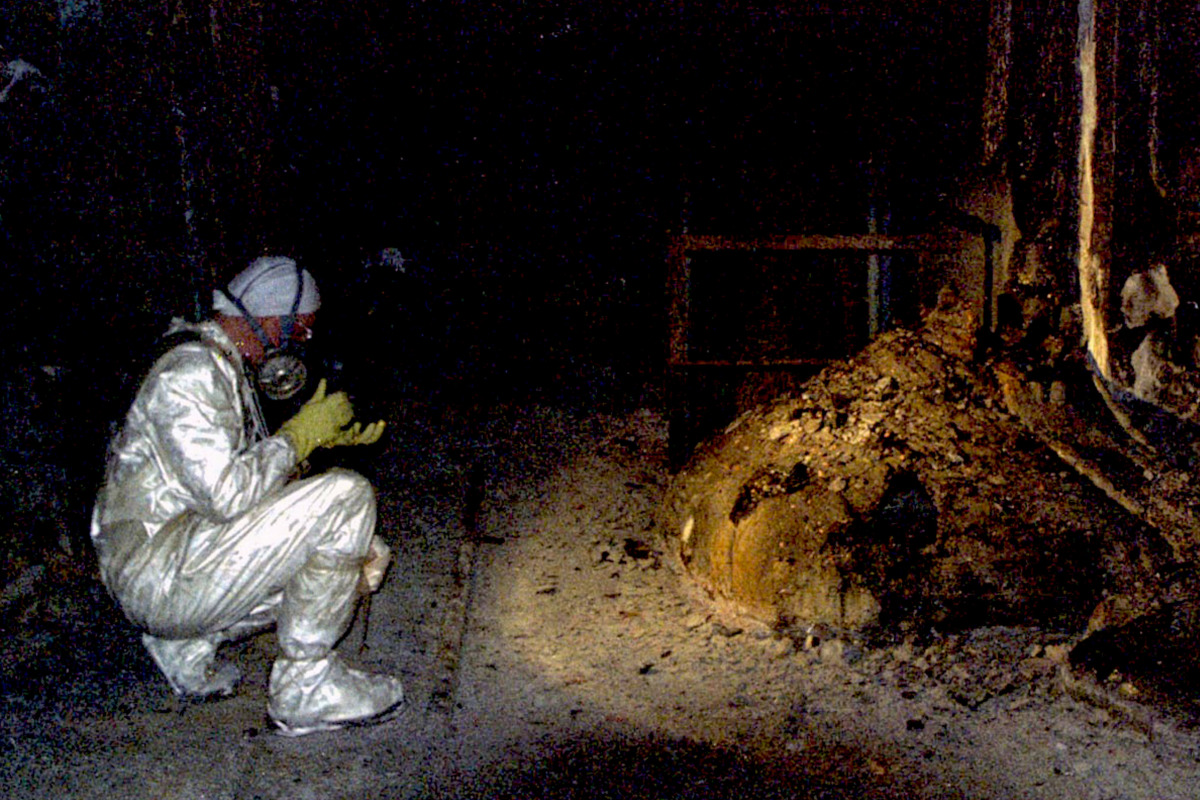
This rare material, known as ‘corium’ or fuel-containing material (FCM), is an extraordinarily complex substance.
It contains dozens of different minerals, metals and radioactive isotopes which have fused together under conditions that are almost impossible to reproduce.
Similar corium has only formed three times in human history: at the Three Mile Island accident in Pennsylvania in 1979, at Chernobyl in 1986, and during the nuclear disaster at the Fukushima Daiichi Nuclear Power Plant in Japan in 2011.
Because corium records the extreme temperatures and chemical reactions that occur, studying it has improved our understanding of severe accident progression, fuel-coolant interactions and the long-term behaviour of nuclear fuel debris, helping to guide both reactor decommissioning and the development of safer designs.
When the Elephant’s Foot was first discovered, around eight months after the nuclear disaster, it was emitting around 8,000 to 10,000 roentgens of radiation per hour.
That’s enough to kill a human within minutes.
Its intense radioactivity made collecting samples extremely dangerous, while its glass-like structure proved too hard for remotely operated drills to penetrate.
Instead, workers eventually resorted to firing armour-piercing rounds from an AK-47 rifle to chip off fragments for analysis. These tiny samples provided scientists with their first opportunity to study corium in detail (see more details in the next section).
The Elephant’s Foot has continued to evolve in the decades since the disaster.
As radioactive decay, moisture and air slowly alter the material, its surface has begun to crack and crumble, producing new uranium-bearing minerals that researchers are studying to better predict how corium will change over the coming decades.
And that knowledge could prove invaluable for the long-term decommissioning of both Chernobyl and Fukushima.
Read more:
- What would happen to a nuclear power station if there was no water?
- These scientists want to make Chernobyl's radiation glow. Here's why
Chernobylite
When scientists analysed samples of the Elephant’s Foot, they discovered microscopic crystals of an unusual uranium-bearing mineral phase within the corium.
This uranium-zirconium silicate, named Chernobylite, is a ‘technogenic’ substance, meaning that it was produced by human technology, and is not naturally occurring.
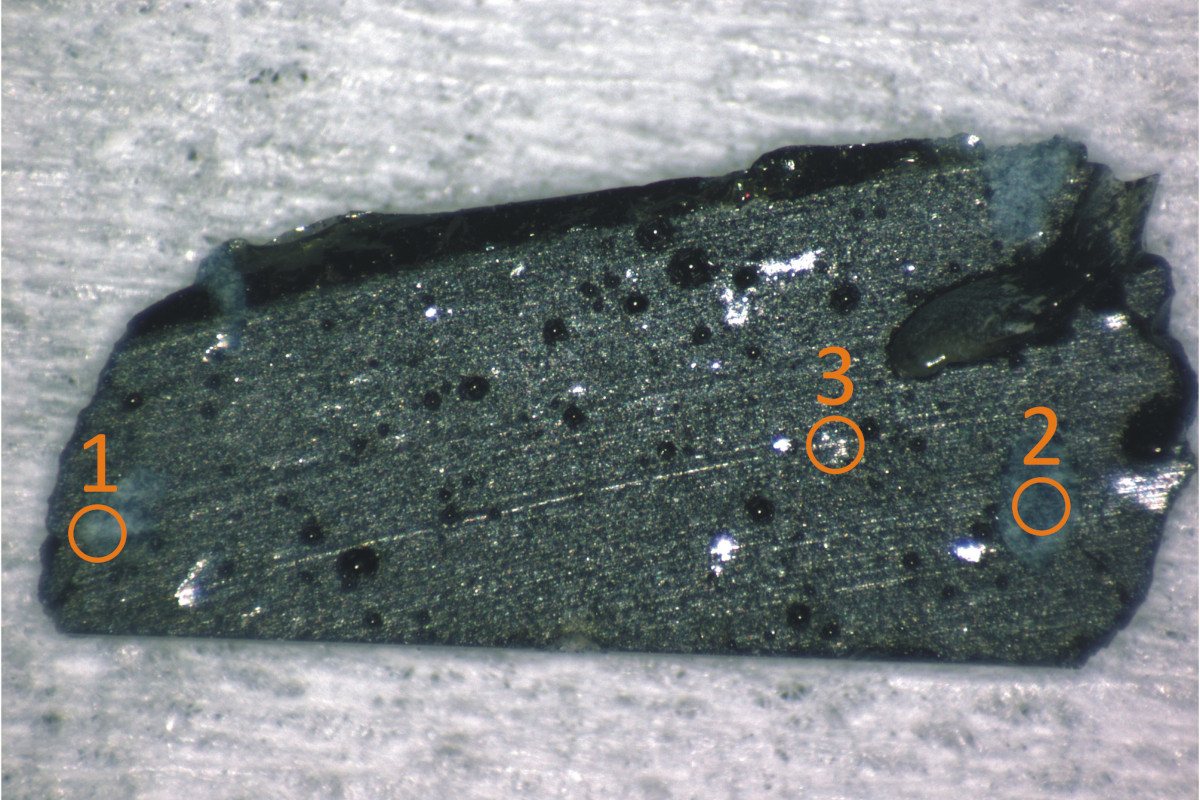
Like the surrounding corium, Chernobylite remains radioactive because it contains uranium and traps radioactive fission products produced during nuclear reactions.
And because it can trap these radioactive elements, this mineral can affect how easily such contaminants can move through the environment over time.
In 2020, researchers at the University of Sheffield succeeded in synthesising corium in a lab, complete with Chernobylite crystals, allowing them to study its properties in more detail.
By producing these materials under controlled conditions, scientists can study their structure and behaviour without handling highly radioactive samples from the reactor site.
Radioactive debris
Graphite played a crucial role in both the operation of the reactor and the disaster that followed.
The plant’s nuclear reactors used long, slender control rods made from several sections. The main part of each rod was made from boron carbide, a material that absorbs neutrons and slows the nuclear fission reaction.
Attached to the end was a section of graphite, a material that acts as a neutron moderator by slowing fast-moving neutrons and making fission more likely (in other words, to accelerate the reaction).
By raising or lowering these rods through the reactor’s fuel channels, operators could carefully control the rate of the nuclear reaction within safe limits.
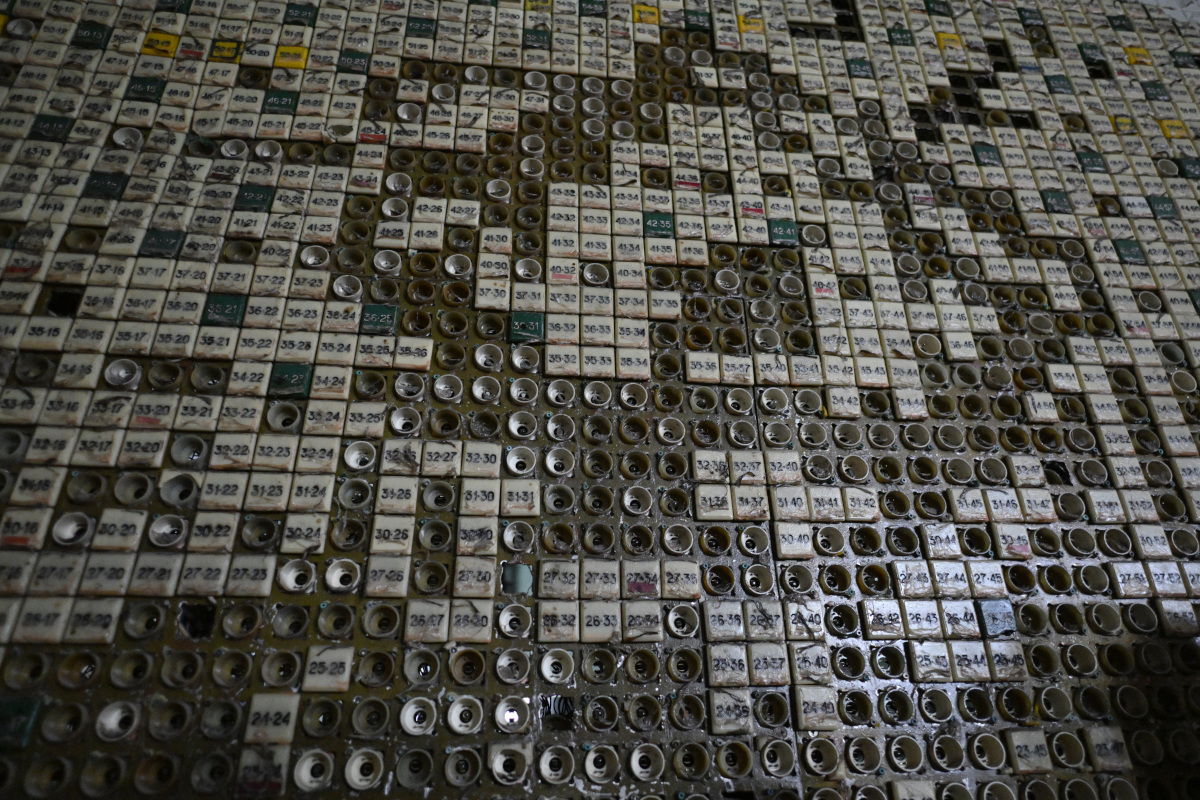
But when a routine safety test on the power plant’s reactor 4 went awry, the graphite sections of all the control rods got locked in place simultaneously, leading to a nuclear chain reaction that ultimately caused the reactor to explode.
As air rushed into the damaged reactor, the red-hot graphite rods may have helped ignite a fire, which released large amounts of radioactive emissions into the atmosphere and triggered a second explosion.
The explosions sent chunks of radioactive graphite flying in all directions, contributing to the contamination of the surrounding area.
In the aftermath of the explosion, human volunteers known as ‘liquidators’ were sent back into this area and were tasked with clearing up the radioactive lumps of graphite.
Working in extremely hazardous conditions, they were exposed to high doses of radiation and many later died from radiation-related illnesses.
Radiation-induced luminescence
In the hours following the explosion, some locals reported witnessing a strange blue glow emanating from the ruins of the power plant.
Although eyewitness accounts are scarce, one possible explanation is a rare phenomenon known as Cherenkov radiation. This happens when a charged particle, such as an electron produced by radioactive decay, travels faster than light.
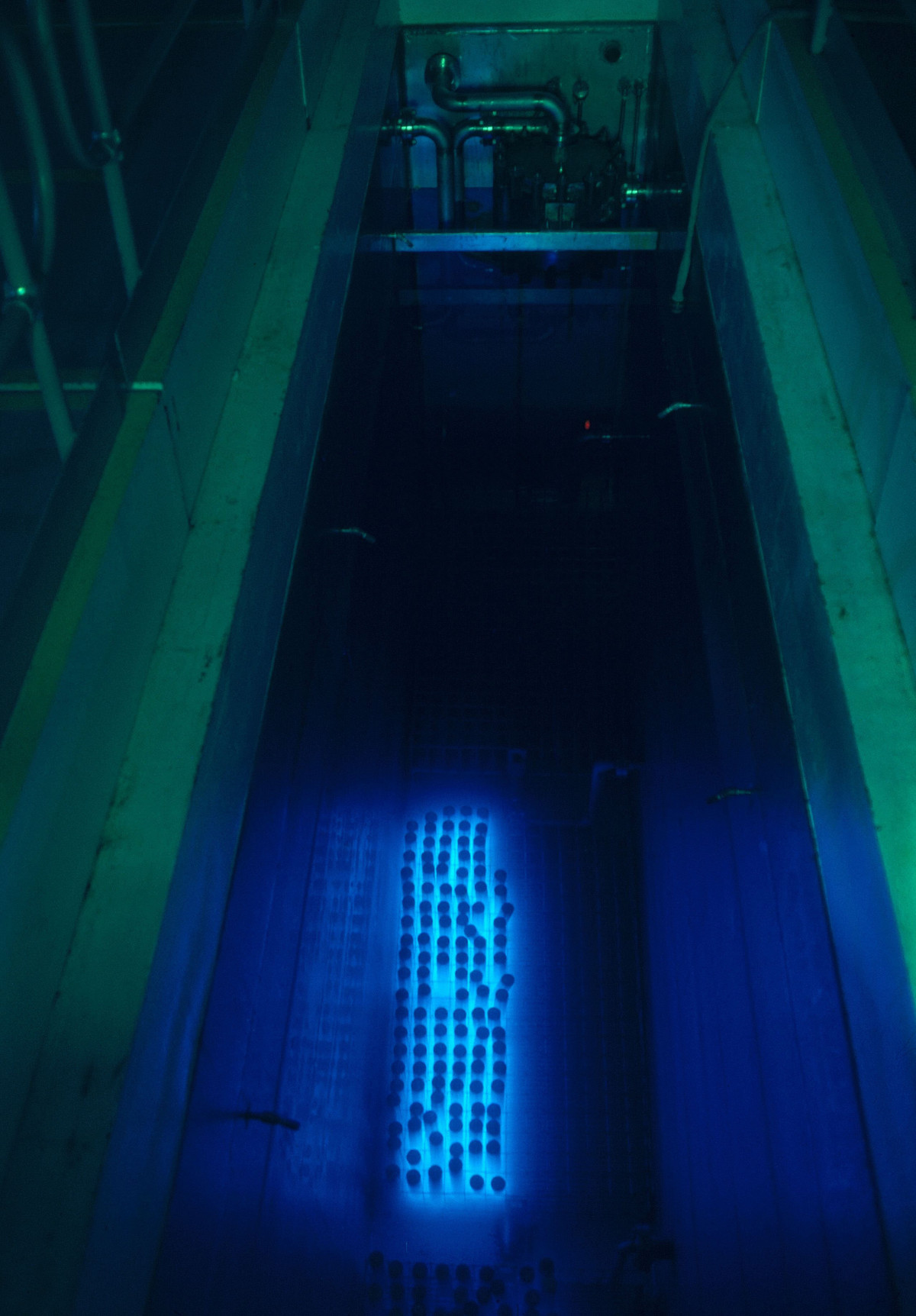
Although we think of the speed of light as a sort of maximum speed limit for the Universe, this limit applies to light travelling through a vacuum. When light passes through a substance, such as water or air, it slows light down a little bit.
This means that high-energy electrons produced inside a nuclear reactor can sometimes move faster than light travelling through the same material. When that happens, they produce a faint blue glow known as Cherenkov radiation.
This optical shockwave is similar to a sonic boom – the sharp cracking sound produced when an object moves through air faster than the speed of sound.
In the case of Cherenkov radiation, the disturbance is created by an electromagnetic field rather than air pressure.
The characteristic blue colour occurs because the radiation produced is strongest at shorter wavelengths, towards the blue end of the visible spectrum.
Cherenkov radiation is most commonly observed in underwater nuclear reactors, which have a characteristic blue glow. But it’s plausible that the exposed reactor core at Chernobyl also emitted some Cherenkov radiation immediately after the explosion.
If it did, it would have been an eer+546, faint light, barely visible to the naked eye.
Read more:
- Head to head: Fukushima vs Chernobyl
- Chernobyl: Has the area recovered since 1986's nuclear disaster?
Rebounding wildlife
One of the most surprising discoveries has been how quickly wildlife has rebounded within the Chernobyl Exclusion Zone (CEZ), a 2,600km² (1,004 sq mile) area surrounding the nuclear power plant that was evacuated following the disaster.
This land received some of the highest levels of radioactive contamination, and although limited tourism and scientific research are now permitted, public access is still restricted.
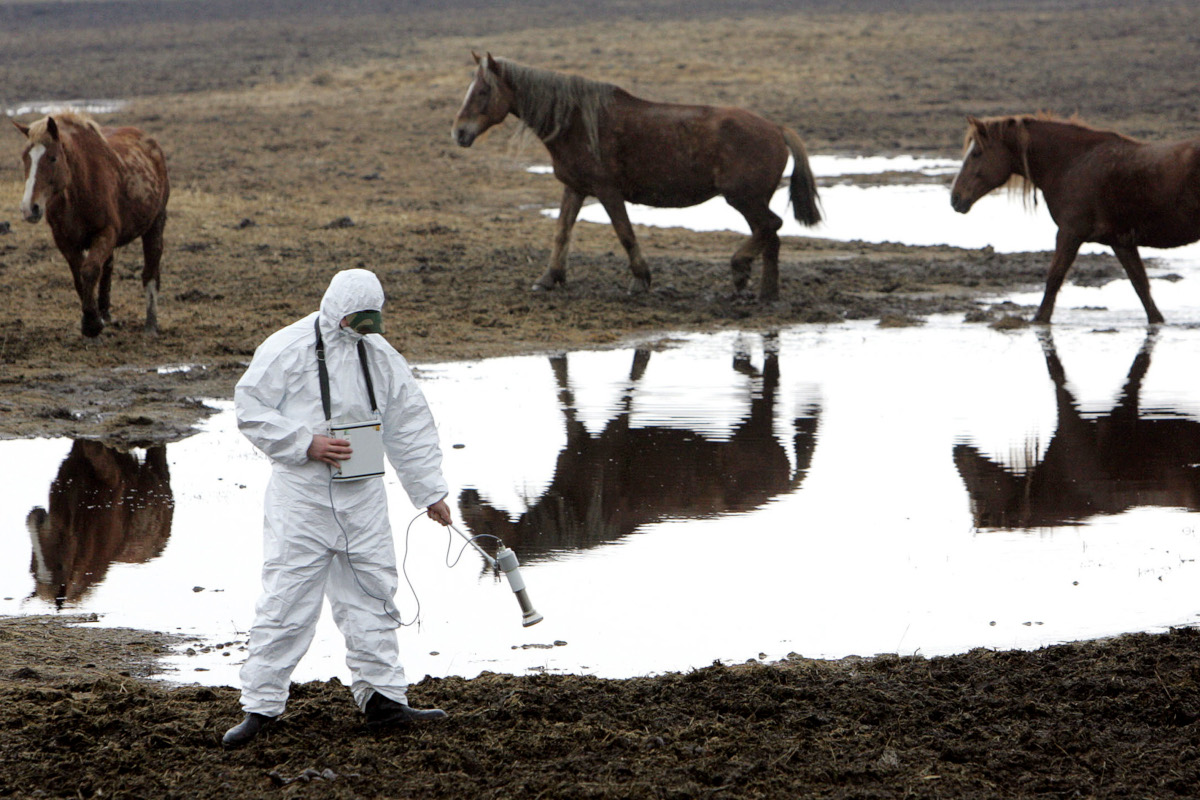
Immediately after the nuclear disaster, nature in the surrounding area showed signs of severe ecological collapse.
A pine forest just 4km (2.5 miles) from the power plant absorbed such a high dose of radiation that, within days of the meltdown, the needles on the trees turned reddish-orange and most of the trees died.
This area became known as the Red Forest, and it remains one of the most contaminated parts of the exclusion zone.
Mass deaths of small mammals, invertebrates and soil microorganisms were also reported in the most heavily affected areas. With fewer microbes available to break down organic matter, leaf litter began to accumulate on the forest floor rather than decomposing normally.
Many people assumed that the contaminated landscape would become an ecological wasteland for centuries. But scientists have discovered a more complicated picture. As the radiation has subsided, wildlife has returned.
The CEZ is now home to thriving populations of wolves, brown bears, bison, horses, beavers, deer, boar, moose and lynx.
Studies using camera traps, surveys and genetic analyses have revealed that large mammals in particular have recovered surprisingly well. In some cases, wildlife abundance in the CEZ is comparable to, or even higher than, nearby protected nature reserves, suggesting that the loss of human activity has been a powerful driver of ecosystem recovery.
In fact, a 2026 study found that species diversity was higher within the CEZ than in neighbouring nature reserves, highlighting the complex balance between radiation exposure and the effects of human disturbance.
Tanned frogs
It’s only been 40 years since the disaster at Chernobyl, but there are clear signs that some of the organisms living there have evolved traits that help them cope with high levels of radiation.
Perhaps the most conspicuous example is that frogs living in the exclusion zone are much darker than those living elsewhere in Ukraine or neighbouring countries.
A study of more than 200 Eastern tree frogs (Hyla orientalis) living in ponds within the CEZ found that they are 44 per cent darker, on average, than frogs living outside the zone.

The darkest frogs were found closest to areas that experienced the highest radiation levels immediately after the accident, suggesting that exposure to radiation may have driven natural selection for darker colouration.
The darker colour is caused by higher levels of melanin, a pigment that gives colour to skin, hair and eyes. In humans, melanin helps protect skin cells from damage caused by ultraviolet (UV) radiation by absorbing UV energy.
It’s the main determinant of skin colour in humans, and our bodies produce extra melanin when we are exposed to UV light, resulting in a suntan.
Melanin can also offer some protection against ionising radiation – the type released during a nuclear accident – and some of the creatures living in the CEZ have evolved to make use of this fact.
In the aftermath of the nuclear disaster, lighter-skinned frogs may have been more vulnerable to radiation damage and less likely to survive to reproduce.
As a result, frogs with naturally darker skin may have left behind more offspring, causing the population to shift towards darker-skinned frogs over successive generations.
This is a classic example of natural selection; evolution did not produce a new trait from scratch but instead was able to exploit existing variation to help the population rapidly adapt to a changed environment.
Radiation-eating fungi
Fungi have also made use of melanin’s protective properties to cope with life in Chernobyl. Across the exclusion zone, scientists have discovered dark, melanin-rich fungi growing in heavily contaminated soils.
Some melanised fungi have even been found colonising the walls and equipment inside the damaged Chernobyl nuclear power plant itself, where radiation levels remain elevated.
What’s even stranger is that some of these fungi do not just appear to tolerate radiation, they seem to be attracted to it.
When researchers exposed samples collected from Chernobyl to sources of ionising radiation in the laboratory, some species grew towards the radiation source, a behaviour known as ‘radiotropism’.
Further experiments found that several species of melanised fungi grew faster when exposed to ionising radiation, suggesting that melanin may play a role beyond simply protecting the cells from damage.
One hypothesis is that these fungi have evolved to use the radiation as their main source of energy, a process called ‘radiosynthesis’.
The idea is that melanin could act somewhat like chlorophyll in plants, absorbing energy and helping transfer electrons that drive chemical reactions.
Researchers have found that ionising radiation changes the chemical properties of melanin molecules, enabling them to transfer electrons more effectively.
However, whether this process provides fungi with a true energy source remains a mystery.
If we can understand how these fungi interact with radiation, they could have unexpected applications beyond Earth.
Melanised fungi have already been tested in space experiments, where researchers are investigating whether fungal material could one day be used as a lightweight, self-repairing radiation shield to protect astronauts travelling beyond Earth’s magnetic field.
Unlike traditional shielding materials, living fungal systems could potentially grow and repair themselves, meaning a small amount of biological material could be expanded when needed.
In 2018, researchers sent samples of the melanised fungus Cladosporium sphaerospermum – originally isolated from Chernobyl – to the International Space Station to test how well it could withstand the radiation environment of low Earth orbit.
Experiments have shown that layers of this fungus can reduce radiation exposure, with thicker layers providing greater protection.
Although more research is needed before fungal shielding could be used on crewed missions, they could one day help protect astronauts from the intense radiation hazards of deep-space travel.
Read more:
- 5 seriously strange ways wildlife is changing inside Chernobyl
- Animals return to site of Chernobyl nuclear disaster
Radiation-resistant wolves
Large mammals have much longer generation times than frogs or fungi, so they’ve had much less opportunity to evolve. Exactly how they are able to cope with the elevated levels of radiation is unclear.
However, researchers studying wolves and dogs living in the CEZ have uncovered some intriguing clues.
Researchers at Princeton University investigated whether chronic radiation exposure had affected the biology of Chernobyl wolves.
First, they attached collars equipped with GPS trackers and radiation dosimeters to eight wolves living within the CEZ, allowing them to measure both the animals’ movements and their radiation exposure.
They found that the wolves were exposed to radiation levels around 50 times higher than the recommended dose limit for humans, and around 250 times higher than wolves living in areas of normal background radiation in northern Belarus.
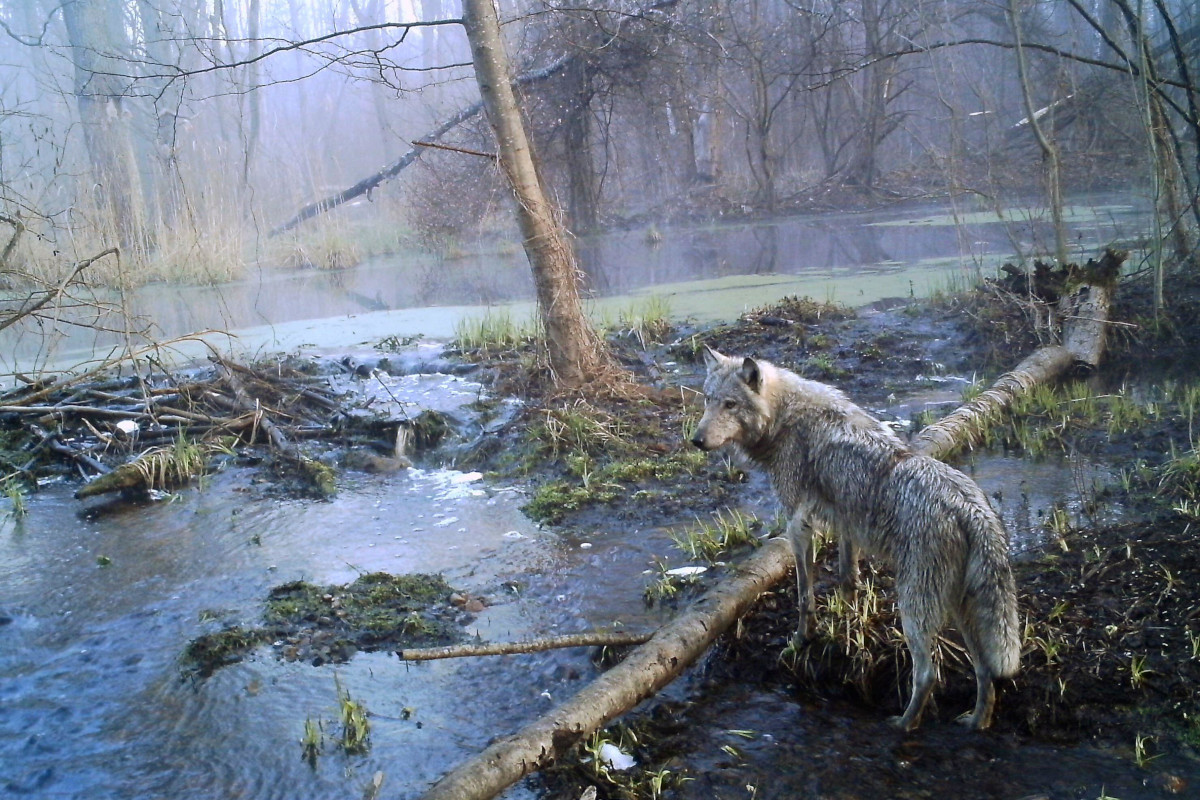
Next, the researchers collected blood samples from 11 CEZ wolves and compared them with wolves from Belarus.
They found differences in gene activity and changes in the composition of white blood cells, patterns that are consistent with long-term exposure to radiation.
The wolves also showed changes in genes involved in immune function and the body’s response to DNA damage – including genes linked to cancer resistance. However, there’s no evidence yet that the Chernobyl wolves are less susceptible to cancer.
Similar questions are being investigated for the stray dogs that live around the nuclear power plant.
A 2023 study analysed the DNA of more than 300 free-ranging dogs from the exclusion zone, revealing that these animals have formed genetically distinct populations after decades of isolation.
The researchers identified genetic differences that may reflect adaptation to the unusual conditions around Chernobyl, although it remains unclear how much of this variation is caused by radiation exposure itself.
Together, these studies highlight one of the biggest unanswered questions about Chernobyl’s wildlife.
Are these animals surviving because of the absence of humans, or are some species gradually evolving ways to cope with one of the most challenging environments on Earth?
What might the future hold for science at Chernobyl?
Although 40 years have passed since the devastating nuclear disaster, Chernobyl remains a place where science continues to uncover the unexpected.
Discoveries have already contributed to our understanding of chemistry, evolution and cell biology, and may even impact fields as diverse as cancer research and space travel.
As researchers continue to explore this extraordinary landscape, Chernobyl may still have many secrets left to reveal.
Read more: