
On a Monday evening in April 2026, five tornadoes touched down near Kansas City – including one powerful enough to tear through a swath of buildings in the town of Ottawa, Kansas.
Such twisters aren’t unusual for Kansas. But the US National Weather Service (NWS) office responsible for forecasting these extreme events seemed to have been caught off guard: the forecast issued that afternoon predicted no chance of tornadoes.
Understanding exactly why such a forecast fails is challenging.
But several missed or delayed weather balloon launches in the region that morning could have contributed to the faulty forecast – potentially linked to staffing shortages prompted by steep cuts by the Trump administration to US weather agencies.
In 2025, more than 1,000 staffers at the National Oceanic and Atmospheric Administration (NOAA) – including dozens of senior meteorologists at the NWS – were fired or accepted buyouts.
The administration has since tried to walk back the cuts in the face of public outcry, scrambling to rehire hundreds of staffers – and insisting, in the words of one NWS spokesperson, that “NOAA’s weather model performance shows no evidence of degradation”.
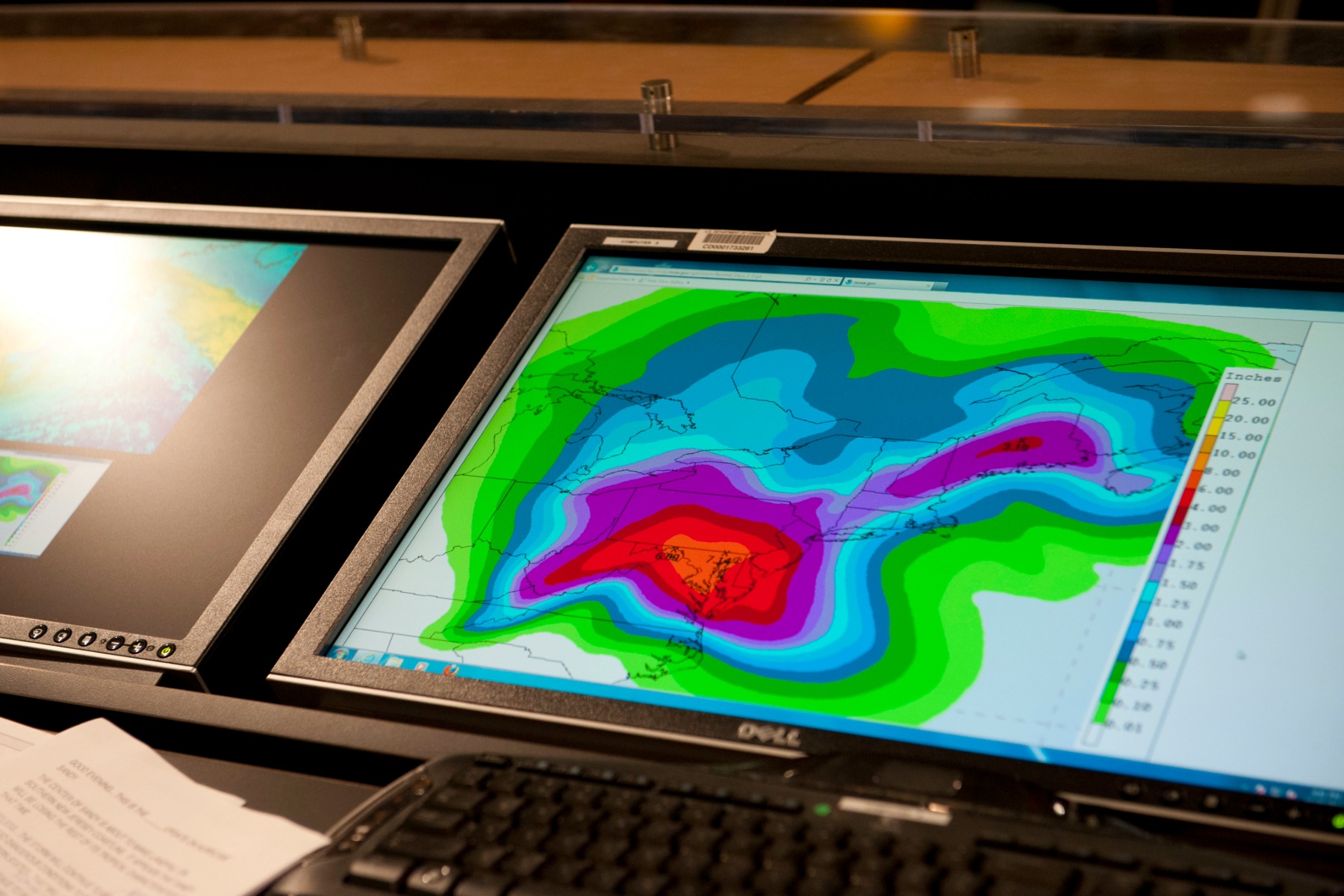
But outside meteorologists warn that a year on from the cuts, the weather service remains chronically understaffed at the worst possible time.
“Some of us who monitor severe weather forecasts closely have felt that the Storm Prediction Center has had more ‘less-than-perfect’ forecasts than normal,” says Prof William Gallus, a meteorologist at the University of Iowa.
That’s a bigger problem than getting caught in the rain: accurate forecasts are a critical part of minimising damages from extreme events, many of which are becoming more common or intense with climate change, from the rapid intensification of hurricanes to record-breaking heatwaves.
Complicating matters further is a possible ‘super El Niño’ weather system brewing in the Pacific, which could bring flooding to the West Coast and push temperatures higher around the world.
“Kansans should not have to wonder whether the systems designed to protect them are fully operational when severe weather strikes,” said Sharice Davids, a Democrat congresswoman who represents the area of the state hit by tornadoes, in a statement.
In April, her office sent a letter to the Trump administration demanding information on why the weather balloons hadn’t been launched and whether that contributed to the flawed forecast. A month later, they haven’t heard back.
Gathering clouds
On paper, the weather enterprise might seem to be recovering. Congress largely ignored the administration’s requested funding cuts in its final budget, and a hiring drive has seen 280 positions filled since recruitment restarted, according to the NWS spokesperson.
But while that represents a record hiring surge, it still leaves the agency with hundreds fewer staffers than it had before the cuts.
And even if the agency can fully restore its staff, the senior meteorologists and other experienced staff who left can’t be replaced overnight, says Prof Brian Tang, a meteorologist at the University at Albany in New York.
“There is a lot of institutional experience and knowledge that was lost.”
Craig McLean, a former acting chief scientist at NOAA, agrees. “With all these hires being made, it’s been clear evidence that the reckless actions of the Trump administration did damage to the agency,” he tells BBC Science Focus.
Collectively, the missing staff represent thousands of years of experience in weather forecasting, climate modelling, and other responsibilities of NOAA. “When you lose 27,000 years of experience, you simply do not have the same agency,” says McLean.
To be clear, researchers don’t expect the disruptions to completely undermine the US weather enterprise. “It’s not that we’re suddenly going into the dark ages here,” says Tang. He expects existing weather models will continue to provide generally reliable forecasts around their current accuracy.
Where staffing cuts could have a more lasting impact is on the pace of improvements to weather forecasting accuracy, he says.
That depends on research conducted at academic labs as well as labs run by NOAA, several of which saw major cuts last year, notably at the Geophysical Fluid Dynamics Laboratory in Princeton, New Jersey.
Other researchers have been alarmed by the administration’s plan to “dismantle” the National Center for Atmospheric Research in Colorado, a hub for climate and weather research.
The coalition of more than 100 universities that manages the centre is currently suing the Trump administration to prevent this from happening.
Read more:
- A global food crisis is nearing – and the warning signs are buried beneath your feet
- Deadly fungal storms are now sweeping the US – and spreading a disease few doctors recognise
- The most powerful climate phenomenon on record could hit the US in 2026, experts warn
Into the storm
Adding to the uncertainty about the future of US weather forecasting is AI. The past few years have seen a profusion of AI weather forecasting models, some of which outperform conventional weather models on key benchmarks.
Traditional forecasting works like a giant physics experiment – supercomputers crunch through millions of equations that describe how the atmosphere behaves, simulating the future state of the weather step by step.
AI models take a completely different approach: rather than simulating the atmosphere, they are trained on decades of past weather data, learning to spot the patterns that tend to precede certain conditions.
The payoff is efficiency – some AI models can run on a laptop rather than a supercomputer. In theory, this could improve forecast accuracy and speed, as well as enable more locally tailored information.
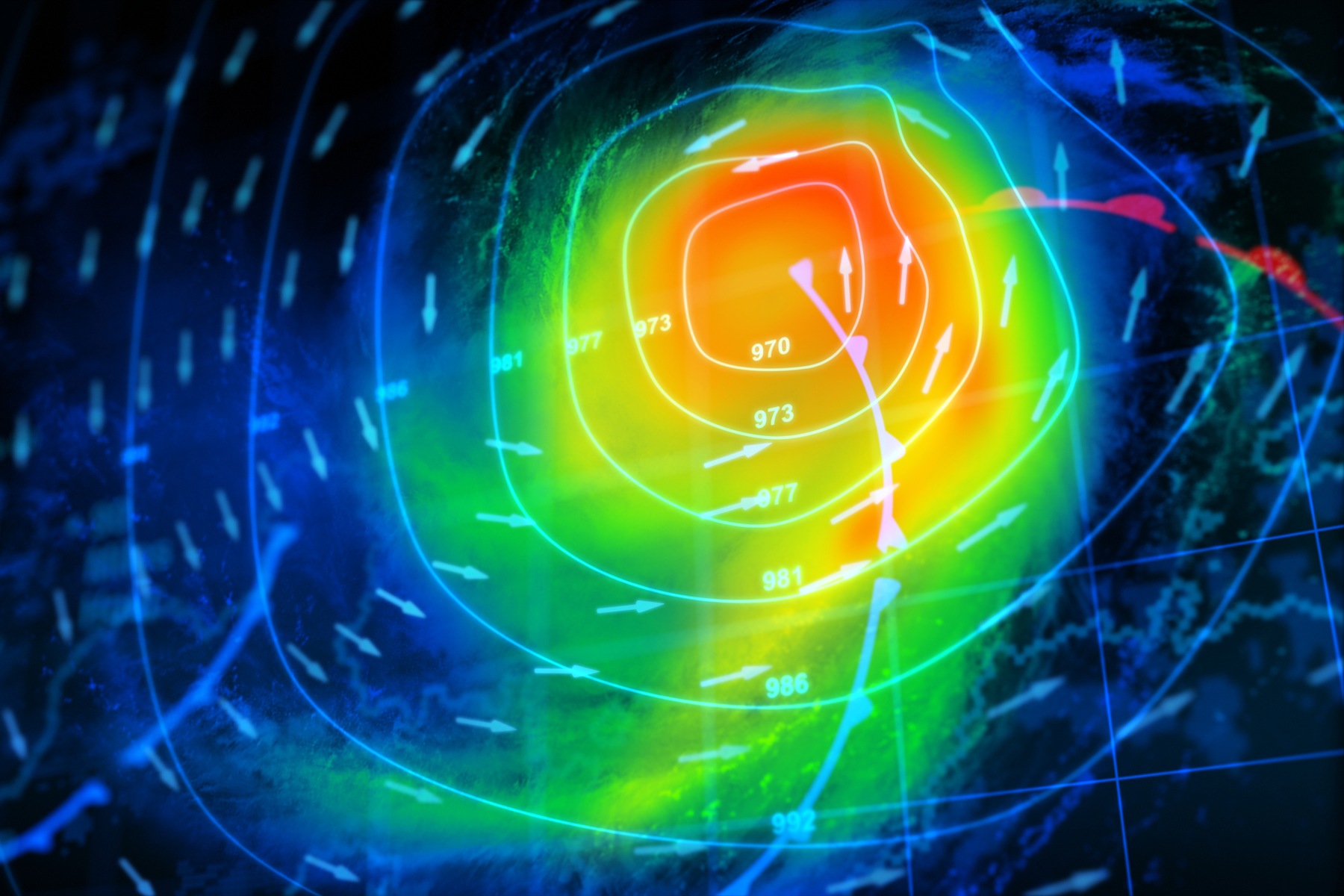
The Trump administration has made it a priority for NOAA to incorporate these advances into forecasting pipelines. But officials insist the technology is only intended to complement existing tools.
NOAA’s new AI models are “an addition to our stable of weather models, not a replacement,” a spokesperson told BBC Science Focus.
However, the possibility that the NWS could use AI tools to reduce human involvement in forecasts has raised worries about the quality of future reports.
“The humans do a lot, even when it comes to just the raw data side of things,” says Dr Jeffrey Shrader, a researcher who studies weather forecasting at Columbia University in New York.
In his current research, he has found the forecasts compiled by human meteorologists are, on average, 20 per cent more accurate than forecasts that come directly out of the statistical models, something he attributes to local knowledge of weather in a particular place.
A forecaster who has worked the same patch for years will know, for instance, how a local valley funnels wind, or where a model routinely underestimates rainfall – nuances no algorithm has yet learned to replicate.
“An experienced meteorologist can actually add a ton of value,” says Shrader. That contribution, he claims, goes far beyond simply interpreting the forecast itself.
The relationships and trust meteorologists build within a community – particularly with emergency services and local officials – can be just as important for keeping people safe as the forecast they deliver.
Importantly, AI models to date are also limited when it comes to the most extreme weather. This is because statistically based models are only reliable at forecasting events that occur within their dataset.
In May this year, a group of researchers in Germany and Switzerland found that the AI forecasts were less accurate than the physics-based model at predicting record-breaking events. The AI systems consistently underestimated record-breaking heat and overestimated record-breaking cold.
Crucially, their performance deteriorated further the more extreme the event became.
Inaccurate forecasts have always posed a risk. But there is evidence to suggest the risk is growing with extremes heightened by climate change.
Researchers have found that a forecast that underestimates the temperature by just one degree can increase mortality during a heatwave (there’s a similar effect from underestimating a cold snap).
“Any algorithmic forecast can end up being quite biased, quite far from the truth, if there’s no human involved,” says Shrader.
Further, AI models cannot do away with the need for basic weather observations. If weather balloons don’t get launched or hurricane hunter flights don’t get flown, the best AI model won’t help.
“We can’t just have the technology,” says Tang. “We need the people.”
Read more:
