
Have you heard the one about the monkey and the Yorkshire pudding? In 2024, Honshu, the Japanese macaque, made global headlines when he escaped from a wildlife park in the Scottish highlands.
The monkey went on the run for five days before finally being found in a local garden, having helped himself to peanuts and a stale Yorkshire pudding that had been put out for the birds.
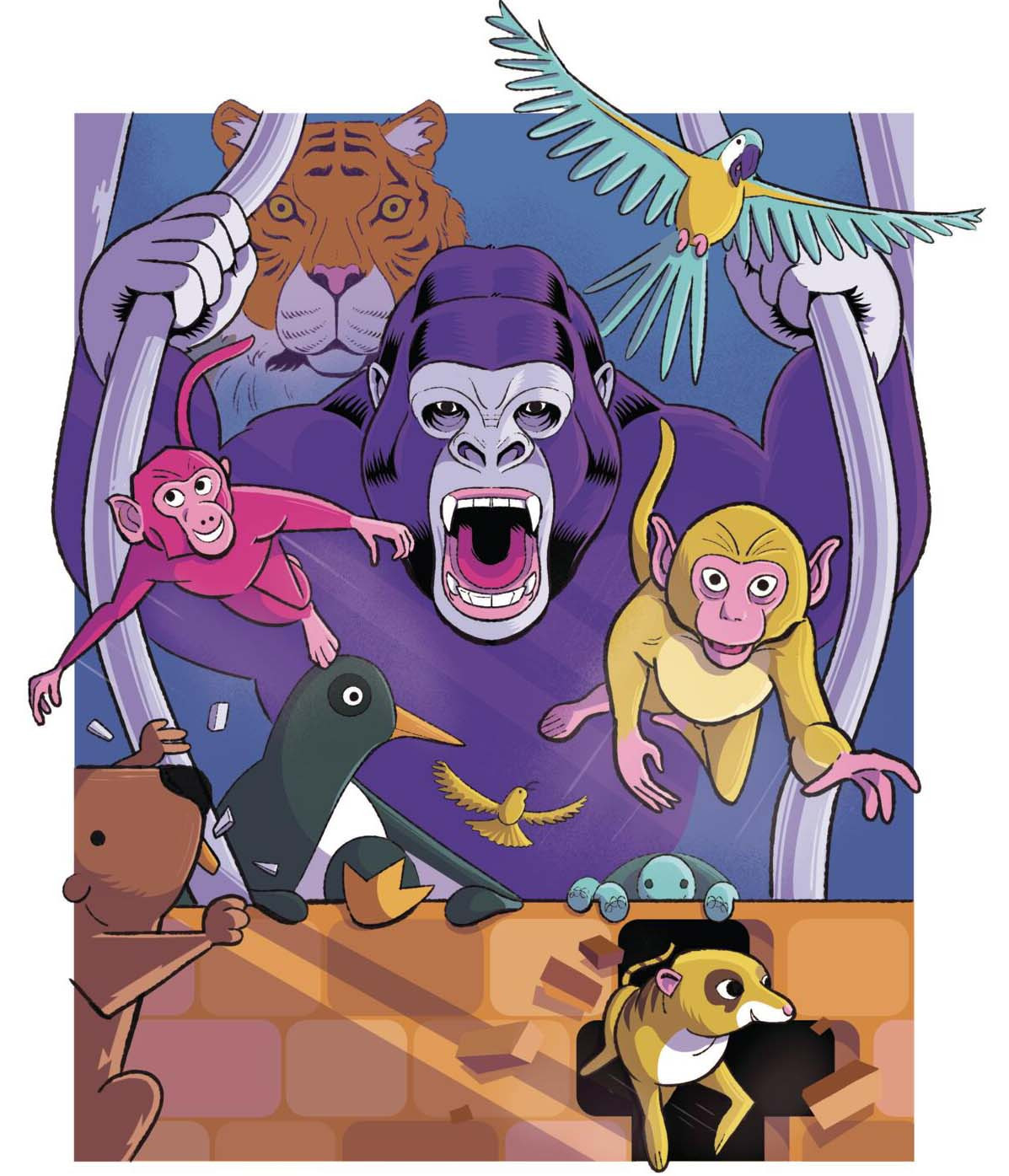
Primates like Honshu are the most likely animals to flee captivity, according to a recent analysis by The Washington Post, which looked at news reports from around the world covering the past 130 years.
They counted 134 escapes, 17 of which were by monkeys and apes (one escape doesn’t necessarily mean one animal. In 2024, for example, 43 rhesus macaques broke out of a research facility in South Carolina, US).
Note that these are full escapes like Honshu’s, where the animal leaves the grounds of the zoo or park, not just its cage or enclosure.
It perhaps isn’t surprising that primates top the list, given their intelligence and dexterity. Other frequent escapees are felines (16 escapes), bovines (including cattle, buffalo and bison, 15 escapes) and birds (14 escapes).
Birds can be especially difficult to recapture. A 2015 analysis of Australian zoo records from 1870 to 2010 found that birds were the most frequent escapees, accounting for almost half of all vertebrate breakouts – and they also had the lowest ‘retrieval rate’.
Probably the most famous avian Houdini is a flamingo called Pink Floyd, who flew from its enclosure in Sedgwick County Zoo, Kansas in 2005, and quickly adapted to life in the wild. Its most recent confirmed sighting was in 2023 on the Texas coast, more than 500 miles from its starting point.
Zoo escapes often capture the public imagination – we all enjoy an underdog story. The attempts of a plucky animal to find freedom are essentially nature’s version of the classic 1994 film The Shawshank Redemption.
There’s also the frisson of seeing an exotic animal in mundane surroundings, like the camel from Kansas that fled its zoo in 2021 and led police on a chase across a golf course and highway before being caught.
Of course, animal escapes aren’t as fun as reports would often have us believe. The animal is likely to be in a distressed state and at risk of injury or death, and it might pose a risk to the local ecosystem if it’s a non-native, ‘alien’ species.
Escaped animals will often be sedated using tranquilliser darts, but if a dangerous animal enters a public space, it may be shot.
Zoos plan for these types of emergencies: in the UK, for example, government guidance requires that zoos carry out at least four escape drills per year, at least two of which must simulate a dangerous animal escape.
Thankfully, Honshu was safely recaptured and moved to Edinburgh Zoo for a fresh start, where he reportedly assumed alpha male status among his troop. Hopefully, his new home came with a lifetime supply of Yorkshire puddings.
This article is an answer to the question (asked by Chloe Reynolds, Bath) 'Which animal is most likely to escape from the zoo?'
To submit your questions, email us at questions@sciencefocus.com, or message our Facebook, X, or Instagram pages (don't forget to include your name and location).
Check out our ultimate fun facts page for more mind-blowing science
Read more:
