
Sales of dairy cheese are booming, with a huge demand for all things protein and increasing numbers of artisan cheese fanatics.
But plant-based vegan cheeses are becoming less popular because many are labelled as ultra-processed, with ingredients such as starches, gums, oils, colourings and flavourings.
However, some people still prefer a vegan alternative, concerned that cows release large volumes of the greenhouse gas methane to the atmosphere as they munch grass.
It’s very difficult to replicate the complex flavours and textures of traditional cheeses, and therefore most dairy-free products are imitations of mild cheddar, mozzarella and soft cheese.
Vegan cheeses often mainly comprise oil and starch with low to no levels of protein. Higher protein versions contain nuts or legumes such as lentils and chickpeas.
Some companies have found ways to use genetically engineered yeast, bacteria or fungi to produce copies of the casein proteins found in cow’s milk.
These proteins self-assemble to form tiny spherical structures called micelles, which play a key role in cheese’s structure and stretchiness. The non-dairy caseins can be used first to make milk and then cheese.
Vegan cheeses generally need very high concentrations of fat to create a product that can be sliced and melted. Coconut oil and palm oil are the most common types, both of which contain high levels of saturated fat.
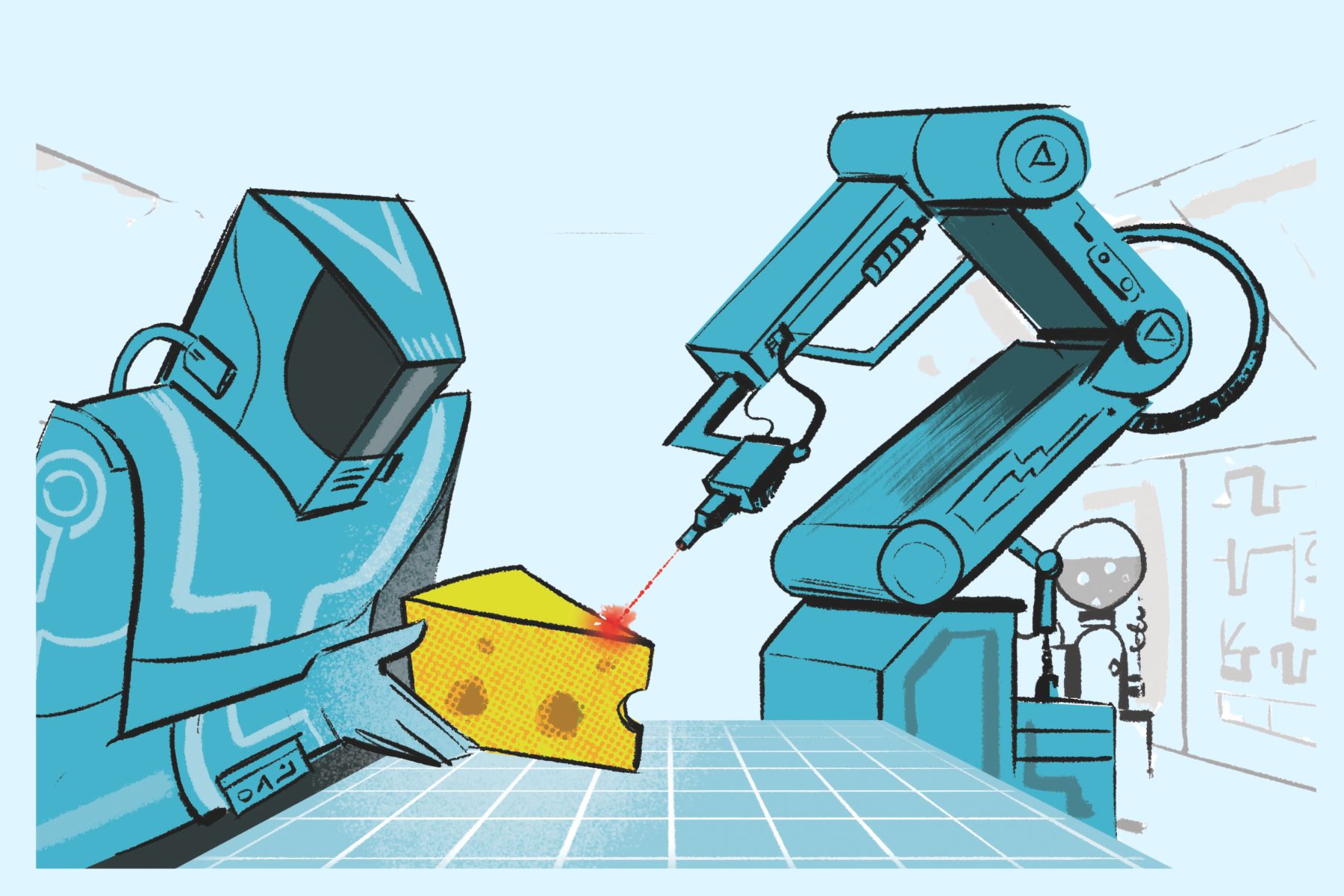
Scientists continue to innovate to create better-tasting, healthier vegan cheeses. A team at Heriot-Watt University in Edinburgh recently developed a way to create a meltable product using unsaturated sunflower oil or rapeseed oil.
They add molecules called oleogelators, which include waxes or proteins, to liquid oil to create a three-dimensional gel structure that behaves like a solid fat and is better at oozily melting than cheeses formed from coconut or palm oil.
In another recent development, scientists at the University of Arkansas, US, reported that waste products from rice milling could be good for making protein-packed vegan cheese.
They analysed proteins from brown rice, broken kernels and rice bran before combining them with coconut oil and corn starch to make a cheese with around 12 per cent protein.
Each protein fraction has different characteristics. In tests, cheese from brown rice protein had a firmer texture, whereas rice kernel proteins gave the most meltable cheese.
Elsewhere, microalgae, tiny organisms found in water, offer a tangy alternative. Microalgae can grow in big vats called bioreactors, fuelled by light and carbon dioxide.
One option is to make a microalgae protein flour and homogenise it with water to make a kind of milk.
The microalgae are an excellent source of amino acids, fatty acids, vitamins, minerals and antioxidants. Products made with them are reported to have a satisfyingly savoury taste known as umami.
So, while dairy cheese makers will always provide premium products for aficionados, vegan alternatives continue to get healthier and more like the real thing.
This article is an answer to the question (asked by Wendy Copsey, Lichfield) 'What is the future of cheese?'
To submit your questions, email us at questions@sciencefocus.com, or message our Facebook, X, or Instagram pages (don't forget to include your name and location).
Check out our ultimate fun facts page for more mind-blowing science
Read more:
