
The terrorist attacks in the US on 11 September 2001 were the deadliest in history, with an official death toll of 2,977 people (not including the 19 terrorists).
Four commercial airliners were hijacked by al-Qaeda. Two were crashed into the Twin Towers of the World Trade Center in New York City, one into the Pentagon building in Washington DC, and the fourth – most likely destined for the US Capitol building in Washington DC – into a field in Pennsylvania after the passengers fought back.
Most of the victims (2,606) were ground casualties at the Twin Towers site. There were also 125 ground casualties at the Pentagon and 246 casualties (crew and passengers) aboard the four aircraft.
However, the actual toll is much higher.
In the 24 years since the attacks, tens of thousands of people have developed health conditions related to 9/11, particularly those who spent time in Lower Manhattan in the hours, days and weeks following the Twin Towers attack.
The New York City Fire Department, for example, lost 343 members on the day itself, but over 370 members from 9/11-related illnesses in the years since.
Toxic dust and an invisible battlefield
The collapse of the Twin Towers pulverised the buildings and everything in them, releasing huge clouds of dust and smoke that didn’t fully disperse for months.
Residents, commuters, students and rescue, recovery and cleanup workers in the area were breathing in substances including concrete, glass, silica, asbestos, lead and jet fuel, as well as fire-related chemicals such as dioxins and polycyclic aromatic hydrocarbons. Most of these substances are toxic or carcinogenic.
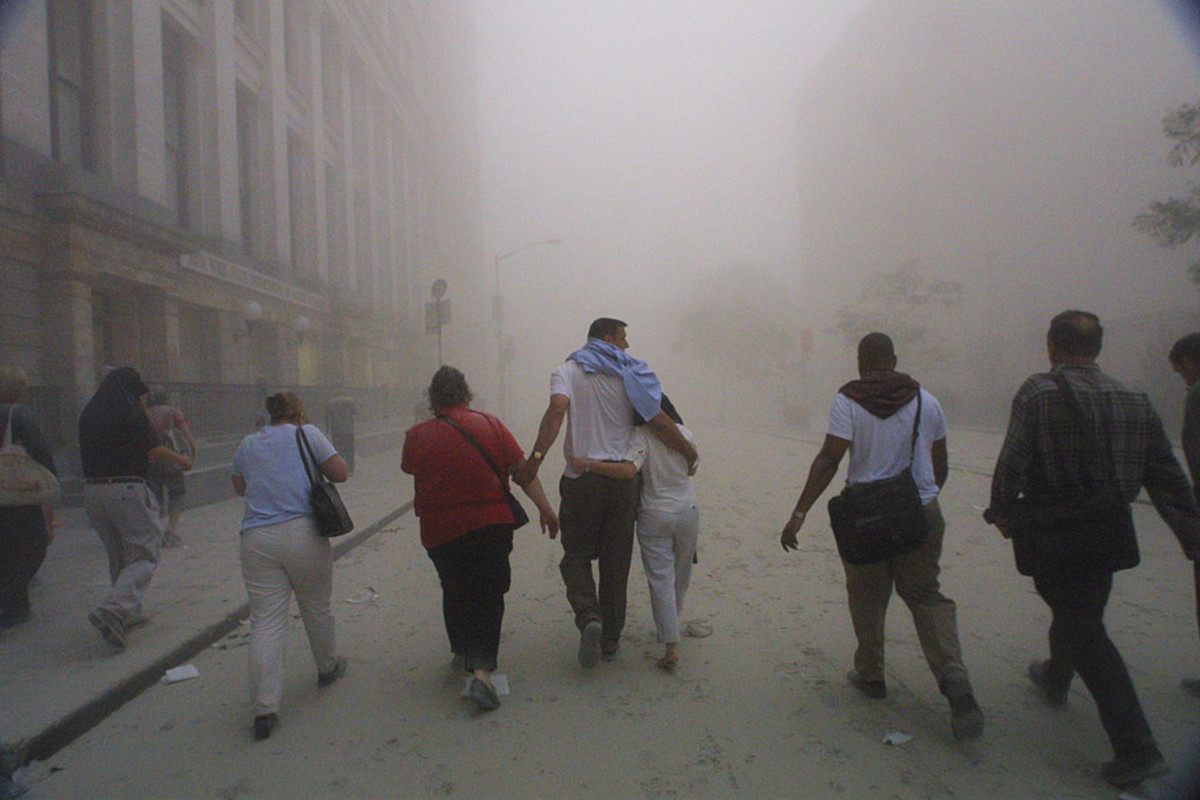
According to the US Centers for Disease Control and Prevention (CDC), around 400,000 people were exposed to toxic contaminants, risk of injury and high stress levels following the attacks.
Since 2011, the CDC’s World Trade Center (WTC) Health Program has been providing medical monitoring and treatment to 9/11 responders and survivors.
Over 136,000 people are currently enrolled in the program, around 90,000 of whom have a diagnosed 9/11-related health condition.
A rising wave of illness decades later
Diagnosed conditions include a range of cancers (non-melanoma skin cancer, prostate cancer and breast cancer are the most common); respiratory conditions such as asthma and chronic obstructive pulmonary disease; chronic rhinosinusitis (inflammation of the nasal sinuses); and post-traumatic stress disorder.
There’s also evidence that NYC firefighters who were exposed to the dust have unusually high rates of sarcoidosis – a rare inflammatory disease that causes lumps to develop in the body’s organs.
There is no exact figure for deaths from 9/11-related illnesses. As of March 2024, 6,897 members of the WTC Health Program had died, but this figure includes all causes of death, not just those related to 9/11.
Sadly, the health impacts of 9/11 will continue to rise, as some cancers can take decades to become detectable after initial exposure to a carcinogen (the cancer’s ‘latency period’).
Mesothelioma, for example – which is linked to asbestos exposure – has an average latency period of around 30 years, leading some experts to forewarn of a significant rise in this type of cancer among 9/11 responders and survivors.
This article is an answer to the question (asked by Lewis Miller, Pennsylvania) 'Will we ever know how many people died in 9/11?'
To submit your questions, email us at questions@sciencefocus.com, or message our Facebook, X, or Instagram pages (don't forget to include your name and location).
Check out our ultimate fun facts page for more mind-blowing science
Read more:
