
If you’ve been following space science for the past few years, the headline might feel familiar: scientists have found the molecular building blocks of DNA in an asteroid. Again. And that’s precisely the point.
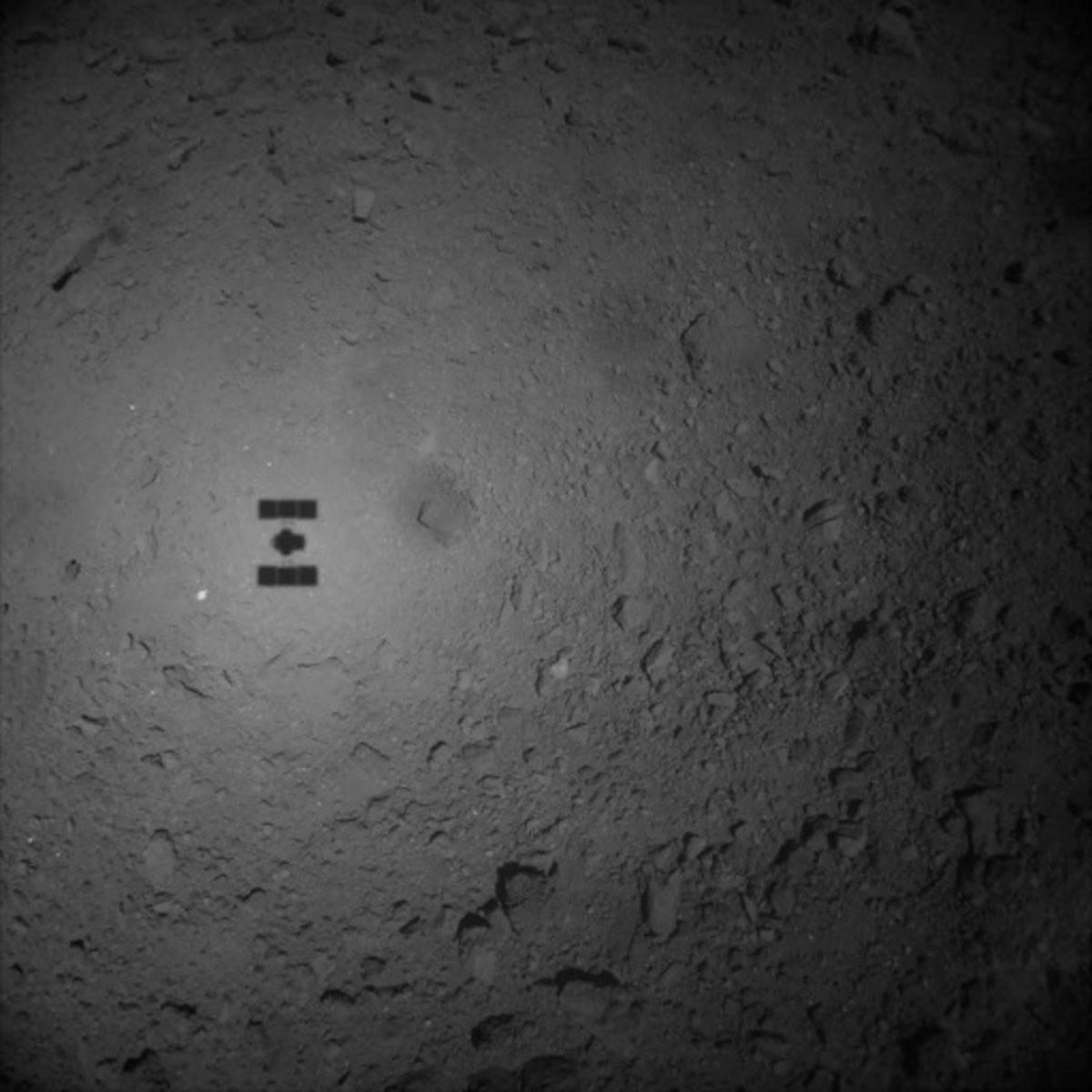
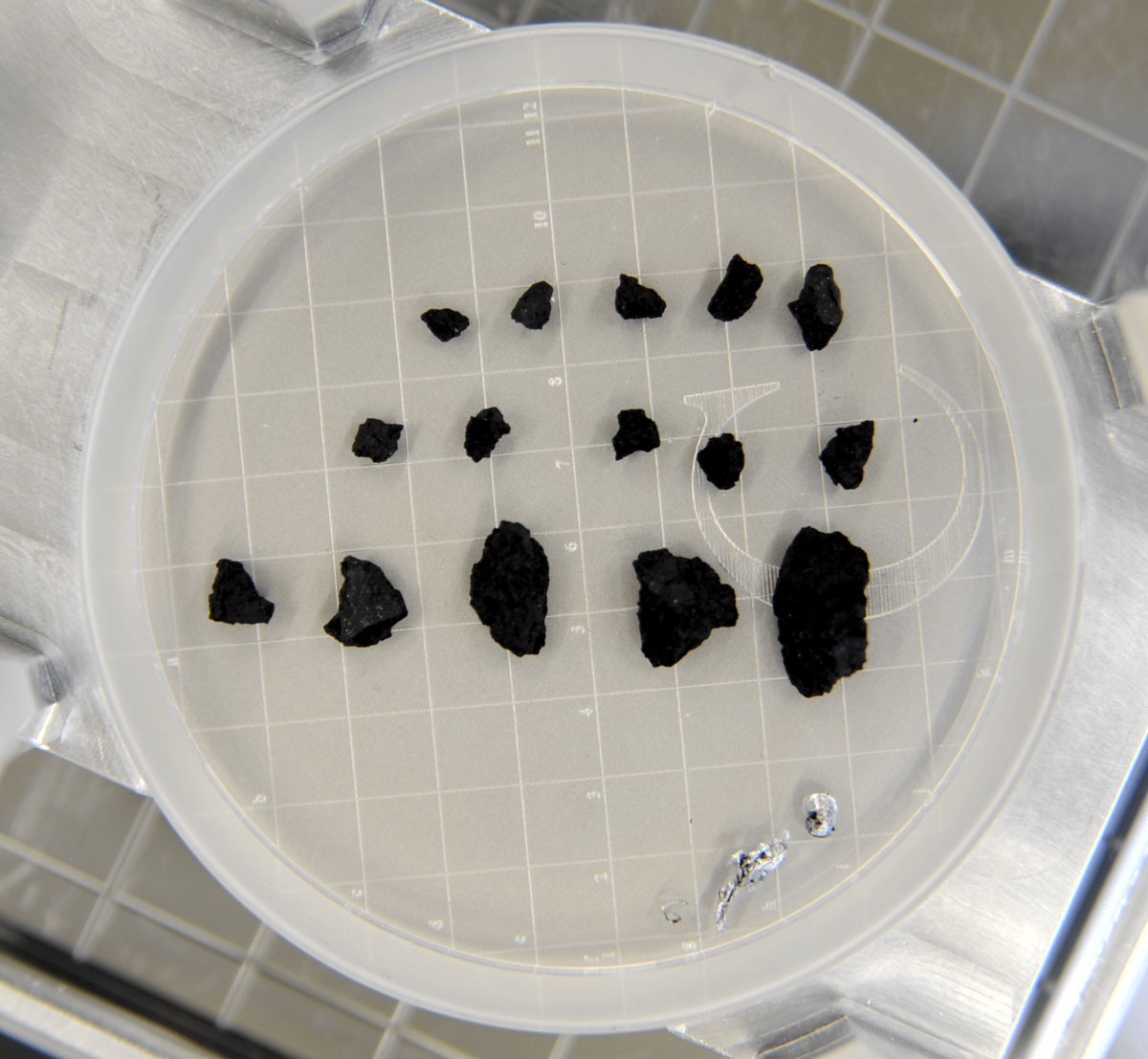
The latest discovery comes from Ryugu, a carbon-rich near-Earth asteroid visited by JAXA’s Hayabusa2 spacecraft, which returned samples to Earth in 2020.
A recent study published in Nature Astronomy confirms that all five canonical nucleobases – the molecular ‘letters’ that spell out genetic information in DNA and RNA – are present in those samples.
It’s a result that, taken alongside similar findings from asteroid Bennu, the Murchison meteorite, and others, is beginning to look less like a series of surprising discoveries and more like a pattern with big implications.
The letters of life, written in rock
Nucleobases are nitrogen-containing molecules that carry genetic information. The five canonical ones – adenine, guanine, cytosine, thymine and uracil – pair up along the backbone of DNA and RNA to encode the instructions for life as we know it. Without them, there is no genetic code, no evolution and no life as we know it.
Finding them in an asteroid doesn’t mean the asteroid was alive. But it does mean that chemistry capable of producing life’s most essential ingredients appears to operate naturally in space, without any biological help – a process known as abiotic synthesis.
“The key takeaway is that nucleobases – the molecules used in genetic material – can form naturally in primitive asteroids and may be widespread in the Solar System,” says Dr Toshiki Koga, a postdoctoral researcher at the Japan Agency for Marine-Earth Science and Technology (JAMSTEC) and lead author of the study.
Earlier detections of life’s building blocks in meteorites that fall to Earth have always had a caveat looming large: they could easily pick up contamination from terrestrial biology during their descent or after landing.
A rock sitting in a field, for example, is going to encounter organic molecules from Earth-life. How do you rule that out?
The answer is to go to the asteroid directly. Hayabusa2 collected its samples in space and sealed them before returning to Earth, where they were handled in dedicated cleanroom facilities under an inert gas atmosphere.
“The samples were collected in space and sealed to prevent exposure to Earth’s environment,” says Koga. Every step of the analytical process was carried out under strict contamination controls.
NASA’s OSIRIS-REx mission did the same for asteroid Bennu, returning samples in 2023 – and those, too, contained all five nucleobases.
Ratios in the rock
What makes the new Ryugu study more than a confirmation of expected results is what the researchers found when they started comparing asteroids.
Different space rocks contain different ratios of the two classes of nucleobase: purines (adenine and guanine, which have a two-ring structure) and pyrimidines (cytosine, thymine and uracil, which have a simpler single-ring structure).
Murchison is enriched in purines; Bennu leans heavily toward pyrimidines; Ryugu sits somewhere in between.
When the team looked for an explanation, they found a strong correlation between the purine-to-pyrimidine ratio and the amount of ammonia present in each sample.
The more ammonia, the more pyrimidines. This points toward a shared but environmentally sensitive formation pathway – the nucleobases in these asteroids likely formed through similar chemistry, but the specific conditions on each parent body shaped the outcome.
“By comparing nucleobase compositions across Ryugu, Bennu and meteorites, we identified evidence for previously unknown formation mechanisms,” says Koga, adding that laboratory experiments are now underway to investigate further.
The beginnings of life
For Kliti Grice, a professor of geochemistry at Curtin University who was not involved in the research, the accumulating evidence demands a shift in how we frame the origin of life entirely.
“The key takeaway is that life didn’t start from scratch on Earth,” she says. “The molecules that make up life – like nucleobases – were probably already forming in space and were likely delivered to Earth very early on.”
That reframes the central question of origins-of-life research. Rather than asking how life somehow conjured its essential chemistry from nothing on the young Earth, we should be asking how our planet took a pre-existing molecular toolkit and organised it into something that could replicate and evolve.
Earth, in this view, was less a chemistry lab and more an assembly line.
The ingredients required to produce nucleobases – carbon, nitrogen, water, radiation – are not exotic. They are among the most common materials in the Universe.
The processes operating in molecular clouds and primitive asteroids are not quirks of our particular solar system but rather standard features of how planets frequently form.
“The ingredients are common throughout the Universe, and the processes we’re talking about are fundamental to how planets form,” says Grice.
“There’s no reason to think this chemistry is unique to our Solar System.”
If the molecular groundwork for life tends to be laid wherever planets assemble, then the question of life’s prevalence across the cosmos shifts from whether the ingredients exist elsewhere, to whether the right conditions ever arise to use them.
However, it’s worth being clear about what nucleobases are not. They are not even DNA, let alone life itself. Getting from a nucleobase to a self-replicating molecule capable of Darwinian evolution requires sugars, phosphates, water and likely an enormous amount of luck.
It’s also worth noting that some molecules delivered by asteroids would be destroyed by the heat of atmospheric entry, meaning they might never have reached sufficient concentration to do anything useful.
But the picture emerging from Ryugu, Bennu and a growing catalogue of asteroid and meteorite analyses is striking nonetheless.
Some 4.6 billion years ago, as the Solar System was still forming, the raw ingredients of genetics were already being synthesised in the rocks drifting between the planets.
How exactly they were put together – and whether that could happen anywhere else – is still the biggest open question in science.
What we can now say with increasing confidence is that the ingredients were never in short supply.
Read more:
- We finally know how life on Earth started, staggering new asteroid discovery suggests
- Our chances of finding alien life just skyrocketed. Here’s why
- Scientists are now seriously asking if humans were seeded by aliens. Here's why
