
“Build a better mousetrap and the world will beat a path to your door.” The phrase, often attributed to the American writer Ralph Waldo Emerson, dates back to 1855 and conveys the idea that big rewards can come from innovation, especially when that innovation results in a better product.
The desire for better products – and the fortunes that can come with them – is the driving force behind the emerging in-space manufacturing industry.
The people in this pioneering enterprise believe that there are specific products that can be made in space and that, due to the unique conditions outside our atmosphere, those products can be made better than the equivalents made here on Earth.
They’re also convinced that the rewards for this innovation could be big. Very big.
And they might be right, because the products that could be most improved by being made in space are the sort of things that are as vital to everyday life today as mousetraps were in the 19th century: computer chips and medicines.
Space-made products may start appearing sooner than you think too.
According to Andrew Bacon, chief technology officer of the UK-based space manufacturing company Space Forge, we could be buying products that have been manufactured in space, either in part or entirely, within 10 years.
“It might even be sooner than that,” he says. “More and more companies are getting involved.”
There are still several challenges to overcome before this vision can be brought to life.
But an exciting new era of production is looming on the horizon, one that could generate fortunes for the people behind what could be the next industrial revolution.
Impossible drugs
The main draw of space manufacturing is gravity, or rather the lack of it. The microgravity environment in Earth’s orbit allows for some novel manufacturing techniques with a wide range of applications.
But while the companies involved try to gauge how valuable the in-space manufacturing market might be, the focus for the time being is on products considered to be the ‘low-hanging fruit’.
California-based company Varda, for example, is devoting its attention to creating novel drugs that can’t be made on Earth.
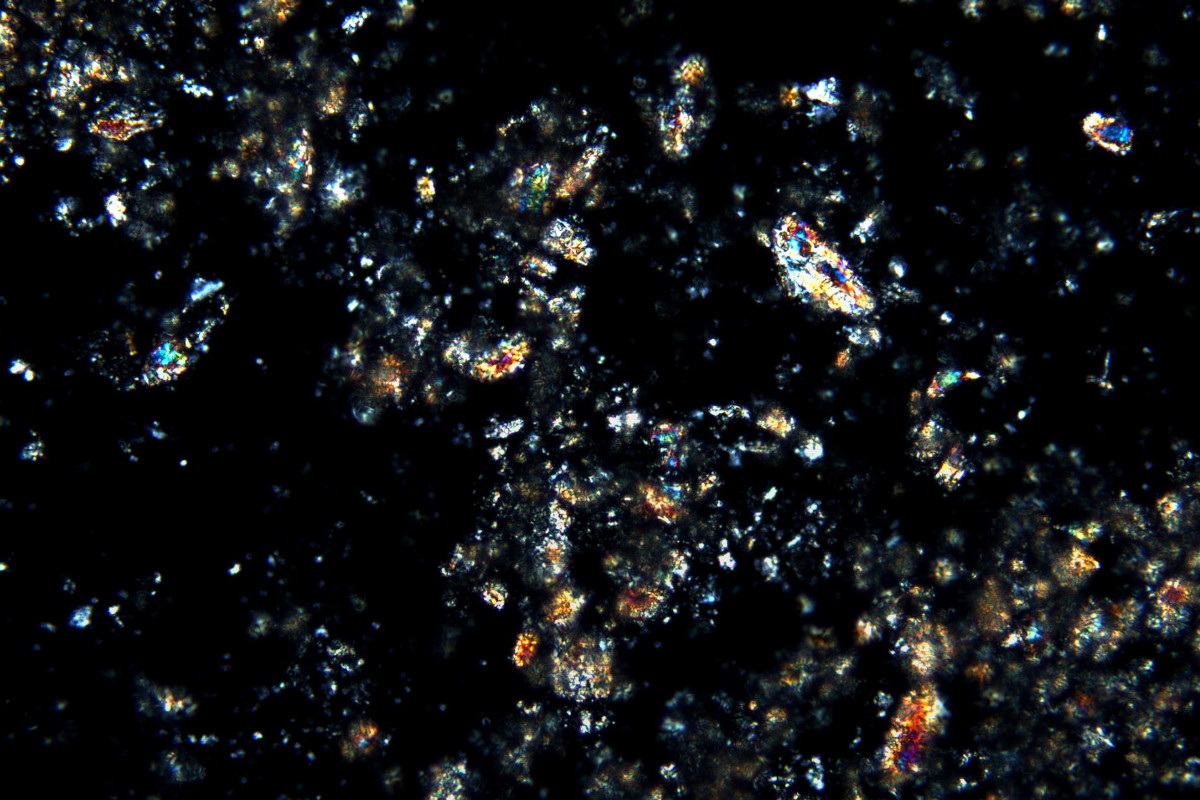
Drugs produced on Earth are made in labs. Scientists use chemical reactions to make a molecule, which they then dissolve in a liquid (a solvent), before reducing that liquid, via evaporation, to form tiny seed crystals of the drug.
Those seed crystals are used to grow more crystals, which then have to be purified and mixed with other ingredients before they can be turned into tablets or injectable medicines.
In space, however, those seed crystals can be grown much more purely to begin with (the lack of gravity means far fewer impurities are produced).
“Microgravity allows molecules to assemble more slowly and uniformly, producing highly ordered crystal structures that are difficult or impossible to create on Earth,” says Michael Reilly, Varda’s chief strategy officer.
“These differences can have meaningful implications for how medicines behave in the body.”
Varda is still in the early phase of developing drugs that have space-made components, but Reilly says they “hope to have a space drug in a human in the next five years.”
Another company looking into pharmaceuticals is BioOrbit, based in the UK and co-founded in 2023 by CEO Katie King.
In April 2026 the company raised £9.8m ($13.2m) in seed funding and hopes to soon start producing products in space to bring back to Earth.
“We’re building a pharmaceuticals factory in microgravity, ultimately to make crystals of drugs that you can’t make here on Earth,” says King.
One area that BioOrbit is targeting is anti-cancer antibodies.
According to King, by crystallising these antibodies in space, you can turn them from a drug that must be injected intravenously by a licensed healthcare professional at a clinic, into a drug that can be injected by the patient themselves at home.
BioOrbit’s first piece of hardware was put into space in 2026. Called Box-E, it was a microwave-sized unit containing an experiment to test BioOrbit’s crystal manufacturing process.
The experiment was launched to the International Space Station (ISS) in May 2026 and ran autonomously there before splashing back to Earth on a SpaceX Dragon capsule in June.
While the full results of the experiment have yet to be announced, King says the “preliminary results are looking great.”
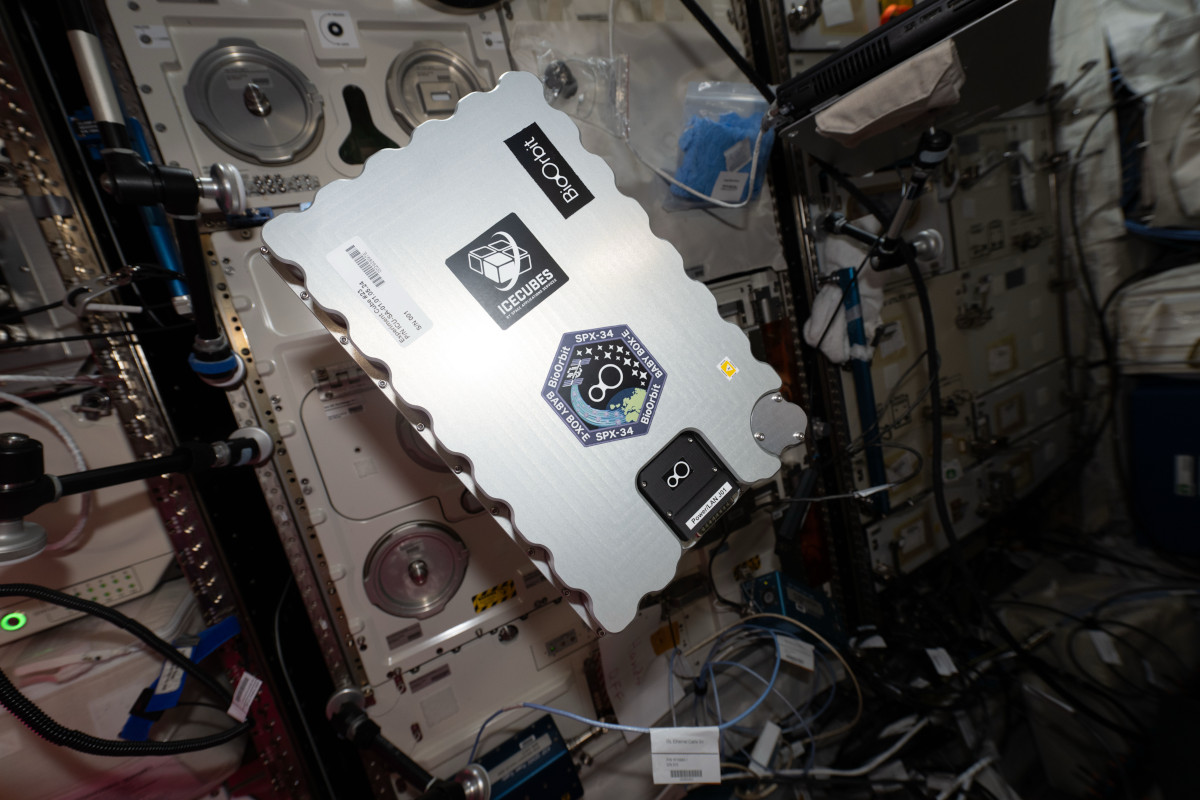
Initially, the company hopes to produce milligrams of drug crystals in space, but intends to eventually produce hundreds of kilograms of them.
Doing so would require commercial space stations that are scheduled to launch to orbit in the next few years.
These stations will have room for astronauts, but also plenty of space for production equipment from companies like BioOrbit.
Voyager, based in the US, is one of the companies building those space stations (as well as working on its own in-space manufacturing processes – in January 2026, it patented a technique to grow photonic crystals, the type used in data centres and telecommunications, in space).
The company plans to host other in-space manufacturing companies on its ‘Starlab’ station.
It’s set to launch by the end of the decade and, according to Paul Tilghman, Voyager’s chief technology officer, “our bookings are over capacity for our first year of operation.” Something he sees as “a really strong sign that there’s unmet need in the commercial market.”
Read more:
Fragments of diamond
Another potentially lucrative avenue for in-space manufacturing is semiconductors – the kind used in microchips.
Space Forge (mentioned above) is looking to grow crystals made of advanced semi-conductor materials that can be sliced into wafers to make computer chips.
Chips made with space-grown crystal wafers would be more efficient than those made on Earth, potentially reducing the energy consumption of everyday electronics, data centres and power grids by up to 60 per cent.
The process is similar to producing pharmaceuticals: a crystal is grown inside a capsule (or perhaps one day a space station) and then returned to Earth.
Where it differs, however, is that instead of using liquids and solvents to produce the crystals, the process relies on temperatures of over 1,000°C (more than 1,800°F) inside a furnace.
In December 2025, Space Forge generated a high-temperature plasma aboard ForgeStar-1, its first spacecraft, to demonstrate its technology.
Using this plasma, the company hopes to carefully control the growing process to produce synthetic diamond crystals.
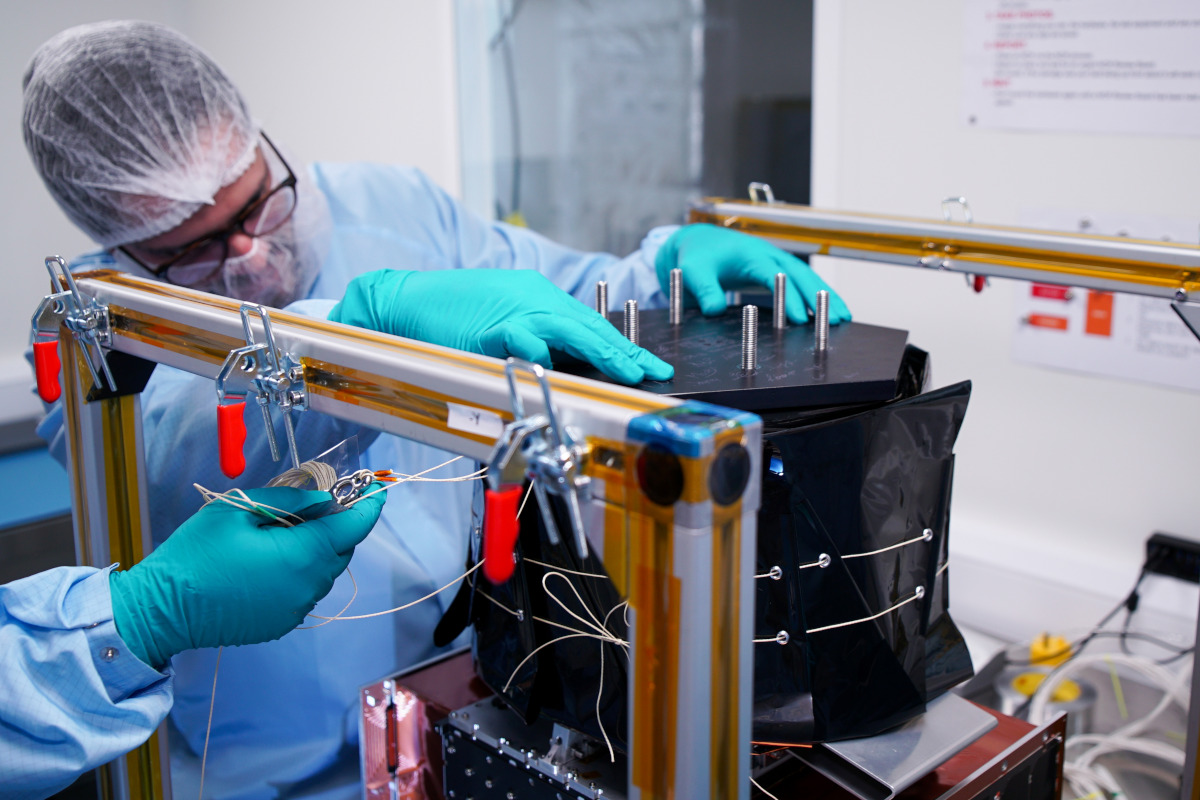
“You can very slowly grow a crystal into kind of any shape you want,” says Bacon, with a growth rate of “micrometres per hour.” “What we demonstrated in ForgeStar-1 is the most important part of this process: generating a stable, clean plasma in orbit.”
The process should produce crystal wafers that are much purer than anything that could be made on Earth.
That could mean faster computers, better chips for AI and many more applications. “[With] these new super materials we make in space, we can make so many things more efficient,” says Bacon.
BioOrbit and Space Forge both received contracts from the UK government in February 2026, for £250,000 (nearly $335,000) and £300,000 (over $400,000) respectively, to develop the businesses.
A third UK company was also funded to the tune of £295,000 (approx $395,000). Called OrbiSky, it’s looking to in-space manufacturing to produce better optical fibres that could greatly improve telecommunications and other areas.
In microgravity, the fibres “can solidify more uniformly,” says Sylvester Kaczmarek, the company’s founder and CEO, “resulting in higher-quality fibre with better optical properties.”
Read more:
Launch and return
Before we can begin making anything in space, however, we need to get the manufacturing machinery up there. And trickier still, we have to find a way to bring the products that machinery manufactures back.
Companies and governmental bodies have been toying with both for decades now, but nobody has found a way to do either in a manner that generates sufficient profit to make them a viable business.
That may be about to change, though.
Thanks to companies like SpaceX and Blue Origin, launch costs are lower than they’ve ever been, with prices as low as a few thousand dollars per kilo for getting things into space.
Meanwhile, companies like Space Forge and Varda are working on ways to bring things made in space back to Earth.
Until now, anyone putting anything into space has had to rely on the relatively infrequent spacecraft coming back from the ISS to return things.
But a new era of re-entry capsules is dawning, which means that more products can be brought back more often.
“You can [return things] at a pretty fast clip once you figure out how to do the re-entry piece of it reliably,” says Clayton Swope, an industry expert at the Centre for Strategic and International Studies in the US.
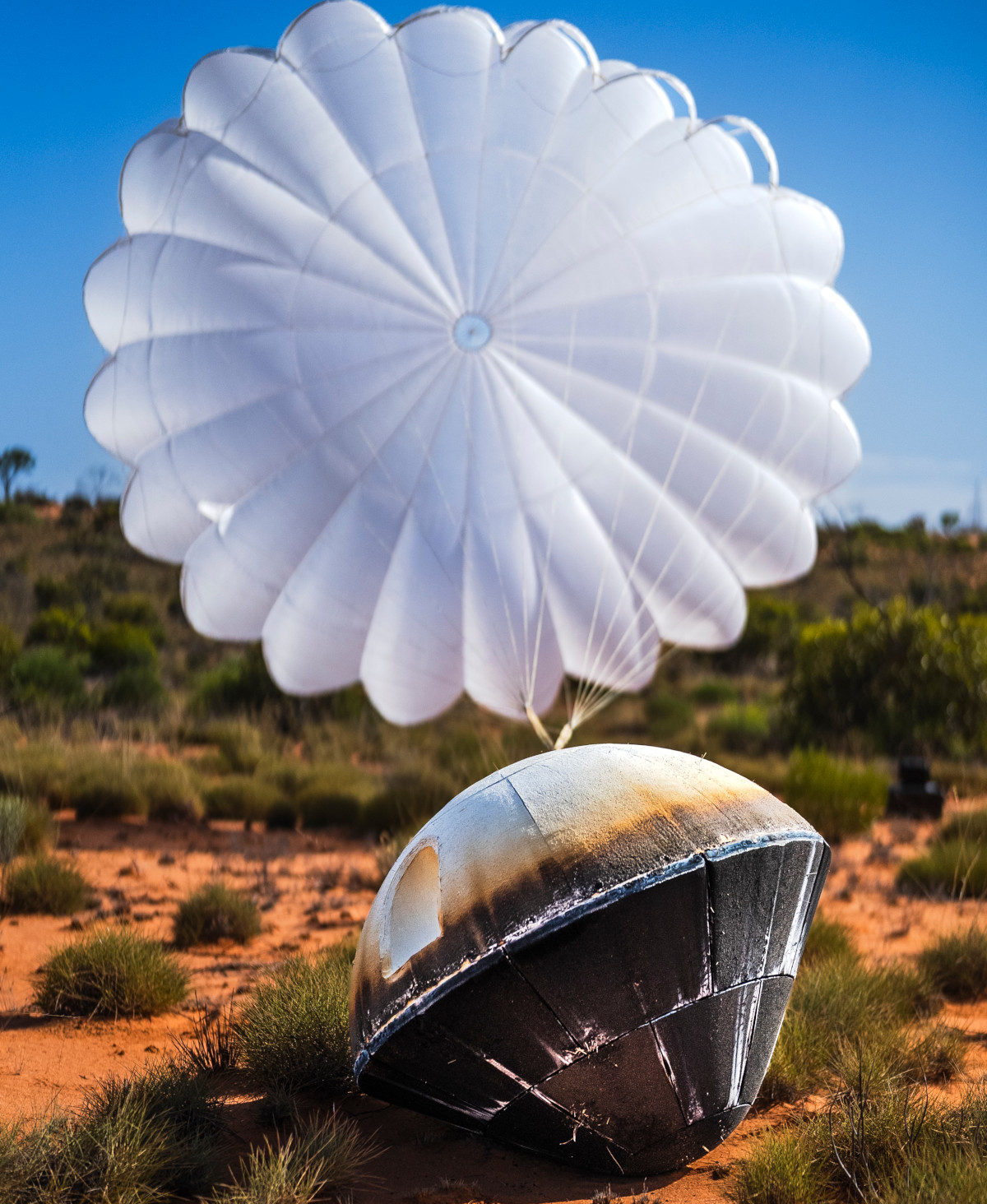
Varda is the current leader in the field of return technology. It has flown six of its W-Series capsules to space (each one with a diameter slightly bigger than a bicycle wheel) and successfully returned them to Earth.
Space Forge is also developing re-entry technology, but is taking a different approach.
It’s developing a collapsible heat shield called Pridwen (the name of King Arthur’s shield and a nod to Space Forge being headquartered in Cardiff).
The shield can be attached to almost any satellite and be deployed to protect it as the satellite re-enters Earth’s atmosphere.
“It’s very much an origami-deployed shape [with] a very high drag-to-weight ratio,” says Bacon. “The shield is considerably larger than the satellite [it’s attached to], which helps protect the [satellite and its payload].”
He says a first test flight is expected in the next couple of years.

In terms of landing sites, Space Forge is initially planning on splashdowns off the coast of the Azores, near Portugal, where there’s enough space and infrastructure for a safe retrieval.
In the future, the company might look to bring its spacecraft down somewhere on land.
Other companies are planning their own re-entry vehicles too, including SpaceX in the US.
In June 2026 the company launched a capsule called Starfall, which it plans to use to bring items from space back to Earth, possibly including products made in orbit.
While the exact details of Starfall are unknown, it’s thought to be shaped like a hockey puck and measure roughly the size of a car.
Despite SpaceX’s immense resources (the company was recently valued at nearly $2tr on its entry into the US stock market) Bacon welcomes the additional focus on in-space manufacturing Starfall might bring.
“We see it as validation that this market is going to be as big as we say it is,” he says.
“In-orbit manufacturing for return to Earth could easily be the largest market in the space industry by 2040 and there’s plenty of room for us, SpaceX and many more companies as there are thousands of potential products to make.”
Future opportunities
The potential for in-space manufacturing is clear, but one thing that isn’t is the law surrounding it.
To start with, there are questions around spacecraft lifting off from one country and landing in another, especially when what’s inside those spacecraft makes them more valuable than when they launched.
“It’s a bit of a mixed picture,” says Lewis D’Ambra, director of communications and public policy at Space Forge.
“What’s the status of the material [on one of those spacecraft]? Can it be taxed? How is it classed? There are some questions to be answered around that.”
There are also some issues around the spacecraft too. After all, people won’t necessarily want capsules raining down from the sky that could pose a danger to them or anyone else on Earth.
Some countries, such as Australia and the US, have regulations in place for re-entering spacecraft, but not all do. “The UK is in the mix, but we’re slightly behind the curve at the moment,” says D’Ambra.
“If you want to [embark on in-space manufacturing] at a scale to make it commercially viable, you need to regularly land space vehicles with cargoes on them.”
That could be crucial, because given how nascent the in-space manufacturing industry is, there’s plenty of opportunity for a country like the UK to claim a significant chunk of it.
“This is potentially quite a big market,” says D’Ambra. “There’s a real opportunity there.”
In November 2025, the UK House of Lords published a report on the space economy and highlighted in-space manufacturing as a particularly big area for growth.
According to the report, the market could grow to $18bn (£13.5bn) by 2033 and contribute $170bn (£127bn) to the global economy over the next 20 years.
There remain hurdles to overcome, though, not just on a technical level, but on a commercial one too.
“I’m waiting with bated breath for the space economy to grow outside of the confines of its dependence on the government as a customer,” says Swope.
If anything is going to explode as the next big business boom, however, it could be in-space manufacturing. Perhaps, in a few short years, we could all be using products that are made in space.
“This could be it,” says Swope. “[In-space manufacturing] could be the killer app.” Or, to put it in terms more familiar to Ralph Waldo Emerson, it might be the better mousetrap the world is waiting for.
Read more:
