
Over the past two years, Keith Magnuson has been in debilitating pain. The 83-year-old has lumbar spinal stenosis, a back condition that causes problems any time he is on his feet.
Until recently, Magnuson was a regular rock climber and hiker, but these days it hurts just to unload the dishwasher.
“Any time I’m on my feet, I’m in pain,” says Magnuson, who lives in Seattle.
His doctor had found a solution. Magnuson could have a procedure called minimally invasive lumbar decompression (MILD), which would help his back and carries less risk than surgery.
As Magnuson was over 65, the procedure would be covered by his Medicare insurance and could be arranged and performed quickly.
There was just one problem. One part of the planned procedure – an epidural steroid injection to help address the back pain – had been denied by Medicare.
Magnuson’s doctors asked for approval again after providing more documentation, and then a third time. On each occasion, it was denied.
It was on the third denial that Magnuson discovered it wasn’t a person who had made this decision about his treatment. It was AI.
“I was outraged,” Magnuson says. “I was like, wait a minute, it’s not even another person at the other end? It’s AI? It’s a bot?”
A pilot with problems
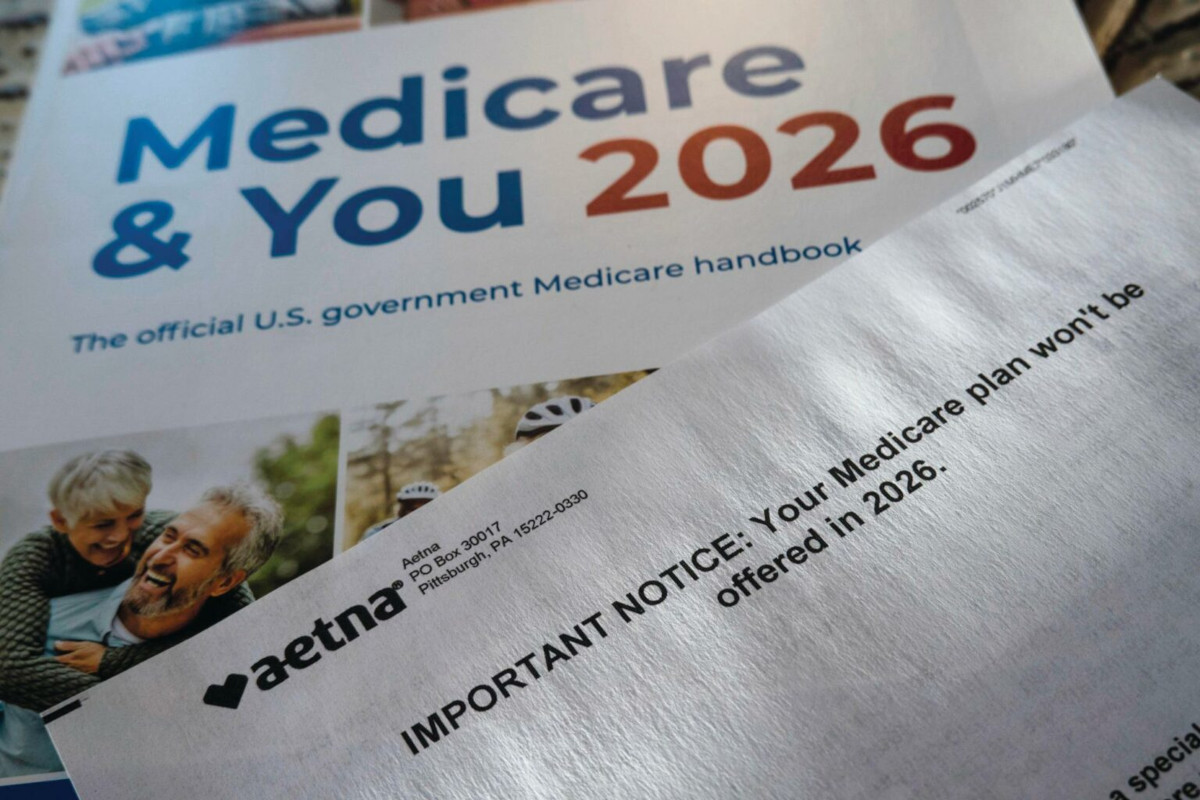
Magnuson is not alone. Across the US, in six specially selected states – Washington, Arizona, New Jersey, Ohio, Oklahoma and Texas – people enrolled in Medicare are finding that AI is deciding whether or not they can receive certain treatments.
These states have been involuntarily enrolled in a six-year pilot programme by the US Department of Health and Human Services (HHS), which wants to find out whether AI can protect US taxpayers from “wasteful” spending within Medicare, and prevent patients from receiving “unnecessary” procedures.
Medicare is a government-run health insurance programme for the over-65s and some younger people with disabilities.
There isn’t an equivalent of the UK’s National Health Service in the US, so anyone not covered by Medicare has to pay for their healthcare either through employer-sponsored insurance or out of their own pockets.
Today, Medicare accounts for around 14 per cent of US federal spending.
In a bid to cut costs, the HHS wants AI to act as a safeguard against doctors prescribing treatments that patients may not need, citing a report from the Medicare Payment Advisory Commission that estimated up to $5.8bn spent on Medicare in 2022 was on “services with minimal benefit”.
The pilot programme forms part of the Trump administration’s embrace of AI as part of its efforts to achieve “global dominance” in the sector, which includes reducing the barriers to the use of AI within healthcare.
Under the pilot scheme – called the Wasteful and Inappropriate Service Reduction (WISeR) Model – certain procedures now require doctors to upload their reasoning for why a treatment is necessary to an online portal.
AI then assesses whether it can go ahead under Medicare cover.

The AI is provided by third-party tech companies selected by the Centers for Medicare and Medicaid Services (CMS), which oversees the scheme, with each state assigned a different tech firm.
But hopes of using AI to cut down on waste and fraud, as well as make life easier for doctors, are already being dashed.
The WISeR scheme has got off to a rocky start, with mixed results across the country. Doctors have reported delays, technical glitches and unexpected denials of care.
Hospitals and medical practices trying to resolve these problems face extra paperwork and often have to call patients back in for more appointments.
Treatments that once took a day to authorise are now taking weeks. In the process, patients are being left in sometimes unbearable pain.
“This was sold to the physician community as: ‘We’re going to turn this around in 72 hours, it’s super fast’,” says Jeb Shepard, director of policy at the Washington State Medical Association (WSMA), “and instead we’ve had people waiting four weeks or beyond.
"And this is for a patient population that’s elderly – if they don’t get timely care, their conditions deteriorate pretty rapidly compared to someone who is middle-aged or younger.”
In addition, while some of the tech companies are responsive in explaining why care has been denied, others have been hard to reach by physicians, or have struggled to explain why a treatment has not been approved.
“I think it’s a complete black box,” says Dr Jeff Marr, a health economist and assistant professor of health services, policy and practice at Brown University’s School of Public Health.
“How these models work, what information they’re looking at, what data they’re trained on. I think there is very little that is able to be understood by researchers or the public.”
How WISeR works
There are 15 treatments covered by the WISeR scheme, ranging from epidural steroid injections for pain management to skin substitutes and knee arthroscopy.
The CMS says these have been selected because they are either often overused or have historically had a greater risk of fraud, waste or abuse.
Doctors must get permission – known as prior authorisation – from the AI each time they want to use one of these treatments.
The CMS says doctors should receive approval or denial within 72 hours. If the AI denies a treatment, a human clinician at the tech company must then manually review that decision.
The use of prior authorisation has frustrated both doctors and patients. Traditional Medicare has historically required prior authorisation only in limited circumstances, unlike private insurance plans where it is common practice.
Physicians argue that the government has inserted AI into a system that was already relatively seamless, and created a cumbersome process in its place.
This argument forms part of a wider complaint from physicians, health bodies and local politicians that there was very little consultation before the pilot programme was rolled out, despite growing concerns about using AI in healthcare decisions.
“I don’t think AI has a place in making approvals on whether a treatment is appropriate or not,” says Dr Steve Aydin, a pain doctor at Kayal Orthopaedic Center in New Jersey.
“A clinician is making a decision based on information that’s synthesised from an evaluation, a conversation, a history and a physical exam – the AI doesn’t know what the patient is feeling or going through.”
Shepard says there was “very little opportunity to share concerns about the potential administrative challenges and patient care delays. It was sort of like the administration said: ‘We’re doing this, and you’re subject to it’.”
Michelle Mello, a professor of health policy at Stanford University School of Medicine and professor of law at Stanford Law School, says the Trump administration was able to implement the scheme without Congressional approval because it has been classed as voluntary, meaning it does not have to go through a formal rulemaking process.
However, it is voluntary only for the tech companies providing the AI tools for this scheme. Doctors who do not participate do not receive Medicare funding
Mello adds that there are very few specific laws around the use of AI in US healthcare.
Parts of AI are regulated under the US Food and Drug Administration (FDA), but the relevant statute dates from 1976 – well before the advent of advanced computing, let alone AI.
“The FDA has, over the years, issued opinions stating that it thinks certain kinds of software can be considered a medical device, and have to go through FDA review,” she says.
“But in practice, around 95 per cent of what it has reviewed are algorithms that work in radiological devices and other physical things.
"So the kind of AI that we tend to worry about are not those things, they’re just freestanding algorithms. In theory, the FDA regulates some of those too, but it’s very circumscribed, and under the Trump administration, it’s become more so.”
Read more:
- We interviewed AI girlfriends. Here's what they said about their partners
- Video: This terrifying, AI-designed robot will never stop chasing you
- Why Silicon Valley is betting big on data centres in space
Delays and denials
Naturally, the administration disagrees, with Dr Mehmet Oz, the CMS administrator, saying: “Combining the speed of technology and the experienced clinicians, this new model helps bring Medicare into the 21st century.”
Those who have used the system say the reality is very different from Oz’s vision. In Washington state, where Magnuson lives, the rollout has been plagued with problems.
Physicians and patients have reported significant delays and unexpected denials from the selected tech firm, Virtix.
Maria Cantwell, a Democratic senator for Washington who is calling for WISeR to be scrapped, issued a report saying that Medicare patients in the state are waiting two to four times longer to complete procedures covered by the pilot programme, with an average wait of 15 to 20 days.
At the Northwest Endovascular Surgery in Richland, Washington, the use of AI in prior authorisation initially meant waiting up to a month for a result, though this has since been reduced to about a week, they say.
For Yasamin Alazawi, an intern and scrub technician at the surgery who is responsible for submitting prior authorisations, such delays are difficult to explain to patients.
“The patients that we see, they’re elderly. They’re in debilitating 10-out-of-10 pain.
"So having to explain to them that, ever since January, with WISeR you need to wait for however long it takes to hear back from Medicare and Virtix to schedule them – you can just hear that disappointment in their voice. It’s heartbreaking.”
In New Jersey, Aydin says unexpected denials are causing problems too, and have forced him to recruit more staff. Denials also mean calling patients back in for further appointments to submit a new prior authorisation request with additional documentation.
“We’ve gone from a scenario where we could have just treated a patient right away, even sometimes on the same day, and turned it into potentially three separate visits,” Aydin says.
Physicians have also reported difficulties in communicating with tech firms to find out why a case is delayed or has been denied.
In Washington, Alazawi says of Virtix: “In the first month, I couldn’t even get anyone on the phone. I would be on hold forever, and I just wouldn’t get anywhere.
“That has improved, but it still doesn’t excuse that first one to two months of just not being able to get a hold of anyone.”
Virtix did not respond to multiple requests for comment from BBC Science Focus but told The Seattle Times in March that delayed responses were caused by an unexpectedly high volume of prior authorisation requests.
The CMS has said it is monitoring turnaround times across all six states and that delays will result in “corrective action”. It adds that participants with a high rate of inaccuracy may be terminated from the model.
Virtix said that denials may occur when a prior authorisation submission lacks certain documents, but that doctors can resubmit requests or arrange a peer-to-peer review to discuss the denial with a Virtix doctor.
Alazawi says she is sceptical of this reasoning.
“In the denials that I have personally seen, it almost sounds like nobody checked the supporting documentation to actually see what we wrote, because their reasoning for denial usually doesn’t match up with the findings of the doctor. Every single appeal that we have submitted has been overturned.”
Hospitals and patients have also raised concerns about the payment structure of the WISeR model.

The amount tech companies are paid is partly based on the savings they generate from denying treatments, leading to fears of a perverse incentive to tweak AI algorithms to deny a certain number of treatments.
“You’re incentivising an entity to deny care,” Shepard says.
“The CMS would disagree with the way that we feel about this, but in a scenario where you tell a company with a profit motive that they get a cut of whatever inappropriate care is denied, it is hard to imagine that this doesn’t lead to more denials.”
The CMS argues that payments to tech firms are adjusted based on metrics such as customer satisfaction and how often a company’s initial decision on prior authorisation is overturned, meaning it is against a company’s interest to incorrectly deny care.
The case for AI
Those providing the AI tools say the technology has the potential to transform how doctors do their jobs.
Jeremy Friese, chief executive of Humata Health – which is providing the AI for prior authorisation in Oklahoma – is a former physician who knows how frustrating prior authorisation can be.
“Our reason for existing is to help get the yes [in prior authorisation requests], as efficiently and as fast as possible,” he says. “While prior authorisation can be a very friction-laden, problematic process, if you do it with technology, it can be much more streamlined.”
Friese says that after doctors upload clinical information about the procedure they want to perform, Humata’s AI checks that request against existing CMS regulations to see whether the information provided meets the agency’s requirements.
“If the answer is yes, we give them an immediate answer so they can immediately go deliver care,” he adds. “If the AI says: ‘I’m not sure that I see all the information’, then there is always a nurse or a doctor that reviews that clinical information.
"What I can tell you with absolute certainty is our artificial intelligence cannot be used to say no. It can only be used to say yes.”
Friese says Humata’s AI tool already has an 88-per-cent accuracy rate, and is constantly updating and learning from errors as it goes.
“No software is 100-per-cent accurate but we fully expect this will get into the high 90s over the coming months.”
A question of trust
For Magnuson, the delays and denials around his care eventually led him to offer to pay for the epidural himself, at a potential cost of $600. Since receiving the operation, he’s still waiting to find out whether he has to pay.
“What I’m trying to do [by speaking out] is help so many people who cannot come up with an extra $600 for this and should not have to,” he says.
He believes the Trump administration rolled out the WISeR programme without sufficient care or thought.
“They mindlessly decided to do this. They didn’t go to the public, they didn’t even go to Congress to get it through some sort of law or rule. They just decided to do it. And that’s a pretty bad way to do business.”
Many physicians involved in the WISeR scheme acknowledge that AI has its benefits, too. Computer vision will enable AI to detect problems in scans that doctors may miss, and its vast corpus of knowledge could help identify new potential treatments for diseases.
And the rollout of AI is not limited to Medicare, or even to the US.
In the UK, the tech firm Palantir has signed a £330m ($450m) deal with the NHS to help organise data held by NHS hospital trusts – currently in separate databases – into a single platform.
In Australia, BreastScreen NSW is using machine-reading technology to help radiologists interpret mammography images.
A study from Sweden found that using AI in breast cancer screening reduced the number of cancers diagnosed in the months after a routine appointment by 12 per cent – because the AI was catching more of them at the screening stage itself.
However, these are mostly scenarios in which humans lead the decision-making. What worries doctors is when humans are removed from the equation entirely.
“Do I think AI is great in the sense of, say, getting a diagnosis? Yes,” Aydin says. “Do I think it’s going to replace the true decision-making of a good and experienced doctor? I don’t think so.”
Read more:
