
For the millions embracing the keto diet, fat isn’t the enemy – it’s the main course.
This low-carb, high-fat diet was originally developed in the 1920s to treat epileptic children. Since then, it’s been co-opted by the wellness world, enticing yoga influencers, gym bros and weight-loss dieters alike.
In 2024, the keto – or ketogenic – market was valued at £9.2 billion ($12.5 billion), and it’s projected to continue growing.
The diet has a simple premise: use fats as fuel. That’s a big difference for normal people, whose diets mean they primarily rely on glucose (simple sugars our bodies make by breaking down carbohydrates).
People on a ketogenic diet eat too few carbs to produce much glucose. Instead, around 80 per cent of their calories come from fat, which drives the liver to convert this fat into an alternative energy source called ketones – hence the name ‘ketogenic’.
People who go on a ketogenic diet say it helps them lose weight without feeling hungry. They say it gives them more energy, focus and mental clarity. And there’s more: the diet is credited with reducing inflammation, stabilising blood sugar levels, lowering risk of type 2 diabetes, better skin – the list goes on.
While that all sounds great, it’s not the whole story. Eating all that fat, day in, day out, can have side effects. For some people on ketogenic diets, their cholesterol can rise dramatically.
“With a lot of [keto dieters], because their diet is so rich in saturated fats, they might see improvements in other parameters – like weight loss – but their cholesterol skyrockets,” says cardiologist Prof Kosh Ray, professor of public health at Imperial College London.
“If you didn’t know they were on this diet, you would say that they have a genetic condition that means they can’t remove cholesterol properly.”
And this cholesterol catch seems to be most prevalent among those who lose weight and say they feel great on a ketogenic diet.
So, the question is, should these keto dieters – who might appear healthier and slimmer on the outside, but whose cholesterol is somewhere in the stratosphere – fear for their heart health?

Why doctors are worried
For most cardiologists, the answer is clear: high LDL cholesterol – the ‘bad’ type that is high among these keto dieters – is a risk factor for heart disease, regardless of your diet.
“We know from hundreds of thousands – if not millions – of people that having lower LDL cholesterol gives you a lower risk of cardiovascular disease,” says Ray.
To really understand why LDL matters so much, it helps to know what it actually is. In essence, cholesterol is a fatty substance that our bodies need to function. It gets carted around the bloodstream by proteins travelling to and from the liver like a tiny taxi service.
LDL takes cholesterol away from the liver, and HDL brings it back. You need a good balance of both to make sure your cholesterol is taken where it needs to go.
Except these taxi drivers have not passed their driving tests. They have a tendency to crash into our artery walls – and, if those walls have been damaged (by age, smoking, inflammation and more), then they might get stuck.
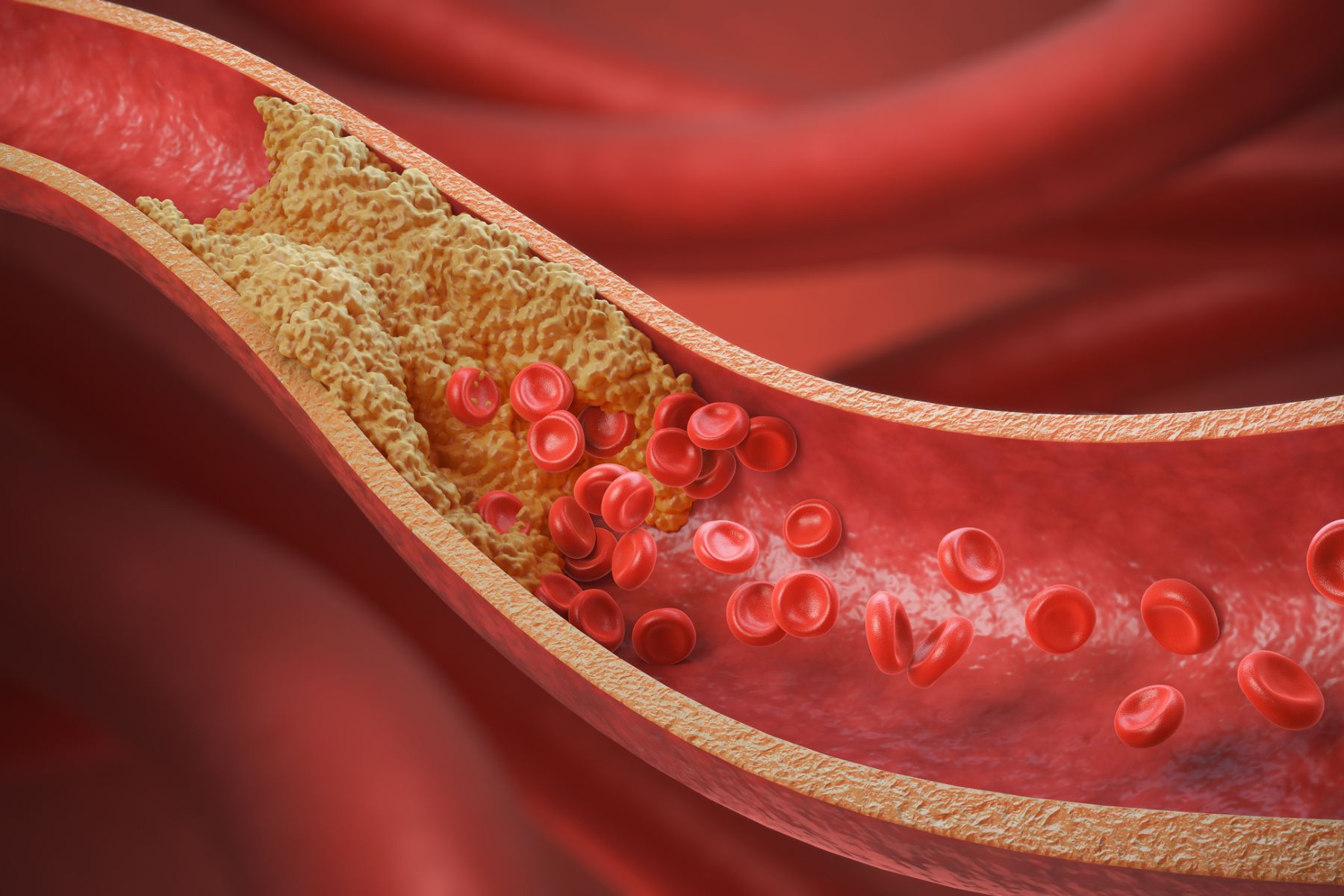
This can turn into a problem, because cholesterol that lodges in an artery wall can cause a fatty deposit, known as a plaque buildup, which hardens over time. If that plaque cracks, it can block blood flow and cause a heart attack.
Read more:
- ‘This is revolutionary!’: Breakthrough cholesterol treatment can cut levels by 69% after one dose
- Feed a cold, starve a fever: keto diet may boost healing from flu
- The carnivore diet: What eating only meat does to your health, a nutritionist explains
The lean mass hyper responder theory
So, everything we already know about heart health suggests that keto dieters with very high LDL cholesterol are at greater risk of heart disease.
But what if conventional wisdom doesn’t apply to this niche group? That’s what a few self-described ‘citizen scientists’ have been arguing.
According to them, there’s nothing wrong with high cholesterol levels if you’re on the keto diet.
They say that, even if you have double the generally agreed upper limit for healthy arteries (the upper limit being 100mg/dL or 2.6mmol/L), eating on a ketogenic diet protects your heart health, so you don’t need to worry about it.
They even have a special term for this. If you’re slim and fit, but have soaring LDL cholesterol levels (at least double the healthy limit), you qualify as a ‘lean mass hyper responder’. Most trained scientists, however, disagree with the whole concept.
“A lean mass hyper responder is a term that is not in any medical textbooks and has not been verified as an actual diagnosis,” warns Dr Scott Murray, consultant cardiologist and medical director of Venturi Cardiology clinic in Warrington, UK.
“It’s a term that was generated by a computer scientist who set up the Citizen Science Foundation in America because he found that his cholesterol levels went astronomically high when he adopted a ketogenic diet, and he wanted to explore why that happened.”
But this hyper responder idea is still new and niche; there’s very little science out there about it. This group of citizen scientists have been trying to change that, to understand high cholesterol keto dieters better.
In their first paper, they found a link between skyrocketing LDL cholesterol and slimness among their ketogenic participants. And they suggested that this extra cholesterol could actually be beneficial to hyper responders.
“The theory is that there’s a greater reliance on fat for energy,” explains nutritional therapist Moira Newiss, who claims to specialise in ketogenic diets for mental health. Newiss identifies as a hyper responder herself, but was not involved in the study.
“In people who are metabolically unhealthy, you don’t want to be shipping a lot of fat around the body, because you’re not using it,” she continues. “But if you’re optimally using fat as fuel, you would expect to see more transport of fat around the body. It makes sense.”
This is the most popular explanation given by keto dieters for the supposed harmlessness of high cholesterol among hyper responders.
They also emphasise the supposed anti-inflammatory properties of a ketogenic diet. Plaque builds up in the arteries due to both high cholesterol and inflammation. So, take that inflammation away, and the idea is that cholesterol is harmless.
However, all of us experience some inflammation, even if some of us have higher levels than others. Inflammation is a normal part of being alive, so you can’t take it away completely, no matter how little bread you eat.
And as for Newiss’s idea? There is no evidence to suggest that extra cholesterol might be useful among keto dieters.
Read more:
- This cholesterol-lowering drug combo could save hundreds of thousands of lives, claim scientists
- Here are the worst coffee types for your cholesterol levels
- Here's what you need to know if you take statins to lower your cholesterol
Keto controversy
But the citizen scientists have tried to back these ideas up. They released a paper in April 2025 arguing that, despite what cardiologists like Murray and Ray say about cholesterol, hyper responders might not be at risk of heart disease.
In response, says Ray, the scientific community is “up in arms.”
This study tracked the amount of plaque that 100 keto dieting hyper responders had in their arteries over the course of a year.
The paper concluded that participants who had extremely high LDL cholesterol levels didn’t have more plaque progression than other hyper responders who had lower (but still very high) LDL cholesterol levels.
“The amount of LDL in their blood was not a good predictor for who was high risk and who was low risk,” says Dr Adrian Soto-Mota, the first author of the study and a clinical researcher at the National Institute of Medical Sciences and Nutrition Salvador Zubirán, Mexico. (Unlike some of his colleagues, Soto-Mota has a formal scientific background.)
However, there were some big problems with this study. Very big. For one thing, there was no control group. That means all these hyper responders weren’t compared with people with normal diets and cholesterol levels.
Instead, they could only compare individuals with very high cholesterol levels to individuals with extremely high cholesterol levels.
Out of the 100 hyper responders included in the study, plaque buildup got worse among 99 of them.
Soto-Mota says that this is not very surprising because most of us experience some plaque buildup over time. “Plaque progression is the norm, not the exception.”
And, Soto-Mota says, their buildup could be explained by other heart disease risk factors, such as blood pressure, diet, sleep, smoking, inflammation, weight and genetics.
But Ray calls the study “counterfactual to every bit of science” and explains that the results suggested “a rate of plaque progression that’s four times higher than the rate we see in a so-called healthy patient population, which means you’re more likely to have a heart attack.”
Where the evidence currently stands
There’s a great deal we still don’t know about cholesterol and the ketogenic diet. But, for now, the evidence strongly suggests that high LDL cholesterol is a risk factor for heart disease – for hyper responders as well as anyone else.
Murray says that, if any of his patients are on a ketogenic diet and have very high LDL cholesterol, he encourages them to get their arteries imaged with CT scans (a slightly more high-tech version of an X-ray) to check for plaque.
“If their arteries are completely normal, then we advocate changing the diet a little bit, with some healthy carbohydrates, less saturated fat and less cholesterol-containing foods,” he says.
“If you find plaque, or advancing coronary artery disease, then change your diet. It doesn’t suit you. Let’s get you on some medication to try and regress the plaque.”
Murray believes that the keto hyper responders seem to be pushing their bodies towards an unhealthy extreme.
“You don’t want to be overweight, with fat on your organs and all the mess that comes with that, like high blood sugar,” he says. “But similarly, you probably don’t want to be in this category, where you’re extremely lean and all you’re eating is fat and protein.”
The body likes balance, Murray explains, and being a keto dieting, high cholesterol hyper responder just “doesn’t seem to be the sweet spot for the human body.”
Read more:

