Smallpox was one of the deadliest infectious diseases that humanity has ever encountered. In the 20th century alone, it's estimated to have killed 300 million people worldwide.
A global vaccination campaign successfully eliminated the virus, making smallpox the only human disease to have been eradicated globally.
So, you might be surprised to learn that we still have samples of the virus in storage.
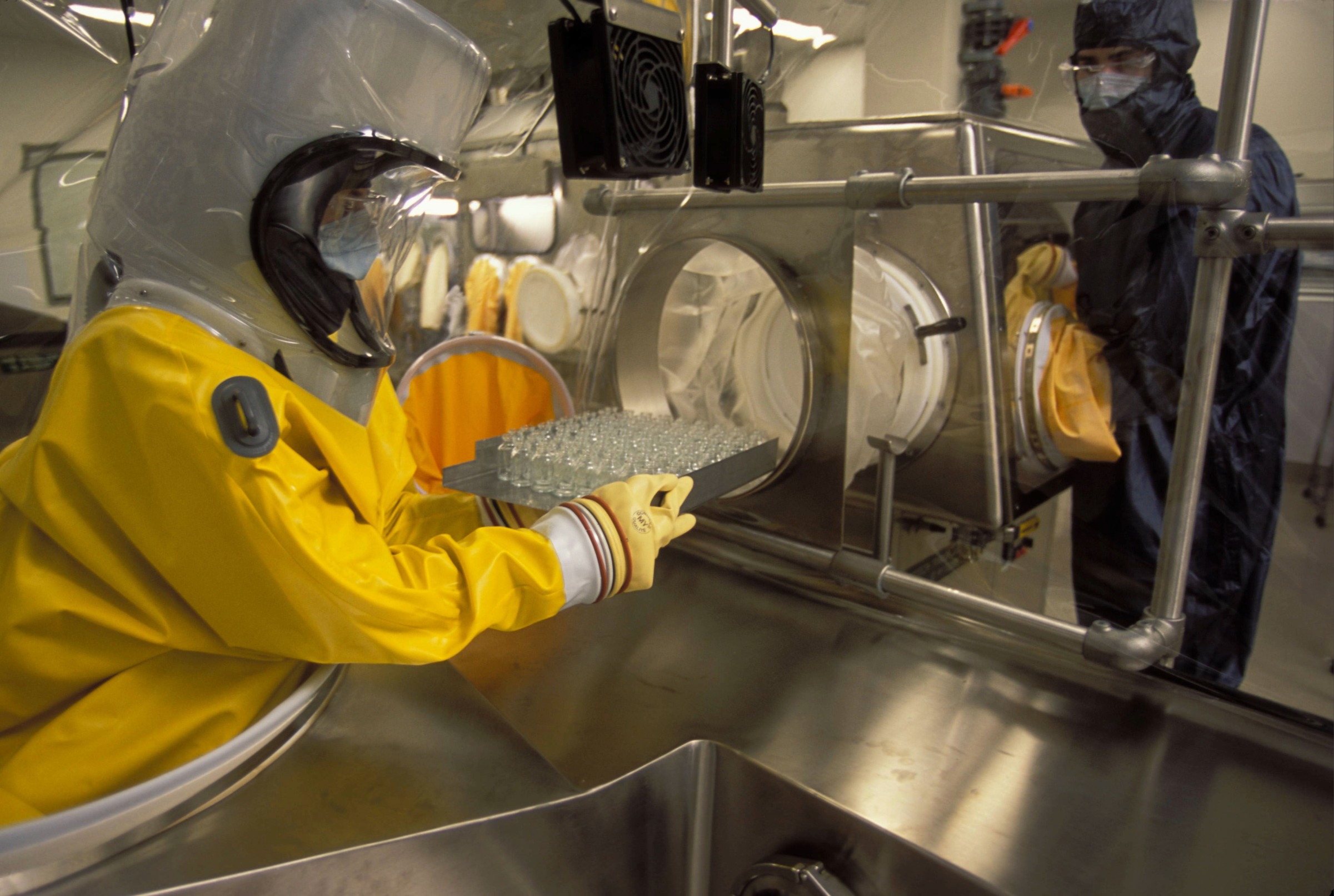
These remain frozen in high-security government laboratories in the US and Russia. While they are kept at sub-zero temperatures, the samples are known as ‘live’ because they would be infectious if thawed correctly.
In fact, organisations like the Centers for Disease Control and Prevention (CDC) in the US and the UK Health Security Agency (UKHSA) store live samples of many different pathogens to aid the development of vaccines, treatments and diagnostic tools.
Although there’s always a small chance that these samples could accidentally be released, many scientists argue that the benefits outweigh the risks.
But why would we keep samples of a long-dead disease? These tiny vials of frozen smallpox have caused fierce debate among scientists and public health officials.
Even though the disease has been eradicated, some experts argue that the samples are still of scientific value. For example, some hope to study the virus to understand its evolution and how it interacts with the immune system.
The counterargument is that we have already collected enough data about the smallpox virus – including its full genome sequence – to continue this research without live samples.
Another argument for keeping smallpox stocks is that there could be other samples out there that we don’t know about.
That’s not as outlandish as it might seem – in 2014, six forgotten vials of freeze-dried smallpox, dating back to the 1950s, were discovered in a laboratory in Maryland, US.
If other unknown stocks exist around the world, they could cause an accidental outbreak or even be used as a bioweapon.
Since people are no longer vaccinated against smallpox, a new outbreak could be devastating. But advocates of destroying smallpox stocks argue that vaccines can be manufactured without them.
A 2010 review commissioned by the World Health Organization (WHO) concluded that smallpox stocks serve no essential public health purposes.
The debate over the smallpox stocks has been raging for more than four decades, and the WHO has repeatedly postponed the scheduled destruction date.
Smallpox may have been eradicated, but for some reason, we just can’t seem to let it go.
This article is an answer to the question (asked by Will Summers, Salisbury) 'Why do we keep smallpox in a lab?'
To submit your questions, email us at questions@sciencefocus.com, or message our Facebook, X, or Instagram pages (don't forget to include your name and location).
Check out our ultimate fun facts page for more mind-blowing science
Read more: