
Why do humans have nails? The answer, according to the world’s foremost experts on the topic: um, sorry, we don’t really know.
There are plenty of theories – from helping us grip things to protecting our fingertips – but nails don’t tend to survive as fossils, making their evolutionary story surprisingly difficult to unravel.
Whatever their original purpose, though, your nails can prove surprisingly useful today. Well, if you know what to look for, that is.
Pay attention to changes in their colour, shape, texture and growth, and your nails can reveal surprising clues about your wider health. In some cases, signs of nutritional deficiencies, infections and even serious conditions can be spotted simply by looking down at your hands.
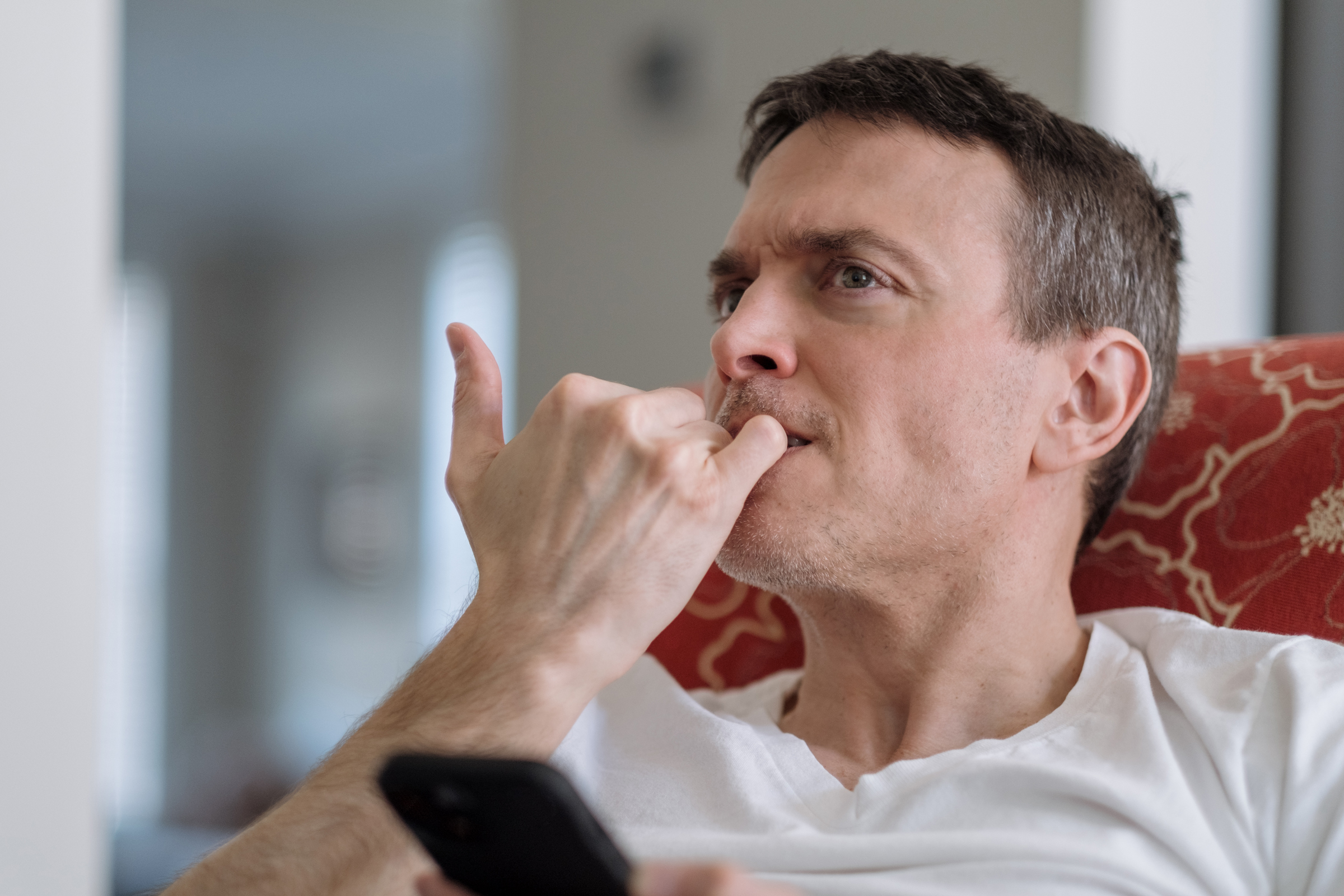
If you’re wondering, healthy nails are typically smooth and slightly supple – they can withstand a little flex without breaking.
“They’re usually translucent enough for the pink nail bed to be visible underneath with intact cuticles,” says Dr Athina Fonia, a dermatologist and member of the British Association of Dermatologists.
“Most people can also see a small white half-moon called the lunula at the base of their thumbnails – it is often less visible in other nails.”
But what about spots, streaks, ridges or changes in colour? When are they perfectly normal – and when should you speak to your doctor?
Below, Fonia unpacks the surprising ways your nails can reflect what’s happening elsewhere in your body.
What your nails are trying to tell you about your health
Weak or brittle nails
Brittle nails – those that split, break or crumble easily – become more common as we get older. That’s partly because nails naturally lose some of their elasticity with age, with brittleness particularly common in women over 50.
But age often isn’t the main culprit. “Brittle nails are typically caused by loss of hydration to the nail, use of chemicals, and mechanical trauma in jobs such as hairdressers, house cleaners, carpenters,” says Fonia.
Less commonly, brittle nails can be linked to dermatological conditions, fungal infections, endocrine disorders, nutritional deficiencies or certain medications.
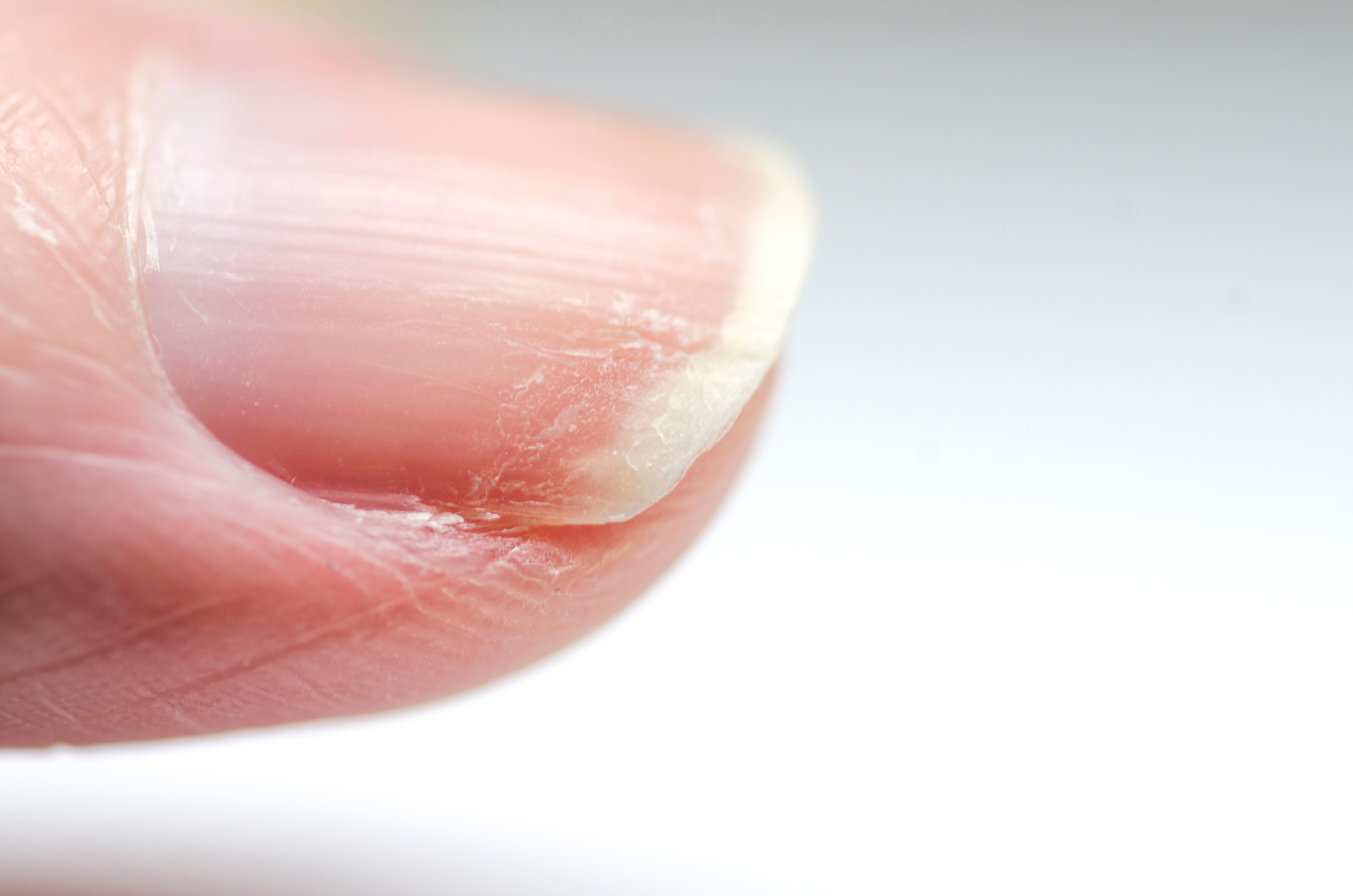
So, what can you do about them? “Treatment depends on the cause, but it is advised to avoid exposure to water, chemicals and injury, keeping the nails well moisturised with emollients,” says Fonia.
If your nails remain brittle despite your best efforts to protect and moisturise them, it’s worth seeing your GP or a dermatologist to investigate why.
“Supplements such as biotin, zinc or iron may help if a deficiency is identified,” says Fonia.
White spots
Despite what you may have heard, those little white spots that sometimes appear on your nails usually aren’t a sign that you need more calcium. Most are simply the result of minor damage to the nail.
“The medical term is punctate leukonychia, and it’s often triggered by nail-biting, artificial nails or nail gel removal,” says Fonia.
While white dots are typically nothing to worry about (though you might want to nix nail-biting to prevent tooth damage and the transfer of noxious germs), there are instances where white markings on the nails may be a red flag.
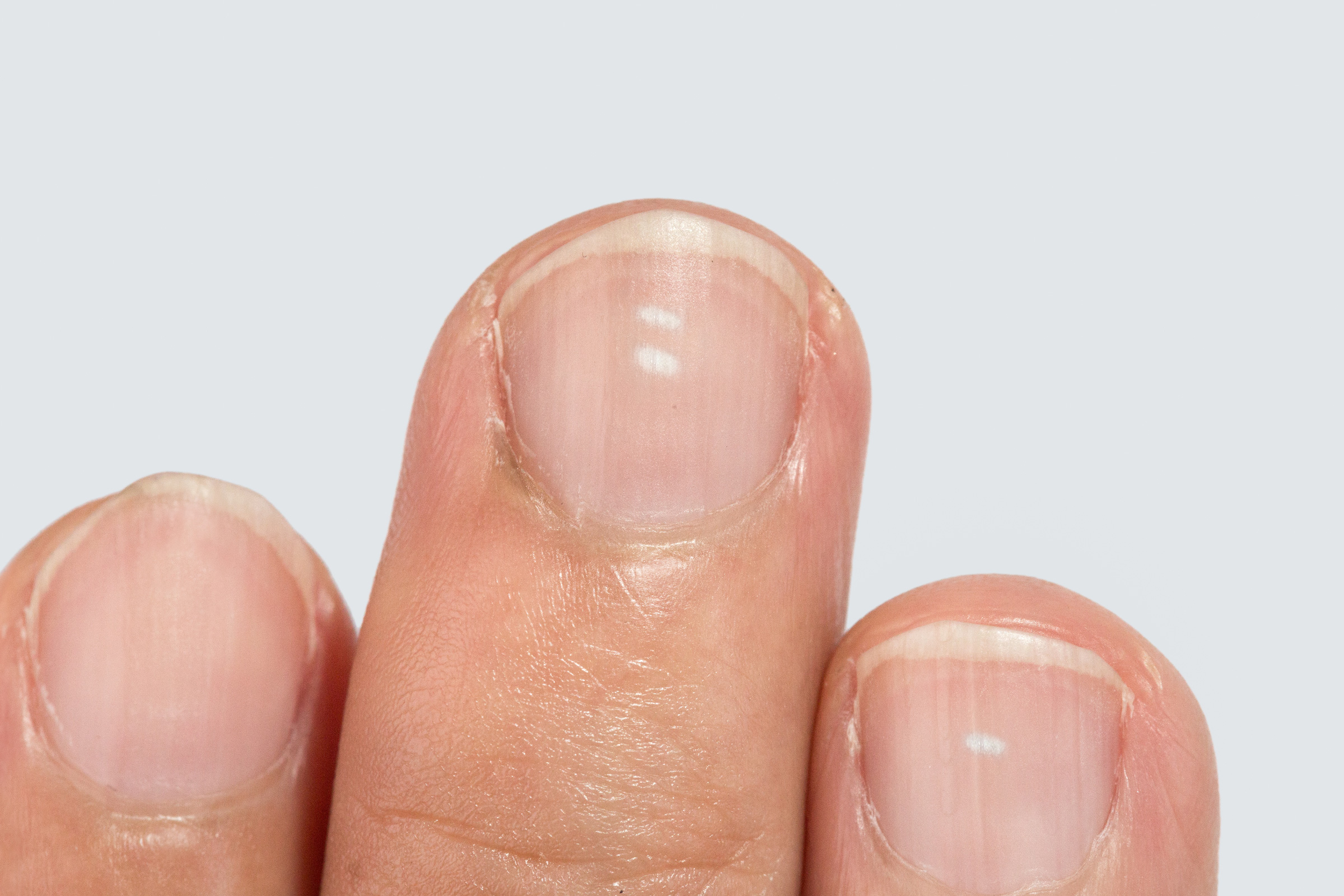
“If the white areas appear as horizontal lines, or if the nails look half white and half dark in colour, or only an outer strip of darkening of the nail, then these observations could indicate an underlying health condition and medical advice should be sought,” Fonia advises.
If minor damage is behind your white spots, there’s usually a simple solution: stop whatever is causing it and give your nails time to recover. “Treatment in the case of these changes is avoidance of the culprit,” says Fonia.
Horizontal or vertical ridges
Vertical ridges – lines running from the base to the tip of the nail – are usually a normal part of ageing, a little like wrinkles on the skin. Less commonly, they can be linked to skin conditions such as lichen planus or Darier disease, or nutritional problems such as iron deficiency.
“If the ridging looks uniform on all nails then it is most probably due to dryness of the nails or ageing, and therefore hydration may help,” says Fonia. “Otherwise, medical input is advised in order to recognise the cause and address it.”
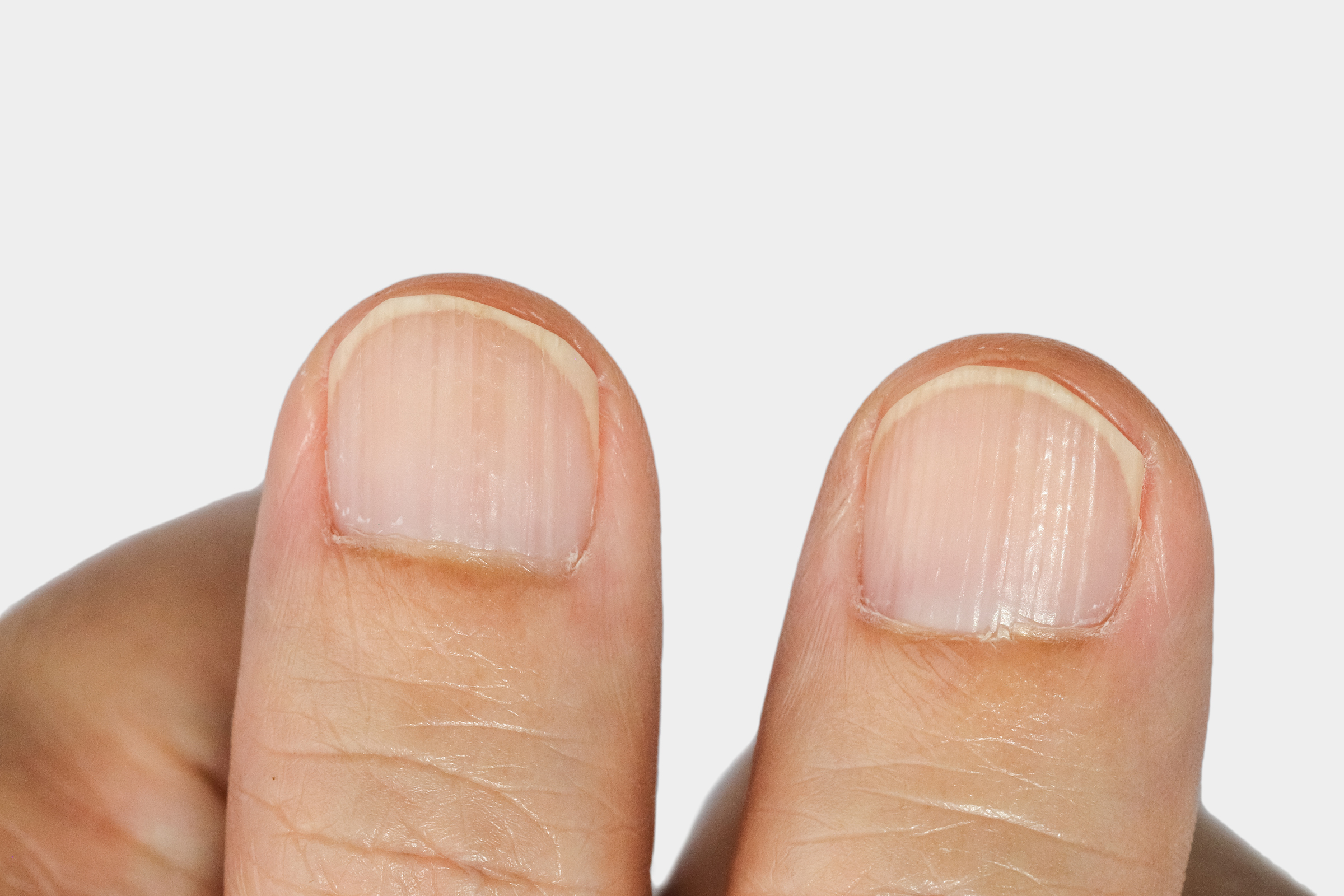
Horizontal ridges, however, are more likely to warrant attention. These lines run across the nail and can appear with inflammatory skin conditions such as eczema or psoriasis. They can also develop when an illness temporarily slows or stops the nail from growing.
If you notice horizontal ridges appearing on your nails, Fonia advises speaking to your doctor to investigate what might be causing them.
Yellow nails
More often than not, yellow nails are caused by external factors, such as nail polish, nail polish remover or tobacco use. But if the yellowing comes with other changes, it may be worth paying closer attention.
“If the nails are also thickened and/or detached from the nail bed this may indicate fungal nail infection,” says Fonia.
In rare cases, yellow nails can be a sign of something more serious. “If the nail yellowing is also accompanied by swelling of the legs and respiratory problems, then you may have yellow nail syndrome,” says Fonia.
If there’s no obvious reason why your nails have turned yellow – or the discolouration persists – Fonia recommends speaking to your doctor.
Spoon, or 'concave', nails
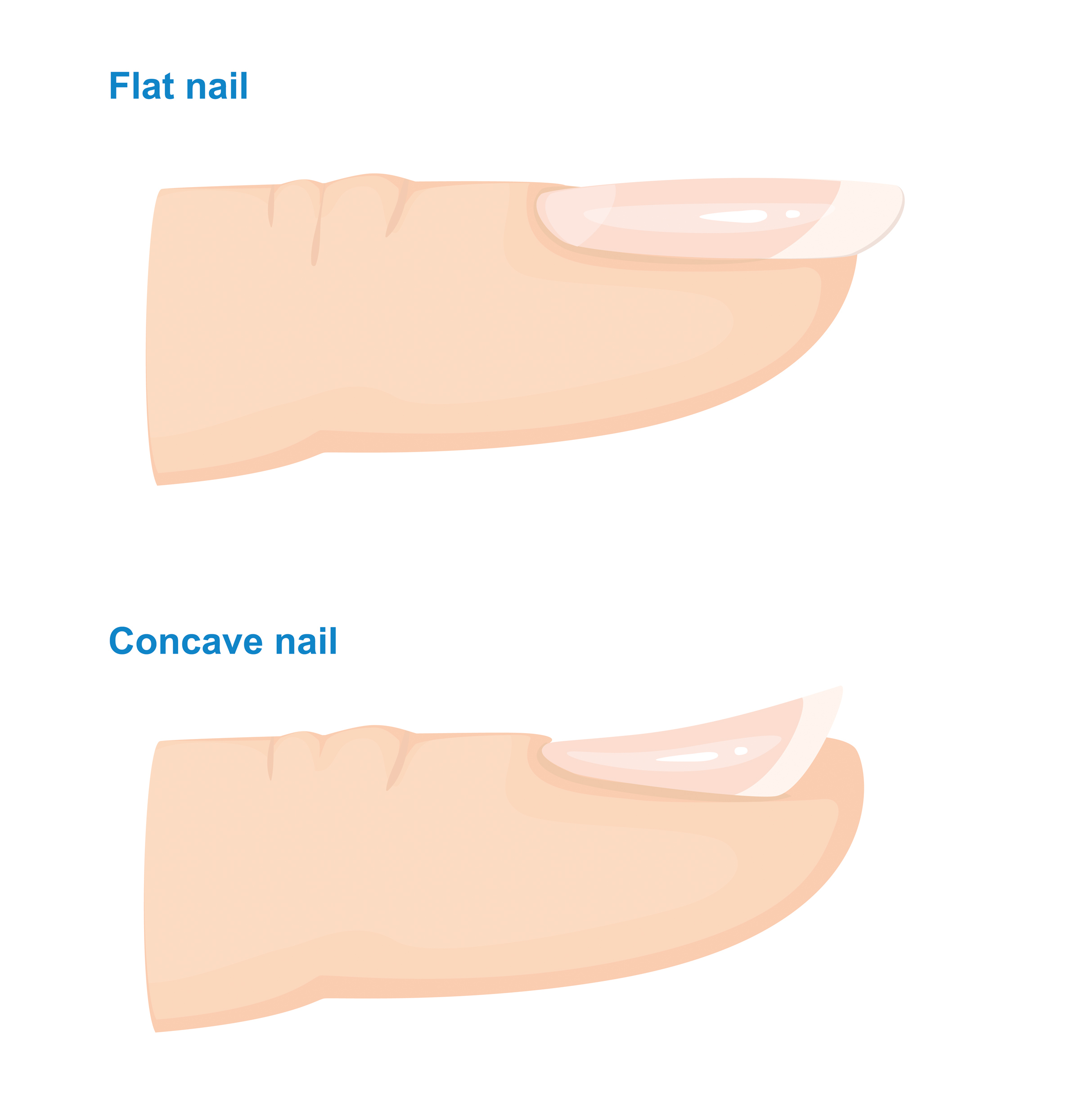
Spoon nails are pretty much what they sound like: nails that dip inwards at the centre, creating a shallow, spoon-like shape. The medical term is koilonychia, and affected nails can also become thin, flimsy and prone to breaking.
In babies and toddlers, spoon nails are relatively common and usually correct themselves as the child gets older. In adults, however, they can be more significant. “It may indicate repeated trauma or an underlying condition such as iron deficiency, anaemia or thyroid problems,” cautions Fonia.
If your nails start to develop this distinctive shape, it’s worth speaking to your GP to rule out a nutritional deficiency or another underlying condition.
Read more:
- Why is nail-biting so addictive?
- Low iron is common, but fixable. Here's how to boost your levels naturally
- Skin cancer cases are rising. Here's what we can do about it
Pale nail beds
Healthy nail beds usually have a pinkish tinge, so if yours become noticeably pale or white, it’s worth paying attention. One possible explanation is anaemia, which reduces the amount of oxygen-carrying haemoglobin in the blood.
“However, if most of the nail looks opaque and white with a ground-glass appearance that disappears when pressure is applied, it may be a sign of liver disease or underlying conditions such as heart or kidney disease,” Fonia warns.
“If the paleness involves half of the nail, then this is associated with chronic kidney disease.”
If you notice persistent or unexplained paleness in your nail beds, Fonia recommends speaking to your doctor to investigate what might be causing it.
Clubbed nails
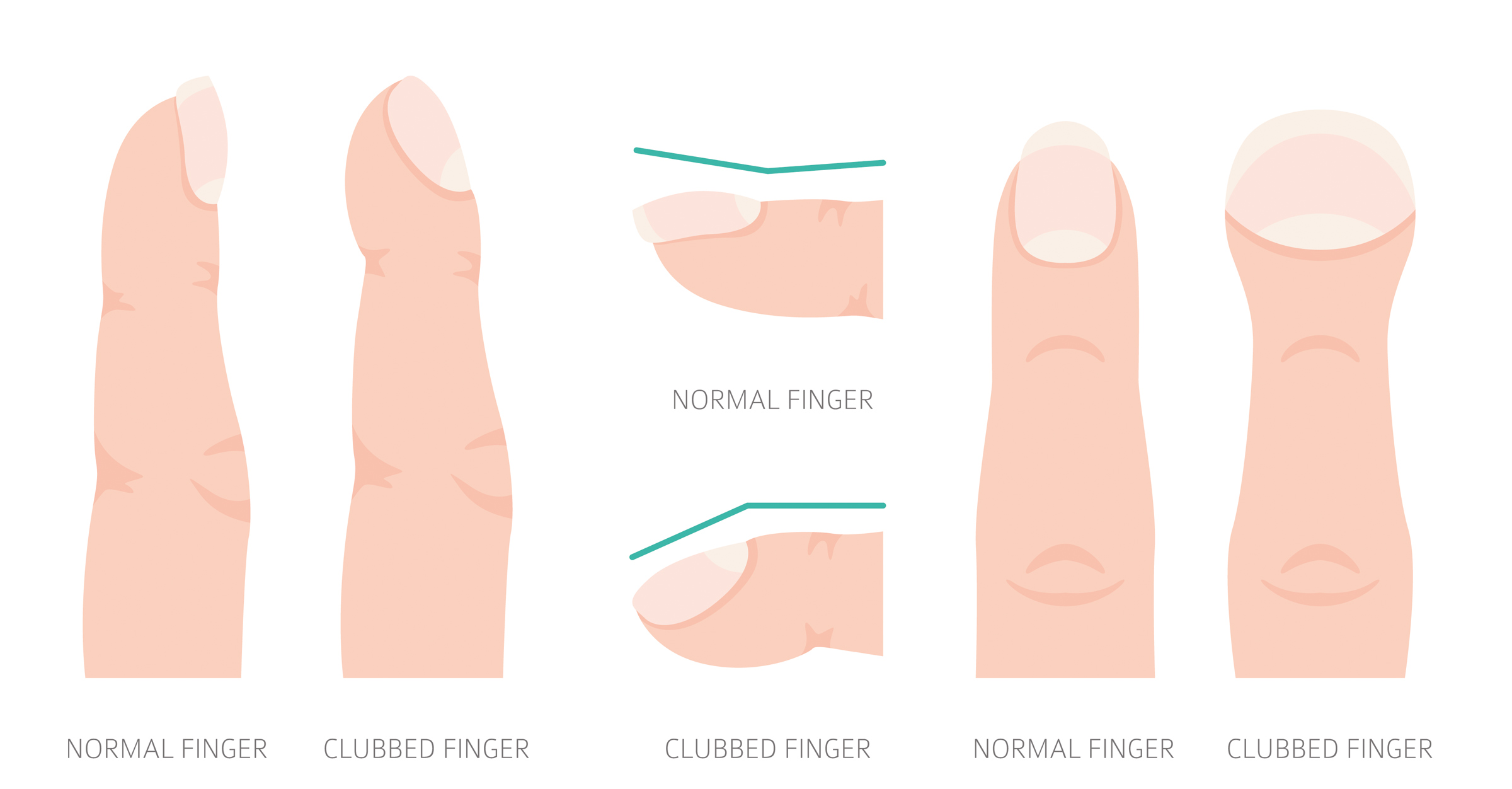
Clubbing is a distinctive change in the shape of the fingertips: the ends of the fingers become enlarged, while the nails widen and curve downwards around them.
Unlike some of the signs on this list, clubbing is always worth getting checked by a doctor, says Fonia. “It is associated with underlying lung, heart and gastrointestinal diseases,” she cautions.
Possible causes include Crohn’s disease, coeliac disease, liver disease, thyroid conditions and some cancers.
Dark streaks
These are dark lines in the nail, which are often caused by injury and bleeding under the nail, known as a splinter haemorrhage. When tiny vessels break under the nail, blood dries in a vertical red-brown streak that can look similar to a wood splinter.
“This can be seen in one nail after injury, but it can also involve several nails and it is a normal finding in people with Asian or African heritage,” says Fonia.
There is, however, one important reason not to ignore a dark streak that appears unexpectedly or starts to change. In some cases, pigmentation beneath the nail can be a sign of melanoma, a type of skin cancer.
“Any new or changing dark streaks should be assessed by a healthcare professional for reassurance or intervention,” says Fonia.
Read more:
