
In the summer of 2006, the Japanese scientist Dr Shinya Yamanaka introduced a new method for reprogramming adult cells back into an embryonic-like state. It revolutionised the world of stem cell biology.
The groundbreaking discovery of these so-called induced pluripotent stem cells (iPSCs) won Yamanaka a Nobel Prize six years later.
But his breakthrough would also prove transformative for a very different medical field: autism. Specifically, the quest to understand the biology behind it.
Back in the mid 2000s, genetic sequencing experiments were just beginning to reveal how tiny differences in the human genetic code could affect brain development.
We now know that the majority of cases of autism arise through the combined effect of hundreds or thousands of common gene variants, inherited from both parents.
But in around 20 per cent of cases, they’re driven by rare gene mutations that have an outsized impact and, to date, at least 100 of these mutations are known to exist.
Because these rare mutations typically lead to severe intellectual impairment and other life-limiting disabilities, such cases are now classified under a new label: profound autism.
Yet for a long time, understanding the precise role of gene variants in the developing brain was close to impossible.
“We know that the basis of autism spectrum disorders probably forms during [foetal] development, and the brain is an especially difficult organ to reach during that stage,” says Gaia Novarino, a professor and autism researcher at the Institute of Science and Technology Austria.
But Yamanaka’s discovery offered a solution. In the last decade, Sergiu Pașca, a psychiatry professor at Stanford University, in the US, has begun using the technology to take blood cells from people with profound autism, and transform them into brain cells in a Petri dish.
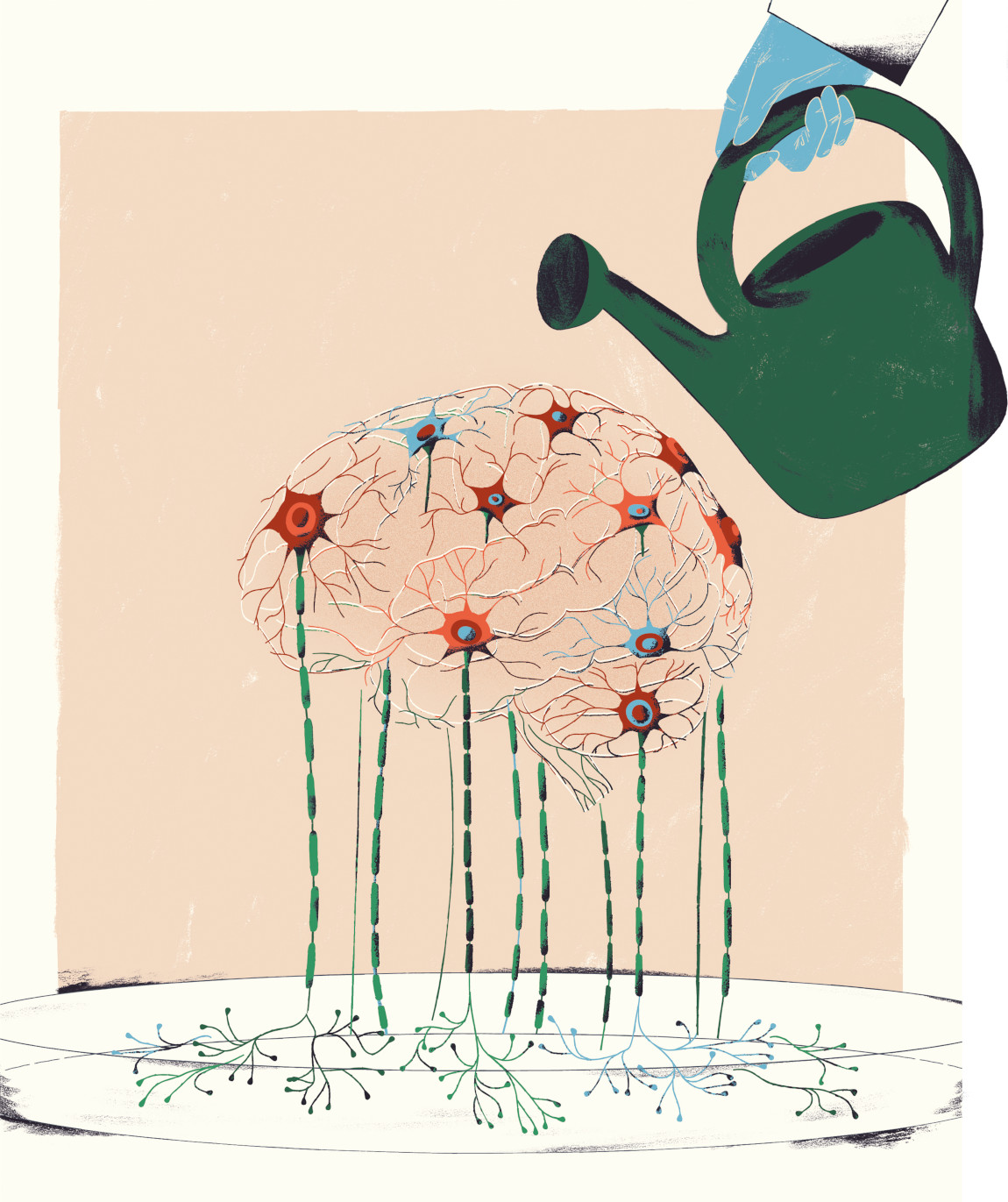
This allows their neurological development to be studied outside the body. Grown in an artificial 3D structure, these clusters of brain cells are known as neural organoids.
Multiple organoids can also be fused together to form assembloids, replicas of specific brain networks, which grow and develop in a remarkably similar way to those within the human body.
While researchers stress that assembloids are not actual brains – they have no immune system nor blood vessels – they nevertheless offer a way of assessing how a particular gene mutation might influence the brain, which is critical for understanding how autism develops.
“Autism is most likely a disorder of circuitry – abnormalities in the complex interactions between individual cells,” says Pașca. “If you really want to understand that, you need to model circuitry outside the human body.”
Creating connections
Pașca’s work with assembloids began with Timothy syndrome (TS), an ultra-rare type of profound autism characterised by recurrent seizures and heart abnormalities, which means that affected children rarely survive past adolescence.
It’s the consequence of a gene mutation that affects the normal flow of calcium, something that plays a critical role in enabling connections to be formed in the brain.
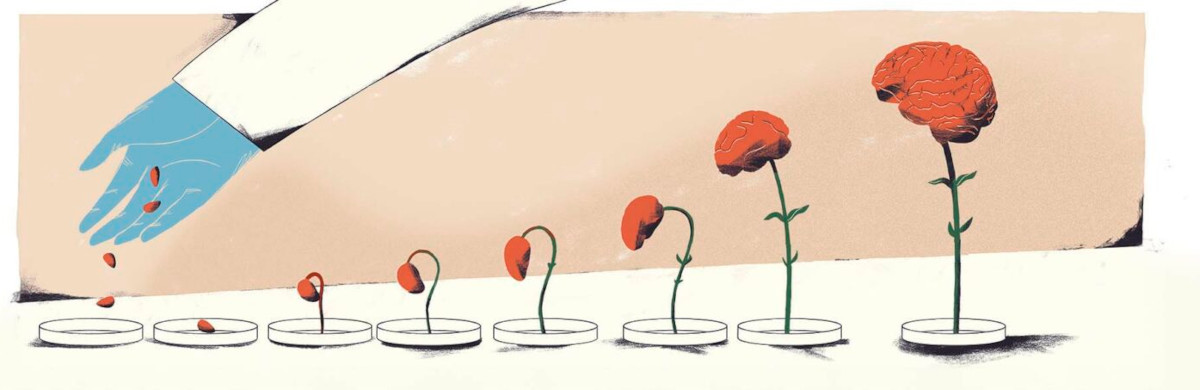
By creating neural organoids that carried this particular mutation, Pașca was able to demonstrate that it makes a particular calcium channel remain open for slightly too long, leading to an excess of calcium accumulation in cells.
“Still, the question was ‘So what?’” he says. “How can this lead to things like epilepsy?”
Using an assembloid made from different populations of neurons found within the cerebral cortex, the outermost layer of the brain and a region thought to be particularly disrupted by TS, Pașca was able to learn more.
It turned out that the calcium abnormalities were affecting the migration of interneurons – cells that enable the formation of complex circuits – which played havoc with the flow of information across the cortex.
“These interneurons weren’t properly moving to their final position, and when they eventually arrived, they weren’t connecting properly with other cells,” says Pașca.
This breakthrough led to the discovery of a drug that attempts to reverse the abnormal effects this gene variant has on the flow of calcium. In 2026, it’ll be trialled in children with TS for the first time.
But in the coming years, the use of assembloids may help us solve more of the mysteries of autism.
Read more:
Pathways and networks
Genes play a significant role in autism, but they’re not the whole story. Environmental factors such as prenatal infections, exposure to air pollutants and certain pesticides, as well as birth difficulties, have also been implicated as key risk factors.
Because of this, researchers are keen to try and identify a broader biological signature, something that might explain certain traits that occur across the autistic spectrum, from the intellectual impairment seen in profound autism to language difficulties.
It might also help researchers understand why many autistic people are more vulnerable to other disorders, such as epilepsy or gastrointestinal difficulties.
“The question is whether there’s one common feature that goes wrong in every case of autism,” says Jürgen Knoblich, a professor and autism researcher at the Institute of Molecular Biotechnology of the Austrian Academy of Sciences.
Over the past two decades, scientists have attempted to draw a few broad-brush conclusions about the autistic brain. One popular theory suggested that many autistic traits are driven by an imbalance between excitatory and inhibitory signalling in various brain networks.
Epilepsy, which occurs in at least 12 per cent of autistic children compared to one per cent of neurotypical children, is a disorder that stems from abnormal levels of excitation in the brain.
At the same time, excessive activity in brain networks underpinning either motor control or the processing of sensory information has been linked to autistic traits such as hypersensitivity. But this may be an overly simplistic explanation.
Some studies have associated autistic traits not with excitation, but with too much inhibitory signalling in the brain.
There’s also no consensus on the right balance of excitatory to inhibitory signalling in the neurotypical brain. And rather than getting to the core of autism, scientists have suggested that this characteristic might just vary from person to person.
However, the development of organoids and assembloids has made it possible to study the brain cells associated with many forms of autism as they grow and develop.
In early 2026, a study carried out by Pașca and collaborators at the University of California, Los Angeles, explored this for the first time.
By taking cell samples from autistic people, they were able to develop neural organoids representing eight gene variants linked to autism, as well as other cases of autism with no obvious genetic cause.
Over the course of 100 days (a period that represents a critical window in early brain development) the scientists watched these neurons grow and compared them with organoids from neurotypical people.
Each autism organoid initially displayed its own distinct patterns, but as time went by, it became possible to spot wider trends – differences in both neuron development and the formation of synapses, the functional connections between brain cells – across the various organoids.
This led to a further discovery: a specific network of genes – called a ‘module’ by geneticists – that appears to be particularly active in the autistic brain during its early stages of growth.
It regulates the activity of genes involved in both neuronal development and chromatin remodelling, an essential process that ensures DNA is made accessible for reading.
“Genes don’t act alone,” says Daniel Geschwind, a neuroscience and genetics professor at UCLA.
“They act as part of pathways and networks. We were able to identify this module of early-expressed genes that could be driving a substantial proportion of the changes that we were seeing [in autistic organoids].”
Pașca is now conducting an even more ambitious experiment, using the gene-editing technology CRISPR to create neural organoids that reflect approximately 100 gene variants that have been implicated in autism.
His aim is to see whether the newly identified gene module is also underpinning early changes in brain development across all these organoids.
If so, it may represent a potential new target for therapeutic intervention.
“Especially now with machine learning and AI, we can use the convergent patterns [observed in organoids reflecting many different cases of autism] to identify the mechanisms involved. From there, think about drug development and screening,” says Geschwind.
Accessing the brain
The concept of developing therapeutics for various forms of autism is a thorny subject. For one thing, many autistic activists see autism as an identity, rather than a disorder to be treated or fixed.
For another, autistic people are concerned about the implications of genetic research, fearing that it’ll lead to prenatal tests that could identify potential traits of autism and be used to justify terminations.
However, despite over two decades of studies, no such test exists. Researchers like Pașca are keen to emphasise that therapeutics would only be intended for cases of profound autism, where the people in question are severely disabled.
“The disorders that we’re considering are really severe perturbations of brain development,” he says. “These patients can’t live on their own. They require a caretaker for most of their life, they have seizures, and they die prematurely.”
He cites the upcoming trial for TS as a case in point. The therapeutic that has been designed is an antisense oligonucleotide, a piece of genetic material that tricks brain cells into using a different form of the faulty calcium channel, one that functions correctly.
When this was tested on organoids in a lab, it proved astonishingly successful.
“It worked like a dream,” says Pașca. “Within hours, you see this switch and essentially, it’s like the mutation is no longer present. It seems to restore many of the dysfunctions, including the way the cells communicate with each other, which is why we’re hopeful it’ll improve some of the symptoms in patients. But that, of course, remains to be seen.”
Pașca’s work has shown that organoids and assembloids can not only be used to understand the consequences of a genetic mutation, but they can also be used to help test new treatments.
According to Novarino, it’s also possible to transplant these organoids into the brains of lab rats, an approach being taken to better understand why mutations in a gene called SLC13A5 lead to severe epilepsy in some autistic children.
Growing human brain cells in a rat may seem somewhat Frankensteinian, but Novarino explains that this allows us to study the development of those organoids for longer. “In a rat brain, they mature way better, and they gain more human-like properties,” she says.
Such methods could lead to novel treatments in the coming years for both SLC13A5 epilepsy and another highly disabling form of profound autism caused by mutations in the SHANK3 gene.
“We’ve already shown through making assembloids that SHANK3 is very highly expressed in the striatum, the deep structure of the brain that’s important for motor control, which is why these patients have very severe motor deficits and motor abnormalities,” says Pașca.
Pașca predicts that such technology could ultimately usher in a greater understanding of other complex brain disorders, such as schizophrenia, which have long been difficult to study.
He points out that the reason why these disorders have had relatively few treatments is all down to the relative inaccessibility of the brain. But organoids and assembloids have changed all of that.
“I hope that TS will be some sort of Rosetta Stone [for the wider field of psychiatric disorders],” he says. “It illustrates how this can now be done, through reconstructing cells and circuits of the human brain for a particular patient, outside of their body.”
Read more:
