
The emergence of DNA evidence in the 1980s and its widespread adoption during the 1990s revolutionised forensic science. Suddenly, leaving a hair or some blood, saliva or semen at a crime scene was akin to leaving a signature.
So powerful was DNA evidence that, as well as securing new convictions, it also led to hundreds of exonerations after it was used to reassess a swathe of contested cases.
In the aftermath, one hugely influential type of evidence came out looking especially bad: eyewitness testimony.
A 2011 analysis of 250 DNA exonerations found that 161 of these cases had involved an eyewitness confidently misidentifying the defendant in court.
Psychologists who’d spent decades stressing the unreliability of eyewitness testimony felt vindicated.
The primary charge against eyewitness testimony is that human memory is reconstructive and, therefore, malleable. Each time a memory is recalled, it can change.
Crucially for witness testimony, memories can – with surprising ease – be contaminated.
Seeing an innocent person’s face amid media speculation or social media frenzy about a case can lead witnesses – including victims – to think that is who they saw committing the crime.
When witnesses appear in court, often years after the crime occurred, they can believe these false memories just as confidently as genuine ones.
Dr John Wixted doesn’t dispute the power of contamination. “There are really convincing studies showing that people’s episodic memories change,” he says. But he does question the belief that human memory is too unreliable to be used as evidence.
A psychologist at the University of California, San Diego, Wixted began studying eyewitness testimony around 15 years ago after many years studying the science of memory.
n his view, the 2011 study of DNA exonerations tells us something quite different about eyewitness identifications.
For 91 of the 161 cases in which a witness confidently misidentified the defendant in court, information was available indicating that they’d previously had issues identifying the suspect.
For the study’s author, this aligned with memory’s flakiness – first a witness says one thing, then they say another. But for Wixted, it suggests that when witnesses’ memories had been freshest and least contaminated, they’d be less likely to identify the wrong person.
In other words, they were correct about the reliability of their identification.

A larger analysis that Wixted published in 2025 examined over 900 exonerations involving eyewitness misidentifications in court. His team found reports of the first identification for 208 cases.
Although 18 involved confident misidentifications, this figure was dwarfed by the 190 witnesses who initially said the suspect wasn’t in the line-up, chose a ‘filler’ (one of the people other than the suspect used to fill out the line-up), or only hesitantly identified the suspect.
Wixted has reached two main conclusions that fit with both common sense and basic memory research. One: the first, least-contaminated identification test is the most informative and should be the main evidence submitted in court.
Two: contrary to long-held views that a witness can’t assess the accuracy of their own memories, a witness who’s confident in their identification is more likely to have made an accurate one than someone who’s uncertain.
“Early on, eyewitness identifications are pretty reliable,” Wixted says. “Not infallible, of course – eyewitness memory isn’t like DNA. But it’s pretty reliable, and that early stage can serve the cause of justice.”
Scepticism remains about Wixted’s viewpoint.
Prof Elizabeth Loftus, a psychologist at the University of California, Irvine, whose research was foundational to the science of memory contamination, says Wixted overstates memory’s accuracy.
But many researchers now back Wixted’s views.
Wixted says we should view memory in a similar way to other forensic evidence: the less contaminated it is, the better.
Furthermore, investigators should collect information – such as a witness’s confidence – that can inform jurors and judges about how reliable their evidence might be.
Easily misled
Loftus began researching eyewitness memory in the 1970s, conducting experiments now considered classics.
By showing volunteers simulated crimes, Loftus revealed that asking leading questions about what people had witnessed frequently changed their memories.
One famous example involved showing a slideshow of an accident in which a car stopped at a stop sign, then recounting to some volunteers a version of the incident in which the car stopped at a yield sign.
When asked about this later, volunteers fed the misinformation were more likely to incorrectly recall the accident featuring a yield sign.
The way misinformation contaminates and changes memories has fascinated Loftus ever since.
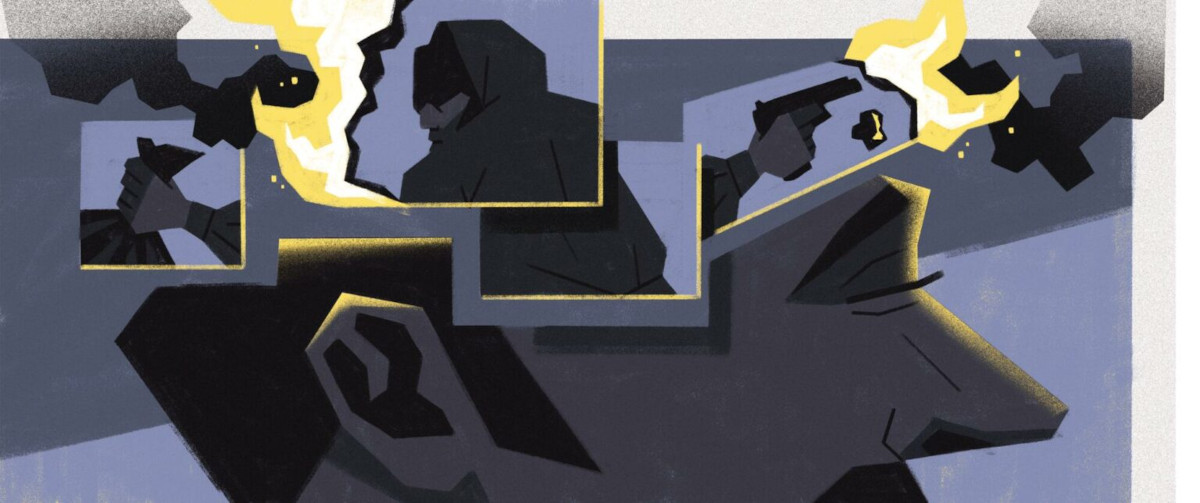
In the 1990s, inspired by a woman who acquired a false memory of “being there when her father raped and killed her best friend,” Loftus used suggestive techniques to fabricate a memory of having been lost in a shopping mall as a child in the minds of a fraction of research volunteers.
The research was powerful evidence that some proportion of people claiming to have de-repressed memories of crimes or abuse were inventing such memories.
Loftus and others also found scenarios where suspect identification was frequently compromised. For instance, people are better at identifying suspects of the same race as themselves.
Furthermore, witnessing events while highly stressed reduces subsequent memory performance.
“When I get involved in court cases,” Loftus says, “what I’m trying to do is provide some basic scientific information about memory, so that they’re judging the eyewitness testimony based on accurate scientific information, rather than myths they might have about memory.”
While human memories are no doubt fragile, Prof Laura Mickes – Wixted’s former PhD student and now a psychologist at the University of Bristol – says, “the pendulum swung too far in Loftus’s direction – that basically no memory is reliable.”
For Mickes and Wixted, this was too far. “I knew with 100-per-cent certainty that memory wasn’t unreliable,” Wixted says.
“That would mean all our mechanisms of memory, which we had been studying for 50 years, go out the window in the real world. The applied science of eyewitness memory had become almost completely divorced from the basic science of memory.”
Mickes and Wixted ran experiments comparing early and later identifications of suspects, which incorporated data on participants’ confidence.
These studies supported the high reliability of initial, uncontaminated memory tests and the significance of confidence.
“All the studies we ran with identifications made with high confidence were high in accuracy, and those made with low confidence were much lower in accuracy,” says Mickes.
Besides stressing the greater validity of the first identification over what a witness later says in court, Wixted and Mickes have come to argue that a non-identification or hesitant identification on a first line-up is powerful evidence of a suspect’s innocence.
The primary criticism of Wixted and Mickes’s work concerns the artificiality of experiments. Since its inception, this field has relied heavily on studies using volunteers watching simulated crimes and then answering questions.
Unlike real crimes, the scientists know exactly what was done and by whom.
But experiments don’t capture the complexity and variability of real witnesses’ experiences – which can include stresses, delays, conversations with other witnesses, questions and prompts from the police, looking at online speculation – so while research participants may have uncontaminated memories, it’s hard to say how frequently real witnesses do.
The importance of confidence has broken through.
Mickes says that the older studies saying confidence was meaningless used faulty statistical analyses.
In a survey of memory experts published last year by Dr Travis Seale-Carlisle, a psychologist at the University of Aberdeen, 90 per cent of experts agreed with the statement:
“If best practices are used during the line-up procedure, an eyewitness’s confidence can provide information about the eyewitness’s accuracy when obtained immediately after the identification decision.”
Compared to scepticism regarding this issue in the last survey of its kind from 2001, Seale-Carlisle says, “That’s a huge shift.”
Most of the rest of the survey, Seale-Carlisle says, revealed a consolidation of opinion about memory reliability.
Experts agreed on things such as: a confident identification in court is unreliable; the police officer administering a line-up shouldn’t know who the suspect is; the wording of questions shapes people’s recollections; and information gained after an event influences memories.
But there was one more shift. In 2001, experts largely agreed that it’s better to use line-ups in which images of suspects and fillers are presented to witnesses sequentially, rather than simultaneously.
But now, regarding whether sequential or simultaneous line-ups work best, Seale-Carlisle says that “the field is divided.”
The confusion stems, in part, from outdated statistical tests in older experiments. But although efforts have been made to resolve this, new technologies may soon overhaul line-ups anyway.
Read more:
- How false memories can shape a criminal court case
- Why millions of people keep sharing the same false memories
- AI has probably already faked one of your memories. Here's what that means
Spruced up line-ups
Contrary to what crime dramas would have you believe, most line-ups don’t use real people filing into a room behind one-way glass.
Instead, in the US, witnesses typically view six photos, one of which is usually the suspect. In the UK, sequential line-ups featuring short videos of nine people turning to face the camera are shown to witnesses.
The case for sequential line-ups was made in the 1980s by American researchers. According to Loftus, they wanted “to stop people from making relative judgments.”
Sequential line-ups were thought to favour a clear “That’s them!” moment, rather than allowing witnesses to go back and forth deliberating between two images in a simultaneous line-up.
But recently, Mickes and colleagues compared US and UK line-ups under experimental conditions and found that the US simultaneous method yielded ‘significantly higher reliability’.
Notably, even the supporters of sequential line-ups published work last year suggesting simultaneous ones are better.
And generative AI might soon make simultaneous line-ups better still.
Today, the non-suspect, ‘filler’ faces in a line-up are picked from a bank of stored photos. Not only is it a difficult task to do well, but it’s also limited by the faces available.
Most notably, when a witness describes a suspect, they often list their distinctive features – such as hair colour, skin tone, piercings, scars, tattoos – and these can be a major factor in bringing someone under suspicion.
For a line-up to be fair, it should contain fillers who also have these distinctive features.
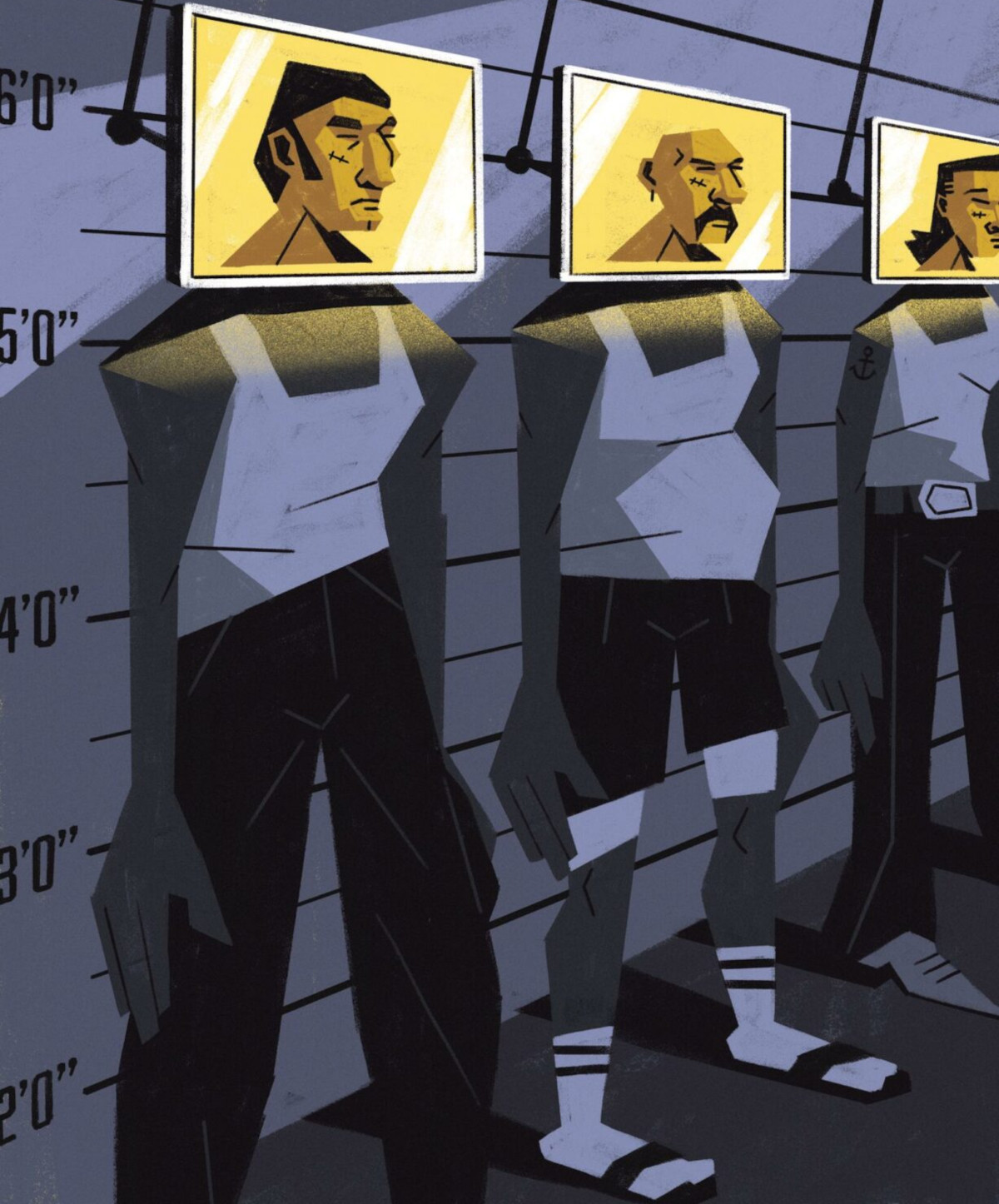
Relying on the banked photos or videos can limit how good a line-up can be.
Few people in those archives who have a scar across their left eye may look anything like the suspect – similarly, someone with a reasonable resemblance may have no scars.
Prof Heather Flowe, a psychologist at the University of Birmingham, and others, are exploring whether AI-generated faces could allow investigators to create line-ups where every filler has the witnesses’ pre-identified distinctive features, but is otherwise different.
Flowe says there’s still a lot of room for improvement when it comes to the new technology. People, she says, can still often tell AI-generated faces from real photos.
Also, AI-generated faces may look intrinsically more trustworthy because the photos these systems are trained on tend to be of people being happily photographed (as opposed to people who’ve been arrested and may be angry, defiant or just plain tired).
But Flowe is also working on another transformative technology: interactive virtual reality line-ups.
As she explains, crimes are often witnessed in conditions unlike those in which suspects’ photos are taken. Or the criminal was seen at an angle unlike the face in the line-up.
For the last few years, Flowe has worked with computer scientists to develop technology that uses videos of people to create manipulable avatars.
These enable witnesses to change the light levels under which a line-up is viewed, to pose the people in the line-up and even recreate their movements.
“It’s a simple concept of, ‘Let’s let the witness have control’,” Flowe says. “Let’s let the witness control the faces in a manner that corresponds to the conditions in which they saw the crime being committed.”
“We’ve tested tens of thousands of people all around the world, from children to older adults, own race, cross race, all sorts of conditions that are supposed to make remembering difficult,” Flowe says, “and we find that it boosts performance between 40 and 70 per cent.”
Testing memories
It’s long been hoped that technology may offer a way of distinguishing true memories from false ones. Indeed, there have been significant efforts to use brain scans to do this.
But the consensus among experts is that although the average patterns of brain activation may differ slightly between large groups of people recalling either true or false memories, the differences are, for now, not distinct enough to distinguish memory accuracy at an individual level.
However, Seale-Carlisle is using AI in an attempt to develop an objective way of assessing the likelihood of an accurate identification.

While experts now largely agree that witness confidence reflects memory accuracy, legal professionals are uncomfortable with people rating their own confidence.
For example, one person saying they’re 80-per-cent confident might mean they’re as confident as they ever are, whereas for another person, 80-per-cent confidence may represent serious doubt.
Hence, the algorithm Seale-Carlisle has been developing assesses witnesses’ behaviour during identifications to gauge both their confidence and the likelihood they’re correct.
In 2022, he published an initial study in which an algorithm was trained on transcripts of what people in a simulated study said while making identifications.
“The classifier returns a probability you can tell the investigator: ‘Based on these words, there’s a 90-per-cent chance that this witness has made a correct decision’,” he says.
He suspects that by adding body language, various features of recorded speech, plus the already vindicated reaction time (faster IDs tend to be more accurate), an even more powerful analysis tool can be created.
For now, he says, his team has plans to use the current algorithm on real-world eyewitness data.
Roll out
The science of eyewitness testimony is no mere academic pursuit – people’s freedom and lives depend on it.
But the new work with AI and VR needs to robustly prove its worth if it is to change police and legal practice, and as a result, affect trial outcomes.
Nevertheless, the difficulty of getting investigators and legal professionals to take the value of these new confidence statements seriously shows how hard changing those practices can be.
Wixted, Mickes, Seale-Carlisle and others have been saying for years now that such statements should be routinely collected.
In the US, the National Academies of Sciences, Engineering and Medicine recommended that the police “document witness confidence judgments” as far back as 2014. And a later memo to prosecutors from the US Attorney General seconded that.
Yet, across a country where local practices vary significantly despite federal guidelines, it’s far from standard to collect this information.
And in the UK, where identification procedures are centrally controlled, there remains no recommendation for recording confidence.
This is a source of frustration. “It’s the most important piece of information you can get from a witness aside from who they identify,” Seale-Carlisle says.
Researchers concede that part of the issue is that scientists collectively changed their minds.
Mickes says of the police, “They get irritated. ‘Well, you told us that confidence didn’t matter. Now you’re telling us it does’,” she says. “The science-to-practice lag is long.”
But Wixted sees signs of change. He says he’s counted five exonerations where a weak or negative first identification helped overturn a wrongful conviction.
These cases were reviewed for other reasons, but Wixted says, “This new scientific understanding helped push those exonerations over the line.”
Recently, he addressed a roomful of federal judges. He was nervous they’d dismiss him, his findings and his suggestions as audacious, but he says, “they were fascinated. They’d never heard anything like this.”
It ended with them wanting to know more about his work and how memory could be put on a firmer footing in the courtroom.
Editor's note
This piece oirginally discussed a review of 250 DNA exonerations of wrongfully convicted people. It stated that in 91 of these cases where the witness had confidently misidentified the suspect as the perpetrator, there was evidence that the witness had at first not been confident in their identification. This was inaccurate. In only a minority of cases was information about their confidence available. In most cases, this had been inferred from wrongful IDs and other statements.
Read more:
