
The only way that I would ever naturally attract a domestic cat is if I was slathered in fish paste. My daughter, on the other hand, is a moggy magnet. She only has to step outside, and random felines follow her down the street.
Some people, it seems, really are more likely to be approached by cats, but is it the people, the cats, or both?
In stark contrast to their famously standoffish reputation, many cats really do choose to be around people. In a study of 50 cats living in homes and shelters, the majority of cats chose human company over food and toys.
Cats also have a sophisticated olfactory system and can discriminate between the scent of their owner and unfamiliar people.
Presented with scent swabs taken from their owner and from unfamiliar humans, cats spend longer sniffing the odour of strangers. This suggests that they can identify familiar humans based on sensory cues.
They can also pick up on scents that are related to human emotion. In another study, researchers presented cats with swabs of sweat that came from people when they were feeling happy, frightened, stressed or neutral.
The cats did not appreciate the fearful scent. They were more likely to flatten their ears, swish their tail, tense up and back away.
So, would a cat willingly approach a person who is frightened? The evidence suggests, no.
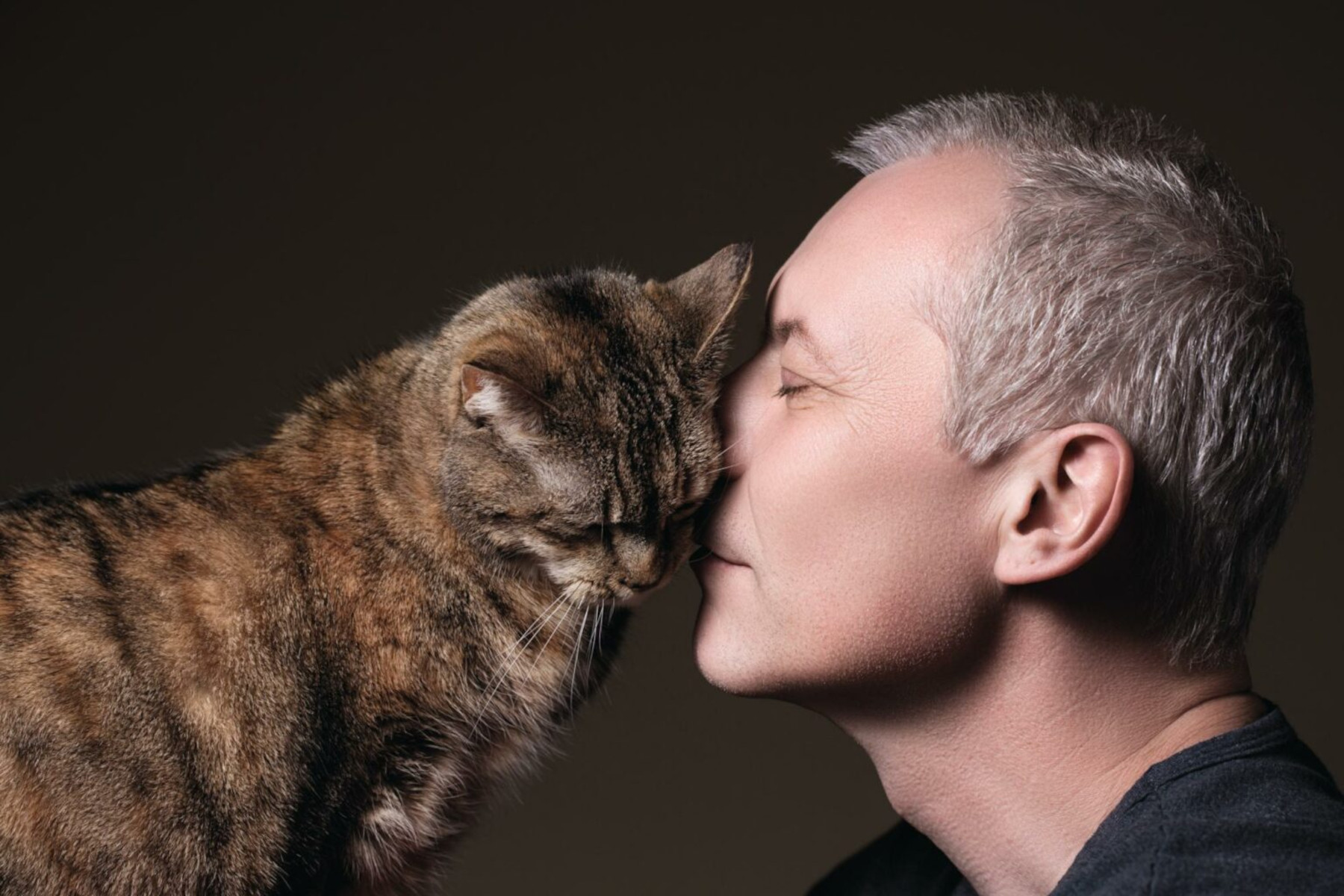
Cats also prefer people who act in certain ways. Right now, the science of cat behaviour is booming, and in another study, researchers monitored what happened when 119 people were allowed to interact with cats in a rehoming shelter.
Basically, the scientists filmed and watched a lot of cat videos and found that people who were more neurotic tended to interact in ways that were more controlling and less responsive to the cats’ cues.
That’s not cool for cats, suggesting that any self-styled moggy magnet is less likely to be neurotic and more likely to interact with cats in a respectful way.
Of course, not all cats are created equal. They have personality differences too, and this also influences their penchant for people.
In a 2022 pilot study, people were invited simply to sit in a cat café or rescue centre and hang out with the cats for two wonderful hours. Researchers monitored the cats’ behaviour and analysed their urine samples.
They found that male cats with lower testosterone levels and male cats that had lived with humans from a young age were friendlier.
This suggests that, in male cats at least, hormones and early life experiences play a big part in whether or not they will approach a person.
So, being a cat magnet is a skill you can learn, if you interact with the right cat and treat them with respect.
This article is an answer to the question (asked by Francis Chase, London) 'Why do some people naturally attract cats?'
To submit your questions, email us at questions@sciencefocus.com, or message our Facebook, X, or Instagram pages (don't forget to include your name and location).
Check out our ultimate fun facts page for more mind-blowing science
Read more:
