
Right now, beneath almost every patch of soil on Earth, one of the planet's strangest living structures is spreading. It's a fungus, though nothing like the mushrooms on your dinner plate. Instead, it grows as microscopic threads, finer than cotton, weaving through the soil and into the roots of most plants.
There are several types of these root-dwelling fungi. The most widespread – and the focus of a major new study – are arbuscular mycorrhizal, or AM, fungi. They've been around for hundreds of millions of years, long before the first trees.
Scientists have known for more than a century that they help keep ecosystems alive by ferrying nutrients and water to plants. Yet one surprisingly basic question has remained unanswered until now: just how much of this hidden network is buried underground?
The answer, fresh from a new study by the Society for the Protection of Underground Networks (SPUN), is: a hell of a lot.
Laid end to end, it says, the threads of the world's AM fungi would stretch for more than 110 quadrillion kilometres – enough to span about a tenth of the Milky Way, or roughly 11,000 light-years. And those same threads are thought to hold around 300 megatonnes of carbon: four to six times the combined weight of every human alive.
But the study does more than put a staggering number on a hidden world. It raises a bigger question: if something this vast has been growing beneath our feet all along, what is it doing for us – and what happens if it starts to fail?
Roots and all
Scientists often call these fungal networks Earth's circulatory systems, and it’s easy to see why.
Put simply, they weave themselves into a plant's roots and act as an extension of them, reaching far further into the soil than the roots could manage alone. They gather water and nutrients and deliver them to the plant. In return, the plant pays them in sugar, produced through photosynthesis.
This isn't some niche partnership between a handful of unusual species. AM fungi connect with around 70 per cent of all plant species on Earth. Tear apart this underground network and you're ripping the supply lines out from beneath most of the world's plants – and with them the crops, forests and grazing land we depend on.
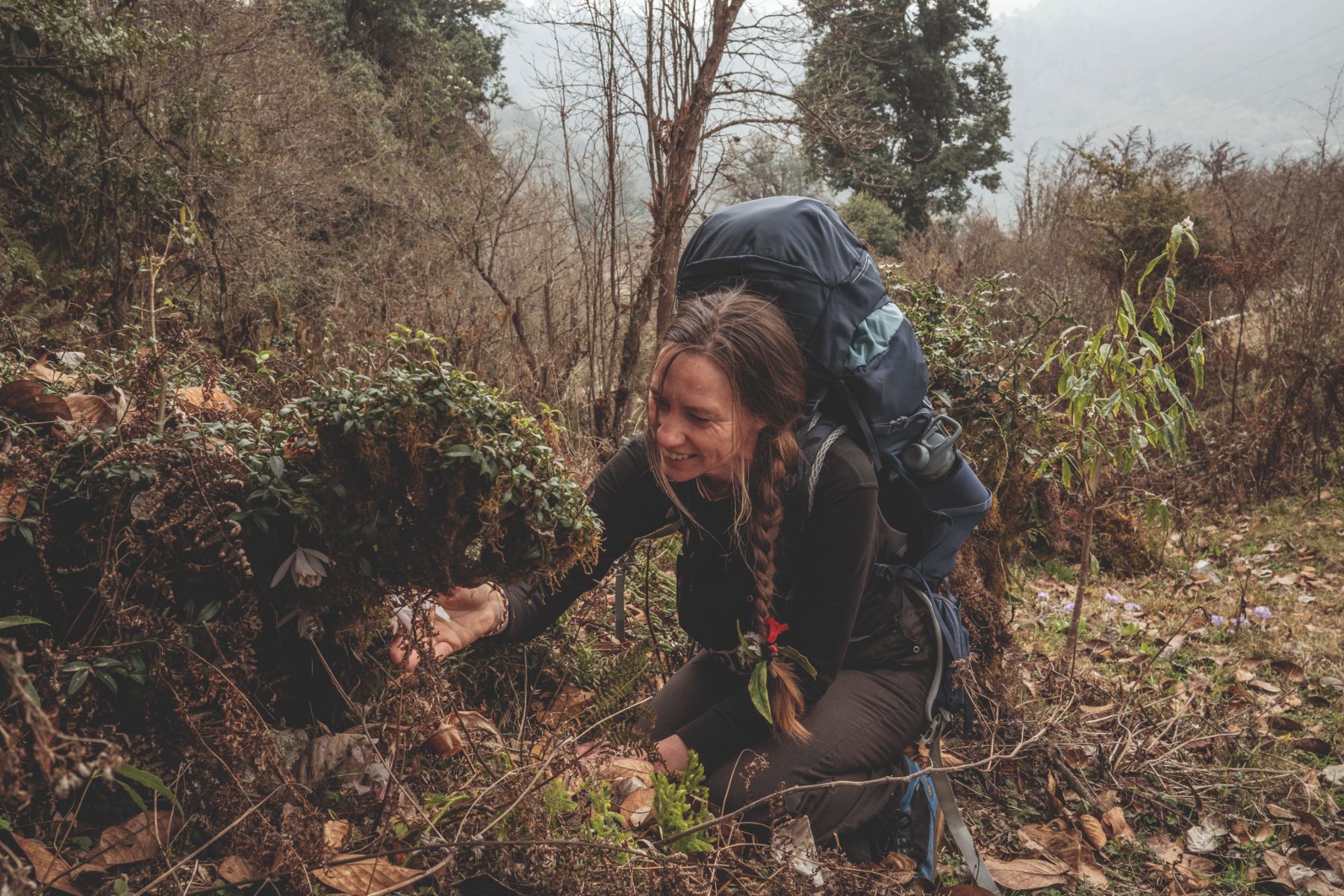
Feeding plants is only half the story. The same plant-fungi partnerships also help regulate the climate. As plants pull carbon dioxide from the atmosphere, they send some of that carbon underground to their fungal partners, helping store it in the soil. An earlier study estimated that around 4 billion tonnes of CO₂ flows into AM fungi every year – almost as much as the United States emits annually.
Yet while we devote huge resources to planting and protecting forests, the vast underground network where much of that carbon ends up has received comparatively little attention.
“It is hard to overstate the importance and enormity of these fungi,” says lead author Dr Justin Stewart, an evolutionary ecologist at SPUN. “There could be up to 10 metres of this network in just a teaspoon of soil.”
A system this vast, this woven into life on Earth – you'd think it would be safe. It isn't. In fact, the same study that revealed its staggering scale also revealed something far more worrying: we're destroying it. And fast.
Mowed down
When people picture nature worth saving, they generally think of rainforests and woodland. But it turns out that wild grasslands – the kind of open, unglamorous landscape most of us drive straight past – hold an estimated 40 per cent of the world's AM fungi. The plains of South Sudan, the Everglades in Florida and the Tibetan plateau are all predicted to be especially rich.
“For me, one of the biggest findings was the importance of grasslands, the great overlooked ecosystem of the Earth,” says study contributor Katie Field, Professor of Plant Soil Processes at the University of Sheffield. Grasslands, she says, turned out to host “this huge diversity of fungi and this huge density of fungi as well”.
And here’s where the trouble starts. Grasslands are among the least protected places on Earth, and they're being converted into farmland four times faster than forests are being cleared. That's bad news for the fungi, because farming is brutal on these networks.
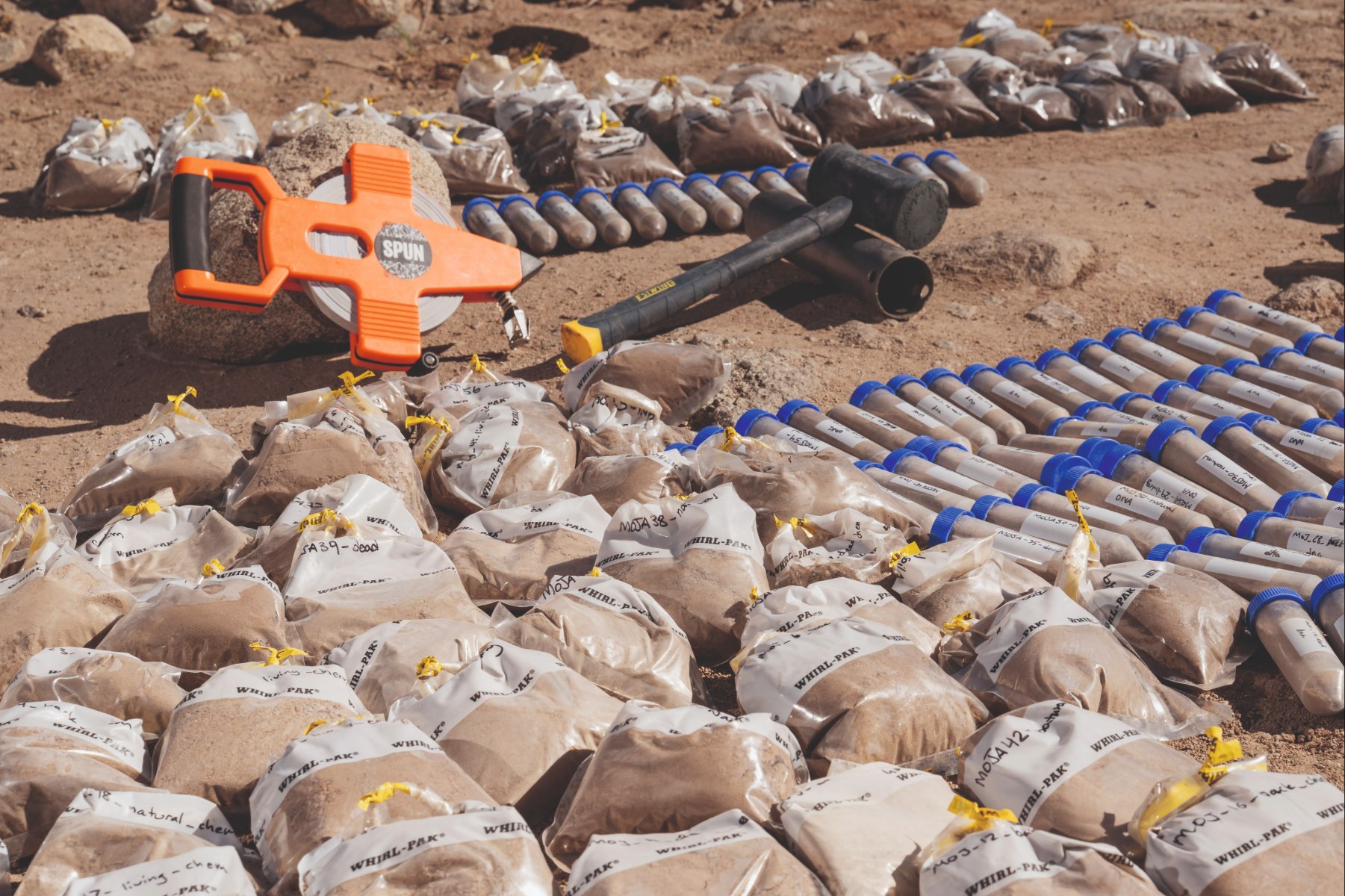
Ploughing tears the fine threads apart, and chemical fertilisers remove the plant's reason to feed the fungi in the first place. So the networks wither. Indeed, the study found that farmland holds only about half as much fungal network as wild land.
As we've seen, these are the same networks burying billions of tonnes of carbon each year. So, as they wither, that loss reaches well beyond the soil.
“Fungi have been ignored in climate and conservation for too long,” says Dr Toby Kiers, SPUN's executive director and a professor of evolutionary biology at Vrije Universiteit Amsterdam. “Now is the time to change that trajectory.”
The warning from outside the project is starker still. Professor Martin Bidartondo, a fungal ecologist at Imperial College London and Kew Gardens, says two centuries of industrial activity are forcing a system that took hundreds of millions of years to evolve into conditions it was never built for.
“Humans evolved some 300,000 years ago, and in the last 200 we've been spending that inheritance at astonishing speed,” he says. “We are doing the biggest experiment ever, without replicates or controls… rapidly creating Frankenstein conditions that plants and fungi did not evolve to cope with.”
If the networks were seriously degraded, he says, the damage wouldn't stay underground. Plants would struggle to establish and grow – and from there the cracks would spread outward: to the food and timber we harvest, the animals that live on plants, the soil's ability to store carbon and water, and its resistance to erosion.
Pull out the fungi, in other words, and a surprising amount of life above the surface starts to unravel.
Into the dark
The uncomfortable truth running through all of this is that we're being asked to look after something we still barely understand. Even the scientists who measured it are quick to point to the edges of their own knowledge.
“We still know relatively little about what they do, how effectively they function, and how their roles vary across environments and host plants,” Field admits. Her co-author, biologist Dr Merlin Sheldrake, agrees: “We still understand too little about how the infrastructure of these living transport systems is distributed across the planet.”
Normally, not knowing enough is a reason to wait and see. Here it cuts the other way. We now know the network is vast, that it quietly holds up most of the world's plant life, and that we're wearing it away fast.
That's why the SPUN team isn't waiting for the full picture. Alongside the study, they've released a Mycorrhizal Infrastructure Map – the first detailed global guide to where these networks lie – and they're urging governments to fold it into conservation plans: protecting the richest grasslands, rethinking how farmland is managed, and – crucially – treating the soil as something to be looked after rather than simply used.
Read more:
