
When Chris Fallows and his wife Monique began capturing fine art photographs of some of the world’s most iconic wildlife 30 years ago, they never saw humpback whales.
“They were like phantom animals,” he says. “Somebody would see one here, somebody else would see one there, but because they were so depleted in the post-industrial whaling era, we never even bothered trying to find them.”
By the morning of 30 December 2025, however, things were very different. Sitting on a boat off the west coast of South Africa, the couple worked furiously to capture the sight they’d spent decades waiting for.
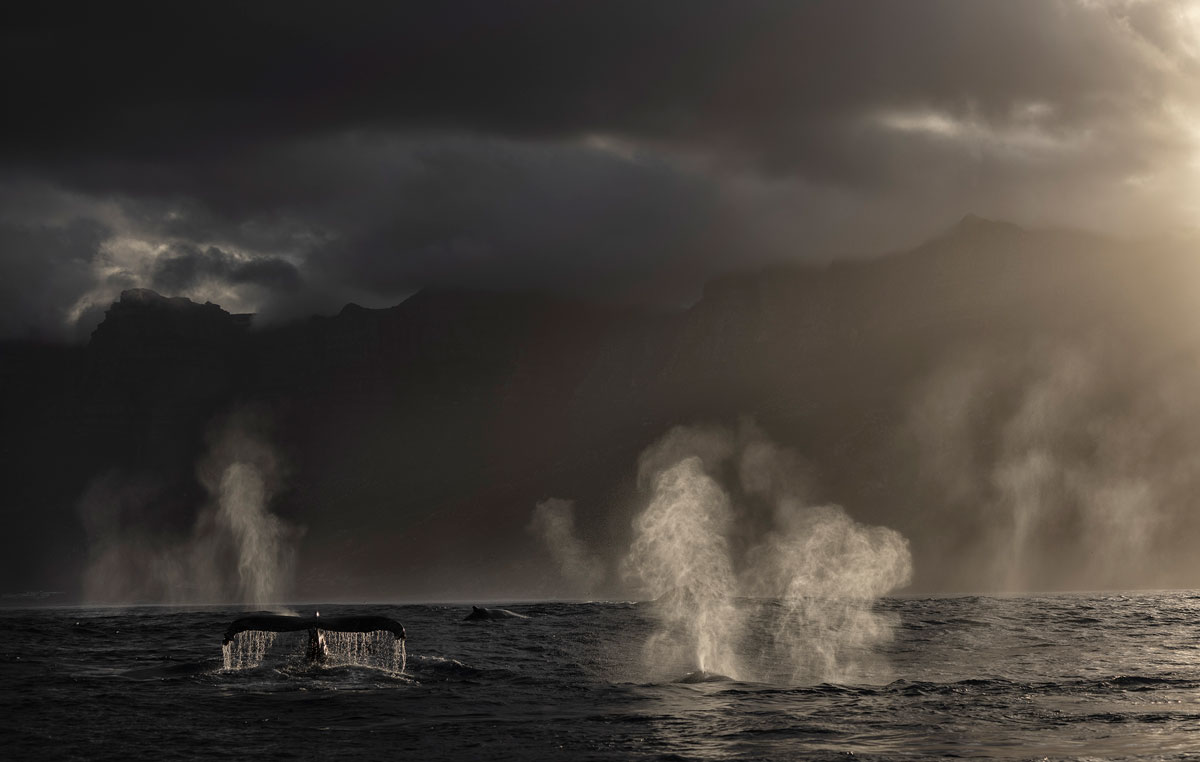
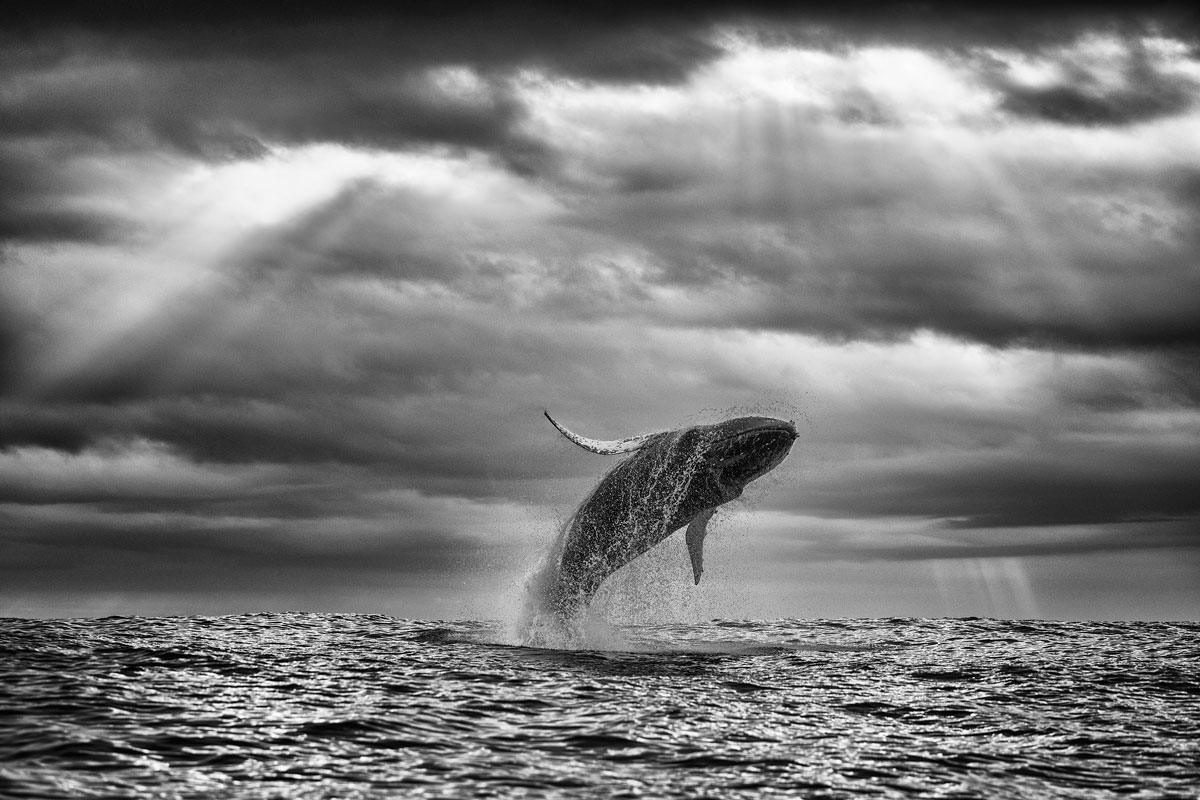
This wasn’t one humpback whale, or 10, or even 50, but more than 300, surfacing, diving, leaping from the water and sending plumes of spray into the air – the largest gathering of its kind ever recorded.
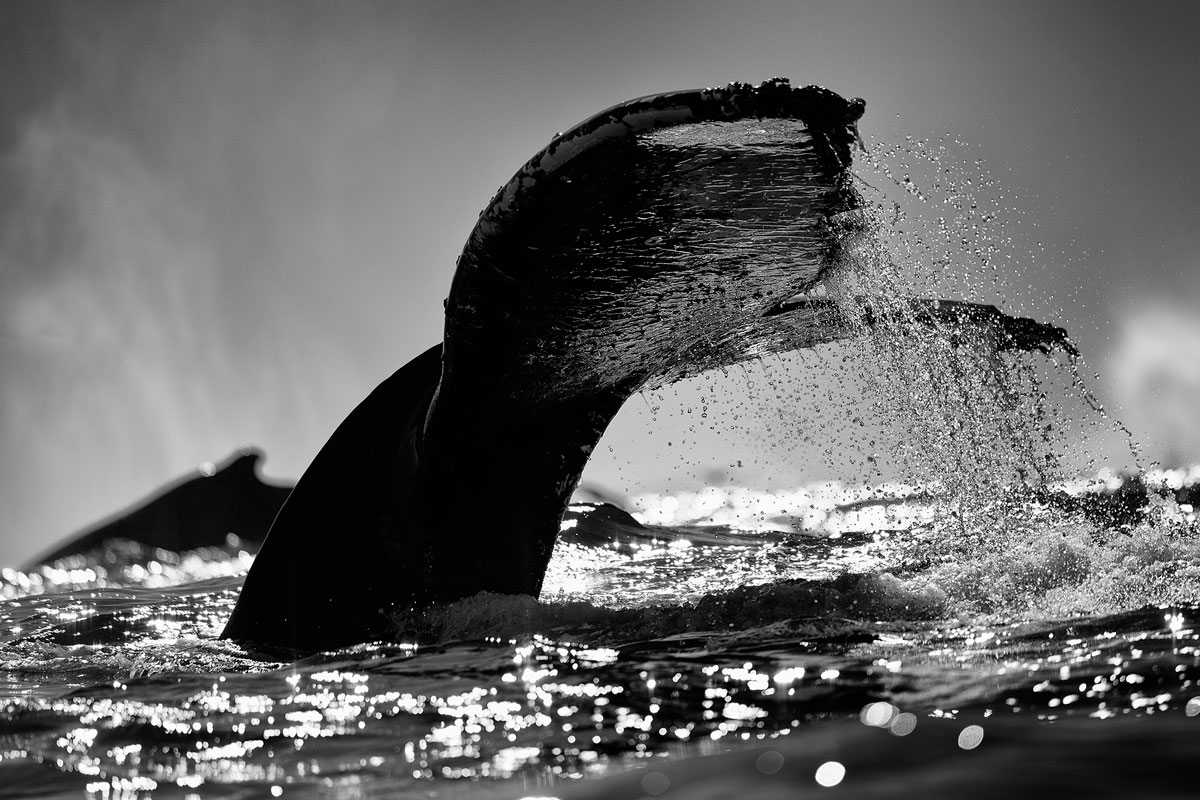
“It’s one of the most sensorial experiences you can have,” Fallows says. “It is an absolutely – the word awesome is very overused – but it is an absolutely awesome experience to be so close to an animal that’s 15, 16, 18m (50, 53, 59 feet) long, and to see so many of them.”
But while most of us can only dream of encountering these giants, the truth is that ‘super-groups’ – gatherings of 20 or more humpbacks which last for several hours – are becoming increasingly common.
Industrial whaling in the nineteenth and twentieth centuries slashed humpback populations by more than 95 per cent. A moratorium in 1985 gave them room to recover, and today most populations are no longer classed as endangered – a rare conservation success story.
Yet numbers alone don’t explain the super-groups. These mass gatherings only began around 2011, long after the recovery was underway.
Between 2015 and 2022, researchers recorded 239 of them, according to a study in Marine Mammal Science led by Elisa Seyboth at the University of Pretoria. Seyboth believes this is genuinely new behaviour, not simply a gap in the historical record.
“If it were historical, we would probably have records of massive groups in old-school recordings and books, even from the whaling era,” she says, “but records from back then only indicate groups of 10 to 15 individuals.”
Sightings have only increased in frequency since 2022, and now appear almost all year round.
Today, the super-groups have become one of marine biology’s most tantalising puzzles. As scientists like Seyboth and photographers like the Fallows spot, document and study these events with growing frequency, we are finally starting to piece together what might be drawing hundreds of humpbacks together.
It’s a party – and the parents aren’t invited
While much remains unknown about the super-groups, in a relatively short period of time, scientists have gleaned a great deal.
For one thing, we now know these gatherings are almost exclusively made up of juveniles. While calves were recorded inside super-groups on only four occasions in a seven-year study period, most individuals were not yet fully grown, breeding-age adults.
The groups are also highly fluid. Rather than a stable assembly of the same individuals, super-groups form, split and reconvene over hours.
“It’s not that those 100 whales are going to stick together for days and days,” says Seyboth. “They form a super-group, which then splits into smaller ones, or you might even see single individuals travelling in the area. Eventually, some individuals will get together again.”
Add to that the fact that the whales appear to come from multiple distinct breeding populations from different parts of the ocean and the gatherings start to look a bit like a convergence of strangers drawn to a well-stocked buffet.
That buffet is probably provided by the Benguela upwelling system, one of the most productive stretches of ocean on Earth, where cold, nutrient-rich water is driven up from the deep along South Africa’s west coast each summer.
The resulting blooms of plankton and prey – including shrimp, krill and small fish – appear to draw the whales in from across the seas. And with each whale needing over one tonne (2,200lbs) of food a day, there must be plenty to go round for so many to converge on one location.
A perfect storm
The super-groups are probably the product of several converging factors, Seyboth says.
Population recovery is the most obvious. From a low of around 10,000 individuals at the peak of industrial whaling, global humpback numbers have rebounded to an estimated 80,000 today. More whales means more individuals exploring feeding opportunities and, potentially, competing for them.
But something else may be pushing them together in unprecedented numbers.
Read more:
- Humpback whales keep bumping into things because they’re shortsighted, claims study
- 5 seriously strange ways wildlife is changing inside Chernobyl
- This is our clearest look yet at one of the deep ocean’s rarest animals
In Antarctica – the traditional summer feeding ground for Southern Hemisphere humpbacks – climate change is warming seas, shrinking the sea ice that juvenile krill depend on for shelter and food.
Research published in Global Change Biology found that in years of poor krill availability, the proportion of pregnant humpback females dropped from 86 per cent to just 29 per cent, a stark illustration of how tightly the whales’ fortunes are tied to their prey.
As krill densities fall in Antarctica, the thinking goes, whales are increasingly seeking alternative feeding grounds – and the west coast of South Africa has plenty to offer.
“It could be due to higher food availability on the west coast combined with lower krill availability in Antarctica,” Seyboth says. “This causes them to explore alternative areas and take advantage of the food available.”
The oceanographic conditions that trigger the formation of super-groups are now reasonably well understood.
Research shows that elevated chlorophyll concentrations in the Benguela in the months prior to sightings appear to be the key. These happen when there’s a bloom in plankton, the main food source of much marine wildlife, including krill.
The whales seem to form super-groups once these blooms have had time to attract dense swarms of animals coming to feed on the plankton, creating a humpback buffet.
What remains less clear is whether, once they arrive, the whales are actively cooperating to feed. Humpbacks are well known for bubble-net feeding – a sophisticated technique in which groups of whales dive below schools of prey and blow columns of bubbles to trap them near the surface before lunging upwards with open mouths.
Recent research on Canadian humpback populations found strong evidence that this behaviour spreads through some whale communities via social learning, so it’s possible something similar is going on off the South African coast.
“In the last season, in November 2025, they might have been doing some team effort to feed on the prey,” Seyboth says. “It’s better for them to work as a team to access the available food more effectively. That would help explain the formation of the tight aggregations, because otherwise they would be fighting for food. There needs to be a benefit to being so close to each other to feed.”
What happens when the party’s over?
Yet despite the strides made in understanding this phenomenon, fundamental questions remain. Among the most pressing is what happens after the feeding is done.
Seyboth’s team tagged a number of individuals in 2025 to begin tracking their movements. Most, it turned out, stayed in the area after being tagged. But whether the whales subsequently head south to Antarctica, remain along the African coast, or do something else entirely is still unknown.
“Is the West Coast just a ‘snack on the way’ before they go south, or is it enough to sustain them through the year? We don’t know that,” she says.
There is also a shadow over the success story. While recovering whale populations are, in themselves, cause for celebration, the same climate change that is depleting Antarctic krill may also pose long-term threats to humpbacks in ways not yet realised.
Vessel strikes are another concern. Major ports like Cape Town and Saldanha Bay sit on the west coast of South Africa, and the shipping traffic they generate poses a real collision risk to whales in the area. According to the global certification standard for sustainable seafood, Friend of the Sea, cargo, cruise and fishing vessels kill at least 20,000 whales across different species every year.
For Fallows, who witnessed the flying great white sharks disappear from False Bay even as the humpbacks returned, the stakes feel personal.
“We cannot give up hope,” he says. “The humpback whales’ increase in numbers is a reflection of the passion of people to save them and governments changing their stance. They are the marine poster child of what is possible when we give nature a break.”
From the deck of a small boat, surrounded by hundreds of whales exhaling in unison, it’s a sentiment that’s difficult to argue with.
Read more:
- Without whale pee, the world’s oceans would probably fall apart. Here’s why
- Killer whales filmed using tools for the first time – and scientists are stunned
- The strange reasons your dog eats grass (and poop)
To see more of Chris and Monique Fallows’ iconic photographic work and conservation efforts, visit chrisfallows.com or @chrisfallowsphotography on social media.
