
Beneath the waves live all sorts of noisy animals. Many use sounds to communicate with each other or as a form of echolocation, and for some the noises they make are a side effect of the way they hunt.
Here are some of the loudest:
Sperm whale (Physeter macrocephalus)
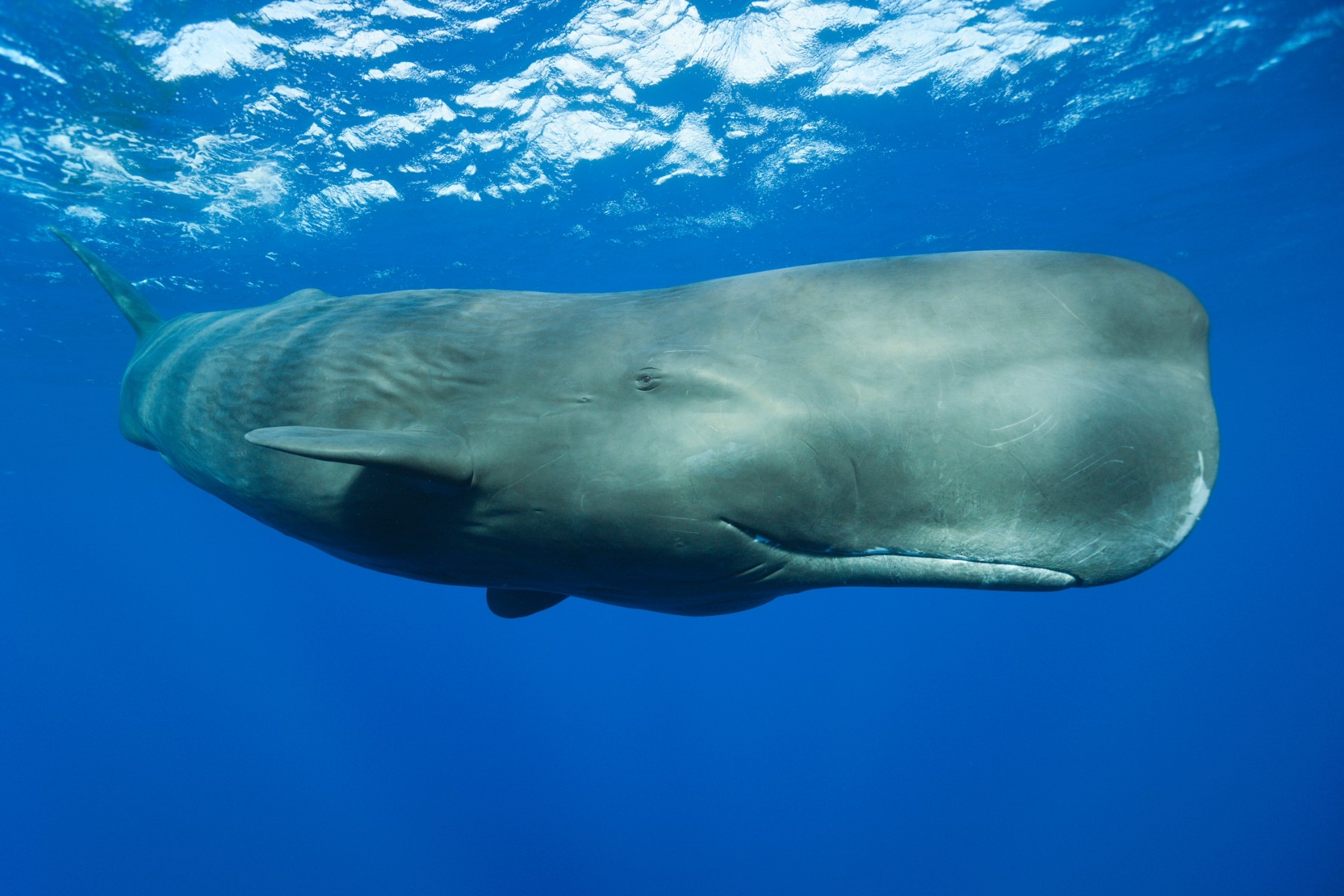
The square blocky head of a sperm whale is in fact a giant nose – the biggest nose in the animal kingdom – and it’s responsible for generating ear-splitting sonar.
Sperm whales dive deep into the twilight zone, 1,000m (3,300ft) or more below the surface of the ocean, and emit shots of sound to interrogate the darkness and hunt for squid.
Sperm whales make these sounds by pushing air along their right nostril over a pair of fleshy flaps, known as monkey lips, which vibrate like human lips blowing a raspberry.
The clicks and crackles sound like a roll of adhesive tape being unwound, and can be as loud as 236 decibels.
For context, sounds above 140 decibels can damage human hearing after just one exposure – although decibels underwater are measured on a different scale, so the two can’t be directly compared. Even so, it’s best to steer clear of any sperm whales that are looking for a snack.
Gulf corvina (Cynoscion othonopterus)
These are members of the family of fish known as croakers, due to the sounds they make by drumming specialised sonic muscles against their gas-filled organ, the swim bladder.
They are endemic to the Northern Gulf of California in Mexico and migrate to the Colorado River Delta in northwestern Mexico to spawn.
Millions of fish congregate and the males sing a loud chorus that reverberates through the hulls of small fishing boats and can be heard above the water line, like a giant humming beehive.
The calls from a single fish can reach 177 decibels, and the collective sound crescendos to 202 decibels.
Bigclaw snapping shrimp (Alpheus heterochaelis)
On a healthy tropical coral reef, there’s a constant crackling and popping soundtrack, like a sizzling frying pan, which comes from masses of small crustaceans burrowed in the seabed.
Snapping shrimp (also known as pistol shrimp) have one very large claw, or chela, which they can snap shut at speeds of more than 100km/h (approx 62mph).
The speed of the snap creates a low-pressure bubble that collapses with a loud pop, generating a powerful shock wave that stuns their prey and wards off other shrimp. Snapping shrimp can make noises of between 183 and 210 decibels.
Weddell seal (Leptonychotes weddellii)
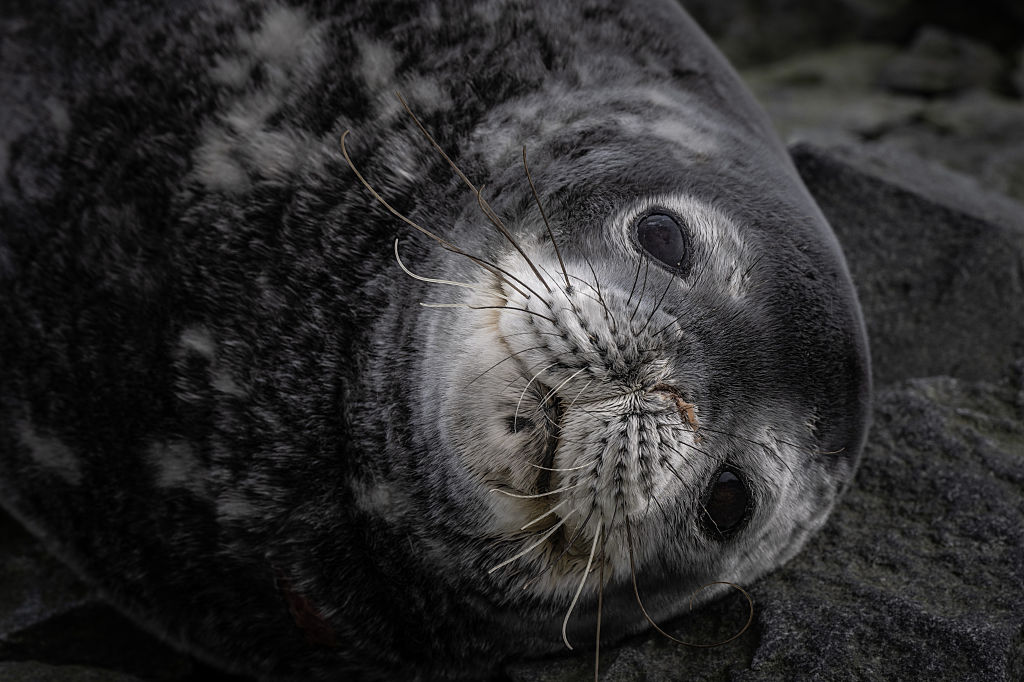
Under the sea ice around Antarctica, it can sound like an alien space battle is raging, with laser guns pew-pewing through the water. In fact, these are the calls of Weddell seals chirping, whistling and buzzing.
Their repertoire includes ultrasonic calls beyond the range of human hearing. It’s possible these calls are a form of echolocation that helps the seals find breathing holes in the ice during the long dark winter.
Scientists have measured their calls at up to 137 decibels.
Northern elephant seal (Mirounga angustirostris)
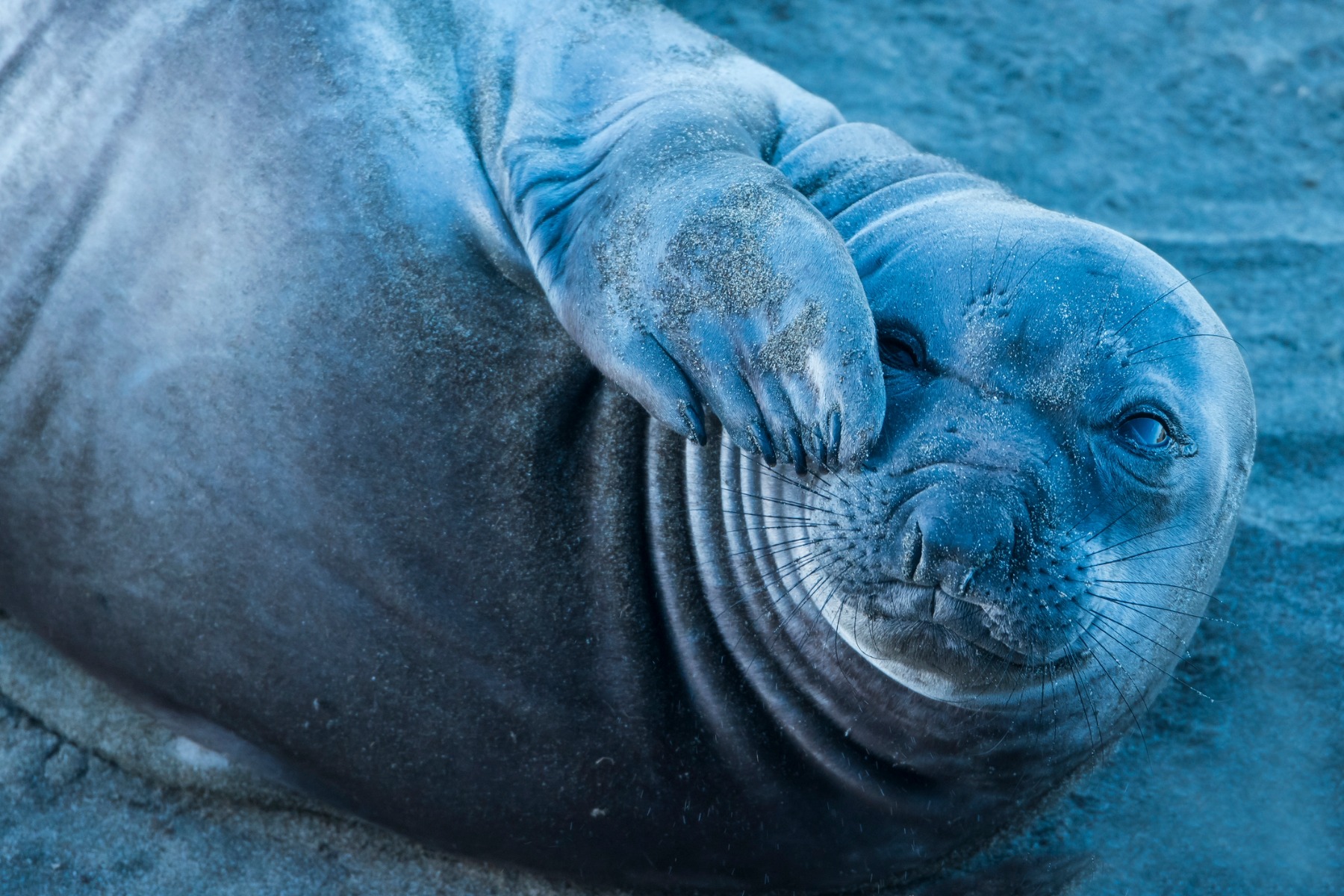
Massive male elephant seals, which have been recorded to weigh up to a whopping 3,700kg (8,200lb), although they typically weigh up to 2,300kg (5,070lb), lumber onto land during the breeding season and bellow at each other while competing over females.
Their airborne calls can reach 131 decibels.
But it’s not a simple matter to compare how loud animals are underwater and out on land because water is around 800 times denser than air.
Loudness is measured slightly differently in each medium and can’t be directly compared.
This article is an answer to the question (asked by Mary Robinson, Maine) 'What's the loudest animal in the ocean?'
To submit your questions, email us at questions@sciencefocus.com, or message our Facebook, X, or Instagram pages (don't forget to include your name and location).
Check out our ultimate fun facts page for more mind-blowing science.
Read more:
