
According to a recent social media post, a captive ball python once went for 22 months without eating anything at all, then broke her fast for a gerbil.
This is extreme (and unlucky for the gerbil), but wild pythons can, and do, go for a year or more without feeding.
As ambush predators, they eat what they can, when they can, then somehow manage to get through their patches of famine with no apparent detriment to their health.
Their heart stays healthy. They manage to maintain plenty of muscle mass. And their metabolism remains in tip-top condition.
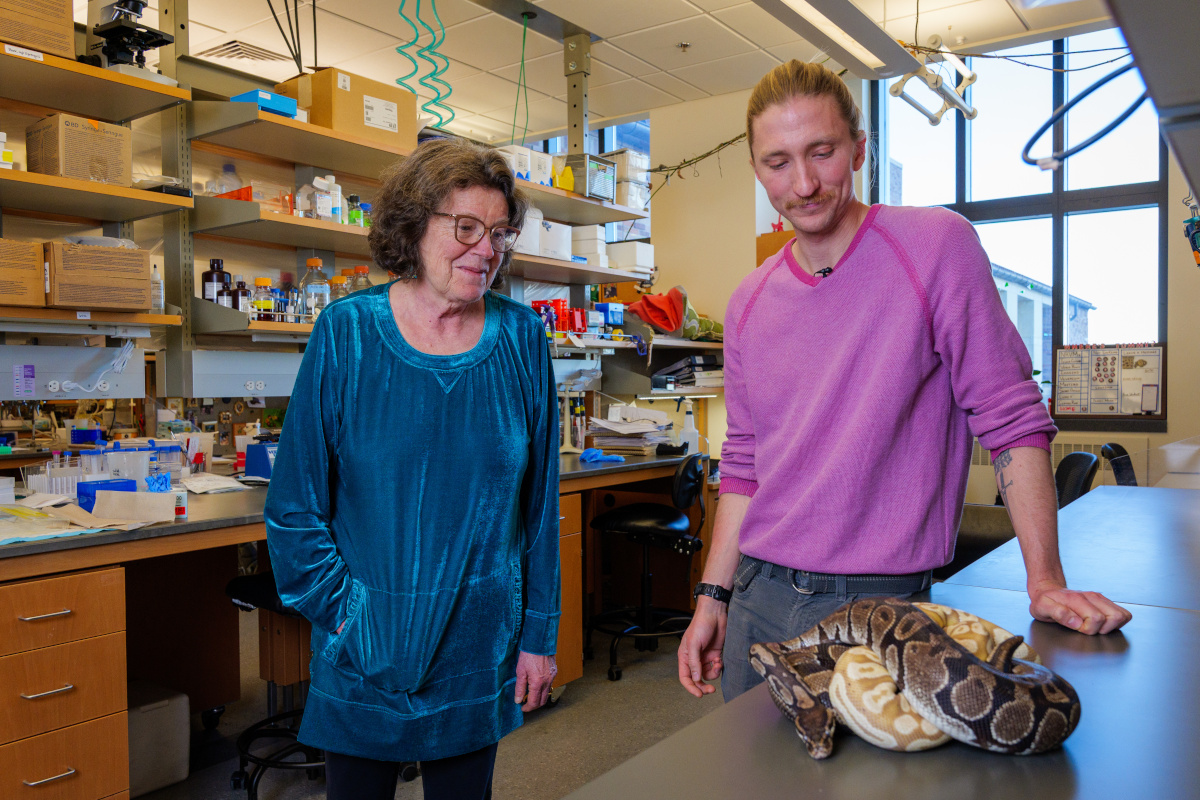
Researchers who have figured out how pythons manage to pull off this seemingly magical feat, think, not just that snakes are amazing, but that what they’ve learned could have repercussions beyond the world of reptiles.
It could lead to the development of new drugs to help human obesity and metabolic diseases.
Prof Leslie Leinwand from the University of Colorado Boulder, in the US, has been studying pythons in her lab for decades. She has shown that in the hours after they eat, snakes can dial up their physiology to help them digest their meal.
Their heart expands by 25 per cent and their metabolism speeds up 4,000-fold.
In a recent study, she analysed blood samples taken from Burmese and ball pythons that were fed once every 28 days. The samples showed levels of more than 200 metabolic byproducts increased after the pythons ate, but one particular molecule stood out.
Para-tyramine-O-sulfate (pTOS) is a molecule that’s made by the bacteria in the snake’s gut. After eating a meal, levels of pTOS increase 1,000-fold, providing a feedback signal to the reptile’s brain, which then suppresses appetite.
When high doses of pTOS were given to obese or lean mice, it did the same thing. The rodents lost weight, but critically, they didn’t have any gastrointestinal problems, muscle loss or declines in energy.
This is exciting because current weight-loss drugs, such as Ozempic and Wegovy, which act on the hormone glucagon-like peptide-1 (GLP-1), can cause these and other side effects.
Although millions of people use GLP-1 weight-loss drugs, studies show that as many as half stop taking them within a year.
“We’ve basically discovered an appetite suppressant that works in mice without some of the side-effects that GLP-1 drugs have,” says Leinward.
Although pTOS occurs naturally in humans, it only increases modestly after a meal. It doesn’t occur naturally in mice and because most research is done in mice and rats, this explains why the molecule had been overlooked.
It’s not just weight loss that pTOS could be useful for. Sarcopenia is the slow, progressive loss of muscle that occurs with age. It can lead to reduced mobility, increased fall risk and loss of independence.
At present there are no approved treatments for the condition, but it’s possible that pTOS, or molecules derived from it, could be helpful.
Now, Leinwand’s team is working to catalogue the function of the other metabolites that increase after pythons eat. “We’re not stopping with just this one metabolite,” says Leinwand.
“There’s a lot more to be learned.”
This article is an answer to the question (asked by Joshua Thompson, North Yorkshire) 'How do pythons eat so rarely yet manage to stay healthy?'
To submit your questions, email us at questions@sciencefocus.com, or message our Facebook, X, or Instagram pages (don't forget to include your name and location).
Check out our ultimate fun facts page for more mind-blowing science
Read more:
