
The internet is full of unlikely viral sensations, but few are as niche as the one that caught the attention of Japanese Twitter users in 2023.
The post featured an exhibit from the Natural History Museum of Helsinki in Finland. Lovingly crafted by Estonian palaeontologist Elga Mark-Kurik, it was a model of an extinct fish called Sacabambaspis.
Sacabambaspis swam in the shallow waters around the supercontinent of Gondwana during the Ordovician period.
It’s named after the village of Sacabamba in Bolivia, where the first fossils were discovered, but subsequent specimens have been found as far away as Oman, Australia and Argentina.
From these, experts have determined that Sacabambaspis was truly weird.
Imagine a foot-long fish that looks as if it’s been whacked on the head with a frying pan. The top half of the body is flattened; the belly is bulbous.
Sacabambaspis belonged to a group of fish known as the agnathans. These are jawless fish with circular mouths that suck up food like a vacuum cleaner.
The mouth of Sacabambaspis contained around 60 rows of small bony plates. These probably moved, helping the oral cavity to contract and expand, so the fish could slurp up plankton, algae and other tasty morsels.
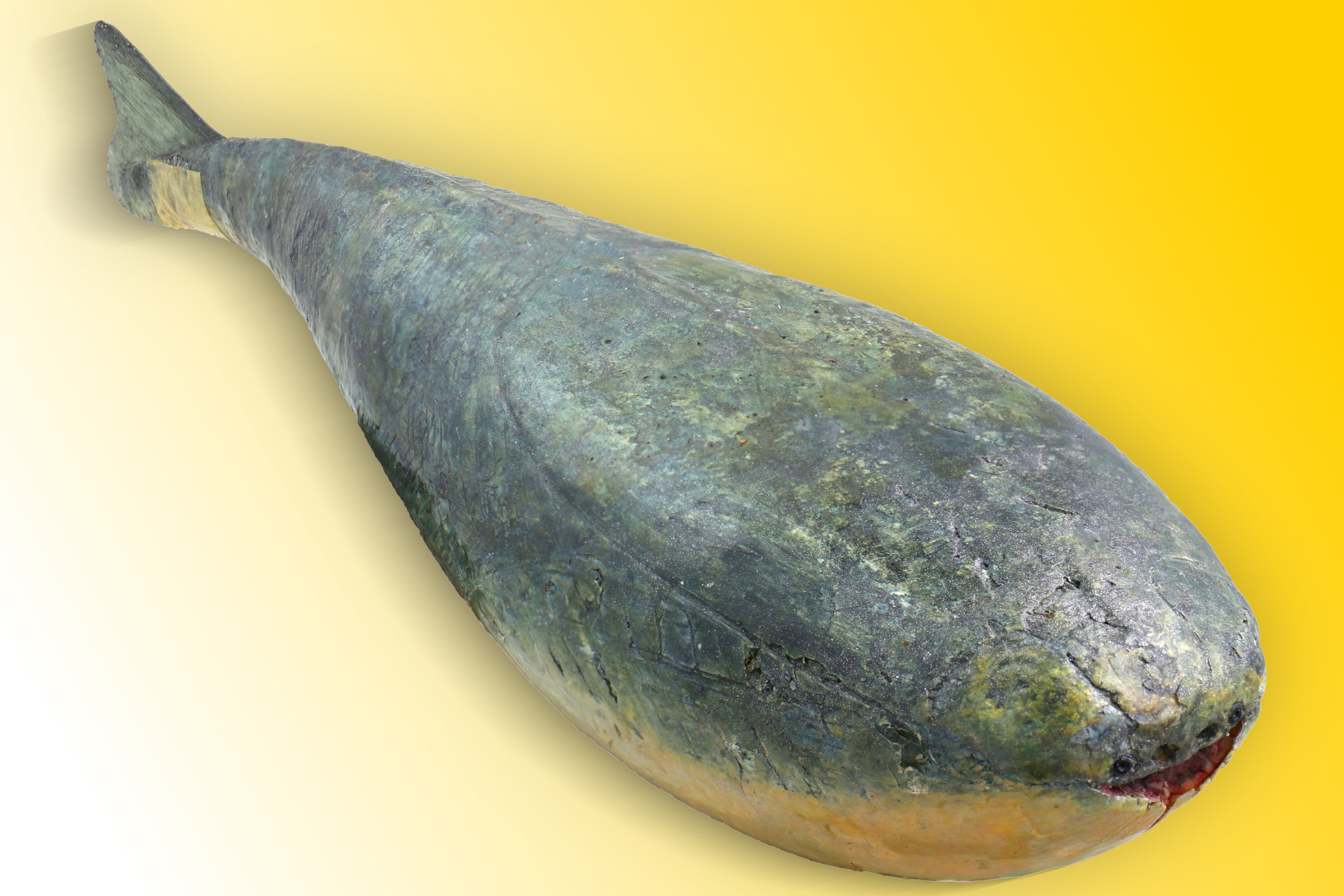
Another oddity is its fins, or lack of them. Most fish have fins on their body, which they use to brake, steer and slice through the water. Sacabambaspis had a fin-free body which tapered down to a muscly tail tipped with one tiny fin.
From this, we can surmise that Sacabambaspis swam less like a fish and wriggled more like a tadpole.
It’s the eyes, however, that are the real talking point. According to the fossils that have been studied, the organs were small and placed towards the front of the face, where they were surrounded by a bony ring.
Any soft tissue, such as retinas and lenses, was not preserved, so when Mark-Kurik was making her model, she allowed herself a bit of artistic licence.
She hand-sculpted her replica from foam, before casting it in silicone and rendering it in a silvery glaze. The mouth was shaped into a cheeky smile, but when the eyes proved tricky, she turned to her local craft store for inspiration.
What happened next has become etched into museum legend.
She could have bought fine liners and drawn them on. She could have bought modelling clay and moulded them. But instead, she bought some googly, black and white doll’s eyes, and then slapped them on the fish’s face.
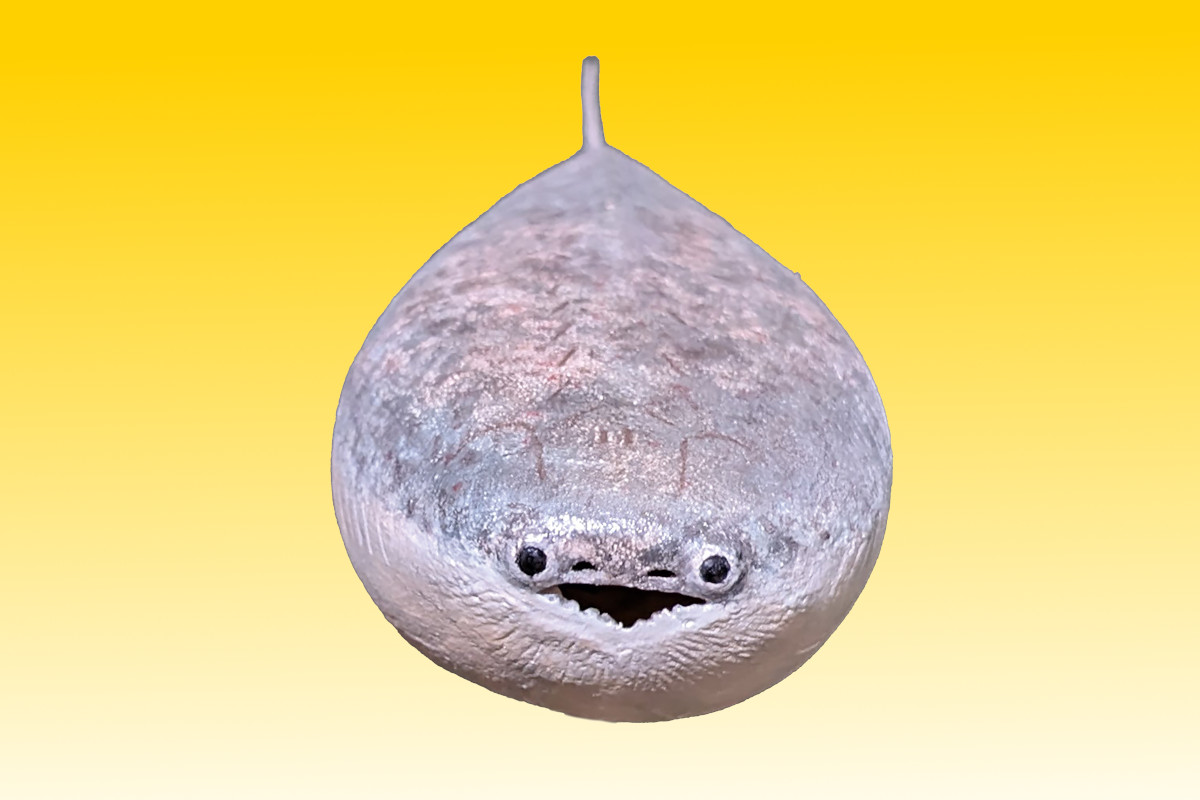
When the exhibit went on display in 1995, it wore the same bamboozled expression as the blue Sesame Street puppet, Cookie Monster.
The model was a triumph, but for more than two decades, it languished in relative obscurity. Then a single photograph changed everything.
When the image of Mark-Kurik’s creation went viral, the ancient fish became an internet sensation. Fan art was made and memes were generated.
Today, you can still buy Sacabambaspis t-shirts, plushies and key chains. Not bad going for a fish that’s been extinct for over 450 million years!
To submit your questions, email us at questions@sciencefocus.com, or message our Facebook, X, or Instagram pages (don't forget to include your name and location).
Check out our ultimate fun facts page for more mind-blowing science
Read more:
