
Experts have uncovered thousands of previously undocumented types of insects in California, revealing that far more creepy crawlies live in the state than anyone had realised.
By attempting to read the DNA of more than a million insects caught in traps across the state, scientists from the Natural History Museum of Los Angeles County identified more than 42,000 distinct genetic groups (potential species).
Despite collecting more than a million insects collected, statistical modelling suggested the survey had identified only around two-thirds of California’s insect species.
That modelling put the estimated total at 61,000 or more – meaning nearly 20,000 insect species could still be out there, waiting to be found.
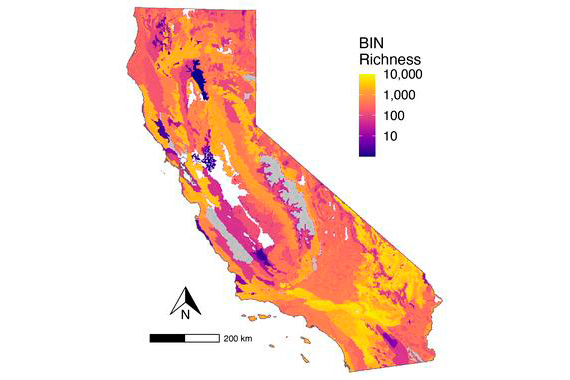
The researchers also found that even areas with similar climates and geography hosted very different insect communities.
“The vast gulf between the earlier and new estimates of insect life deepens the urgency of conserving the wild places these insects call home,” a representative for the researchers said.
The researchers used DNA barcoding, reading a short section of each successfully sequenced specimen's genetic code to distinguish between genetic groups.
However, these groups don't always correspond to formally recognised species. So far, only about a quarter of the specimens (individual insects) in the study could be assigned a formal species name.
The researchers also warned that their estimate was a conservative minimum, as much of the sampling relied on Malaise traps, which tend to miss non-flying insects.
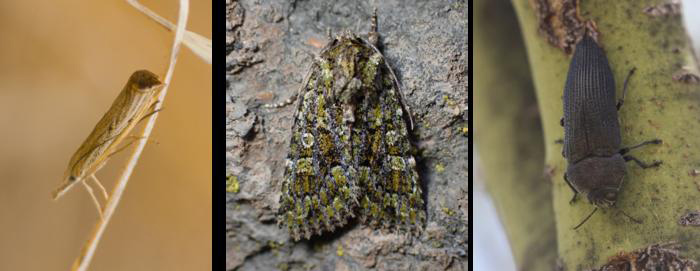
The insects were collected at 72 sites across 13 of California’s 14 major ecoregions (areas with similar ecosystems), with additional sampling at 454 locations using methods including sweep nets and light traps.
Many of the traps were managed by volunteers: in one case, two people helped maintain a trap in a high desert for more than three years.
The study was the first publication from the California Insect Barcode Initiative, a £4.5m ($6m) project to build a DNA barcode library covering every insect species in the state.
The California study fits a wider pattern. A study published in PNAS in June estimated there were at least 14 million insect species on Earth, and possibly 20 million or more – two to three times the consensus estimate of about 6 million.
The research was published in the journal Ecography.
Read more:
