
Blending technology with biological life lets you get the best of both worlds. The results of doing so can be particularly surprising, especially when you combine cybernetic implants with insects.
Cyborg insects might sound like an idea straight out of science fiction, but it’s a very real field of research. Scientists have been experimenting with combining bugs and tech since the late 1990s.
Cyborg hawkmoths
These Manduca sexta moths experienced a very experimental upbringing
What if you could grow a cyborg insect, rather than build one? That’s essentially what researchers from Cornell and North Carolina State Universities set out to do with tobacco hornworms.
They implanted electrodes into the insects at the pupal stage and allowed them to grow with the tech in place. When the insects eventually emerged as adult hawkmoths, the electrodes were already integrated into their flight muscles.
This created a more stable and reliable system than simply implanting them into an adult moth – through an approach that caused less distress to the insect in the process.
The researchers could then use the electrodes to stimulate the flight muscles and study how they responded. An added bonus of this method was that the moths also remained capable of normal flight.
The research, published in 2014, was part of Hybrid Insect Micro-Electro-Mechanical Systems (HI-MEMS), the same DARPA-funded programme as the remote-controlled beetles.
The aim was to explore whether living insects could be combined with electronics to create manoeuvrable machines, with the hope that hawkmoths could eventually carry sensors into places that robots couldn’t easily reach.
Read more:
- Footballing bees are expert problem solvers
- Five fascinating facts about bees
- Armed robots are now battling on Ukraine’s front line. What comes next is even stranger
Cyborg locusts
These fast-sensing, bomb-sniffing locusts could be the new wave in airport security
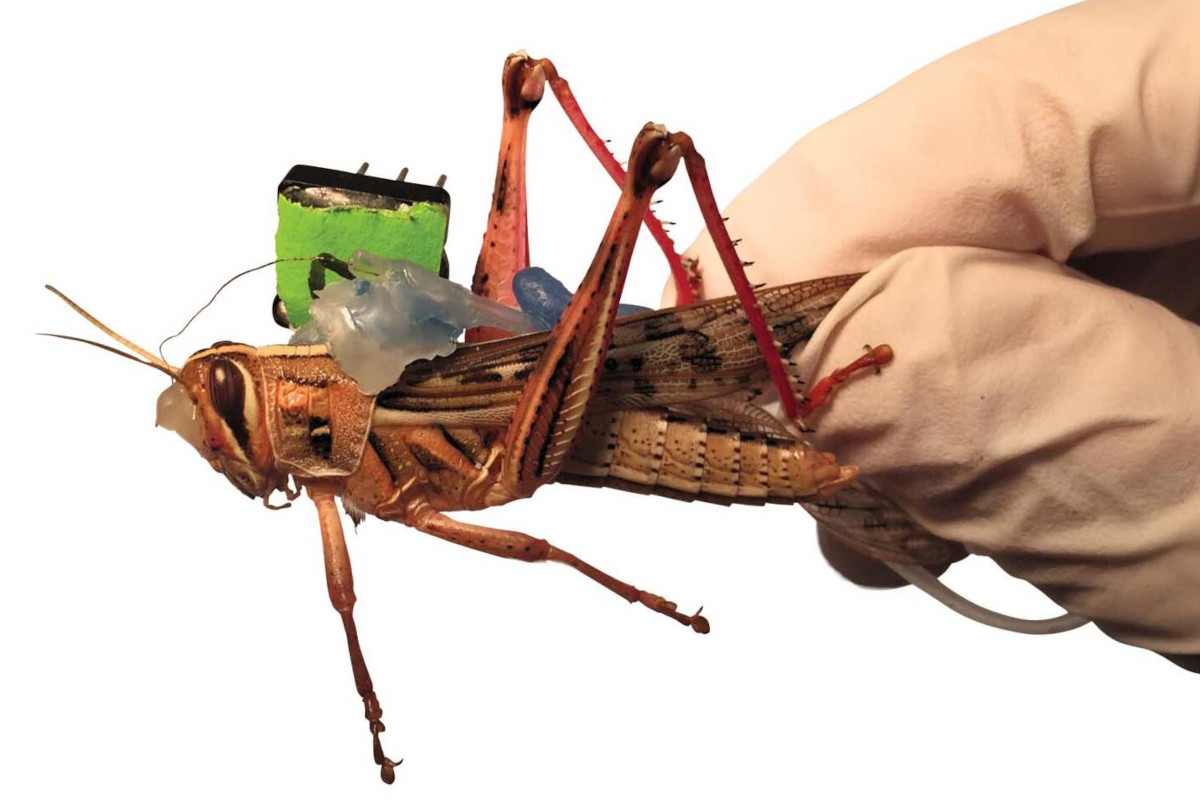
Using electronics to harness an insect’s natural abilities is a big part of what makes this field so interesting, as researchers in the US demonstrated in 2020.
They devised a way of turning locusts into living chemical sensors by exploiting their incredibly precise sense of smell.
The team from Washington University in St Louis exposed locusts with electrodes implanted into their brains to vapours from various explosives and bomb-making chemicals.
They discovered the insects’ olfactory neurons produced distinct patterns of activity in response to each chemical, with signals decoded in as little as 500 milliseconds – considerably faster than a conventional sensor could manage.
The scientists also found that the activity in the brain changed depending on how concentrated the explosive vapour was, meaning that as well as identifying what the locust was smelling, the data also had the potential to help locate the source.
In 2021, the US Office of Naval Research awarded the team a grant of over $850,000 (£627,000 approx) to further investigate how little explosive vapour the locusts could detect.
Cyborg dragonflies
The backpack of electronics worn by these dragonflies was light in more ways than one
While electrical stimulation proved effective for controlling insect movement, in 2017 researchers revealed a more precise way of communicating with an insect’s nervous system.
DragonflEye, a collaboration between American R&D company Draper and the Howard Hughes Medical Institute, in the US, used genetic engineering to make specific steering neurons in a dragonfly’s nerve cord sensitive to light.
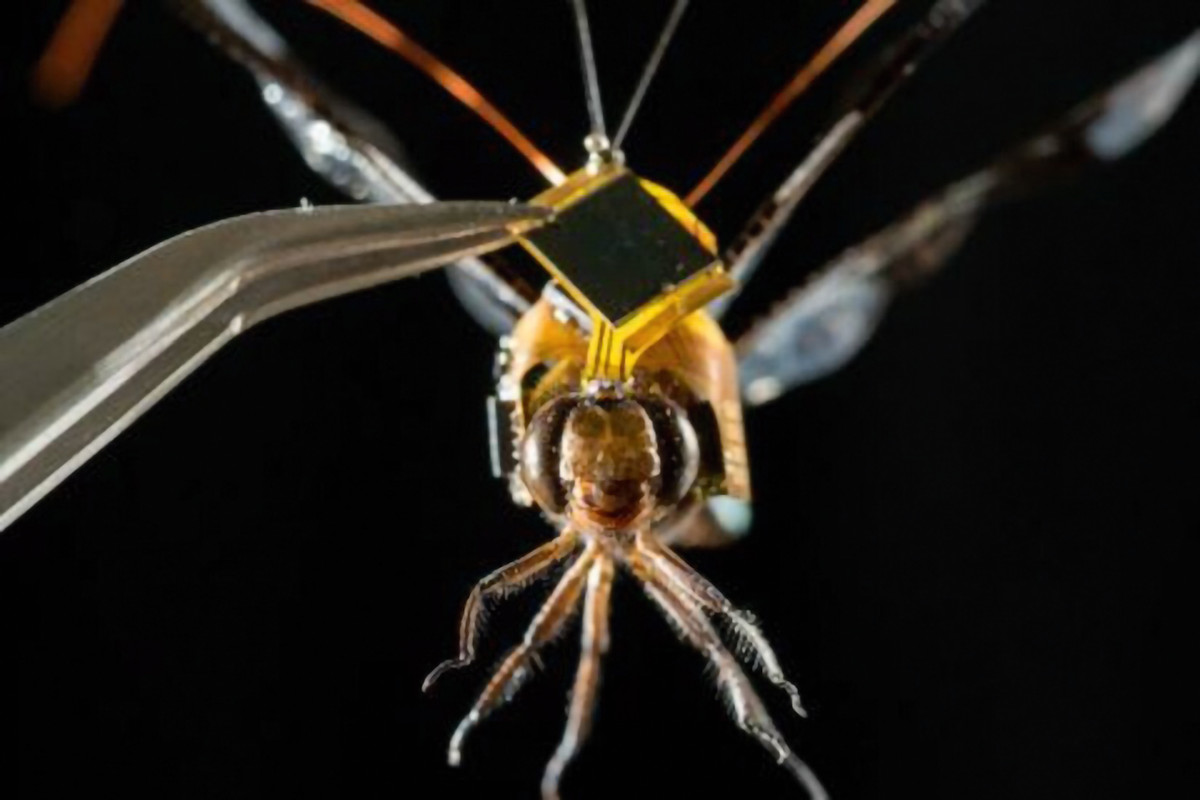
This allowed researchers to use a tiny, flexible optical implant called an optrode to deliver pulses of light to these modified neurons, creating a more selective way to influence the insect’s flight than directly stimulating its muscles.
Researchers chose dragonflies for the experiment because they’re robust, agile and efficient fliers for their small size, while their worldwide distribution means they could potentially be used to collect and report data from a wide range of environments.
But at just 600mg (0.02oz), their size also presented a challenge, forcing the team to shrink the backpack of electronics considerably and use a solar cell to harvest energy instead of a battery.
The result was a cyborg insect that robotics alone would struggle to replicate at this scale – particularly when it comes to power and stability. Researchers envisaged miniaturising the tech further for even smaller insects.
Cyborg cockroaches #1
Move over Tesla, we have rechargeable roaches now
Cockroaches were among the first insects that scientists turned into cyborgs. They’re still a popular choice for researchers today, owing to the fact they’re strong enough to carry hardware that smaller insects can’t.
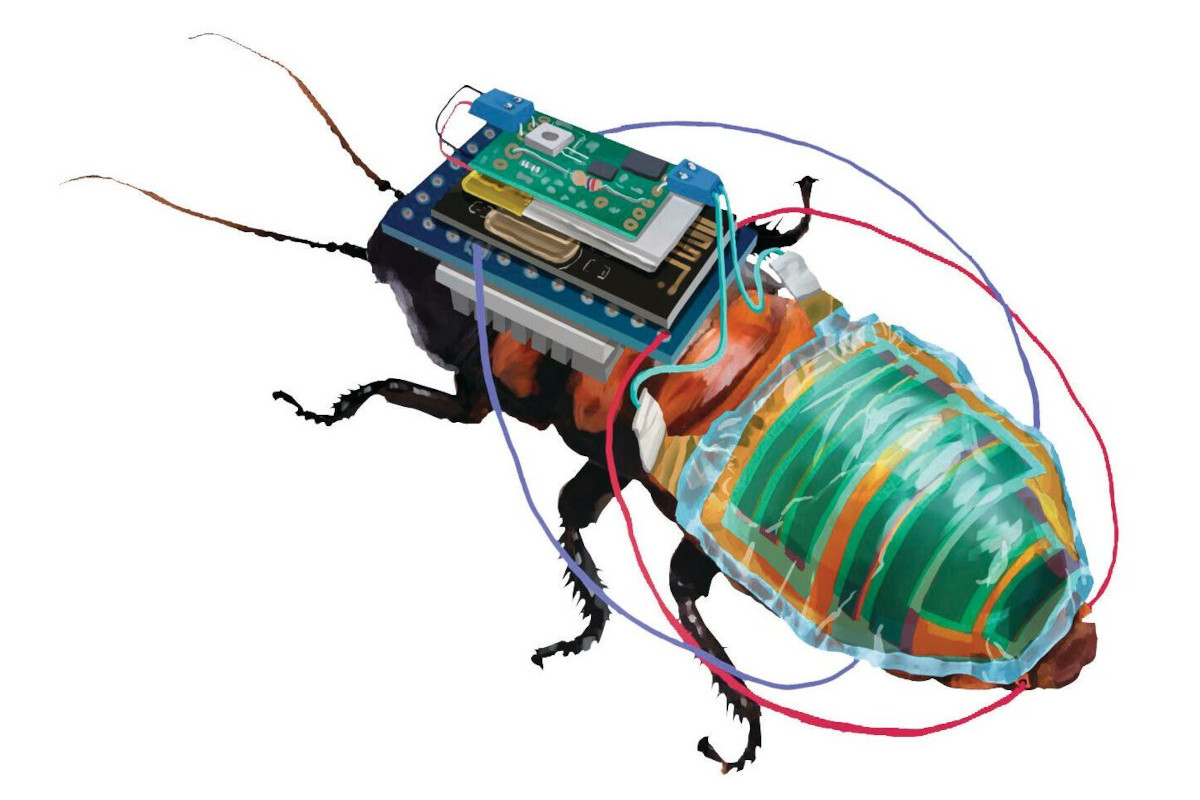
But powering that hardware remains an issue, with batteries adding weight and also limiting how long a cyborg cockroach can serve its intended purpose.
If that purpose is locating survivors during a drawn-out search-and-rescue mission, that could be an issue.
In 2022, researchers in Japan developed a solution.
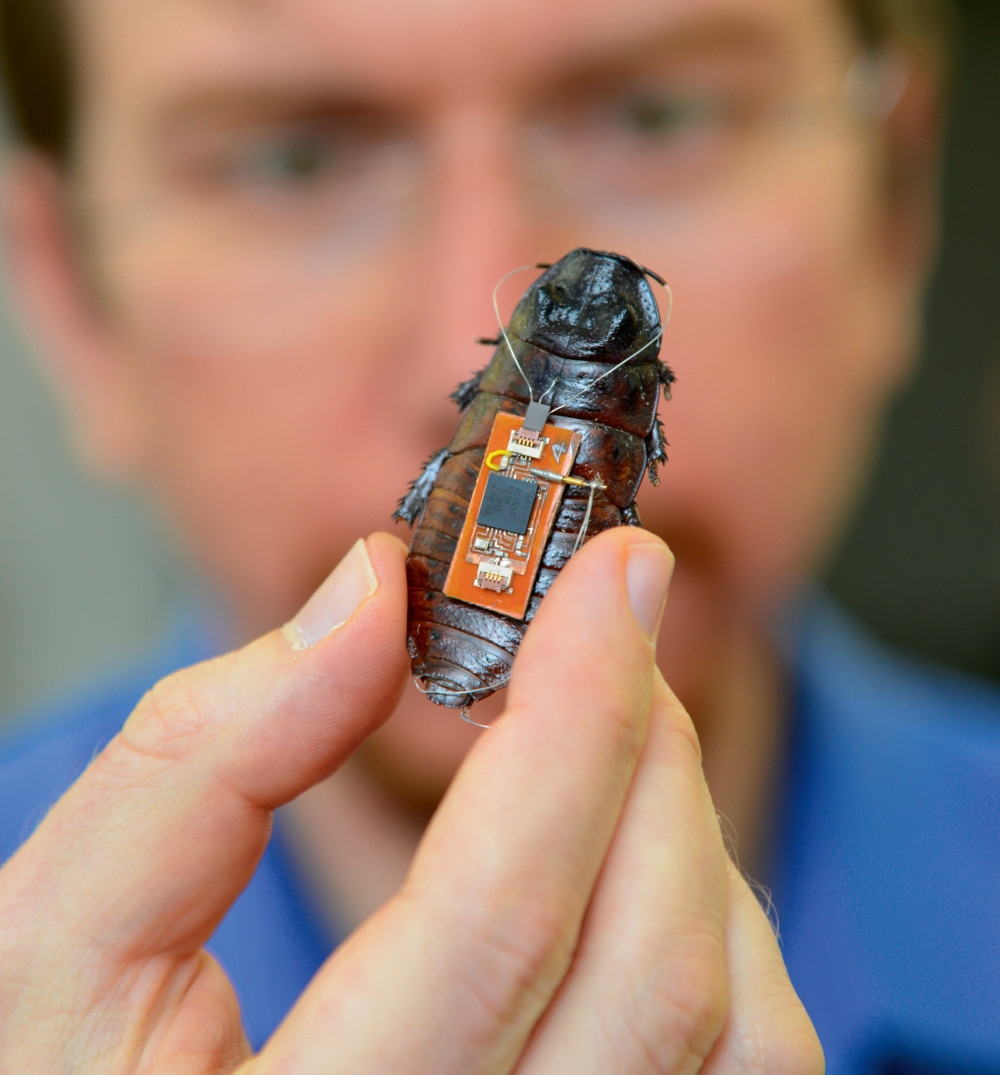
They fitted a Madagascar hissing cockroach with a lightweight electronic backpack filled with controllers, sensors and a rechargeable battery, and then attached a solar panel to its abdomen.
By stimulating the cockroach’s legs electronically, they could steer the insect remotely, while the solar cell helped to keep the system powered.
Tests showed the solar cell could recharge the system effectively, potentially allowing for longer run times without the need for the cyborg cockroach to return to a charging station.
Read more:
- Can animals play video games?
- Incredible footage shows cyborg cockroaches swimming in tiny diving suits
- 9 of the world’s weirdest-ever military inventions
Cyborg cockroaches #2
Just when you thought it was safe to go back in the water
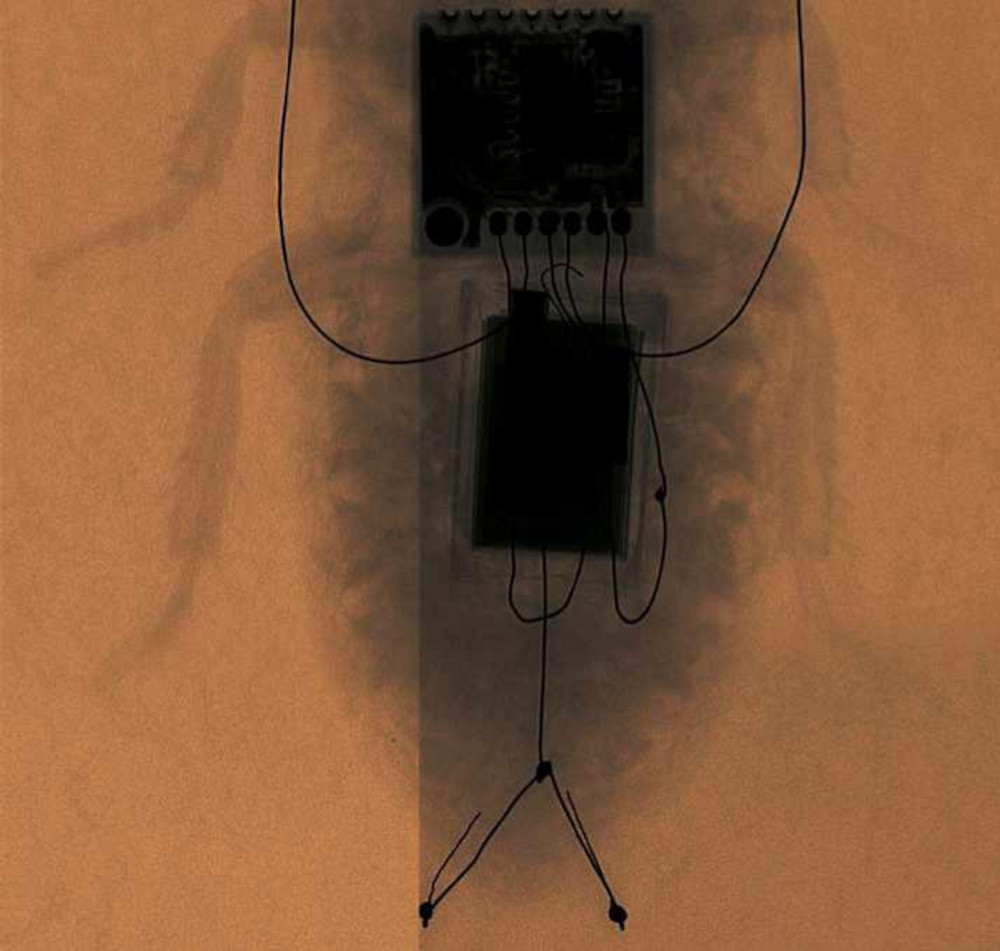
With the right technology, cyborg insects are even capable of changing habitats to suit their new-found abilities.
In 2026, researchers took the resilience of Madagascar hissing cockroaches to a new level by developing a wearable “diving suit” that allows them to move and survive underwater.
The system is made up of a lightweight 3D-printed harness with a flexible membrane that covers the cockroach’s body, leaving its legs free to move.
An oxygen tank allows it to breathe underwater and means it can remain submerged for up to three hours, while a small electronic backpack can be used to control its movements and carry equipment such as an infrared camera.
The researchers who tested the system found that the insects could continue walking normally while submerged, potentially extending the use of cyborg cockroaches in search-and-rescue operations to underwater environments.
The moth-driven drone
Only part of a moth was needed to achieve superior steering
For all the research that involves strapping tech to insects, there’s also a growing body of work focused on strapping insects, or even just parts of insects, to tech.
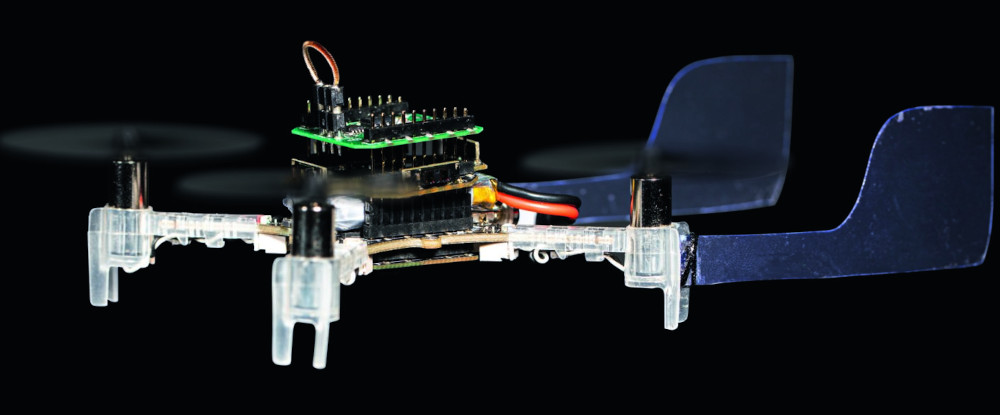
Researchers at the University of Washington did exactly that with the so-called Smellicopter, a small autonomous drone that uses an antenna taken from a hawkmoth to help it detect odours in flight.
A hawkmoth’s antenna contains thousands of specialised smell receptors, giving moths an extraordinarily sensitive sense of smell.
Rather than try to artificially recreate the complexity of this, researchers instead found a way to connect a hawkmoth’s antenna to an electronic circuit that could translate the biological signals into data the drone could use.
But there was a problem. Once removed from the hawkmoth, the antenna only remained useful for around two hours before its signals became unreliable.
In 2026, researchers in Japan found a way to extend the antenna’s working life, using a water-retaining hydrogel electrode to keep an antenna (this time from a silkworm moth) hydrated and responsive.
This gave the system the ability to detect odours for up to seven hours.
The silkworm-controlled rover
Pheromones were the real driving force behind this experiment
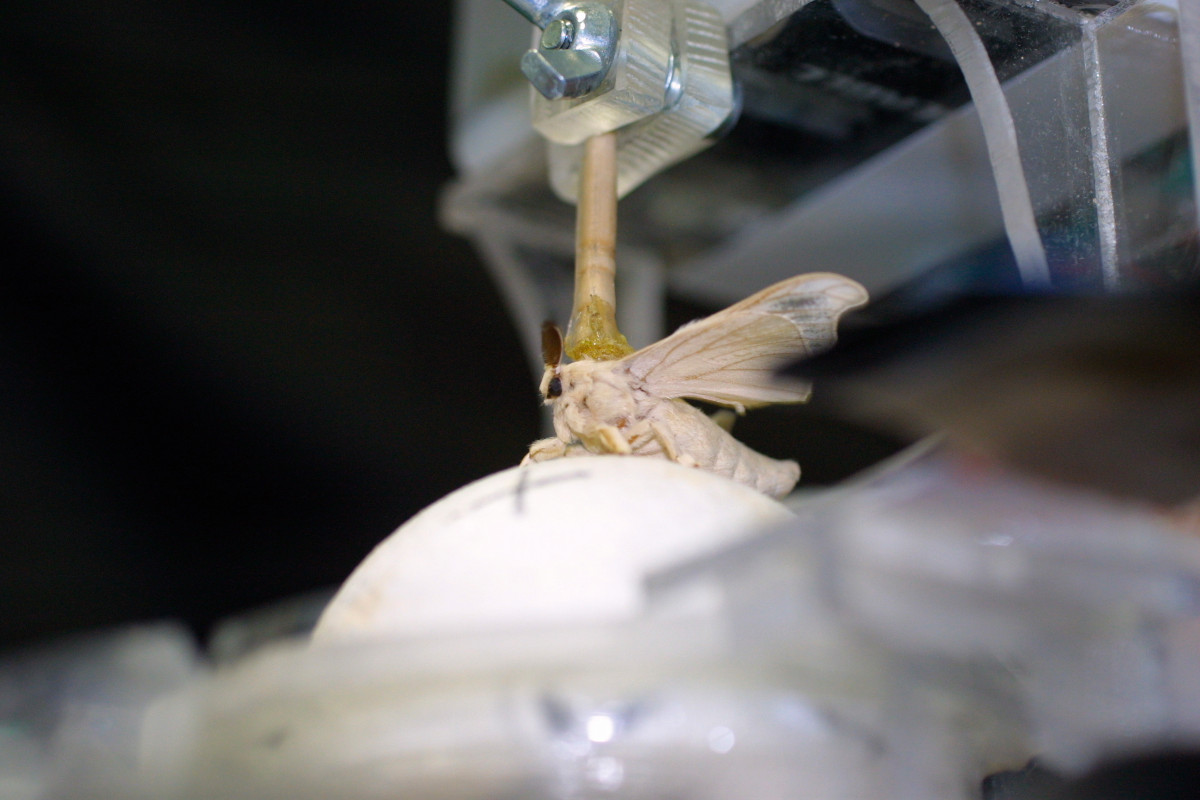
In 2013, researchers at the University of Tokyo put a male silkworm moth in the driving seat of a robot on wheels and used the insect’s natural instinct to track down a female’s pheromones to steer it.
Instead of a steering wheel, the moth was perched on top of a tracker ball inside the robot.
As the insect scurried around trying to find the source of the scent, sensors around the ball detected its movements and translated them into speed and direction commands for the robot.
This way, the moth was able to quickly navigate the robot towards what it believed was a potential mate.
Scientists hoped to use this research to learn more about how moths track odours, so that they could eventually apply that behaviour to autonomous robots searching for environmental spills and leaks.
The idea was taken even further in 2016, when researchers used a similar contraption to investigate how silkmoths adapt their movements while tracking an odour.
By deliberately altering the relationship between the moth’s movements and the robot’s, they found that moths could adapt their behaviour and still successfully locate the source of the smell.
The data-gathering bees
Scientists transformed the meaning of the term 'worker bees'
It’s not always about turning insects into robots, or vice versa – when it comes to collecting real-world data, sometimes leaving insects to do what they do best is just as effective.
In 2019, researchers at the University of Washington did exactly this when they turned bumblebees into flying carriers for tiny wireless sensors.
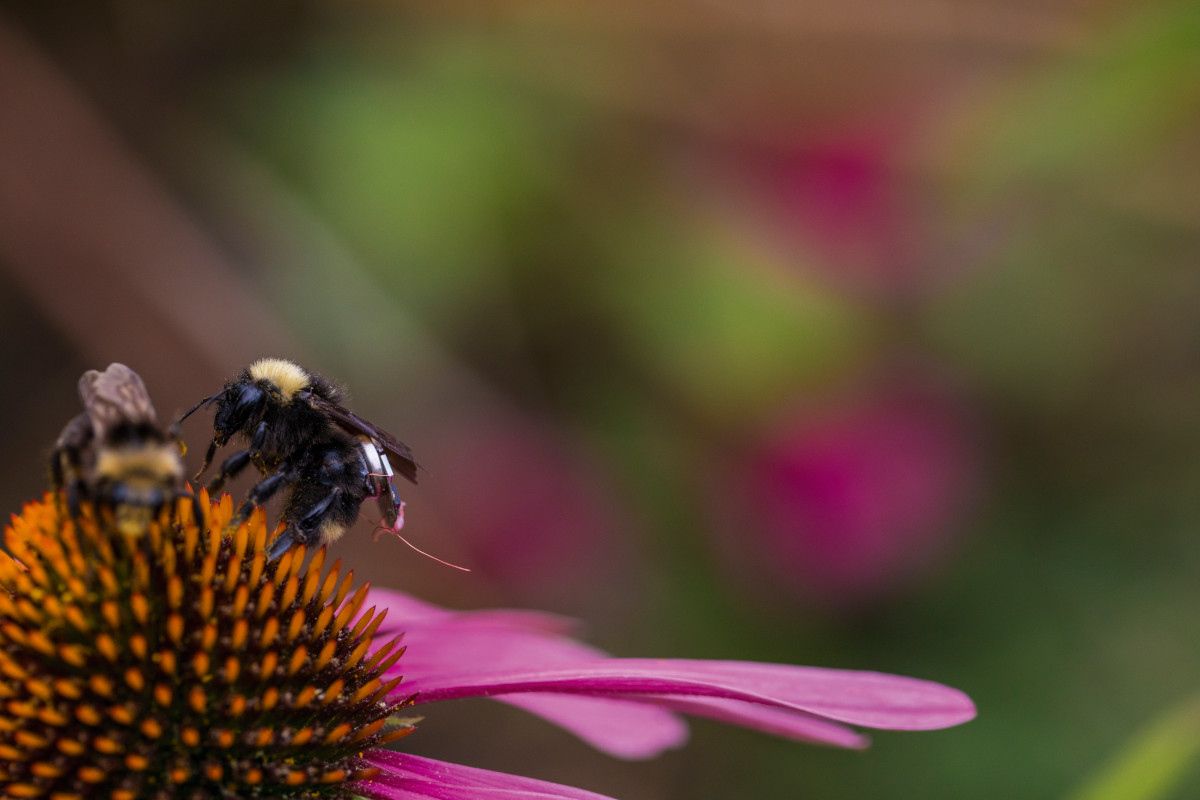
The team assembled tiny ‘backpacks’ weighing just 102mg (0.003oz) for the bees that included a range of sensors, a basic computer, a wireless communication kit and GPS technology.
The bees could go about their normal lives while wearing the backpack, unknowingly collecting data from their environments in the process.
As bees naturally travel between their hives and flowers while foraging, it meant the system could sample conditions across a much larger area than a standard sensor fixed in one location.
The bees could also fly a lot longer than most drones, which need fresh batteries after around 20 minutes.
The backpacks could record and store data during flights, and wirelessly transfer it when the bees returned to the hive.
Researchers believe the data collected could help in a range of applications, including environmental monitoring and precision agriculture.
Cyborg beetles
The US government wanted to send the Mecynorhina torquata beetle where no man had gone before
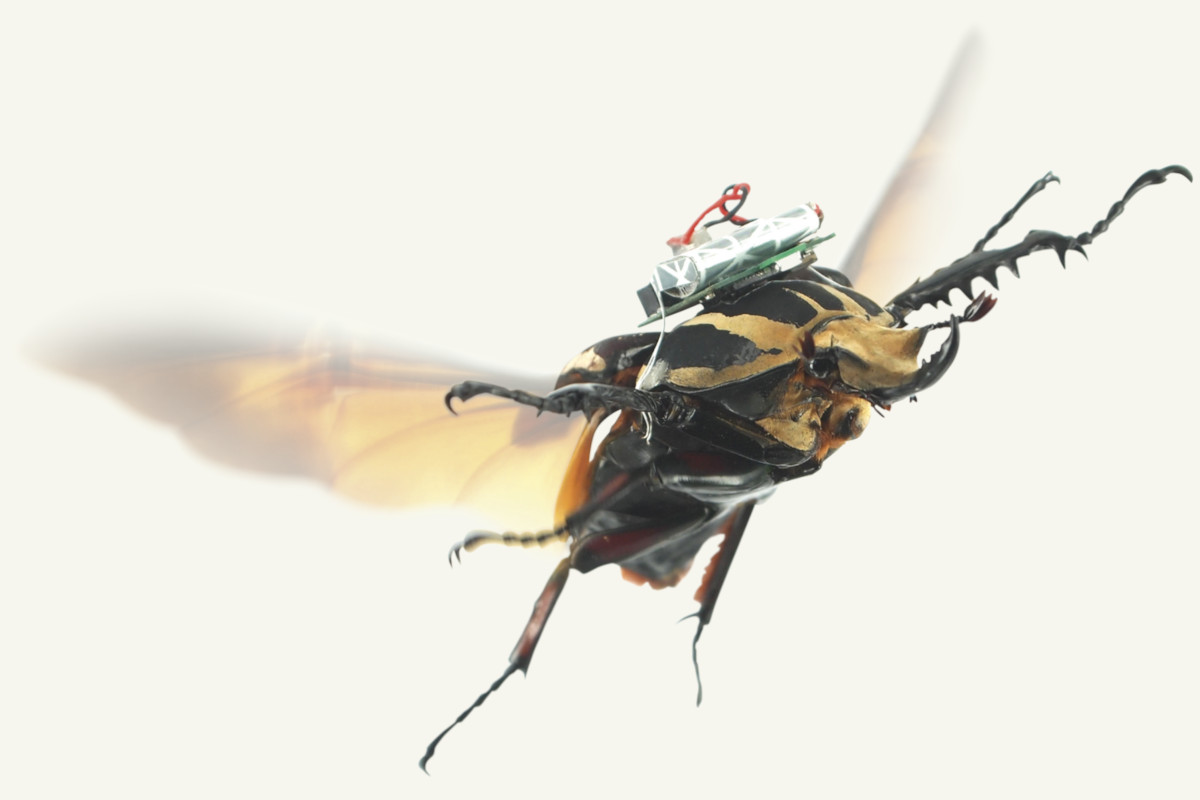
Some of the earliest work on cyborg insects concentrated on remotely steering cockroaches, and by 2009, researchers at the University of California, Berkeley (with funding from DARPA, the US Department of Defense’s research and development agency) were looking to take the idea to the skies.
Scientists fitted giant flower beetles – selected for their relatively large size – with tiny electronic backpacks containing a radio receiver, microcontroller and battery.
Electrodes were then implanted into their brains and flight muscles, which allowed scientists to control their flight remotely.
The system didn’t actually make the beetle fly, but tapped into the insect’s flight machinery and influenced it.
In other words, the beetle moved its wings independently, but researchers could stimulate its brain to trigger take-off and landing, along with its flight muscles to turn the beetle left or right.
The research also uncovered some surprises in beetle biology.
A tiny muscle once thought to be involved in folding the wings was also found to play a big part in steering, while later work showed another muscle could be used to influence braking, pitch and body angle.
The discoveries helped researchers understand more about how beetles fly and ultimately allowed even more precise control over their movements.
But why was DARPA so interested in beetles in the first place? Well, as mad as it sounds, it was hoped that the beetles could prove useful for search-and-rescue operations in areas considered too dangerous or inaccessible for humans.
Read more:
