
An image of the Shark Nebula (see below), which is some 650 light-years away in the constellation Cepheus, has been crowned the overall winner of this year’s ZWO Astronomy Photographer of the Year competition.
The nebula’s silhouette is formed by thick clouds of interstellar dust and gas that block the light of background stars.
Photographer Ali Alobaidly spent two nights in the desert of western Kuwait to capture the striking nebula – the result was his award-winning image: The Quiet Predator.
It was pulled together using hundreds of long exposures over more than 28 hours.
“The juxtaposition of an oceanic predator prowling through the skies above the Kuwaiti desert is something I find deeply poetic,” Alobaidly, who won £10,000, said.
“The fine nebulosity captured is exquisite,” said judge Steve Marsh, BBC Sky at Night Magazine's art editor. “You can zoom in to a very high magnification and there is never a drop in quality.”
Alobaidly wasn't the only winner. Here are some of the top photos:
The stunning Shark Nebula
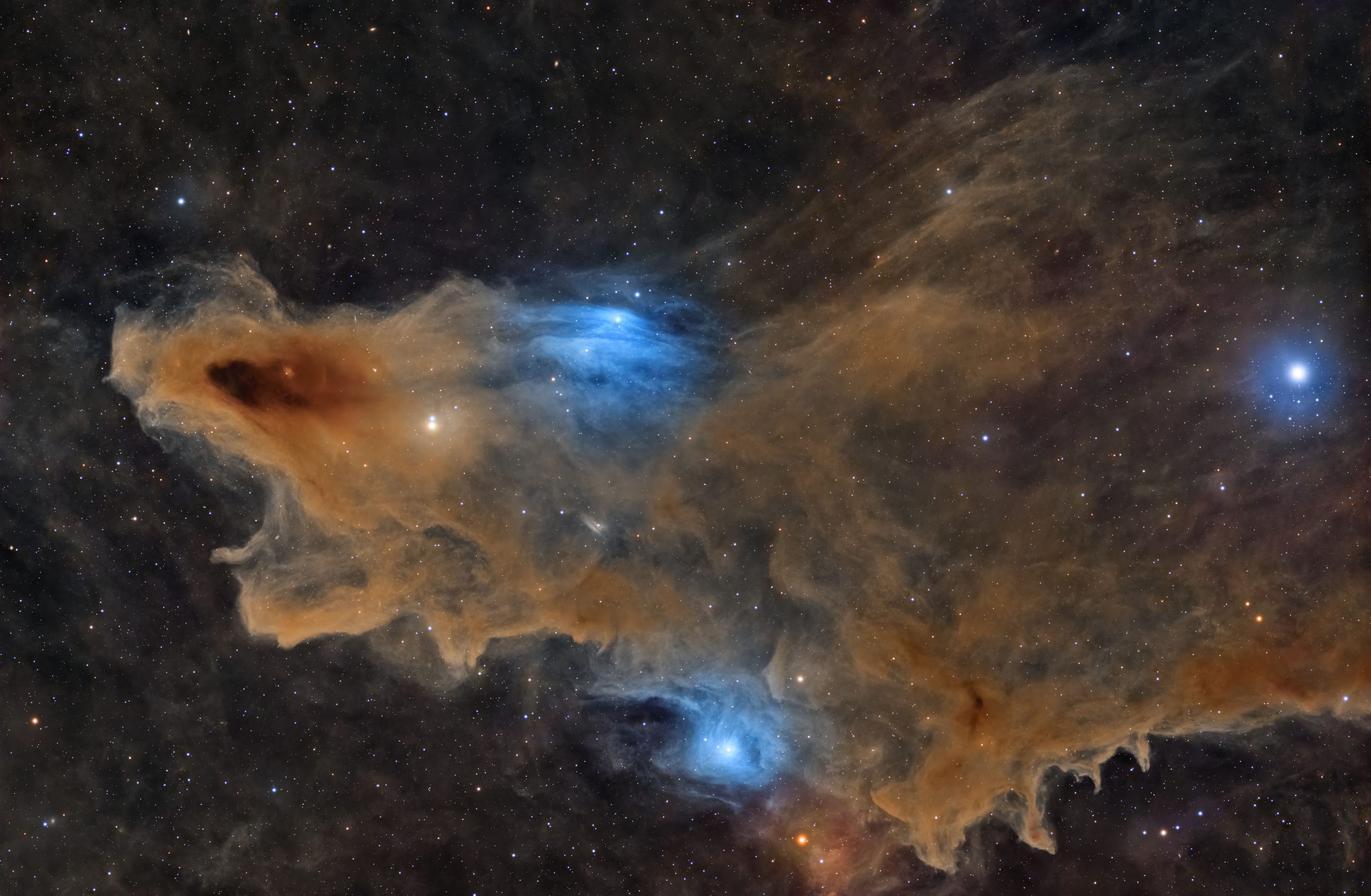
The Quiet Predator not only took the overall prize but also won the Stars and Nebulae category.
"This predator drifts silently through space, camouflaged against the faint glow of the background stars, lit only by nearby blue-coloured reflection nebulae," said Alobaidly.
A close-up of the Sun
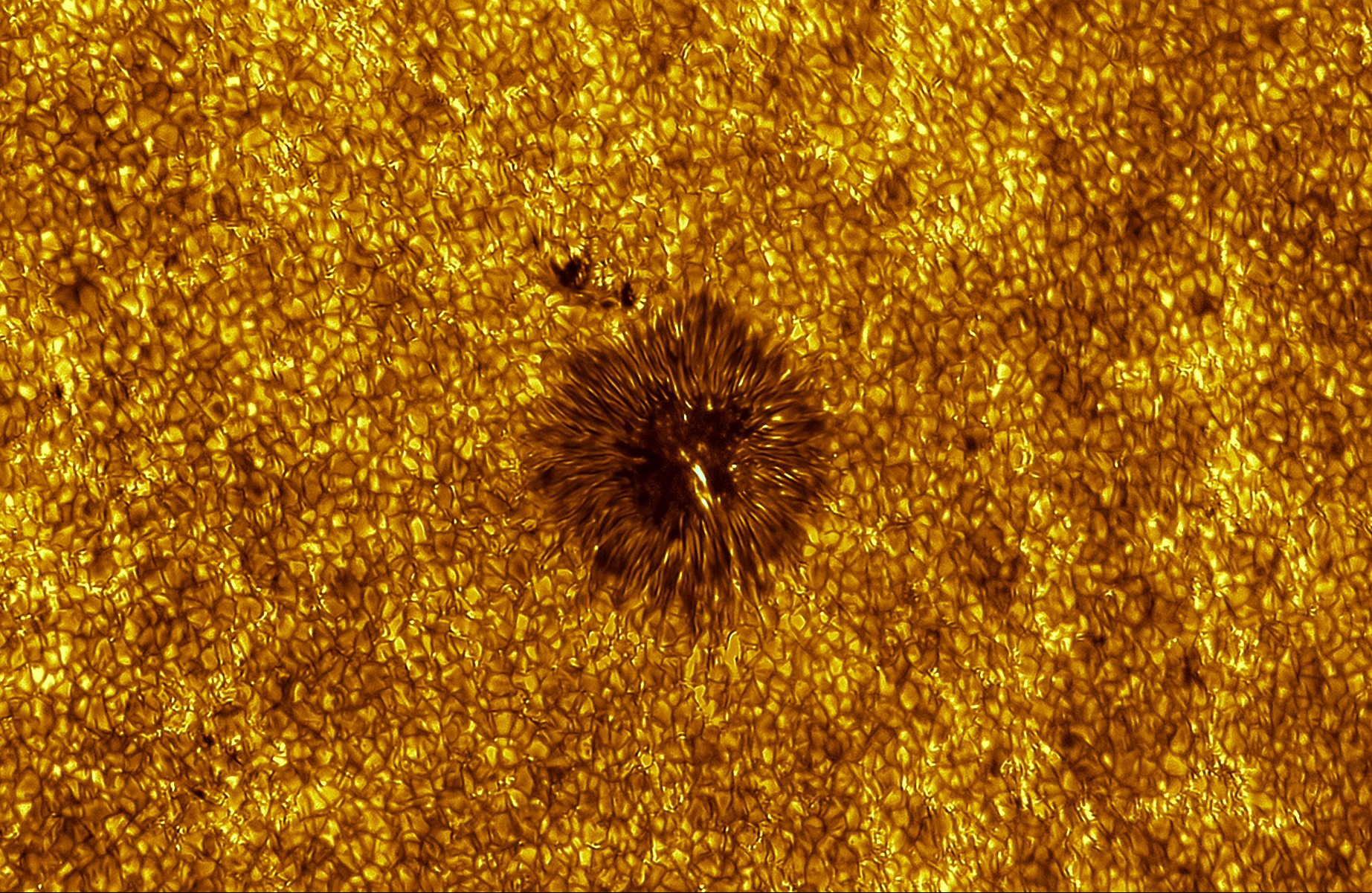
Miguel Claro's Active Region 4122 was declared the winner of the Our Sun category. The image was taken in Portugal in 2025.
“This image was captured with a new dual-band telescope to try to reveal a greater level of detail in the Sun’s photosphere [visible layer],” said Claro.
A powerful aurora above an Icelandic church
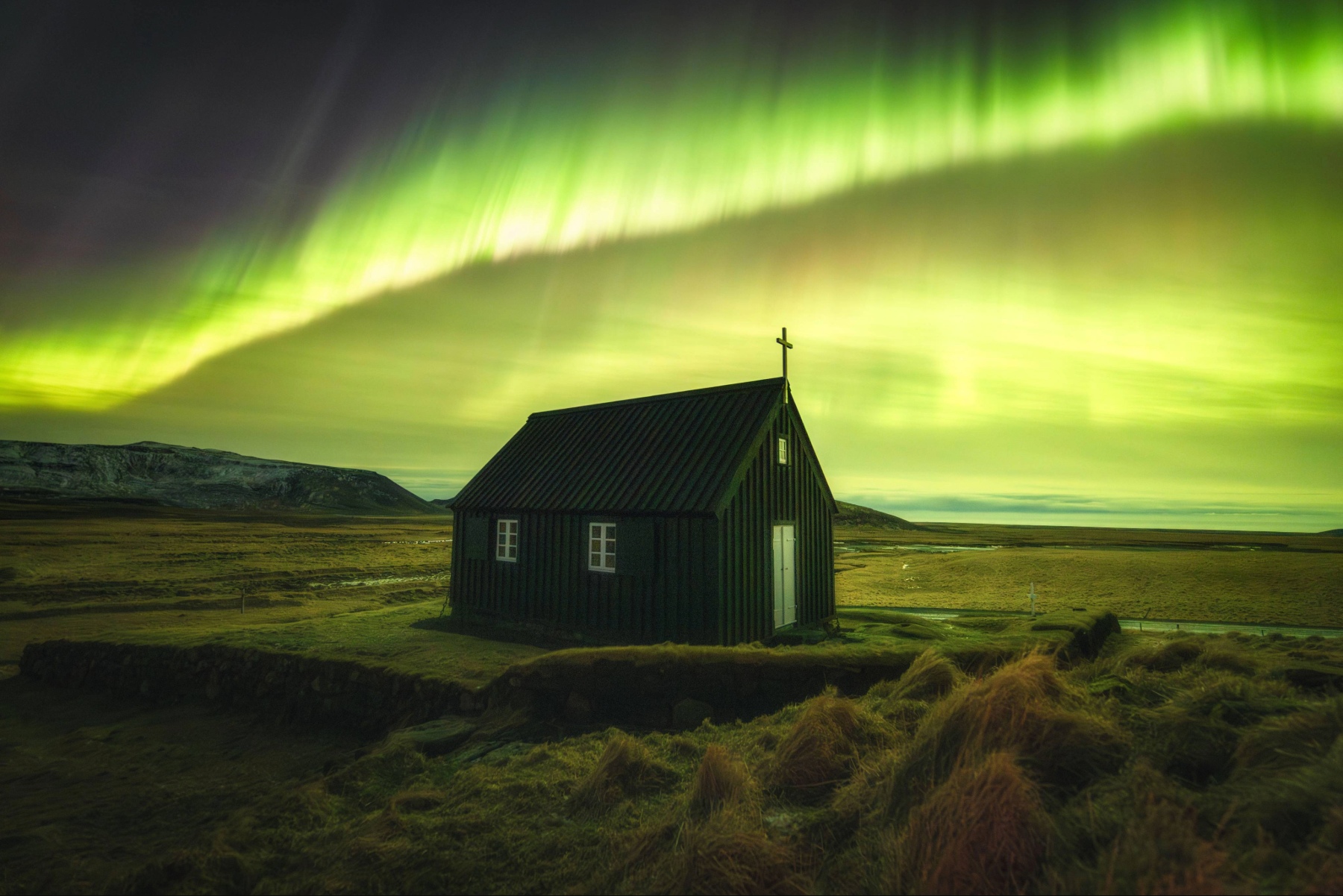
Bulgarian photographer Radoslav Sviretsov won first place in the Aurorae category with The Crown.
Judge Alan Sparrow said that the photo would delight many people. “It has a fantastic setting: the small church stands defiantly in the wilderness. The photographer has captured the moment when the Aurora Borealis bathed the chapel with a magnificent green glow gifted by the geomagnetic storm.”
Contrasting rock art with the vastness of space
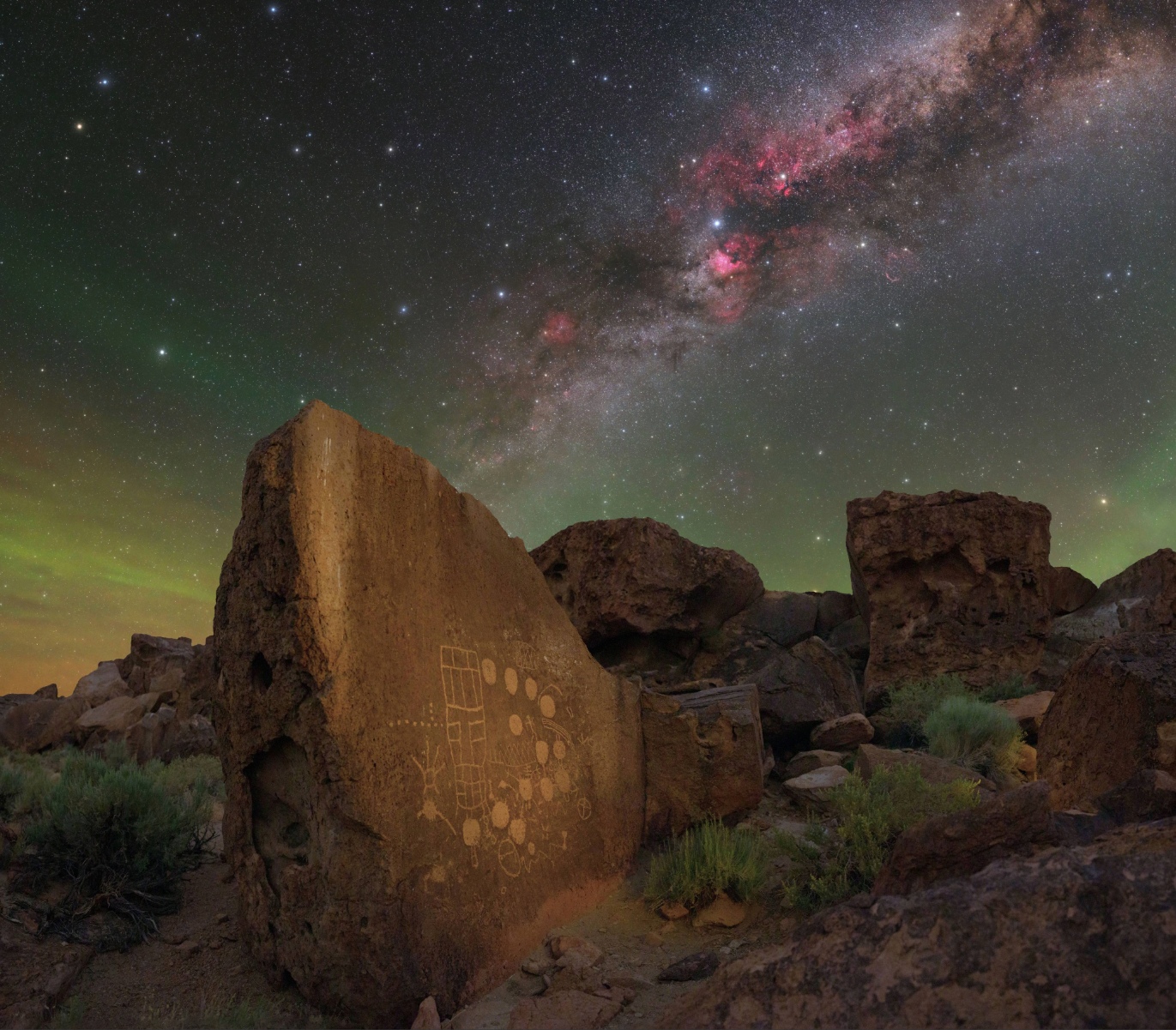
In the People and Space category, New Zealander Max Inwood won first place for his A Message from the Ancients.
“Deep in the desert of California lies a series of ancient petroglyphs: rock art dating back thousands of years," Inwood said. “One particular piece known as the 13 Moons caught my attention. This petroglyph is thought to be an ancient calendar depicting the 13 full Moons that Earth can experience in a year."
A colourful capture of star trails over Botswana
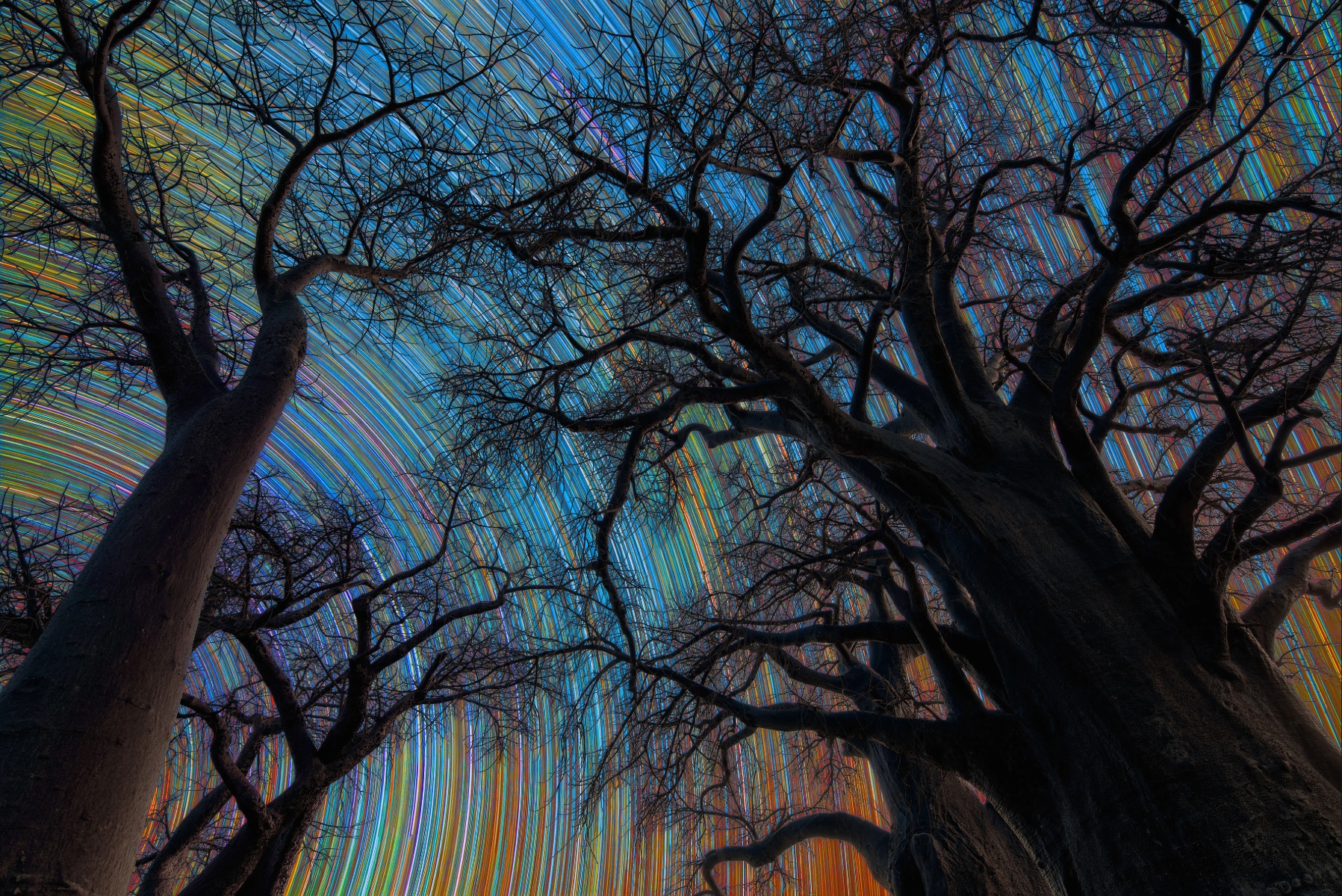
Stefano Pellegrini took out the top prize for the Skyscapes category with Botswana Star Trail.
"It was like being inside a Gothic cathedral," he said. "The old sturdy trees were like columns, with their branches creating vaults and arches. I put my camera almost on the ground, facing up, to capture this intricate canopy of branches and the sky behind it."
The overall winner and category winners are on display at the National Maritime Museum in Greenwich, London.
Read more:
