
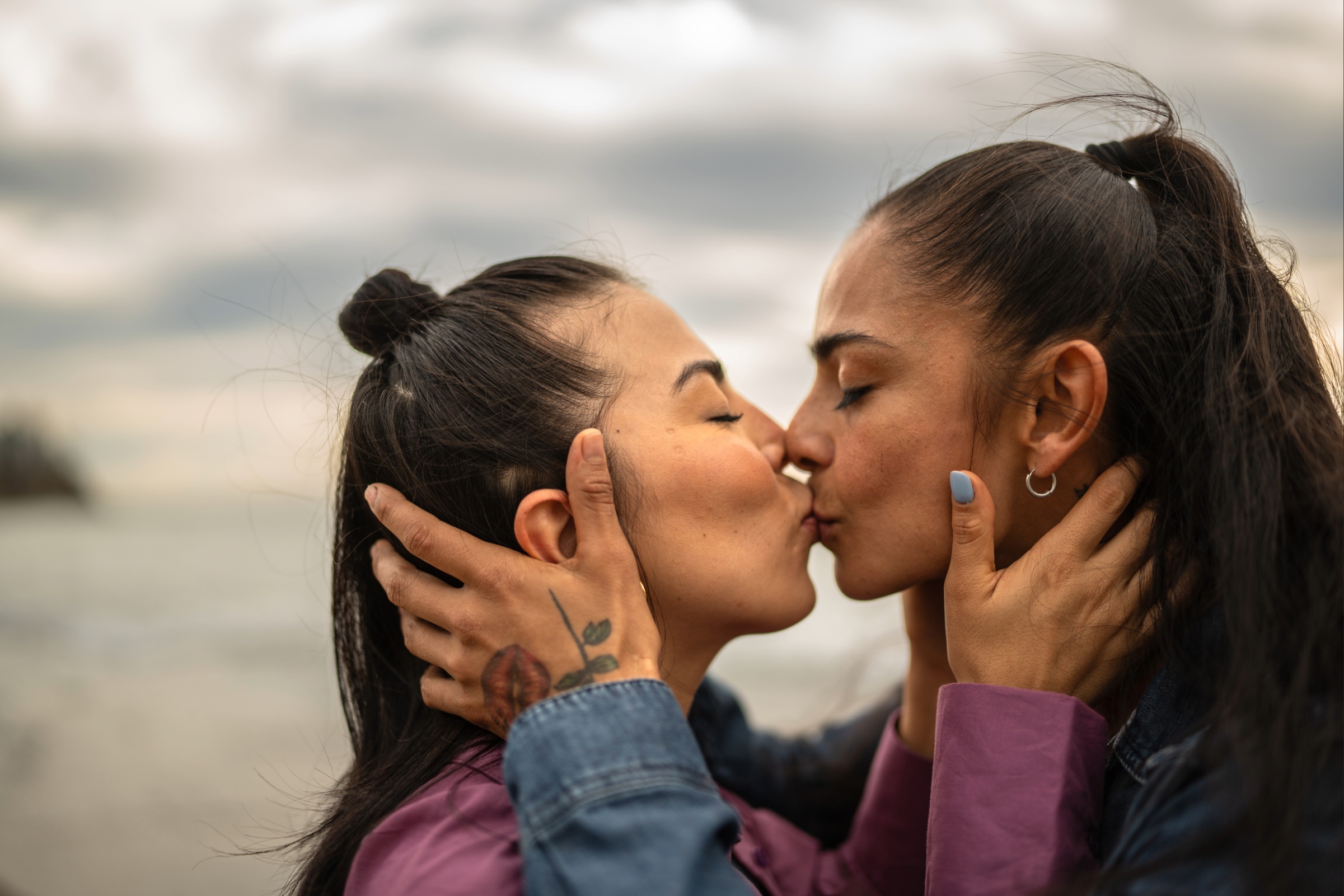
Kissing is one of the most intimate human behaviours, yet its origins remain surprisingly mysterious. When we talk about kissing, we usually mean lip-to-lip contact, which involves suction and pressure, although it sounds far less romantic when described like this.
But why do humans kiss?
Historically, kissing has held different meanings across cultures, with the earliest recorded human kiss documented in ancient Mesopotamian texts dating back to 2500 BCE.
The ancient Romans had three distinct types of kiss: the osculum, a social kiss on the cheek; the basium, a platonic kiss on the lips shared between partners or family; and the savium, a passionate kiss between lovers.
Clearly, kissing has long been more than just a romantic gesture.
Despite its popularity, kissing is by no means universal. A study of 168 cultures published in American Anthropologist in 2015 found that only 46 per cent practised romantic lip kissing. In cultures that don’t kiss, intimacy is expressed differently.
In the Trobriand Islands near Papua New Guinea, couples nibble each other’s eyelashes. Interestingly, when on his travels, Charles Darwin described the Malay kiss, where people squat and sniff each other’s scent, suggesting that smell may play a role in human intimacy.
Can biology help us understand why we kiss? Research suggests that kissing serves a biological bonding function, as it triggers the release of oxytocin, a hormone linked to trust and attachment.
Oxytocin helps reduce stress and fosters feelings of closeness, reinforcing connections between romantic partners. So perhaps we kiss on the lips because it feels good.
Evolutionary theories suggest that lip-to-lip kissing may have its roots in early maternal behaviours, such as breastfeeding and premastication (where mothers chewed food before transferring it directly to their infant’s mouth).
This practice, still observed among primates like chimpanzees, may have laid the foundation for lip contact as a signal of care and bonding.
Human infants seem biologically attuned to lip contact, associating it with comfort and safety, and it may have evolved into a broader social behaviour with evolutionary ties to caregiving and emotional connection.
However, theories that focus on lip-to-lip behaviours between mothers and infants may not fully explain why we kiss romantically.
A recent and somewhat bold theory, proposed by evolutionary psychologist Dr Adriano Lameira from the University of Warwick, suggests that kissing may have instead evolved from grooming behaviours.
In primates, grooming often ends with mouth contact, such as sucking debris from another primate’s fur.
As humans gradually lost body hair, Lameira suggests that the hygienic function of grooming diminished, leading to shorter grooming sessions, eventually leaving the final lip-to-lip kiss as a lasting gesture of affection.
Seemingly, kissing is a complex behaviour that was likely shaped by the behaviours of our ancient ancestors. Whether it’s a passionate savium or a gentle sniff, the act of getting close to another person seems to fulfil a deep human need for connection.
This article is an answer to the question (asked by Dani Castillo, via email) 'Why do we kiss?'
To submit your questions, email us at questions@sciencefocus.com, or message our Facebook, X, or Instagram pages (don't forget to include your name and location).
Check out our ultimate fun facts page for more mind-blowing science
Read more:
