
The best liars keep things simple. After all, when you begin practising the art of deception, you can easily end up in a tangled web, lost in your own lies.
But simplifying your lies is easier said than done. One lie begets another. Entire backstories need to be prepared and remembered. New fabrications might be required at a moment’s notice depending on where the line of questioning goes.
No wonder, experts say, that in the process of lying our brains are under serious cognitive load. In other words, we’re having to think hard and fast.
“If you’re telling a high-stakes lie, you’ve normally practised it – you’ve thought about your lie, you’re trying to remember what you’ve said in case you’re asked again, so you can repeat it,” says Dr Sharon Leal, a psychologist at the University of Portsmouth.
“You’re monitoring your own behaviour and trying not to look nervous, trying to look the person straight in the eye. You’re monitoring the person you’re lying to for signs that they’re on board – or not.
“We know from MRI scans that the truth pops up first, and that has to be suppressed, so all of these things add to cognitive load.”
You might expect this mental pressure to reveal itself with a series of physical signs. But you’d be wrong.

It’s high time to put people straight, says Leal, an expert on the signs of lying. “We now know that verbal detection of lying is far better than non-verbal, even though we hear so much about the non-verbal signs,” she says.
“There’s nothing in it scientifically to show looking for non-verbal signs actually works. Forget all the extraneous movements, fidgeting, blinking, gaze aversion – it’s not there. If anything, it’s the opposite; liars tend to be more still.”
Instead, psychologists have now established effective ways of detecting lies from what suspects actually say. It’s all about the words; what a suspect says and how they say them.
Liar, liar, words on fire
An interviewer can prompt tell-tale statements – and detect signs of dishonesty – through skilful use of the evidence in their possession.
The strategic use of evidence (SUE) approach relies on the questioner asking questions about an event without revealing the information they already have.
Truth tellers who have nothing to hide tend to speak freely and provide details, whereas lie tellers will deny they attended the event, or will be reluctant to give specifics and may deflect questions.
If interviewers do not have the necessary evidence, they can ask a suspect to provide it. This, too, can be revealing.
Verifiability Approach (VA) research has found that truth tellers are more likely to volunteer such evidence (for example, mentioning other people who were at the event) than lie tellers.
Another interrogation approach is the cognitive credibility assessment (CCA) interview, in which interviewees are asked to tell their story several times over.
CCA research has shown that truth tellers volunteer more extra information during these successive recalls than lie tellers who keep their stories simple.
Some evidence suggests that asking suspects to recount their timeline backwards can produce incriminating errors. People telling the truth can rely on memory and handle this easily; liars struggle with the added strain and make mistakes.
In the same vein, posing unanticipated questions that relate to the core events, for example, asking for specific details about the room layout, or the presence of an irrelevant but verifiable person, can produce telling errors or hesitation.
Acting as the devil’s advocate
There are subtler signs to look for, as well. One recent study by an international team led by Leal and Prof Aldert Vrij tested what they call ‘the devil’s advocate interview protocol’.
Interviewees were asked to provide reasons that supported their opinion (eliciting-opinion request) and reasons that opposed their opinion (devil’s advocate request).
Their analyses showed that truth tellers were more eloquent and passionate in responding to the eliciting-opinion than to the devil’s advocate request.
Lie tellers, however, showed a similar level of eloquence and passion in responding to these two requests, and demonstrated more consistency than truth tellers when comparing eliciting-opinion and devil’s advocate responses.
This is consistent with earlier evidence suggesting that lie tellers believe that inconsistency raises suspicions.
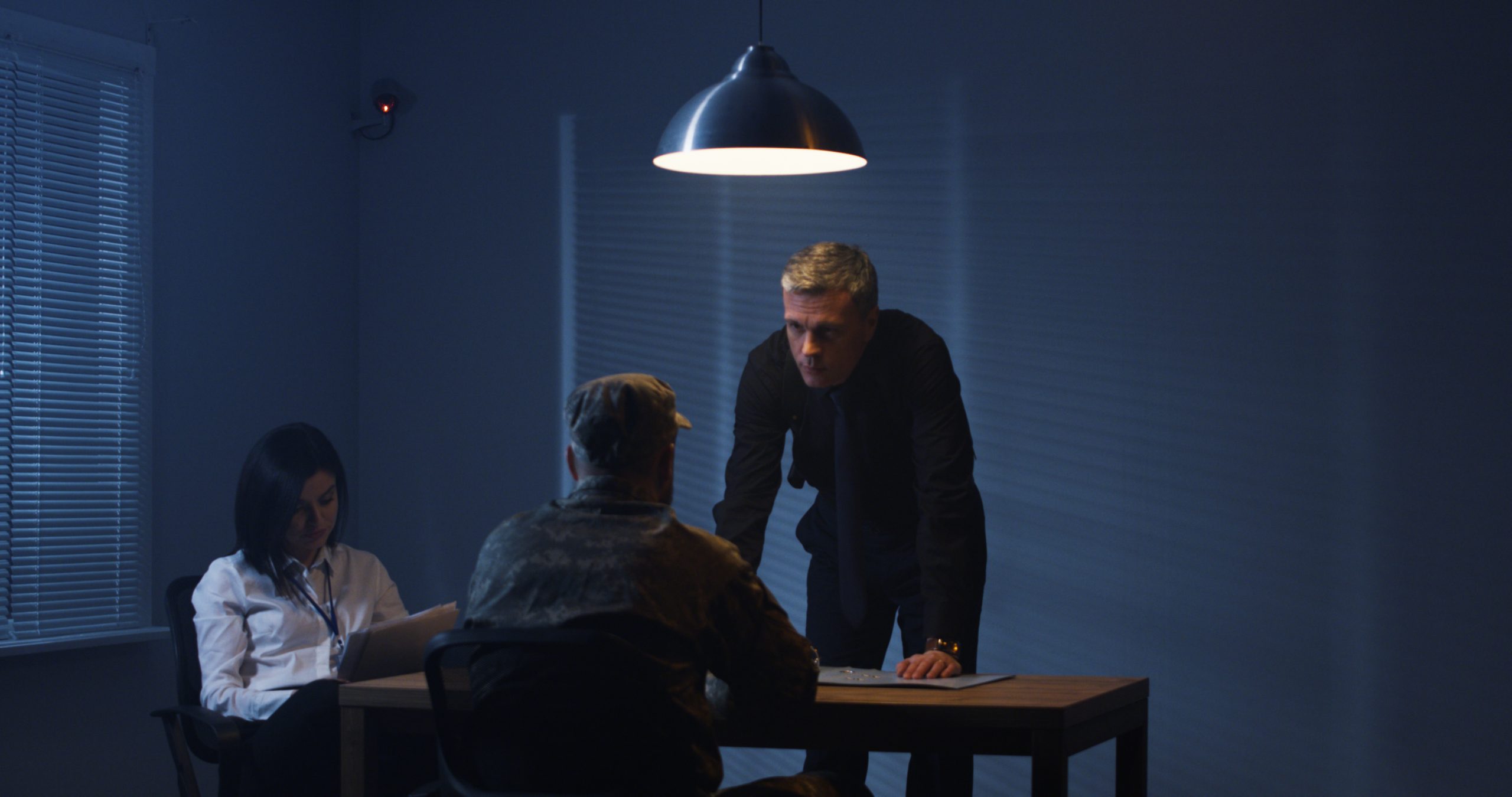
Just recently, the Portsmouth team have been studying the practice of what they call ‘omission lies’ – that is, the deliberate omission of key information in order to deceive someone. For instance, a suspect asked where they were on a given evening might truthfully say they were “at a friend’s house” – while leaving out that they also slipped out to the scene of the crime for 20 minutes and came back.
The data so far suggest that the same verbal cues used to catch other lies – vague or evasive answers, a reluctance to volunteer detail, inconsistencies under further questioning – are just as effective at exposing this kind of deceit.
“A lot of people think when they lie by omission, it’s not a lie, but it is still a lie, and the verbal cues are still there,” says Leal.
Why the myth of body language prevails
Despite all the evidence that verbal cues, not physical ones, provide the best way of unmasking liars, Leal thinks that old habits die hard, and that myths surrounding unusual blinking, hand movements and other physical activities still prevail in many situations.
“Let’s say that you’ve got a customs officer who checks the bags of everybody who touches his ear or yawns as they go past him, and you’ve got another one that only checks the bags of people that look him straight in the eye,” she says.
“Each one of those people, when they open the bags of these individuals, will get some hits, and they take that as a reinforcement for their method of working.
“So, they can both be doing two different things, and they’ll get some hits. But only if they open the bags of the people who didn’t do that as well would they actually be able to contextualise the value of it. And I think it’s a similar problem elsewhere.”
These days, however, smart investigators pay attention not to what they see, but what suspects say.
Read more:
