
Weight-loss jabs. Scan social media, turn on the news, tune in to chat shows and everyone, it seems, is talking about them. Mounjaro, Ozempic and Wegovy have become household names, as famous as the celebrities transformed by them.
Hailed as revolutionary, these so-called ‘miracle drugs’ have helped millions lose excess pounds, and their popularity is growing. And the hype isn’t empty. They’re genuinely changing how we lose weight.
Until recently, shedding a significant amount of body fat was hard. Really hard. It demanded relentless discipline, constant hunger and a high chance of failure.
Now, for many people, that equation has flipped. With GLP-1 drugs, users can lose up to 20 per cent of their body weight in 16 months, without the white-knuckle battle of traditional dieting.
It’s little wonder that, according to recent polls, up to one in four people would consider taking GLP-1 drugs to help them lose weight, if only they could get their hands on them.
Which raises an obvious question: shouldn’t we make life easier for them? Why, with obesity rates rising, shouldn’t GLP-1 drugs be rolled out more widely – and for free?
After all, if weight-loss medication became used as routinely as, say, antibiotics or vaccines, could we finally bring the obesity epidemic to an end?
And it is an epidemic. More than a billion people worldwide are now obese, including around 40 per cent of adults in the US and 30 per cent in the UK.
For many, a radical shift in how we treat obesity is no longer optional. That’s because being overweight or obese increases the risk of developing type 2 diabetes, cardiovascular disease and certain cancers.
Obesity contributes to more than 3.5 million deaths every year. On top of that, the psychosocial consequences, such as poor mental health and discrimination, can be devastating, and the economic costs are staggering.
It’s predicted that by 2030, obesity will cost the global economy $3tr (that’s $3,000,000,000,000, or £2.25 trillion) per year.
So, could giving GLP-1 drugs to everyone who’s overweight and wants them become a form of preventive medicine, saving millions of lives (and dollars)? Or are we getting ahead of ourselves?
Weighing the cost
Look around, and it’s no wonder that so many people are struggling with their weight. For most of human history, food was either scarce or sporadic, so we grabbed as much as we could, whenever we could.
Over time, this propensity to over-consume became wired into our biology, but what was once a useful adaptation has now become a bane.
In the modern world, we’re surrounded by a ready supply of cheap, high-calorie, ultra-processed foods, all designed to be delicious. Our evolutionary past makes this hard to resist, and so we find ourselves living in a world that nudges people towards obesity.
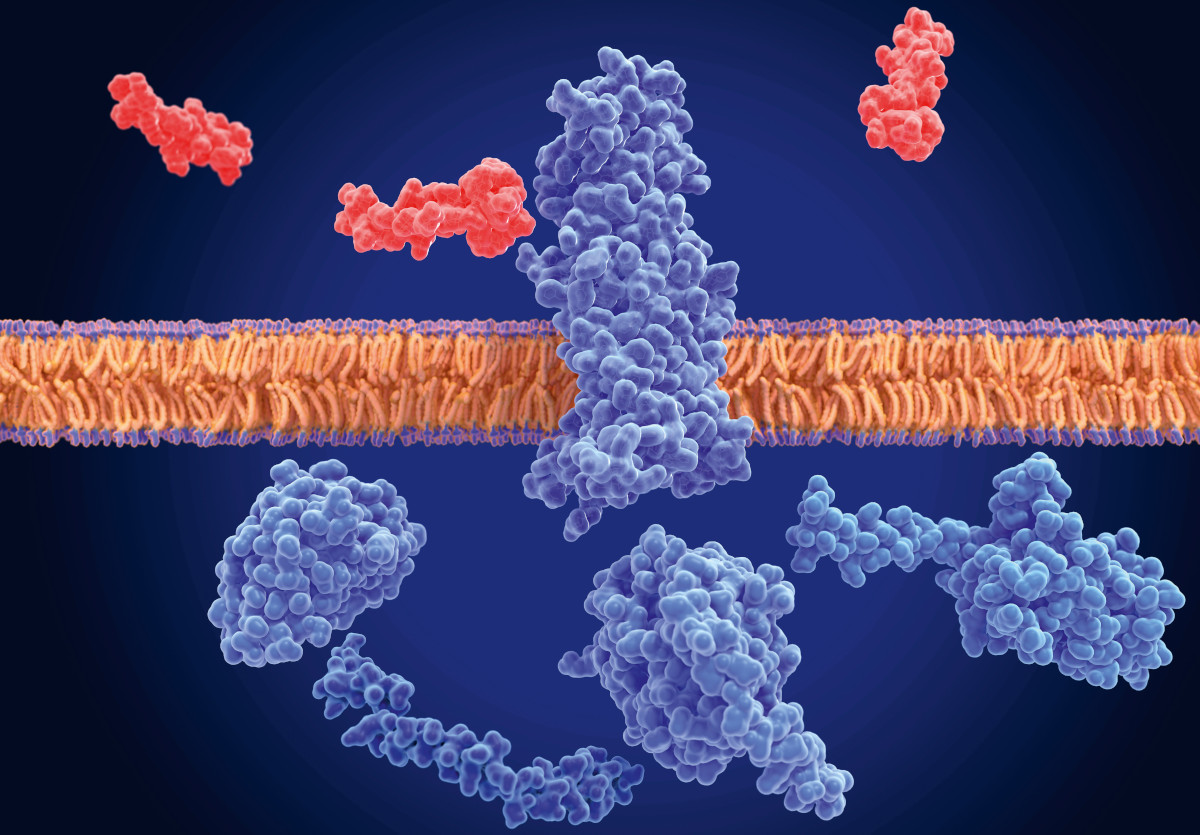
GLP-1 drugs work by mimicking a hormone called glucagon-like peptide-1. The drugs act on the brain to reduce hunger signals and increase feelings of fullness. Appetite wanes, and weight falls off.
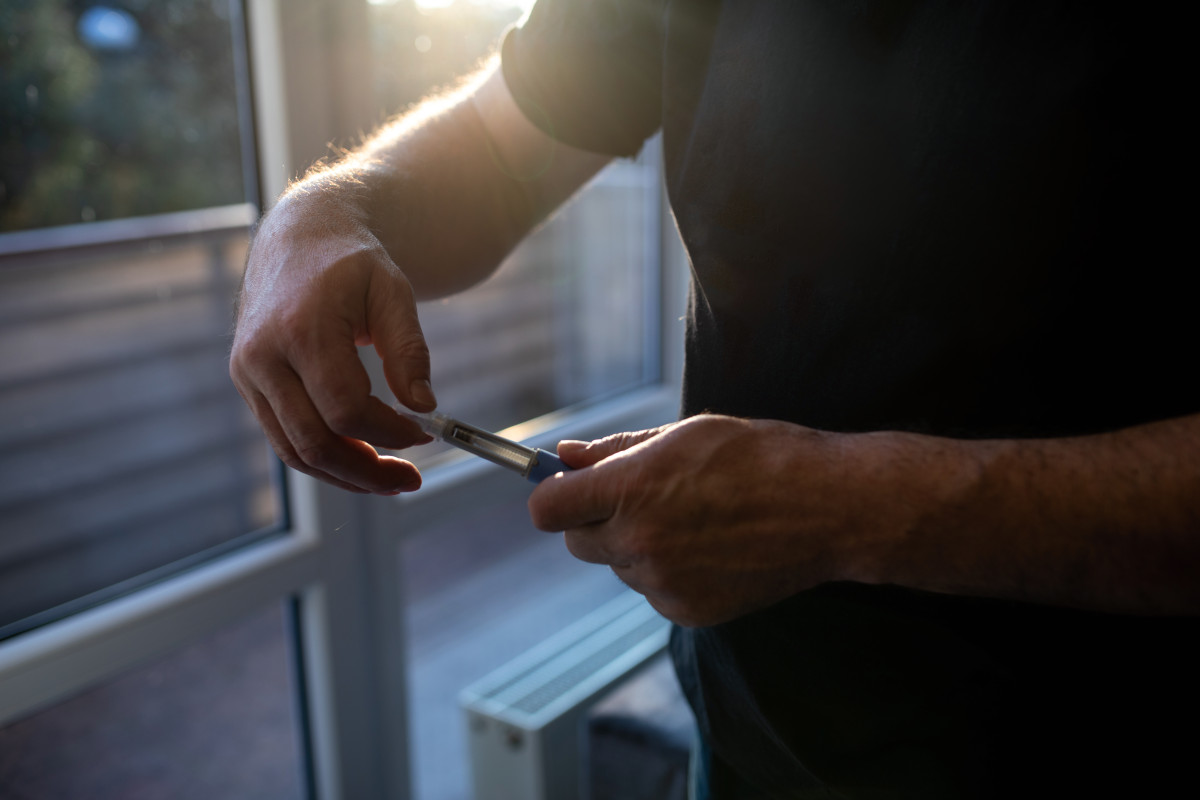
“The drugs are an incredible way of being able to put all that food noise to one side and override your biological system,” says Katherine Jenner, director of the Obesity Health Alliance, a coalition of health organisations campaigning for policy change on obesity.
Originally devised as a therapy for diabetes, GLP-1 drugs have been used to treat obesity since 2014. Since then, as improved versions have been developed, more than one in eight adults in the US has taken the drugs.
And now, for the first time in history, there are signs that America’s obesity rate has fallen. There are an estimated 7.6 million fewer obese adults today than there were three years ago.
It’s a start, but that still leaves more than 100 million people in the US who are obese. If GLP-1s were rolled out to them, the benefits could be substantial.
A 2025 University of Chicago model estimates the prevention of around 20,000 cases of type 2 diabetes and 10,000 cases of cardiovascular disease for every 100,000 people treated.
This sounds encouraging, but the same study also found that at the current US price of around $1,000 (£750) per month, the expensive injections are simply not cost-effective to roll out on this scale.
In fact, the researchers concluded, the drugs cost nearly twice as much as what’s typically considered good value for money in standard healthcare.
Another US study found that healthcare costs can actually rise after people start anti-obesity drugs.
Analysing insurance data, researchers led by Prof Coady Wing at Indiana University found that spending increased by about $100 (£75) per month in the five years after patients began GLP-1treatment.
Wing thinks the increase occurs, not because people are becoming sicker, but because they’re filing claims for GLP-1 follow-up visits.
“I think partly what’s happening is that patients taking the drugs end up consuming some extra doctor visits to monitor possible side effects and performance,” he says, “and this raises their monthly healthcare bill.”
As checkups become less frequent, however, there could be savings. “It’s certainly not crazy to think that,” he says. “If savings do occur, it’s likely to happen over longer horizons.”
Shot in the dark
Despite their health benefits, for now at least, it doesn’t make financial sense for governments to give GLP-1 drugs freely to everyone with obesity. But that may not last.
Prices are expected to fall, and pill versions are already on the horizon, making them both cheaper and easier to use. If they reach a point where they effectively pay for themselves, the question shifts: why shouldn’t they be prescribed more widely?
The answer is that cost is only part of the story.
Even if the economics improve, other challenges remain. One of the biggest is what happens when people stop taking the drugs. One issue is that most people who take GLP-1 drugs regain lost weight quickly after they stop taking them.
And related health benefits, such as improvements in blood pressure and cholesterol levels, disappear too. Like most medicines, GLP-1s only work while you take them – sustained results require long-term use.
“Most people don’t realise that they’re a drug for life,” says Amanda Daley, professor of behavioural medicine at Loughborough University. That creates its own problems, particularly when side effects are involved.
Most are mild and short-lived, such as nausea and constipation. But rarer complications can be more serious. One is pancreatitis – an inflammation of the pancreas – which affects around three in every 1,000 people taking GLP-1 drugs.
If that number sounds small, imagine that you’re one of them – and how many more could develop this potentially fatal condition if the drugs were prescribed to billions.
Scaled to the roughly 100 million people in the US with obesity, that could mean around 300,000 cases.
There could also be other serious side effects that we don’t yet know about, precisely because the drugs are new and have never been deployed on this scale.
Daley worries, for example, about the loss of muscle mass that can accompany rapid weight loss. This may be especially concerning for women.
After menopause, bone density declines more rapidly, meaning the loss of muscle – which helps support and protect bone could further increase the risk of fractures and osteoporosis.
There are also studies suggesting that weight-loss drugs dampen the desire, not just for food, but for other things too, including alcohol, nicotine and perhaps even shopping.
This may be good for the pocket and for physical health, but stripping life of too many pleasures could also lead to mental health problems that require psychological support. We just don’t know.
Read more:
- 5 expert-backed food combos that can supercharge your health
- Why the worst foods for weight gain aren't what you think
- The cholesterol-lowering supplement you might be taking without realising
Chance to reset
All this leads us to an awkward truth with GLP-1 drugs: for all their effectiveness, they’re not a silver bullet. “Obesity can’t be cured just with a drug,” says Daley. “[GLP-1s] aren’t a ‘get out of jail free’ card.”
That’s because the drugs don’t address the underlying habits and environments that lead to weight gain.
For that reason, the World Health Organization advises against using them on their own, instead recommending they form part of a comprehensive care plan that includes a healthy diet, regular physical activity and support from health professionals.
Learning to maintain a healthy lifestyle brings benefits beyond weight loss. Good nutrition can help reduce inflammation, while physical activity can boost mood.
But these habits are hard to sustain, which is exactly why having a comprehensive plan from health experts matters. Without it, the benefits of the drugs may not last.
Daley therefore argues they should be prescribed alongside this support, helping people keep the weight off once they stop taking them.
Jenner agrees. She likens GLP-1 drugs to a reset button – a chance to tackle the underlying causes of weight gain.
Used this way, the drugs can give people the space to build healthier habits, so that when they come off them, those habits are already in place.
“If they can be used to create a reset moment, to break people out of this junk food cycle and start thinking about eating a nutritious diet, moderating alcohol use and introducing exercise, that’s when it starts becoming a public health investment,” says Jenner.
In that sense, GLP-1 drugs wouldn’t just change people – they could start to reshape the food system itself. That would be no small feat. Right now, that industry is built around appetite and, crucially, around encouraging us to want more.
The global fast-food market alone is worth over £490bn ($650bn). Seven of the world’s ten biggest food companies make more than two-thirds of their UK profits from unhealthy packaged food and drink.
And the ultra-processed food market is still growing fast, expected to expand by another £641bn ($856bn) by 2029. In other words, there’s a vast economic engine designed to keep our cravings exactly as they are.
“My personal view is that, at the moment, we have a food industry that’s creating customers for the pharmaceutical industry,” says Jenner. “I don’t like that. And I think a lot of people would feel uncomfortable with that too.”
GLP-1 drugs might have the potential to disrupt that loop. By dialling down hunger and muting cravings, they could shift what millions of people actually want to eat – smaller portions, fewer snacks, less ultra-processed food.
And if enough people start wanting different things, the market would be pressured to follow.
Of course, it could also play out the other way – with drugs simply patching over the damage while the food environment stays exactly the same.
But if these medications spark a broad enough shift in appetite for a period, they could do something diets alone never have: force the industry to adapt.
“We could use this time to reset the food industry, in what they sell and promote to us and have on the shelves and in the high streets,” says Jenner.
That kind of reset, she argues, is possible, but only if people on lower incomes aren’t left behind.
Right now, they are. Healthier food is often more expensive, so people with less money to spend are more likely to rely on cheaper, ultra-processed options – around six per cent more, according to one study – and are more likely to develop obesity as a result.
But they’re also the least likely to be able to access GLP-1 drugs. Most people taking them today are paying out of pocket rather than getting them through the NHS or insurance.
In the UK, one survey found that 95 per cent of users are funding the treatment themselves.
The result could be a two-tier society: those who can afford the drugs are able to lose weight and improve their health, while those most at risk are left without access to the same help.
Closing that gap, Jenner argues, would mean treating these drugs less as a private fix and more as a public health tool – rolled out fairly and alongside proper support to help people change their habits.
“I do think we have to seriously consider it as an option,” she says.
System reboot
As we’ve seen, from cost to side effects, rolling out GLP-1s widely won’t, on its own, solve the obesity epidemic.
These drugs can blunt the consequences of obesity – reducing the risk of diabetes and heart disease – but they don’t stop the condition from developing in the first place.

This matters hugely. Because by the time someone qualifies for treatment, the damage may already be underway.
Excess weight strains joints. Fat can build up in the liver. The cardiovascular and respiratory systems begin to change. Inflammation rises. Insulin resistance sets in. Some of this can be reversed, but not all of it.
Jenner warns that treating obesity primarily as a pharmaceutical problem is dangerous because it risks waiting until people become obese before they receive treatment – effectively, shutting the stable door after the horse has bolted.
In short, GLP-1 drugs are a treatment for obesity, but they don’t prevent it from happening.
And if the epidemic is to be brought under control, both sides of the equation matter: helping those who already have obesity, and stopping others from developing it in the first place.
The UK’s sugar tax is an example of a policy that helps to prevent weight gain before it begins. Since the levy on sugary soft drinks was introduced in 2018, the amount of sugar consumed by adults from these beverages decreased by a third. For children, the amount halved.
From portion sizes and menus to advertising and ingredients, tackling obesity means reshaping the world that surrounds our choices, not just medicating the consequences.
Done well, those kinds of changes could be among the most cost-effective interventions we have, even if their benefits are harder to track than the immediate results of a drug.
But while those broader changes take time to take effect, GLP-1drugs are arriving now. As they become cheaper, better and easier to use, more people will take them. That’s inevitable.
But on their own, they won’t end obesity and relying on them risks missing the bigger opportunity to prevent it in the first place.
Without that prevention, there’s a danger of locking in the very cycle these drugs are meant to break: a steady stream of new patients, lining up for treatment.
Read more:
