
There are few things more common, or more quietly dreaded, than a receding hairline. Up to 80 per cent of men experience some degree of male pattern baldness over their lifetimes.
It’s so normal that we barely count it as a medical event at all – just one of the standard-issue indignities of getting older, filed somewhere between reading glasses and a dodgy knee.
For the majority of men, going bald is simply cosmetic and no cause for alarm. Plenty of bald men are in rude health and will stay that way. But over the past decade or so, researchers have noticed something faintly unsettling.
Baldness – or, more precisely, male pattern baldness – keeps turning up alongside conditions that have nothing to do with your scalp. Heart disease. Insulin resistance. An enlarged or cancerous prostate.
The hair on your head, it seems, may be less of a private cosmetic matter and more of a readout on what is happening beneath the skin.
It's not just whether you're balding – it's where
One of the more interesting findings in this field is that not all balding is created equal.
In a 2013 meta-analysis published in BMJ Open, researchers pooled six studies covering nearly 37,000 men and found that hair loss at the crown – the vertex, in the trade – was associated with a raised risk of coronary heart disease, while a receding hairline at the front was not.
A retreating fringe carried essentially no cause for concern. Losing it on top was a different story.
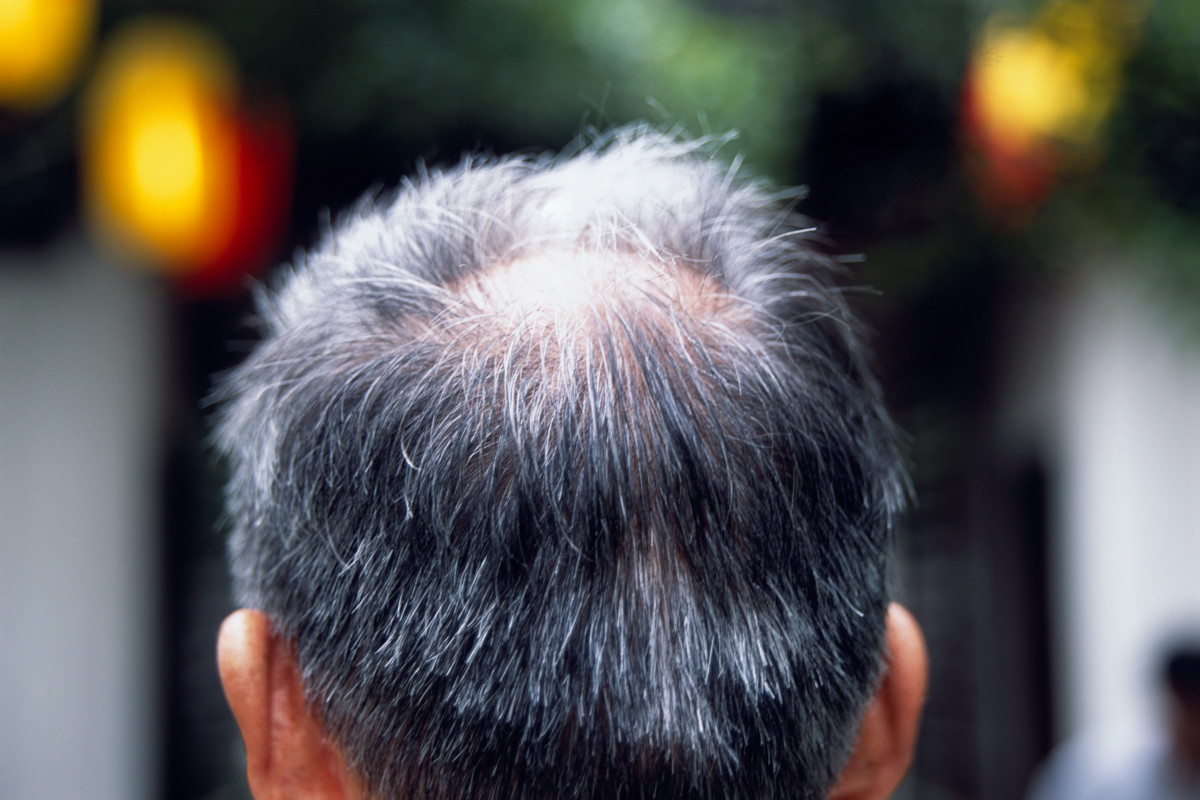
It also scaled with severity. Men with mild vertex balding had around an 18 per cent higher risk of coronary heart disease; moderate balding pushed that to 36 per cent; and severe balding to 48 per cent.
That dose-response – more hair lost, more risk – is part of what makes researchers take the link seriously rather than dismissing it as coincidence.
Following the 2013 analysis, epidemiologist Dr Guy Eslick wanted to look more broadly at the link between alopecia and heart disease.
“There had been a review published in 2013 in the BMJ Open, but the literature search strategy seemed lacking – it only identified six studies,” he says. “We identified 31 studies and felt it was worth conducting a comprehensive review.”
The resulting 2014 analysis gathered more than 29,000 people with hair loss – chiefly male pattern baldness – and found it associated with a raised risk of coronary heart disease, along with insulin resistance and metabolic syndrome, both several times more common in balding men.
“Being bald may dispose you to increased risks of coronary heart disease, high cholesterol, high blood pressure and prediabetes,” says Eslick, “even after accounting for age, cardiovascular risk factors, education, body mass index, race, smoking, alcohol consumption and diabetes.”
The prostate belongs on the list too.
A 2025 review examining decades of studies found male pattern baldness turning up alongside a higher risk of aggressive prostate cancer and benign prostate enlargement.
Though, as with the heart, the results across studies are far from uniform.
It is worth pausing on how alarming all this can be made to sound. One study presented at an Indian cardiology conference in 2017 reported that men under 40 with male pattern baldness had more than five times the risk of coronary artery disease.
However, that was a small case-control study aired at a conference, not a settled result, and the honest headline is more measured.
Nor does every study even agree that the link is strong: a large German cohort study found only a weak association between male-pattern baldness and a few heart disease risk factors.
Summarising their results, the authors wrote, “do not point to male-pattern baldness as a strong surrogate measure for coronary heart disease and coronary heart disease risk factors in general.”
In short, the science is mixed, though there does seem to be at least some association worth delving into.
Read more:
- We're finally learning why hair loss happens – and how to reverse it
- Is my moisturiser making me bald?
- The 5 best ways to cope with hair loss, explained by a psychologist
The hidden link between bald patches and health
To understand why the top of your head could have anything to say about your health, it helps to know what male pattern baldness actually is. Despite appearances, going bald does not mean your hair follicles have died and dropped out.
“The actual factories that make the hair are not typically lost,” explains Desmond Tobin, professor of dermatological science at University College Dublin.
“They’re just miniaturised, such that the fibres they produce – if they can produce fibres – are so cosmetically invisible that they appear to be gone.”
Get close enough to a balding scalp, and you will see them: a fine, colourless peach fuzz where a thick head of hair used to be.
The clinical term is androgenetic alopecia, which Tobin breaks into three parts.
“Andro for the fact that it’s driven by male hormones, or androgens – or at least that’s the supposition, genetic in that it’s inherited, and alopecia is a common name for anything relating to hair loss, regardless of the type.”
The follicle, Tobin points out, is perhaps the only tissue in the body that cycles for your entire life, growing and shedding hair on a three-to-five-year loop. In balding, that cycle gradually winds down.
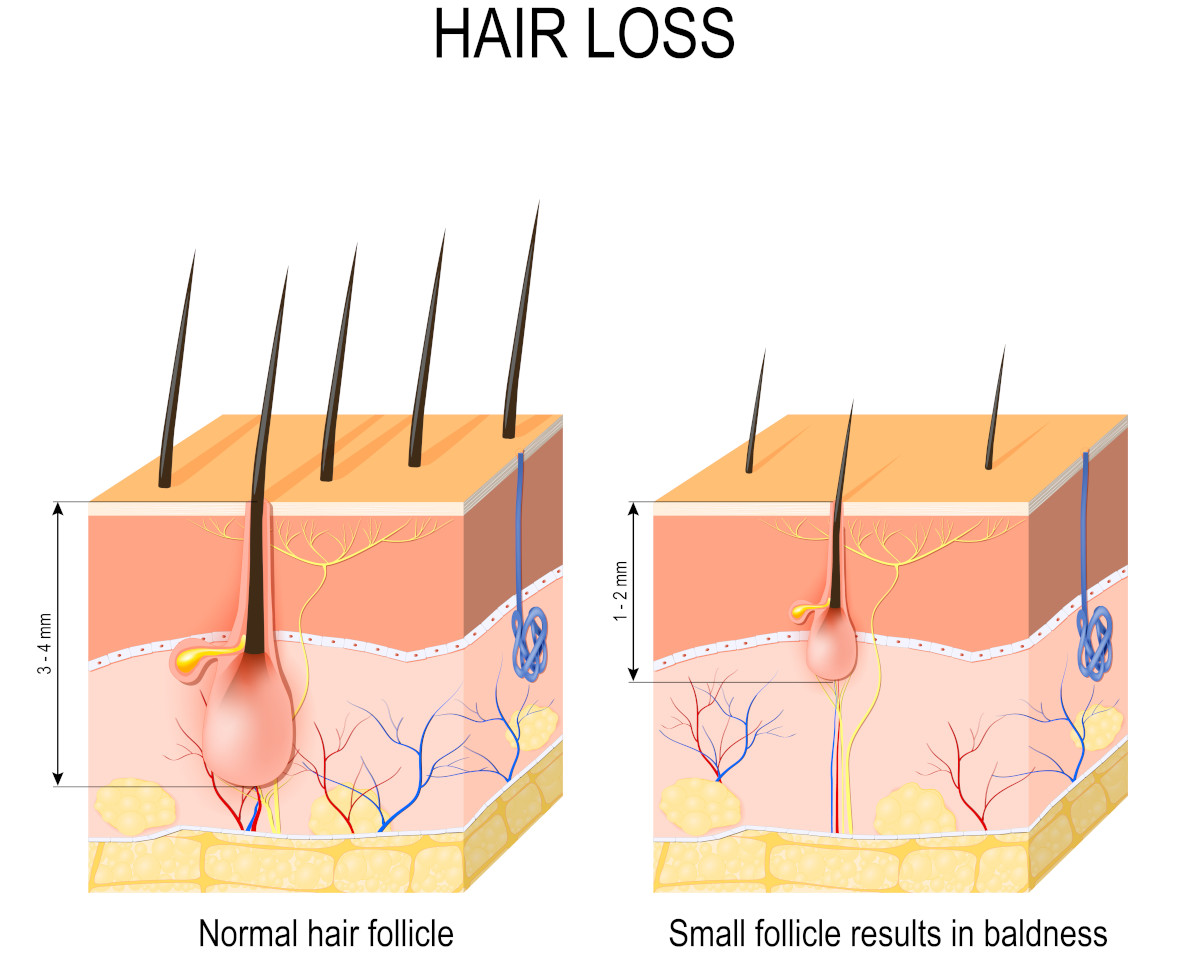
“It’s a bit like if you had a hose that was becoming progressively blocked,” he says. “The amount of flow per unit time becomes less and less, ultimately to a trickle. The fine, invisible hairs are really the trickle effect.”
The crucial thing, and the source of much confusion, is that going bald is not about having more male hormones. Instead, it’s about how your body responds to them.
“Men who don’t go bald don’t necessarily have less of the androgens,” Tobin says.
“It’s just that they are less sensitive to them. A man with a full head of hair won’t necessarily have a lower amount of testosterone; it’s just that their tissues are less responsive to that same level.”
That sensitivity is written into your genes – a whole basket of them. Recent work has identified more than 380 regions of the genome linked to hair loss.
And here is where the wider health picture comes into focus. The hormone doing most of the damage to your follicles is dihydrotestosterone, or DHT, a potent derivative of testosterone.
But DHT doesn’t only act on hair follicles and is instead wired into tissues all over the body.
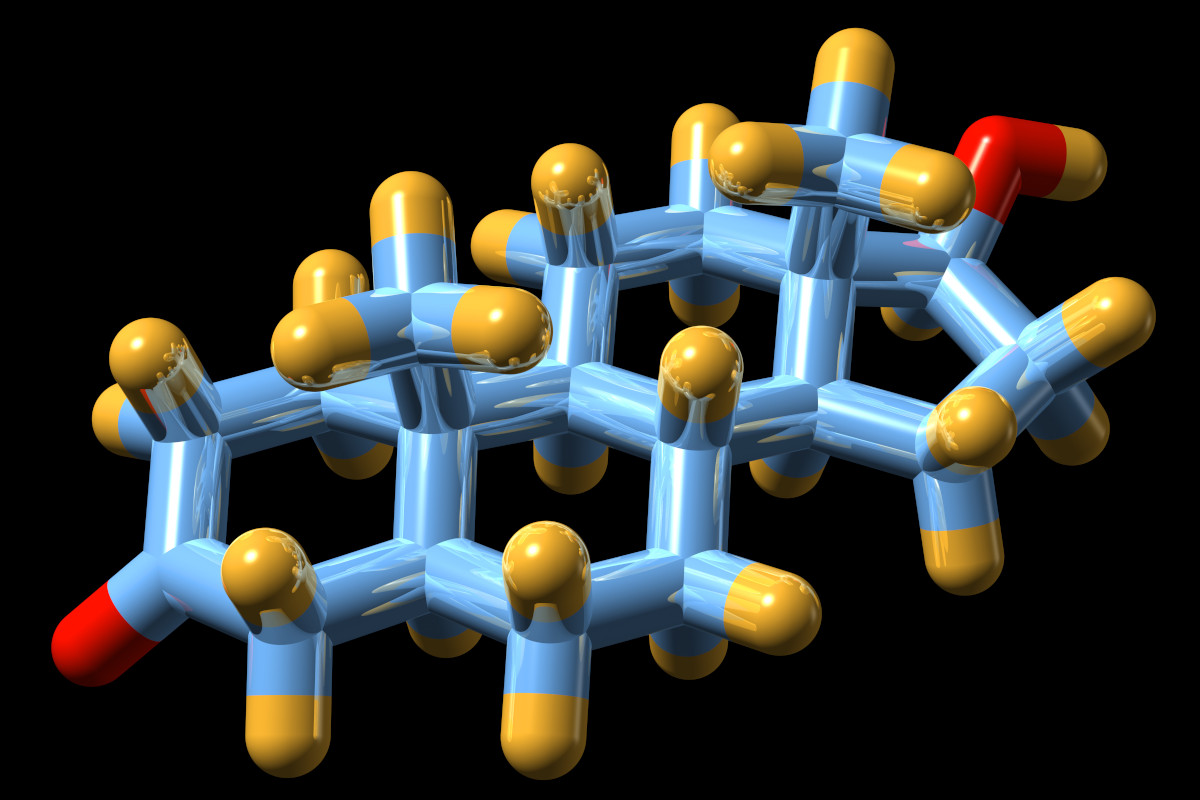
“Nobody wants to mess around fundamentally with the androgen system in men, because it’s hardwired and plumbed into so many different parts of male physiology,” Tobin says.
“So it’s not surprising that some of the drivers for male pattern alopecia may also be influencing, in a negative way, potentially cardiovascular changes – but also any other organ that is sensitive to these androgens.”
Through this lens, baldness is not causing heart disease. Both are symptoms of the same underlying hormonal wiring, which is also why they do not march perfectly in step.
As Tobin notes, a man’s individual health background can nudge “all their tissue-ageing trajectories” in different directions.
An illustration of how intertwined the hair loss process is with other parts of the body is the drug finasteride. Though it’s now a mainstay of hair-loss treatment, it was never intended to be used this way.
“It was discovered by accident,” Tobin says. “They were giving the drug to men who had enlarged prostates in their 60s – driven by androgens – and found that, as well as shrinking the prostate, it also helped hair regrowth.”
And the story may not end there: a 2024 study from the University of Illinois found that men taking finasteride had lower levels of cholesterol than those who did not, and that the drug slowed the progression of fatty plaque build-up in the arteries of mice, among other benefits.
Results like this hint that a treatment for baldness might tug on the cardiovascular thread too.
Although it should be noted that the human sample in the study was small, and the finding needs to be replicated in a clinical setting before anyone reads too much into it.
Finasteride also has several side effects, and taking the medication is not without risk.
Don't panic
If you are reading this while surreptitiously feeling the top of your head, take a breath. None of this means a thinning crown is a sentence.
The associations, while real, are modest, and – crucially – a bald patch is one of the few risk factors you can do absolutely nothing about, and don’t need to.

Because the levers that actually matter are the familiar ones. “It’s probably easier to improve your cardiovascular risk outcomes by just doing the lifestyle changes,” Tobin says.
“Eat less saturated fat, get more exercise, don’t smoke, sleep better.”
Thinning hair on top changes none of that advice; it just, perhaps, adds a little urgency to it.
Tobin’s framing is that baldness could be a useful prompt rather than a curse.
“If you let people know that early and extensive balders may have a higher association with cardiovascular disease, that could be significantly improved in terms of their longevity and health span if they adopted more heart-healthy practices.”
It’s also worth remembering that the head losing its hair may be gaining a few things too. Some research has pointed to upsides in how bald men are perceived – as older, certainly, but also as more dominant.
In another study, men with closely shorn heads were consistently judged taller and stronger than their hairier counterparts.
None of which will make the slightest difference to your coronary arteries. But it is a reminder that the story your scalp tells is not entirely a grim one.
The hair on your head was never really the point. What matters is the health underneath it.
Read more:
