
When is your cholesterol high enough that you need medication? You might expect there to be a simple cut-off. Above this number, you need statins. Below it, you don’t.
But doctors don’t just look at your cholesterol in isolation. It’s fed into a formula – alongside variables like your age, blood pressure, medical history and lifestyle – that estimates your overall risk of having a heart attack or stroke in the years ahead. Rewrite the formula slightly and suddenly you could find yourself being offered statins.
That’s exactly the situation for millions across the US following a major overhaul of cholesterol guidelines from the American Heart Association (AHA).
Around 87.5 million people – more than half of Americans aged 30–79 – now meet the criteria for statin treatment, a jump of 21.5 million since the AHA’s last guidance in 2018.

One of the biggest changes is how early doctors start looking at your cholesterol risk. Cardiovascular risk assessment used to start relatively late in life – now it begins a decade earlier.
“Prior guidelines released in 2018 focused on patients ages 40 to 75,” says Dr Stephen Kopecky, cardiologist at Mayo Clinic.
The new guidelines have broadened the age range for risk estimation to 30–79, allowing doctors to better monitor a person’s long-term cardiovascular risk.
“With this younger age group, the equation now used to estimate risk includes 30-year risk in addition to the 10-year risk we have commonly used in the past,” Kopecky explains.
In other words, doctors used to focus on one question: what are your chances of having a heart attack or stroke in the next 10 years?
Now, for younger adults, they’re also looking much further ahead, at the risk over the next 30 years.
That can paint a very different picture of somebody’s risk of cardiovascular disease. A 35-year-old might have little chance of a heart attack in the next decade, yet still be on a path that puts them at much greater risk by their 50s or 60s.
Under the new guidelines, if that longer-term risk is high enough, they may be offered statins even when their short-term risk remains low.
When it comes to preventing heart attacks and strokes, time is one of the most valuable tools doctors have. Seen that way, the new guidelines are a positive, proactive step – catching risk earlier, before damage sets in.
But qualifying for a prescription and actually needing one aren’t the same thing. And for the 21.5 million people newly caught by this wider net, working out the difference matters.
Numbers game
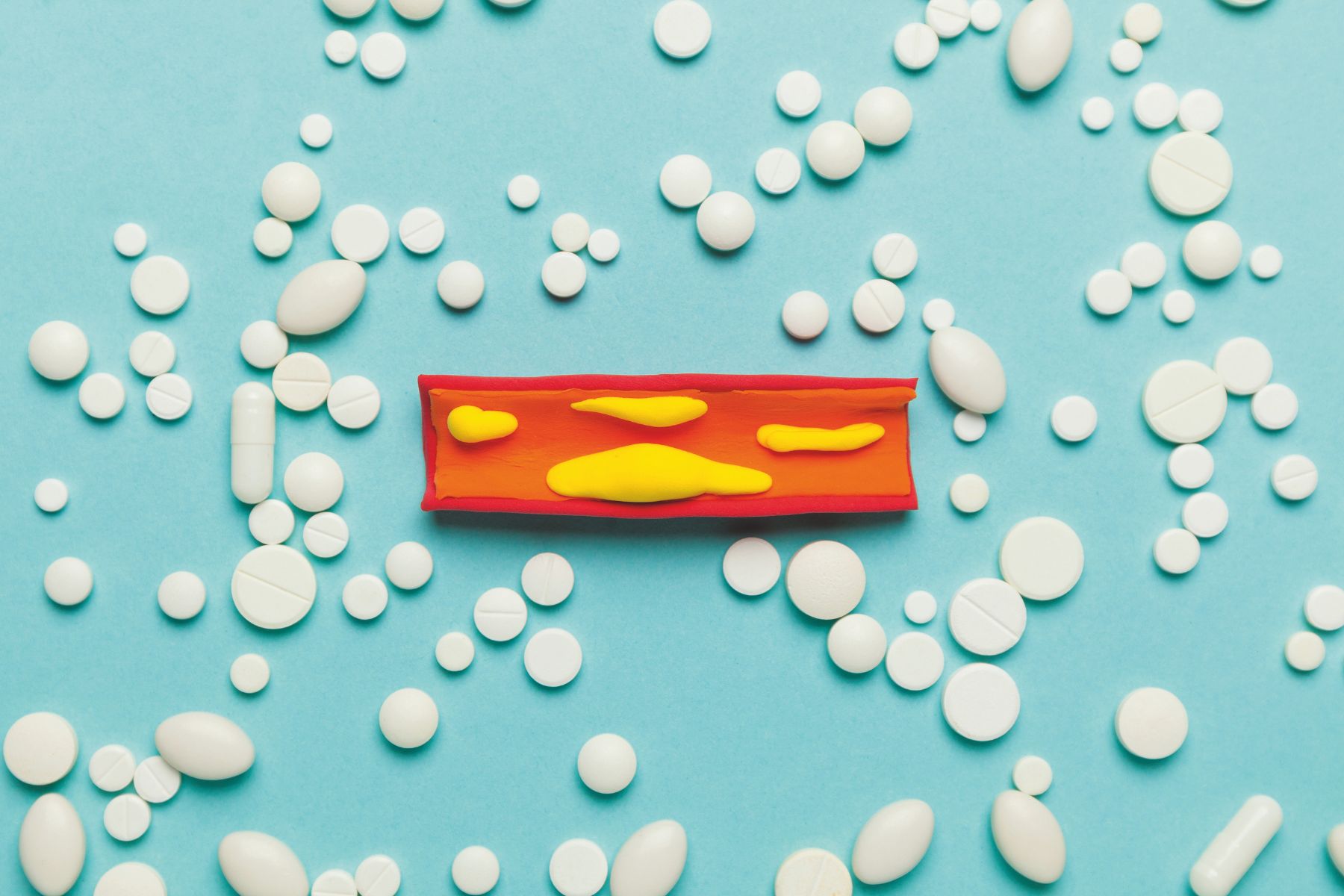
There’s little doubt, in general, that statins work. Depending on the type and dose, they can reduce low-density lipoprotein (LDL) – the ‘bad’ cholesterol that contributes to fatty plaques building up inside our arteries – by around 30 to 50 per cent.
The more difficult question is when to start taking statins.
Statins are traditionally prescribed later in somebody’s life, but the damage caused by high LDL cholesterol can start decades earlier.
Over time, LDL cholesterol can build up as fatty plaques inside your artery walls, meaning how long your arteries have been exposed to moderately high levels may matter as much as how high your cholesterol is today.
This also means a cholesterol reading that looks relatively healthy today isn’t a guarantee against problems later.
Doctors typically consider LDL below 2.6mmol/l (100mg/dL) optimal, yet around half of all heart attacks occur in people with levels between 2.3mmol/l (89mg/dL) and 3.8mmol/l (147mg/dL) – a range that starts within what’s considered healthy.
So why wait, experts are now asking, until someone’s risk becomes high before stepping in? When we’re younger, plaques tend to be less established and easier to modify. As they accumulate and become increasingly calcified with age, some of the damage becomes much harder to reverse.
Lowering LDL sooner could therefore prevent some of that damage from developing in the first place.
“Some studies have shown that even a low dose [of statins] can be very beneficial when given over many years to reduce plaque formation,” says Kopecky. “The potential benefit regarding 30-year risk is quite real.”
Intriguingly, lowering cholesterol with statins may have a greater proportional effect when someone’s immediate cardiovascular risk is still low.
According to Prof Kausik Ray, Honorary Consultant Cardiologist at Imperial College London, among people at very low risk, a 1mmol/l (39 mg/dL) reduction in LDL has been associated with around a 36 per cent cut in their chances of a major cardiovascular event.
Among those whose cardiovascular risk is already much higher, the same reduction is associated with a smaller cut, of around 13 per cent.
That doesn’t mean healthy young people have more to gain from statins than someone at high risk of a heart attack or stroke.
A 36 per cent reduction sounds enormous, but if your chances of having a heart attack are very small to begin with, the actual difference to your odds may still be small. Someone with a one per cent chance of a cardiac event a year, for instance, might see that fall to around 0.64 per cent.
For someone at high risk, a smaller percentage reduction can still translate into a much bigger real-world drop: someone with a 10 per cent chance might see it fall to around 8.7 per cent – a smaller relative cut, but a bigger absolute one.
This doesn’t mean everyone should start taking statins in their 30s, either. A major question remains unanswered: if someone starts at 30 or 40 to head off a risk that may not become significant for decades, how long do they actually need to stay on the medication?
For now, nobody knows. The long-term data simply doesn’t exist yet. But Kopecky says it may eventually prove possible to use statins intermittently – with periods on and off the medication – but “these are questions that have not yet been answered”.
Read more:
- This is the single best way to reduce your cholesterol without statins, according to a leading doctor
- What your calf muscles can reveal about your heart health
- ‘An extremely exciting milestone!’: landmark treatment slashes cholesterol by 62% with a single dose
No magic pill
Whether you should take a statin isn’t something this article can answer. That’s a decision for a doctor, based on your full medical history. But it’s worth knowing what a conversation with a doctor is likely to involve.
For many people, it won’t start with a prescription, but with suggested lifestyle changes – moving more, for instance. Simply getting the recommended 150 minutes of weekly moderate activity could reduce LDL cholesterol by 20 per cent over 12 months.
And even if you are prescribed statins, you’ll likely be told to exercise more anyway.
“There is a suspicion that taking a statin medication without changing lifestyle renders much, much less benefit in reducing [major cardiovascular events] than adding it to a healthy lifestyle,” says Kopecky.
“Every drug approved for lipid lowering by the US Food and Drug Administration has recommended the medication in addition to a healthy lifestyle.”
To be clear, in some cases, lifestyle changes won’t be enough on their own. People with familial hypercholesterolaemia, a genetic form of high cholesterol, will typically need statins regardless of how healthy their habits are.
And on the other side of the coin, statins aren’t automatically the right call for everyone with high cholesterol. Doctors advise against them for anyone who is pregnant or trying to become pregnant, or who has severe liver disease.

Even for people who are good candidates, the side effects of statins are worth weighing up with your doctor. Mild ones can include headaches, digestive changes and sleep disturbances; rarer, more serious ones include muscle damage and raised blood sugar, which may affect type 2 diabetes risk.
That balance of risk and benefit gets more complicated with age. “People over age 70 are at increased risk for side effects of statins, but they’re also the patients at highest risk of death and of heart attack,” says Kopecky.
Stopping the medication carries its own risks, too: “Research tells us that if an elderly person stops taking a statin, their risk of heart attack, cardiovascular death and hospitalisation go up over the next few years.”
The exception, he says, may be someone with a very shortened life expectancy due to terminal illness.
Ultimately, none of this adds up to a single answer for the 87.5 million Americans now eligible for statins. Some will be advised to start taking them straight away. Others will be steered towards lifestyle changes first, or a combination of both. And for some, the risks will outweigh the benefits entirely.
What the new guidelines may do is widen the pool of people having that conversation with a doctor in the first place – which, experts say, is exactly the point.
As Kopecky puts it, the goal isn’t to put everyone eligible on a statin. It’s to make sure individual risk, and the most effective approach for managing it, gets properly assessed.
Read more:
