
A one-off treatment could lead to a cure for high cholesterol, according to medical researchers in London.
In an early-stage clinical trial, a single dose of a new experimental therapy cut levels of LDL ‘bad’ cholesterol by up to 62 per cent and kept them low for up to a year, raising hopes that patients could one day avoid taking daily medication for the rest of their lives.
The treatment, called VERVE-102, is delivered through an IV drip and works by permanently altering a gene involved in cholesterol regulation. Researchers reported no serious safety concerns in the trial, the results of which were published in The New England Journal of Medicine.
Lowering LDL cholesterol reduces the build-up of fatty plaques in the arteries, helping to cut the risk of heart attacks and strokes.
While statins can achieve similar reductions to gene therapy, they generally need to be taken every day. If larger studies confirm that VERVE-102 is safe and effective, a single treatment could provide long-lasting protection against cardiovascular disease.
“It is still early days, but this is an extremely exciting milestone,” said Prof Riyaz Patel, a clinical academic at University College London (UCL) and consultant cardiologist at Barts Health and UCL Hospitals (UCLH), and one of the local leads for the trial.
“These findings show the technology works, is safe and helps lower cholesterol.”
Read more:
- The cholesterol-lowering supplement you might be taking without realising
- The countries with the lowest (and highest) cholesterol levels in the world
- Here's what actually causes high cholesterol (and how to cut it)
Why it matters
Raised LDL cholesterol is one of the biggest risk factors for heart attacks and strokes, contributing to hundreds of thousands of deaths each year in the UK and US.
Doctors can lower that risk with statins, and the drugs are now taken by more than 7 million people in the UK and upwards of 40 million in the US. But they only work if people keep taking them.
Research suggests around half of patients stop their cholesterol medication within a year of starting, either because they find a daily pill difficult to maintain or because of side effects.
Muscle aches are the most commonly reported problem, while a small number of patients experience more serious complications.
That is why researchers are so excited by treatments such as VERVE-102. If a single dose can provide lasting cholesterol reductions, it could remove the need for lifelong medication altogether.
How the treatment works
The study, run by researchers at UCL and UCLH, involved 35 adults who had either an inherited form of very high cholesterol – known as heterozygous familial hypercholesterolemia – or premature coronary artery disease.
Each patient received one of six doses, ranging from 0.3mg to 1.0mg of total RNA per kilogram of body weight. RNA acts as a genetic messenger in the body.
At the highest dose, the therapy reduced LDL cholesterol by up to 62 per cent. The smallest reduction, 9 per cent, was seen at the lowest 0.3 mg-per-kilogram dose. In the participants followed for the longest, cholesterol stayed low.
VERVE-102 is given as a single infusion, delivered through a drip into a vein, and lowers LDL indirectly. It switches off the gene that prompts the liver to make a protein called PCSK9, which normally stops the body from clearing circulating LDL cholesterol from the blood. With the gene silenced, the body removes more LDL.
The approach is designed to mimic a natural quirk of biology. Some people are born with this gene effectively switched off, giving them very low cholesterol throughout life and a much lower risk of heart disease.
The therapy aims to recreate that protective effect in people at high risk of heart attacks and strokes.

How safe is it?
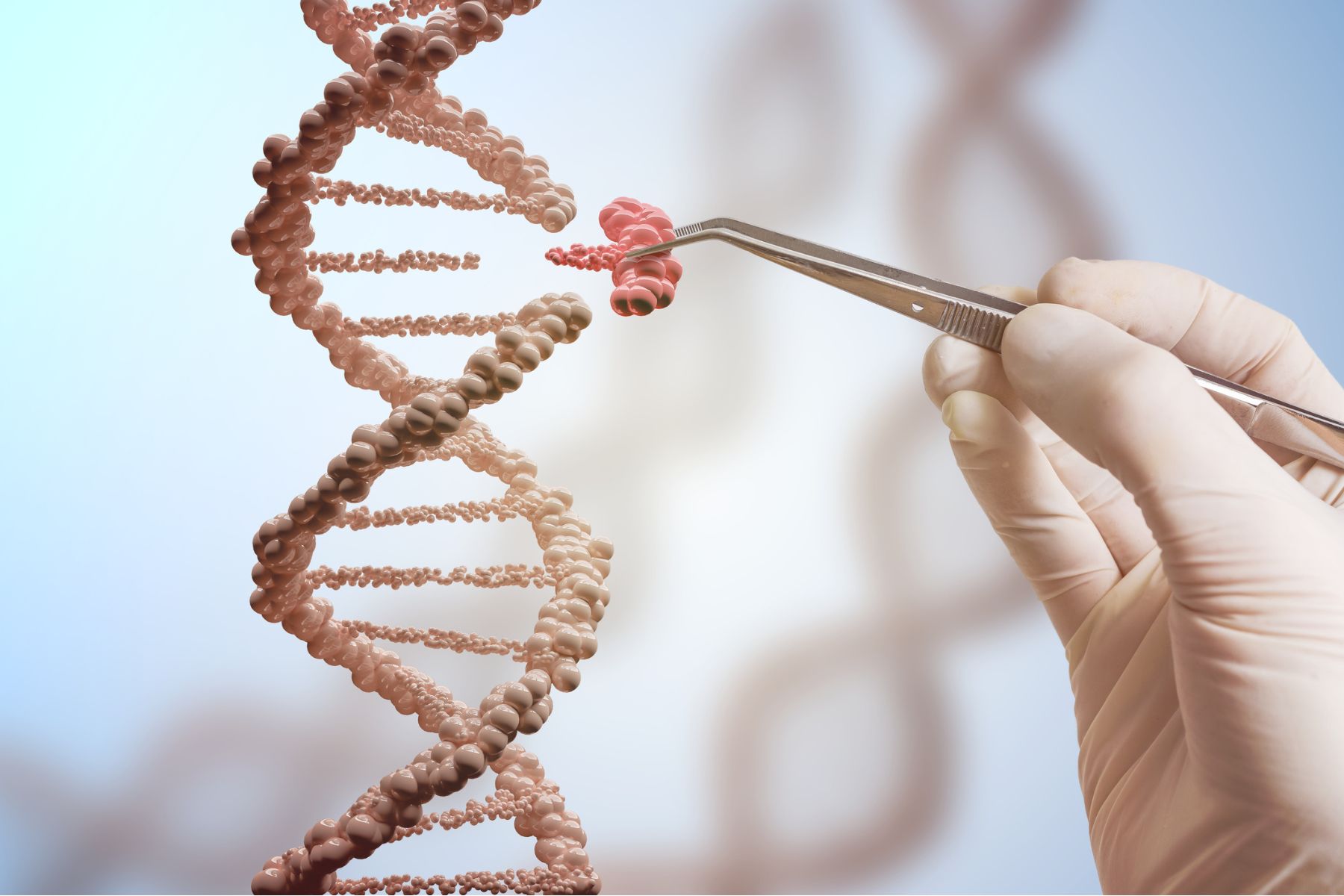
Despite the ‘gene therapy’ label, the treatment does not rewrite a person’s wider DNA. It makes a single, targeted edit to one gene inside liver cells, and the change is confined to those cells in the patient’s own body.
Crucially, it does not touch the genes carried in sperm or eggs, so it cannot be passed on to a person’s children. In effect, it is designed to copy a genetic variant that some people are simply born with – though, as with any new medicine, its long-term safety is still being studied.
Prof Bryan Williams, chief scientific and medical officer at the British Heart Foundation, said: “These results are very exciting and highlight the pace of change in genetic technologies and their application in healthcare.
“Cholesterol levels were lowered by impressive amounts, up to 62 per cent at the highest dose, and reductions appear to have been stable over several months.
“While longer studies involving more patients will be needed to confirm this, it is possible that a single dose could reduce a person’s risk of cardiovascular disease for years.
“If larger trials prove successful, this innovative gene therapy has the potential to revolutionise the way we treat people to lower cholesterol in the highest risk patients.”
Others sounded a clearer note of caution. Prof Kausik Ray, professor of public health at Imperial College London, said the therapy should not be oversold.
“For gene editing, it is, in theory, a once-in-a-lifetime treatment to maintain PCSK9 lowering, but we currently only have months of data,” he said.
“Safety concerns mean the FDA requires 14 years of safety follow-up. Safety issues may not emerge for many years. These can be in another organ or another gene. If this happens, we need to see if there are long-term consequences.”
Ray also predicted that some patients with extremely high cholesterol might still need additional medication alongside gene therapy to drive their LDL low enough.
What else could gene editing treat?
Some experts framed the trial as a milestone for the wider field. The work shows the potential of somatic gene editing – altering the genes of ordinary body cells rather than sperm or eggs – to tackle conditions affecting millions of people.
Prof Ewan Birney, director of the European Molecular Biology Laboratory’s European Bioinformatics Institute near Cambridge, told BBC Science Focus the work was impressive and likely to be one of many somatic gene-editing technologies developed in the coming years.
“This is a good use of somatic gene editing for a key disease,” he said.
As well as helping the small group of people who do not respond well to statins or who have complications, he added, it pointed to a route for somatic gene editing to treat a common chronic disease – whereas existing gene editing has mostly targeted rarer genetic conditions.
Read more:
