In 2025, a team of food scientists in America proved that healthy eating can be a real pain in the jaw.
Researchers at the University of Missouri found that kale – the so-called Superman of ‘superfoods’ – doesn’t always deliver the waterfall of nutrients we expect when we add it to our plates.
Kale is a bountiful source of carotenoids, vitamins and other chemicals. These micronutrients help our immune system and lower our risk of some diseases, including diabetes and cancer. But our bodies have a hard time absorbing them all.
“The key nutrients in kale, especially carotenoids, are fat-soluble,” says Prof Ruojie (Vanessa) Zhang, one of the researchers involved in the study.
“That means they don’t dissolve well in the watery environment of the gastrointestinal tract when kale is eaten on its own, which greatly limits how much our bodies can absorb.”
Fortunately, Zhang and her colleagues demonstrated an easy and delicious solution using a lab model that mimics human digestion.
They found that eating kale with an oil-based dressing multiplies the amount of fat-soluble nutrients we absorb from the leafy greens.
“When these nutrients are consumed with oil-based foods, like a dressing made with olive oil, the oil is broken down in the gut and forms structures called ‘mixed micelles’,” Zhang says.
“These micelles help transport the carotenoids across the intestinal lining, leading to much better absorption.” The principle also applies to fat-soluble vitamins, like vitamins A, D, E and K.
The kale study is just one example of bioavailability in action. Foods may be packed with essential nutrients, but the proportion that is actually absorbed – that’s bioavailable – depends heavily on how the food is consumed.
There are lots of examples where combinations of food can unlock more nutrients than if the ingredients are eaten alone.
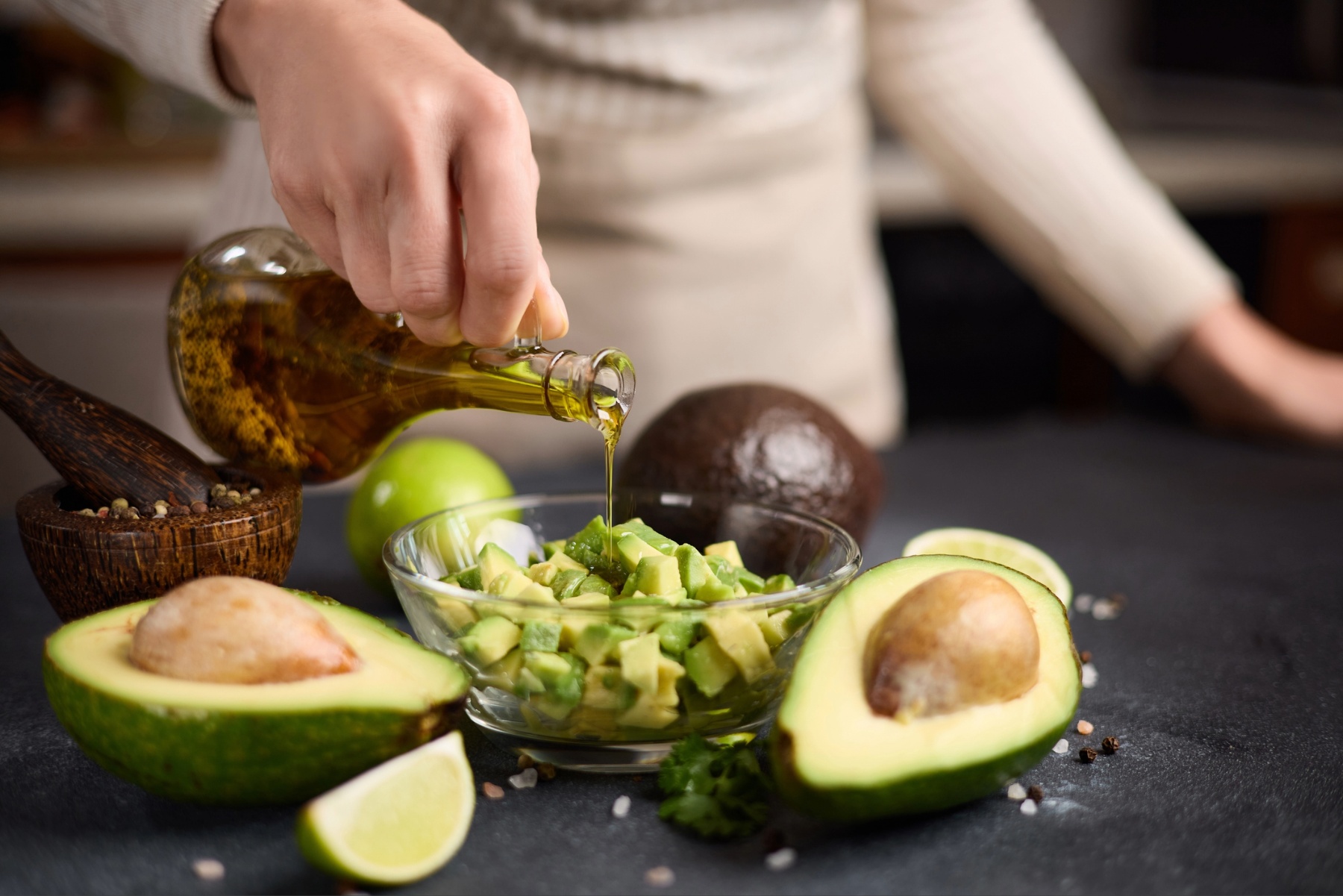
Adding olive oil or avocado to a salad with tomatoes or carrots will increase absorption of lycopene, a fat-soluble antioxidant, Zhang says.
Using black pepper as well as turmeric in your next curry will increase the absorption of curcumin – a nutrient linked to lower risk of dementia – because a chemical in black pepper called piperine slows curcumin metabolism and improves bioavailability.
Another one is spinach, which, on paper, is high in iron. “But its absorption is limited when eaten alone because ‘antinutrients’, such as oxalates, can bind minerals and reduce their bioavailability,” Zhang says.
“However, when spinach is consumed alongside vitamin C-rich foods such as lemon juice, iron absorption is significantly enhanced, because ascorbic acid helps reduce inhibitory compounds and promotes iron solubility in the gut.”
How a food is prepared and cooked can also affect the nutrients your body gains from it. Fermenting foods can increase the bioavailability of some minerals, for example, while eating some foods raw can mean you miss out on some nutrients.
“Carrots are rich in beta-carotene, a precursor of vitamin A that’s important for visual health,” Zhang says.
“However, when eaten raw, less than five per cent may be absorbed. But consuming carrots with a source of dietary fat – meat, fish, butter or olive oil – can increase absorption by [up to six times].”
Heat also has an effect; cooking can increase or decrease the bioavailability of nutrients depending on what the food is and how it’s cooked.
“In many cases, thermal processing enhances bioavailability by disrupting plant cell structures and releasing bound bioactive compounds,” Zhang says.
In previous research, she and her colleagues showed that cooking carrots and tomatoes increased the release and absorption of nutrients like beta-carotene and lycopene.
“Light steaming can also enhance nutrient accessibility by softening plant cell walls while minimising nutrient losses,” she says. Beware overcooking, however.
“Excessive heat exposure can degrade heat-sensitive nutrients and lead to the loss of water-soluble vitamins such as vitamin C and B vitamins.”
It’s hard to get all of this nuance on a food label, of course. And it’s complicated by differences in people’s gut microbiomes.
But by having key ingredients in your arsenal, like olive oil and lemon juice to drizzle on vegetables and leafy greens, you should ensure that your healthy eating is exactly that.
Read more: