
Humans might not be able to live forever, but they could one day reach an average age of almost 200, a new study has found.
The research determined that even if every other cause of ageing was removed, the buildup of naturally occurring genetic changes would eventually stop our organs’ ability to function. The paper revealed that a typical human life would be between 146 and 194 years – though some could potentially reach over 550 years old.
The researchers, from Skolkovo Institute of Science and Technology in Moscow, hope their work will help create a better understanding of which factors help us age and which we should focus on to ensure a longer life.
The paper – published in the journal NPJ Aging – took a simple scenario and explored it: if we were able to cure every reversible cause of ageing, except for DNA changes in our cells, how long could a human actually live?
Such genetic alterations, called somatic mutations, are not inherited but occur naturally when cells split or become damaged over our lifetime, starting from the moment of conception. Each time a division takes place, small glitches can creep in at random – much like in a photocopy of a photocopy of a photocopy.
Most of these defects are harmless, but over time they can build up. When a person gets just the wrong combination of mutations, it can impair how our cells function and can even lead to cancer. Such DNA changes are hard to eliminate, and exactly how they impact our bodies is not fully understood.
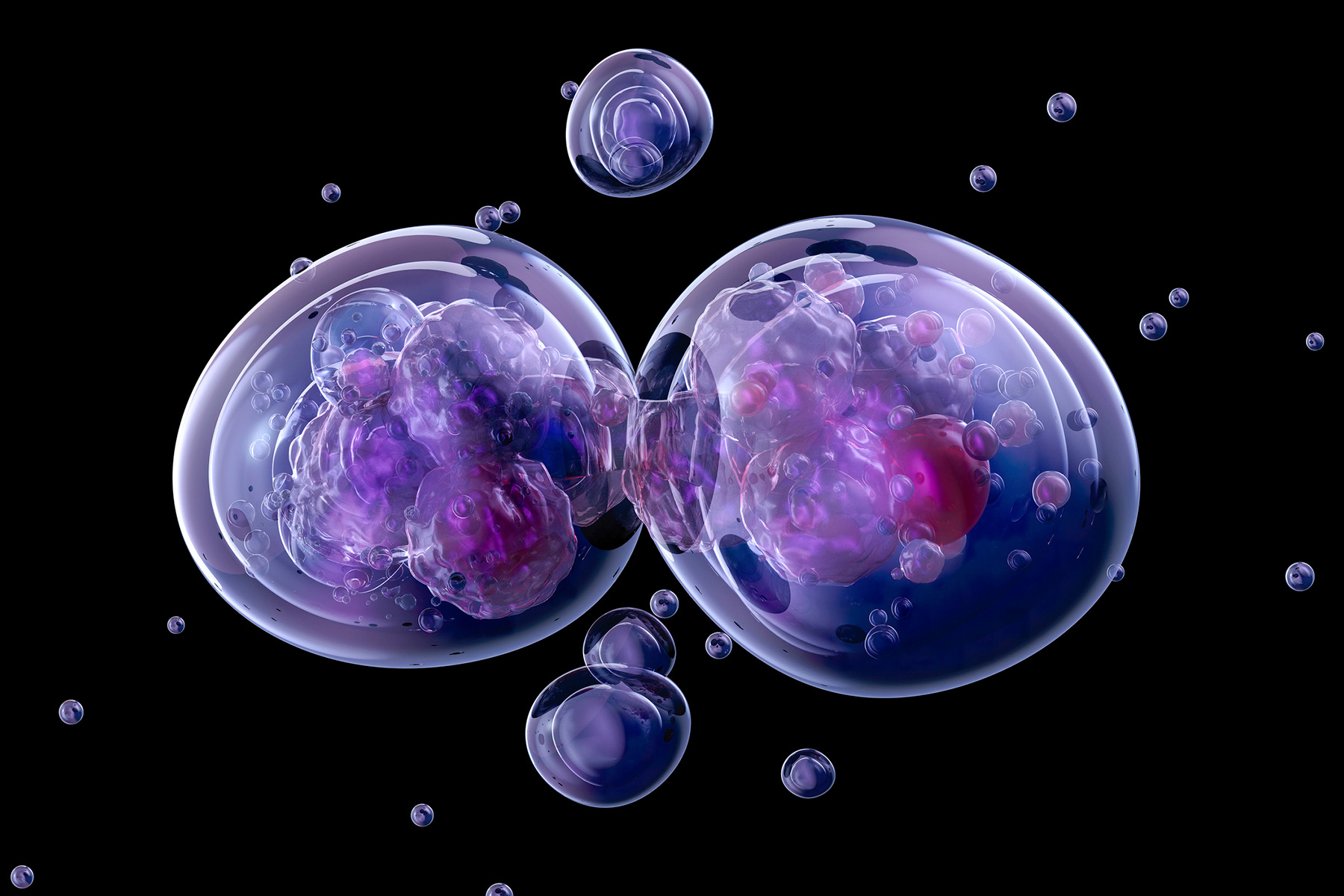
Our cells are skilled at protecting themselves from such changes through regeneration and repair: organs like the liver and lungs can almost keep renewing cells indefinitely. But those in the heart and the brain do not rejuvenate as easily, meaning they are much more vulnerable to damage through somatic mutations.
It’s the eventual damage to these crucial organs, accumulating over decades, that would provide a cap on human lifespans, the scientists found. In the end, the damage would get too much and our heart or brain would stop working.
The study offers one glimpse into how our bodies age, but there is plenty more that is unknown. The researchers acknowledge that they don’t take into account how various organs might influence or affect each other. It is more of a mathematical estimate of one factor in ageing, but they are hopeful it could provide the foundation for a breakthrough.
“Ultimately, incorporating other major ageing factors could pave the way to a comprehensive theory of ageing,” the study says. “Achieving it would require coordinated efforts across multiple research groups – a challenging but increasingly attainable prospect in the near future.”
Joao Pedro de Magalhaes, a professor of molecular biogerontology at the Institute of Inflammation and Ageing at the University of Birmingham, said the mathematical modelling carried out in the study was “interesting, but relies on several speculative assumptions”.
“Any estimate of an upper limit to human lifespan based only on somatic mutations is highly speculative, as it considers only one candidate mechanism of ageing,” he said.
Magalhaes’s own studies raise the possibility that ageing could be caused not by molecular damage such as mutations, but by the way our cells are programmed.
“In other words, ageing is an information problem rather than wear and tear,” he said. Reprogramming our cells could, he suggests, lead to humans living not to 200 years old – but to 20,000.
But, like the Russian researchers, he believes much more work remains to be done: “The bottom line is that we need to better understand why we age.”
Read more:
