
Some said it sounded like the screech of grinding metal. Others described it as a piercing, clicking or buzzing noise.
Beginning in late 2016, diplomats and intelligence agents stationed at the US Embassy in Havana, Cuba, reported hearing weird noises in their homes and hotel rooms. It was, some said, as if a beam of energy was being fired at them from outside.
Soon afterwards, they began to feel unwell. They described shooting pains, headaches, dizziness, pressure in the ears, vertigo, nausea and confusion. Some had problems with their balance. Others began to struggle with their memory.
The condition became known as Havana Syndrome, and it wasn’t long before it started to spread. In the following years, hundreds of North American officials from all over the globe reported similar experiences.
On one occasion, a member of the National Security Council was struck down outside the White House. In another, a senior Defense Department official was overcome at a NATO summit in Vilnius.
Since then, some have recovered, but others have been left with debilitating neurological symptoms that have derailed their lives. A number have had to give up work. And the cause?
One theory is that they were targeted by Russian spies who used a clandestine weapon emitting a directed energy source, such as microwaves or radio waves.
Earlier this year, American media reported that the US government had secretly bought and studied a device containing Russian components that could be linked to Havana Syndrome.
It sounds intriguing, but it’s not case closed.
No perpetrator has ever been caught or admitted responsibility, and it’s unclear how such a weapon would work. Another oddity is that people with Havana Syndrome have genuine symptoms but no obvious physical damage to their bodies.
This points to a different explanation, that their symptoms may have been caused by something called the nocebo effect.
The Coca-Cola conundrum
For the last few years, I’ve been researching the nocebo effect for my new book, This Book May Cause Side Effects. If the term sounds familiar, it may be because you’ve heard of the similar-sounding placebo effect.
This occurs when positive expectations prompt a person’s health to improve. In its classic guise, a person takes a placebo tablet that contains no medicine and feels better for it.
Placebos have been shown to ease the symptoms of epilepsy, allergies, stomach ulcers, erectile dysfunction and more.
The nocebo effect is placebo’s evil twin. Derived from the Latin meaning ‘I will harm’, it occurs when negative beliefs cause us to become unwell.
It’s seen in clinical trials when people in the control group receiving a placebo develop side effects after being warned about them.
For example, data collected from 12 trials of the COVID-19 vaccine, involving over 45,000 people, reveals that 76 per cent of all common adverse reactions to the jab were caused by the nocebo effect.
In the ‘real world’, the nocebo effect can conjure new symptoms and worsen existing ones, sculpt illness and prolong ill health. It’s also far more pervasive than most people realise.
The nocebo effect taints the way we respond to medicines and foods, how quickly we recover from surgery and the way that we age.
It explains why a quarter of cancer patients begin to feel nauseous before they have their chemotherapy. Why people with back pain can have the same amount of physical damage, but wildly different degrees of disability.
And why the decline of patients with chronic conditions, such as cancer, often has less to do with the progress of their disease and more to do with their psychological state.
The nocebo effect affects us individually, but in times of heightened stress, it can also spread like a virus.
This is known as Mass Psychogenic Illness (MPI), and it may be the most likely explanation for the symptoms experienced by some (if not all) of those with Havana Syndrome.
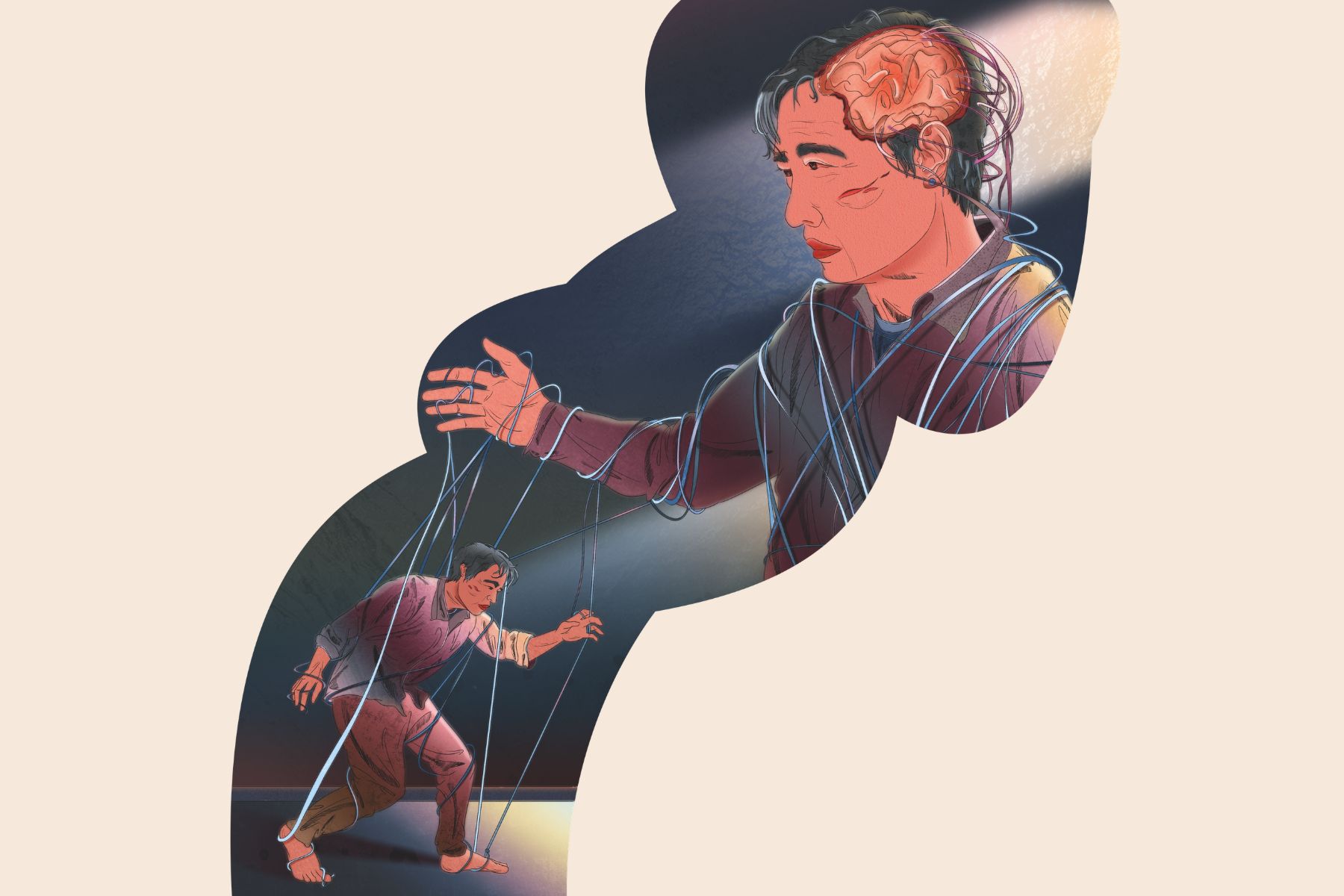
MPI may sound unusual, but history is littered with examples. They include the dancing manias of the Middle Ages, which saw people contort and thrash around, sometimes to the point of collapse.
At the dawn of the industrial era, MPI led to contagious outbreaks of fainting and convulsions in factories.
In 1999, an episode caused more than a hundred children in Belgium to fall sick with headaches, palpitations and bellyache after drinking Coca-Cola.
The beverage was pulled from the shelves in a move that cost the company $200 million (£150 million), but as with all outbreaks of MPI, medical tests came back clear, and no contaminant or environmental cause could be found.
Instead, psychologically generated ailments ricocheted through groups of people who perceived they were vulnerable.
I spoke with Dr Robert Baloh, a professor of neurology from the University of California, Los Angeles, who is an expert on Havana Syndrome.
Based on key features of the outbreak – including the pattern of its spread, a high-stress environment, lack of organic injury and absence of definitive skullduggery – he told me, “I believe the most likely explanation for the outbreak of mysterious symptoms in Cuba and elsewhere is Mass Psychogenic Illness.”
Many of those familiar with MPI also believe this.
When people with these types of symptoms are told that they have a psychological root, it can prompt frustration. Patients feel they’re not being believed or listened to.
It doesn’t help that the old-fashioned name for MPI – mass hysteria – conjures up images of people who are overreacting or faking it.
Yet, because of the way the brain works, it’s entirely possible to have real symptoms that don’t have an overt physical cause, but do have a neural one.
Read more:
- The uncomfortable truth about hearing loss and dementia, according to doctors
- Experts just found a surprisingly easy way to improve your brain at any age
- 25 surprisingly small changes that can significantly lower your dementia risk
Immaculate overdoses
In recent years, neuroscientists have developed a new understanding of how the brain works. In this model, the brain relies less on incoming information and more on guesswork.
Instead of analysing every shred of incoming data, which would be time-consuming and inefficient, the brain largely predicts what is happening. As a result, our experience of the world is what our brain predicts it will be.
The neuroscientist Prof Anil Seth calls this 'a controlled hallucination.'
Most of the time, these predictions match objective reality. Things look, sound and feel as they should. But sometimes, they go awry.
When the brain wrongly predicts a symptom that doesn’t exist, and overrides any incoming information to the contrary, it can trigger a self-fulfilling prophecy.
A glitch in the neural software generates a genuine symptom that has no physical basis in the body. This is the foundation of the nocebo effect.
In outbreaks of MPI, there’s an additional element at work too.
Mirror neurons are specialised brain cells that fire when you either perform an action or watch someone else perform the identical activity.
By ‘mirroring’ the observed behaviour in your brain, the neurons help you to intuit what others are doing without having to consciously think about it.
Crucially, the same cells also light up when we witness other people’s emotions, pain or suffering. In outbreaks of MPI, mirror neurons are thought to become overactive.
Without conscious thought, people start to copy the movements and emotions of those around them. Physical symptoms, and the distress they cause, creep through communities.

The results of this can be dramatic. Head over to YouTube, and you can find bodycam footage of US police officers ‘overdosing’ after coming into contact with the street drug fentanyl.
Fentanyl is a synthetic opioid, 50 times more potent than morphine or heroin. Every year, tens of thousands of users overdose and die.
In the US, many law enforcement officers believe that exposure to just a few grains can trigger a potentially fatal collapse. So, when they accidentally touch the powder, they can drop like a stone and immediately lose consciousness.
At face value, this is a terrifying predicament; only things aren’t quite what they seem. Toxicologists agree that it’s virtually impossible to overdose from touching or accidentally inhaling fentanyl.
If it were, then dealers, workers at needle exchange sites, and pharmacists who prepare the drug legitimately, would also be collapsing. They’re not.
Contrary to what many police officers believe, fentanyl does not pass readily through the skin, and the risk of it poisoning someone when it’s airborne is next to nothing.
When users overdose, it’s because they’ve injected, smoked or snorted too much of it.
In these cases, the drug shows up on blood and urine tests, yet to the best of my knowledge, none of the police officers with these ‘immaculate overdoses’ are known to have returned a positive toxicology test.
The law enforcement community believes one story. The scientific community another: that it isn’t fentanyl that strikes police officers down, but the misplaced belief that fentanyl can do this.
This expectation is strong enough to skew the brain’s prediction machinery, fire up their mirror neurons, and cause their very genuine and frightening symptoms.
MPI strikes again.
Social media induced illness
Historically, when outbreaks of MPI occurred, they were, at least, easy to contain. Transmission relied on line of sight or word of mouth. Outbreaks fizzled when those affected were isolated and news of the episode died down.
Today, it’s much harder to contain this sort of information. Stories can ricochet around the internet indefinitely.
In the case of the American police officers, videos of the collapses have been viewed more than 18 million times. Now, researchers are worried about the effect of social media on MPI.
Prof Kirsten Müller-Vahl runs a clinic for people with Tourette syndrome at the Hannover Medical School in Germany.

Beginning in May 2019, patients started presenting with odd symptoms. Their arms jerked wildly. Sometimes they hit people. They shouted obscenities and random words, such as Bombe (bomb) and Fliegende Haie (flying sharks).
None of them could control their actions. Normal life was becoming impossible, and they were deeply distressed. Tourette syndrome had been mooted, but Müller-Vahl was adamant. “To me, it was absolutely clear that this was not Tourette’s,” she told me.
Tourette syndrome typically manifests at a young age. Subtle tics, in the form of blinking, grimacing or shrugging, start slowly. A year or two later, vocal tics, such as throat-clearing or grunting, can appear.
Only one in ten goes on to develop the condition’s most infamous symptoms – coprolalia (shouting obscene words) – but even then, most patients repeat just a handful of swear words.
This was different. Most of Müller-Vahl’s patients were teenagers or young adults, whose flamboyant and diverse symptoms had appeared without warning. Strangest of all, they all shouted the same things, even though they had never met or seen each other.
It made no sense, but then Müller-Vahl heard about a German influencer called Jan Zimmermann, who was making videos about his own Tourette syndrome for his Gewitter im Kopf (Thunderstorm in the Head) YouTube channel.
When Zimmermann posted his first video in February 2019, Müller-Vahl had no patients like this. Three months later, Zimmermann had over a million subscribers, and Müller-Vahl saw her first case. Many more followed.
All of them had watched Zimmermann’s videos and then developed mirror symptoms. “It was absolutely clear there was a relationship between these two things,” she says. Patients were catching symptoms via social media.
Then the pandemic struck and more ‘chronic health influencers’ or ‘illfluencers’ with tics started producing content. This included some of Müller-Vahl’s own patients, as well as people from other countries.
At the same time, specialist centres around the globe noted a steep rise in referrals. One clinic in Texas saw a 60-per-cent increase during the pandemic. Another, in London, noted that referrals doubled over a few months.
The pattern was always the same.
Larger-than-life tics, which changed on an almost weekly basis, often mimicking the content of new videos as they dropped. Symptoms passed directly from content creator to content consumer.
It’s estimated that thousands of young people were affected. The media referred to the phenomena as TikTok tics.
Now, experts are worried that social media is turbo-charging the spread of the nocebo effect. Move over MPI, this is “mass social media-induced illness.”
Because of its ubiquity and reach, social media has the potential to spread this new version of MPI further and faster than ever before. It could be more difficult to rein in, too.
Stay aware
So, what can we do to protect ourselves from the nocebo effect and the reach of mass social media-induced illness?
Although most people who watch illfluencers don’t develop mirror symptoms, there’s a vulnerable, as-yet-undefined minority who do. The story of the TikTok tics is a timely reminder to think carefully about the type and volume of content we consume.
In addition, studies suggest that simply knowing about the nocebo effect can make people more resistant to it.
Some people believe that the low-frequency hum (infrasound) of wind farms causes them to develop symptoms, such as nausea and dizziness, but no causal relationship has been found, making the nocebo effect likely.
Brought into a laboratory and warned of possible side effects as they listen to a recording of a wind farm infrasound, people who believe they are sensitive do experience symptoms.
But when the same people have the nocebo effect explained to them and then listen to the noise, their symptoms return to baseline levels.
The sensations that manifest so easily in the first part of the experiment vanish just as easily in the second.
From those affected by Havana Syndrome and the ‘immaculate overdoses’, to all of us who sometimes have physical symptoms that can’t be physically explained, it can be hard to accept the profound influence of the mind on the body.
Yet, recognising this complex interplay is one of the most powerful things we can do to minimise these sorts of symptoms and maximise our health.
Read more:
