
Struggling to get or maintain an erection is a more common experience than perhaps many men would care to admit.
In fact, more than half of men between the ages of 40 and 70 report erectile dysfunction. And even that’s probably an underestimate of how common it really is, since many feel too embarrassed to seek medical help.
But the cost of putting off an awkward conversation with a doctor is not just frustration in the bedroom.
Difficulties with erections are often alarm bells for physical or psychological problems ticking away in the background. And by ignoring the signals down below, you or your partner may be missing out on a treatment that really works.
“A lot of men get angry with their penis for not working,” says Dr Ben Davis, a GP, sexual medicine specialist and psychosexual therapist.
The key, he says, is being curious as to why it’s not working.
As a man with erectile dysfunction, it’s easy to assume that you’re somehow to blame for your performance in the bedroom. And as a partner, you may even take offence at a penis that is reluctant to stay up, taking it as a reflection of your attractiveness.
But in fact, there are many, many possible medical explanations for why an erection may not be happening as desired.
“If you’ve got a problem, it’s telling you something,” says Davis. “Working out what that is is a pathway to greater health, better sex and growth.”
So, what could you or your partner’s penis be trying to tell you when it just can’t seem to stay up? And more importantly, what can you do to fix the underlying problem?
What causes erectile dysfunction?
Men may feel frustrated with not being able to maintain erections, especially if they can remember a time when it felt effortless in comparison.
But actually, a solid, lasting erection is a tremendous biological feat. Blood flow to the spongy shafts which form the bulk of the penis increases by around 20 to 40 times. And the penis literally grows in size (it’s not just wishful thinking) to accommodate the extra fluid.
Such a performance requires careful coordination between different body systems.
“You need basically four things for a good erection,” says Davis. “You need blood vessels, you need nerves, you need hormones, and you need good tissue.”
A problem with any one of these elements can stop the penis from functioning normally.
The penis receives its oxygen supply via thick-walled blood vessels called arteries. And just like any artery in the body, these are prone to atherosclerosis – the build-up of fatty deposits in the vessel wall which can restrict blood flow over time. Medical conditions like high blood pressure, high cholesterol and diabetes all increase the risk of this happening.

Nerves which carry electrical signals to and from the penis can also be affected by diabetes, as well as certain medications, neurological diseases, and even medical treatments for other conditions, such as surgery or radiotherapy for prostate cancer.
Additionally, problems with erections can be a result of imbalances in hormones such as testosterone, or of changes to the penis tissue that happen with age, disease or injury.
And that’s not to mention the all-important role that the mind has to play in achieving and maintaining an erection.
In short, there are many possible causes of erectile dysfunction. But the important thing to remember is that “in a lot of cases it’s treatable”, says Prof Suks Minhas, a urological surgeon at Imperial College London and expert in men’s health.
Rather than looking at erectile dysfunction as an isolated problem, it can form part of a wider picture of health.
“I look at it as an opportunity for looking at men’s health in general,” says Minhas, urging men to “get checked out” if they’re struggling with erections.
Read more:
- What your penis is trying to tell you about your health
- Scientists have just mapped all the nerves of the clitoris for the first time
- What you're (probably) getting wrong about sexual desire
The problem with waiting too long
Erectile dysfunction can be an “early warning sign” of common conditions such as heart disease or impending diabetes, says Prof Geoffrey Hackett, a consultant in urology and sexual medicine and former professor of men’s health and diabetes at the University of Bedfordshire.
“And despite the fact that we’ve known this for decades, we constantly miss it.”

Research suggests that erectile dysfunction symptoms may appear two to five years before a serious cardiovascular event, such as a heart attack.
“If men are delaying two or three years before they ever see anybody, that event’s coming quite soon unless we intervene,” adds Hackett.
For men whose erectile dysfunction is found to be related to cardiovascular disease, Davis stresses the importance of “aggressive treatment” for any contributing risk factors, such as high cholesterol or blood pressure.
Similarly, when diabetes is the root cause of erectile dysfunction, early intervention is key.
Men with type 1 diabetes are three times more likely to have erectile dysfunction, while men with type 2 diabetes have a 30 per cent higher risk, according to a study of more than 31,000 men aged 53–90.
According to UK national clinical guidelines, men with diabetes should be asked about erectile dysfunction at least once a year and offered treatment if necessary.
But this doesn’t always happen. A 2017 study found that a third of men with type 2 diabetes were not being asked about erection problems by healthcare professionals.
Delayed recognition of erectile dysfunction in diabetes means that the damage to blood vessels and nerves, which cause the problem in the first place, “gets worse every year”, says Hackett.
So putting off a visit to the doctor may mean there’s less they can do to help you – not just with erections, but with the chronic disease that may be driving it.
“The later you leave it, the harder it is to treat,” warns Hackett.
Mindset matters
Sexual arousal starts in your head. A trigger – perhaps the sight or smell of a romantic interest, or thoughts about sex – generates signals in the brain which travel down the spinal cord to the nerves in the penis.
Nerve signals tell the penis muscles to relax, making space for blood vessels to widen and fill up with blood. This causes a build-up of pressure which stops blood from flowing back out again. The result? An erect penis, firm and ready for action.
Since it’s where it all begins, it’s no wonder the mind has such power in determining whether or not an erection lasts, or even happens in the first place.

When you’re struggling to get or maintain an erection, your body could be telling you something about your relationship, the kind of sex you’re having, or your psychology, says Davis. And treating it only with medication may not solve the problem.
“Viagra works for psychological issues to a certain extent, but often it will stop working after a while,” says Davis. “And so you add another drug, then another drug, then another drug.”
Men may end up on a cocktail of drugs for their erectile dysfunction, but these won’t necessarily address the root psychological cause.
While pills may help with the psychological element to some degree, Minhas says “psychotherapy might also be important in some patients”.
Psychotherapy may help address not just psychological issues which prevent successful erections, but those that arise as a result of them.
“I can’t tell you from my clinical experience how profound the effects of erectile dysfunction can be psychologically on men,” says Minhas.
He points to men in their 20s and 30s in particular who may struggle to “form relationships, engage socially and have confidence” because of their erection difficulties. These struggles may be amplified by social media and pornography, he says, which pile on unrealistic societal expectations about what sex should look like.
According to the British Medical Journal, a psychological cause of erectile dysfunction is more common in men who are younger, with no obvious medical risk factors. They may be able to recall a specific time when the problem started, such as a relationship breakdown, or the start of intimacy with a new partner.
That said, psychological issues may get in the way of erections at any age, and can deepen the impact of any contributing medical problems.
Hackett gives the example of an older man who avoids sex with his partner for years because of erectile dysfunction caused by diabetes.
In that time, he says, “the whole relationship dynamics with their partner will have changed. They probably develop some avoidance strategies. They won’t go to bed at the same time… anything to avoid that embarrassing concept of failure”.
Again, delaying treatment may make things harder in the long run, says Hackett.
“You’ve got all that to put right the longer you leave it.”
Read more:
- This surprising factor could reveal how compatible you and your partner really are, says science
- 10 seriously surprising facts about orgasms, from the experts who study them
- Here’s what your sexual fantasies say about your personality, study claims
Why testosterone levels may be important

Testosterone, or T, gets a lot of attention when it comes to men’s health, often for its role in driving fertility and sex drive. But its role in erectile dysfunction is perhaps less well known.
As Minhas explains, testosterone controls the production of chemical messengers which, when released in the nerves and tissue of the penis, help produce erections.
Testosterone levels naturally fall with age, declining by about one per cent a year from around the age of 30 to 40. Lower levels are also associated with medical conditions such as obesity, diabetes, genetic disorders, and the use of certain medications.
When low libido due to low testosterone levels combines with poor sexual performance due to erectile dysfunction, this is a “double hit that can totally destroy a man’s sexual function”, says Hackett.
Minhas cautions, however, against unnecessary testosterone supplementation.
“It’s a big vogue now to prescribe testosterone to patients even with normal testosterone levels, which you shouldn’t be doing,” says Minhas. “There are specific guidelines for when you do that.”
But when prescribed appropriately to men who meet the clinical criteria, testosterone supplements may help solve the problem of erectile dysfunction.
It’s not just patients who are embarrassed
Talking openly about erectile dysfunction can be awkward and difficult. And that goes for doctors too, not just patients.
Davis reflects on his own early experiences as a GP, where he received “very little training” on sexual medicine.
“When we say sexual health, we mainly think of infections like chlamydia, gonorrhoea, HIV. We don’t think about the medicine of sexual pleasure. There’s a lot of shame around it.”

And doctors’ lack of confidence around the topic may be apparent to patients too.
On the website FrankTalk.org, a volunteer-led support community for people with erectile dysfunction, the introductory page states that “the medical profession is often ill-equipped to deal with sexual medicine” and that there are “very few places where men can get reliable help in a safe, private setting.”
This echoes Davis’s experiences of seeing patients at his clinic for the first time.
“A lot of men tell me about bad experiences they’ve had talking to doctors, where [the doctor] just shut them down, dismissed it, or not really understood.”
While interactions like this can be off-putting, Davis urges men not to give up on finding a health professional who really listens.
“A lot of doctors are uncomfortable talking about sex. Sometimes it’s worth seeking out a doctor who is more comfortable talking about these issues.”
Davis also encourages men to be curious about understanding why they are being given a particular treatment.
“If you see a doctor who offers you medication without an explanation of what’s causing the problem, try to ask what they think might be causing your difficulty.”
Minhas also advises men to seek medical help with erectile problems, rather than just self-managing it with over-the-counter medications.
He warns that there may be drug interactions “to be wary of”. For example, the use of recreational drugs, such as cocaine or poppers, may increase the risk of serious side effects when taken with drugs commonly used to treat erectile dysfunction.
But ultimately, the responsibility for bringing up erectile dysfunction shouldn’t necessarily land on patients.
“Ideally, we should be screening men and using it as an opportunity for looking at men’s health in general,” says Minhas.
Why Viagra helps (but may be just one part of the solution)
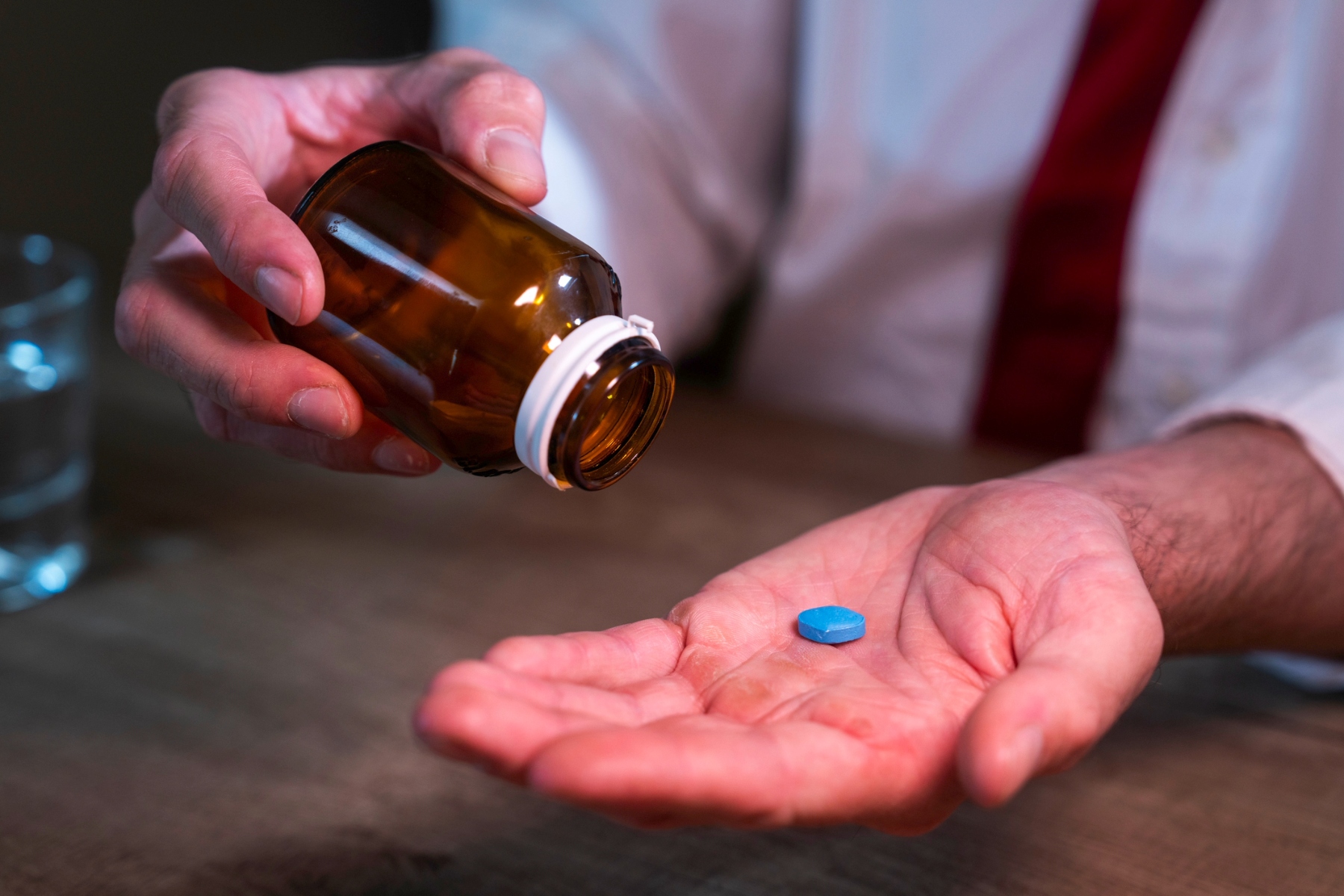
Erectile dysfunction has become practically synonymous with Viagra, the brand name for the drug sildenafil citrate.
Originally developed as a blood pressure medication, sildenafil turned out to be so good at producing lasting erections that it was repurposed for erectile dysfunction.
Sildenafil, or Viagra, is just one of a family of drugs known as PDE5 inhibitors, which work by slowing the breakdown of a chemical messenger that relaxes the penis muscles, allowing the penis to fill up with blood and become erect.
“PDE5 inhibitors are great drugs. They work really well. They have multiple benefits and a low risk profile,” says Davis.
“But taking Viagra doesn’t tell you what the cause of your erection problems are. And the causes of erection problems are so broad.”
A conversation with a health professional may just begin to uncover what your penis may be trying to tell you.
“If you get erectile dysfunction, don’t just think it’s in my mind. Don’t just think it’s unimportant,” says Minhas. “It’s important for your life, your relationships, but it’s also important for your general health to get checked out.”
Read more:
