
Getting off, having a happy ending, coming undone – there are endless slang terms for experiencing an orgasm. But what do we really know about the elusive big O beyond sex ed at school, traded titbits and ancient copies of Cosmopolitan magazine?
Scientifically speaking, an orgasm is defined as rhythmic contractions that are 0.8 secs apart and increase in latency until their termination, and are usually accompanied by feelings of euphoria.
However, there’s plenty more an orgasm can do besides making you feel good; they can bond you to your partner, temporarily relieve pain – and even alter your state of consciousness. In fact, the French refer to orgasms as ‘la petite mort’, or ‘the little death’.
They can also make you feel bad, with some disorders seeing climax causing ongoing discomfort and even pain.
And that’s just looking at human research on orgasms; further observations into the animal kingdom show how orgasms are merely a small part of intricate mating rituals and can be used to establish a social hierarchy.
Here’s everything you never knew about orgasms – with some guaranteed to take your breath away…
1. Your brain can distinguish between different types of stimulation
Typically, orgasms are associated with genital arousal and stimulation in areas such as the clitoris and anus – but research indicates around 12 per cent of women can experience orgasm through the stimulation of other erogenous zones, including lips, nipples and even through the scalp.
What’s even more intriguing is that your brain can specifically tell when different areas of the body are being aroused.
A 2016 neurological study looking at brain imaging suggests orgasms from different kinds of stimulation activate overlapping but partially distinct neural pathways.
The sensory cortex appears to map these regions separately, and, if your partner is skilled enough to stimulate every part at once, could result in a more intense experience.
“Each of those body regions projects to a different place, and each is capable, by itself, of eliciting a different quality of orgasm,” explains Dr Barry Komisaruk, a leading researcher on orgasms at Rutgers University, Newark, in the US.
“My hypothesis is that if all are stimulated concurrently, it produces a much more diverse and intense orgasm.
“Because they each go to separate places in the brain, they each produce their own orgasmic response. So, if you put them all together, you get a more complex, more intense, and more enjoyable orgasm.”
2. People with spinal cord injuries can still experience orgasms
The spinal cord works as a two-way communication roadway between the brain and the rest of the body. If your spinal cord is severed, it would typically mean no sensation can be felt whatsoever – including sexually.
However, research by Komisaruk found that women with a severed spinal cord could be stimulated to orgasm.
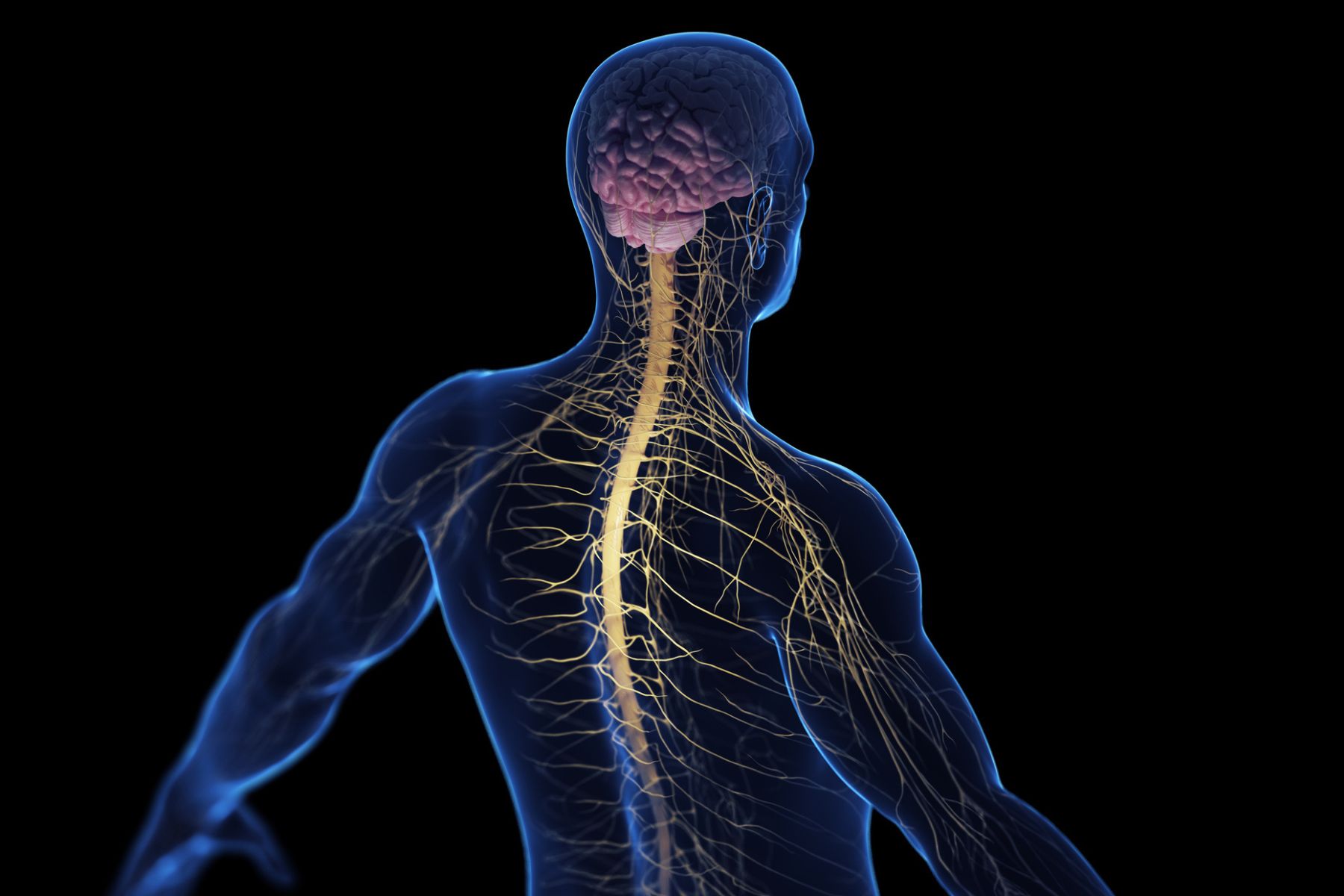
“It was previously thought that the vagus nerve only travelled to the abdomen,” Komisaruk explains. “However, brain imaging showed that sensory signals from the reproductive organs bypassed damaged spinal cords and travelled via the vagus nerve straight to the brain’s reward and sensory processing centre.
“It’s likely the vagus nerve is probably functioning all the time to respond to vaginal and cervical stimulation. But in the absence of the spinal cord, if it’s severed, then it’s very likely that the function of the vagus nerve becomes intensified.”
Read more:
- 54 per cent of cultures don't kiss romantically. Here's what they do instead
- We need to stop shaming masturbating birds, say scientists
- Japanese people still aren't having sex. And nobody knows why
3. Orgasms actually lower dopamine (and raise testosterone)
When you experience an orgasm, the body releases numerous hormones and neurotransmitters. It’s fairly well known that the brain releases oxytocin, the ‘attachment’ hormone, at the point of climax.
However, while you may expect a release in the so-called ‘reward’ chemical dopamine, a second hormone actually acts as a dopamine inhibitor, resulting in a see-saw effect.
“Dopamine acts as a motivator,” explains Dr Nicole Prause, neuroscientist and sexual psychophysiology researcher at the University of Michigan.
“While it increases with arousal, it drops after orgasm. This is because the body releases prolactin, which acts as a dopamine inhibitor. Prolactin reduces further sexual desire and is also why you may feel tired after sex.”
Another orgasm myth, regularly bandied about as fact – particularly by manosphere influencers – is that masturbation and ejaculation lowers your testosterone. Some frame abstention as a way to ‘reclaim’ masculine energy, discipline, and focus. But Andrew Tate and his ilk are entirely wrong about this.
“It’s actually the opposite of this,” Prause explains. “Testosterone rises during sexual arousal and peaks at orgasm. It’s a small, and temporary, rise – it’s not like a steroid shot, but it’s still a rise, before returning to regular levels. The idea that sex and orgasms deplete testosterone levels is completely false.”

4. An orgasm can temporarily relieve pain
We’ve all heard the (somewhat sexist) cliché of ‘not now honey, I have a headache’ – but sex, and achieving climax, is something that can temporarily relieve pain in quite an effective way.
One of the substances released during an orgasm is a vasoactive intestinal peptide (VIP).
“In my study, we found at orgasm the pelvic nerve releases a vasoactive intestinal peptide, which acts as a powerful painkiller by inhibiting pain signals in the brain and spinal cord,” Komisaruk explains.
“On a molecular basis, we found that the VIP is potent; we had to give a higher dose of morphine to produce an equivalent effect in women.”
5. Not all orgasms feel pleasurable
We tend to associate orgasms with pleasure and enjoyment, but for some people, reaching the point of orgasm can be painful.
“This can happen for a number of reasons,” explains Dr Sara Nasserzadeh, co-author of The Orgasm Answer Guide. “At the point of orgasm, your body produces contractions. If you have hyper-tenacity of your pelvic floor muscles, or your coccygeal muscle in your pelvis, then these contractions could feel more intense, which may not always translate into pleasure.
“This could be symptomatic of an underlying health issue, such as prostatitis, or endometriosis, or fibroids. If this pain is interfering in your sex life, you should consult with your doctor.”
Nasserzadeh adds that some post-coital pain may be psychosomatic: “There may be deep emotional and psychological reasons why you feel pain after sex, which could align with previous traumatic experiences.”
However, there are further physiological reasons why orgasms could cause discomfort or pain. It’s thought around 0.6–3 per cent of people suffer from Persistent Genital Arousal Disorder (PGAD).
PGAD is characterised by spontaneous, unrelenting physiological sensations of genital arousal like tingling, throbbing, or the feeling of an impending orgasm that can occur beyond the context of sexual desire or mental excitement.
“The study we conducted found good evidence that PGAD can be caused by Tarlov cysts [fluid-filled sacs that grow on nerves] that form on the genital sensory nerves,” Komisaruk explains.
“In other cases, where a Tarlov cyst isn’t present, bulging spinal discs pressing on nerve fibres can physically irritate them and result in PGAD symptoms. Research has shown that symptoms alleviate after surgery.”

6. Some medications can prohibit orgasms altogether
Medications classed as SSRIs (selective serotonin re-uptake inhibitors) that are typically used to treat depression and anxiety disorders can temporarily cause sexual dysfunction.
This is due to SSRI drugs increasing the user’s serotonin levels, which then has a domino effect on other hormones and neurotransmitters within the body.
Symptoms can include a lower libido generally, and genital numbness.
“An appropriate metaphor for orgasm is like a hot and cold water faucet,” Komisaruk explains. “Orgasms are comprised of neurochemicals that cause excitement and inhibition. The inhibition is triggered at the peak of excitement to prevent the excitement from becoming too aversive.
“SSRIs can put these neurochemicals out of kilter. An increase in serotonin tends to suppress dopamine in the brain’s reward centres, resulting in a lower libido.”
These symptoms typically alleviate as your body adjusts to taking SSRIs. However, there are some instances where sexual dysfunction can continue to exist even long after sufferers stop taking SSRIs.
Little research has been done on post-SSRI sexual dysfunction, so what could cause long-term sexual problems is yet to be determined.
7. Arousal can move your organs
If you feel like your insides have been rearranged after a particularly energetic session, you may not actually be wrong. This process of arousal in women is known as ‘tenting’ and is to accommodate deeper penetration.
“When you’ve been stimulated and a woman’s genitals become engorged with blood, the uterus lifts and the cervix actually pulls back to create more space,” Nasserzadeh explains.
8. Primates use ‘tools’ to stimulate arousal
Sex may be primarily for reproductive purposes, but humans are not the only species that engage in coitus for fun.
Bottlenose dolphins have been observed engaging in masturbation, homosexual copulation and non-reproductive mating. Meanwhile, studies on female rats show they return repeatedly to environments associated with mating, which points to pleasurable reinforcement.
However, few animals have such a rich sexual repertoire as the bonobo primate, who have been observed using sex as a fundamental social tool.
“Bonobos are incredibly intelligent,” Komisaruk explains. “Studies have shown them using sex to relieve tension, or to reconcile after fights.
“We also see bonobos having same-sex partnerships. They have a relatively low reproductive rate for primates, which would suggest that copulation is used as a means for pleasure or for other reasons than procreation.”
Meanwhile, sex toys are not merely the reserve of Ann Summers. Some studies have shown that female Japanese macaques use sticks, twigs and stones to stimulate their clitoris.
“These animals engaging in these behaviours are doing it for self-reward and pleasure,” says Komisaruk. “It’s all part of the repertoire of healthy social interaction in these species.”

9. Pigs have a unique sexual physiology
It’s not just apes that engage in interesting sexual play, the behaviour of boars and sows has also intrigued researchers.
Pigs have particularly lengthy orgasms; on average, a high-performance boar can continuously produce semen for between five and seven minutes, resulting in around 200 to 250ml of semen per ejaculate.
But pigs are in the Guinness World Records for having the longest possible orgasm of any animal, capable of lasting for up to 30 minutes.
However, it’s the mating ritual between boars and sows that is particularly interesting.
“The male pig’s saliva contains a metabolite of testosterone,” explains Komisaruk. “When this breaks down, it releases androstenone and androstanol in their breath.
“When a boar ‘chomps’ at a female pig in heat, it causes her to basically freeze and become paralysed.
“This allows the male pig, with its corkscrew shape penis, to mount and enter, and ejaculate a significant amount of semen during their lengthy orgasms.”
10. Orgasms can affect your consciousness
Even if you’re not a pig, it’s not particularly unusual to feel dazed after climax as your brain has gone through a major neurological event.
For instance, when orgasm is achieved, studies have shown it turns off the part of the orbitofrontal cortex that is responsible for decision-making, which can lead to feeling out of control.
This may result in seemingly involuntary sensations, like the loud screams of ecstasy when ‘in the moment’.
In fact, Komisaruk compares an orgasm’s impact on the brain as similar to that of an epileptic fit.
“Brain imaging finds synchronised widespread activation across the brain during orgasm,” he explains. “Huge numbers of neurons are firing in the brain at once.
“At this point, we can temporarily and very fleetingly lose our usual state of awareness and comprehension.”
It turns out, with every big finish, there’s a lot more going on in your body than you might expect.
Read more:
