We seem to have entered a new age of anti-ageing. Longevity bros and the pharmaceutical industry have declared war on the biological clock, developing pills and protocols to slow our cellular decline.
At the consumer level, wearable technology lets us track the minutiae of physical existence.
A few hundred pounds will buy you a test that tells you what your ‘biological age’ is. A few hundred more will get you an appointment at a boutique longevity clinic.
Meanwhile, Bryan Johnson, the infamous entrepreneur who wants to live to 160, is going even further, with an exhaustive list of daily interventions. He says death should be “optional”.
What a time to be alive.
There is, however, a wrinkle in the war on ageing, and it probably has ramifications for the burgeoning longevity industry. That is, we don’t really agree on what ageing is, why it happens or even whether it really exists.
“I had a paper a few years ago where I argued that there’s no such thing as ageing,” says Prof Alan Cohen, a longevity researcher at Columbia University in New York.
“What I mean by that is not that we don’t age but that by naming something ‘ageing’ we get this sense that there’s a single phenomenon that we could somehow biologically circumscribe.
"Maybe ageing is a set of thousands of processes that are independently happening and there’s no way to pull that all together.”

Most of us experience ageing as something that feels like the slow breakdown of a machine. Some days it feels like ripening. Others like rot. And until recently, that was sort of how medicine viewed ageing, too: a pile-up of separate broken parts.
Keeping it together
Cohen and a growing cohort of researchers are thinking about ageing in a different way. Rather than the breakdown of multiple systems in our bodies, they say ageing may be caused by the loss of coordination between those systems.
The emerging theory says that good health isn’t just the absence of damage, and ageing isn’t a simple case of wear and tear.
Instead, researchers are finding evidence that ageing occurs when the body’s ability to coordinate thousands of systems at multiple levels – genes, tissue, behaviour – wanes.
The complex networks that keep our biology in concert get slower and less resilient, like an orchestra falling out of sync.
In a widely cited paper laying out the theory, Cohen and his co-authors argued that “disruption of this ensemble causes… the functional manifestations of ageing.”

Not a fan of the orchestra analogy? Another way to think about it is to imagine a tightrope walker making their way from one side to another.
“They keep their balance not by getting the right configuration of their muscles and just holding still,” Cohen says. “They do it by constantly adjusting their muscles to everything else that’s going on.”
That, he says, is what a healthy human body is doing. Good health isn’t static perfection. It’s constant adjustment, coordination and crosstalk between the myriad of systems in our bodies.
It’s our brains talking to our muscles, our hearts talking to our lungs, our immune systems talking to our metabolisms and our mitochondria talking to our cells.
When this immensely complex network stutters – when coordination begins to fail – that’s when ageing happens. That’s when the tightrope walker falls.
Read more:
- A landmark Harvard study of 110,000 Americans just revealed a surprising truth about ageing
- Flexibility helps you live longer and age well. Here's how to boost yours in minutes
Theory for the ages
If the coordination theory is correct, it represents a huge paradigm shift in our understanding of ageing. But it’s also built on decades of research that has pieced together the intricate ways our bodies change as we age.
“There was a paper in 1990 that published 300 theories of ageing,” Cohen says. “Surprisingly, that paper wasn’t enough to get people to think, ‘wait a second – we’ve got to make sense of this together’.”

Jump forward to 2013 and another influential paper was published in the journal Cell. It listed the ‘Hallmarks of Ageing’, a series of nine (expanded to 12 in 2023) molecular and cellular indicators of biological ageing.
They include things you might have heard of, like chronic inflammation or stem cell exhaustion.
There are also things that may only have cropped up if you’re a student of biology, like the loss of proteostasis, when cells fail to maintain and clear damaged proteins.
Researchers don’t necessarily see the Hallmarks of Ageing as a definitive list of what goes wrong in our bodies as we age. It’s influential because most longevity scientists now agree that ageing isn’t the result of one process, but many.
Also, the Hallmarks were a precursor to the most prominent anti-ageing treatments being developed today.
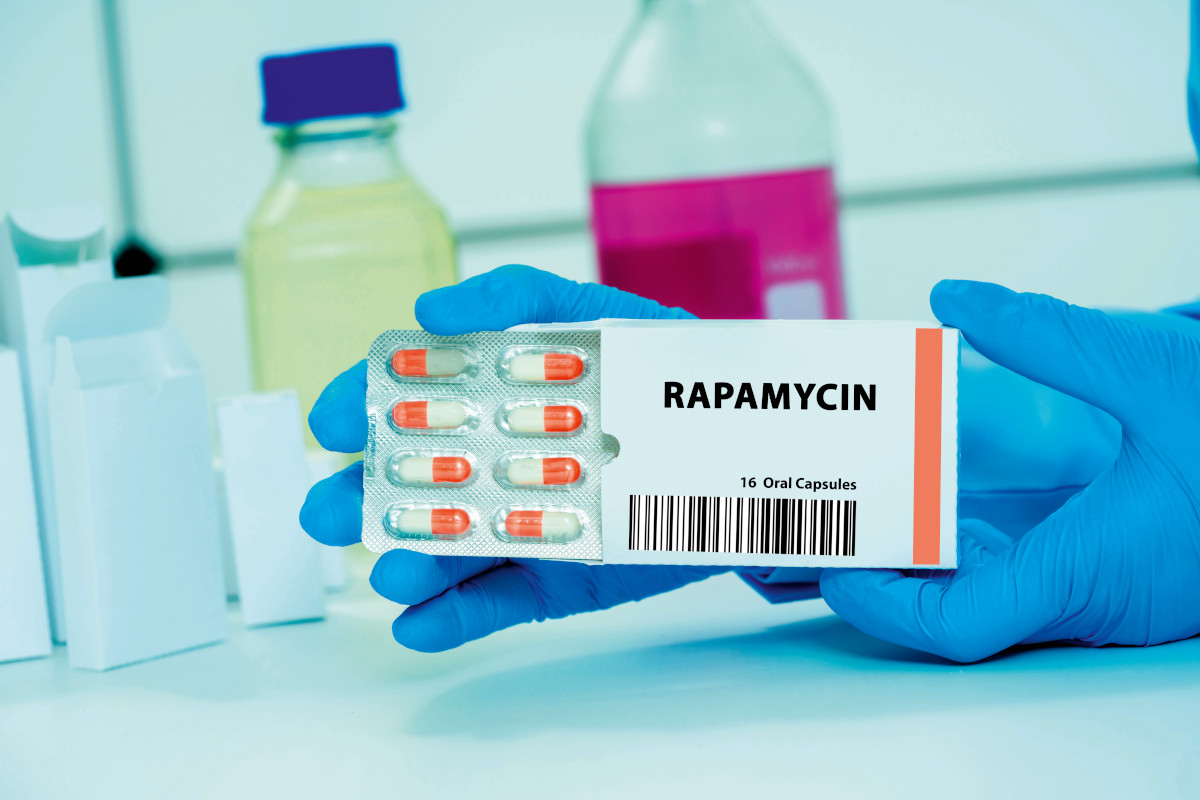
Whether you read the latest scientific papers or listen to the live-forever podcasts, you’ll have heard of promising (but far from proven) treatments like rapamycin, NAD+ boosters and senolytics.
All of them target one or more of the Hallmarks of Ageing.
Whether these treatments move the needle in biological ageing or human longevity or not, it’s still uncertain whether they target a driver of ageing or an effect of it.
The Hallmarks represent a list, not an explanation for why we age in the first place.
The emerging coordination theory does offer the why – but before it leads to any novel interventions, we need to be able to measure the coordination of systems in the body, and then prove that the loss of that coordination really does drive the ageing process.
Discord and discoordination
In 2024, researchers at the University of Cologne published some of the plainest evidence yet for the idea that ageing may be less about individual systems failing, and more about their (in)ability to work together.
They studied basic processes in cells across multiple human tissues, such as cell growth and mitochondrial function.
They found that while many relationships within individual cellular processes were preserved with age, coordination between distinct processes weakened.
In other words, the machinery of an older cell may still be capable of doing many of the things a younger cell does, but the processes become less well integrated. It was a strikingly simple demonstration of the coordination theory in action.
Other evidence comes from a study involving UK Biobank data, where researchers estimated the biological age of different organs and mapped a kind of multi-organ ageing network.
They found that organs don’t age in isolation – when one organ ages faster than expected, others nearby tend to age faster too.
“We showed that biological ageing is highly synchronised across certain organs,” says study author Prof Andrew Zalesky at the University of Melbourne.
“This means that premature ageing in one organ can potentially drive premature ageing in other connected organs.
"For example, our results show that advanced lung ageing drives cardiovascular ageing, which in turn drives ageing of the musculoskeletal system.”

Other examples included kidney ageing predicting vascular ageing and cardiovascular ageing predicting brain ageing.
“Perhaps the most unexpected finding was that diseases traditionally considered organ-specific were associated with accelerated biological ageing across multiple organ systems,” Zalesky says.
“For example, while dementia is generally viewed as a brain disorder, our results indicate that it’s also associated with advanced ageing of the pulmonary, musculoskeletal, renal and immuno-metabolic systems, as well as the brain.”
While the study demonstrates that diseases associated with ageing aren’t confined to the organ where that disease is found, Zalesky is cautious about the extent to which his results are evidence for the coordination theory.
“I don’t think ‘loss of coordination’ is an accurate description of our findings,” he says. But nor is it clear if one organ is actively driving ageing in others, or whether it happens because the body is no longer able to keep its systems coordinated.
“Both of these alternatives are plausible, and they’re not mutually exclusive,” Zalesky adds. “Age-related deterioration in one organ may contribute to accelerated ageing in other organs that depend on its function.”
Physiology as a network
Zalesky’s research suggests that a level of coordination matters over the course of decades: the ageing of one organ is associated with changes in the ageing trajectories of others in the same network.
But there’s another way to look at the same phenomenon: not as the gradual co-ageing of organs, but as the moment-to-moment conversation between them.
This is the territory of Prof Plamen Ivanov, a physicist at Boston University who has spent years studying what he calls ‘Network Physiology’.
The idea is that the body isn’t a collection of independent organs, but rather an integrated system within which the heart, lungs, brain and other systems are constantly adjusting their behaviour in response to one another.
“We realised that systems crosstalk,” Ivanov says.
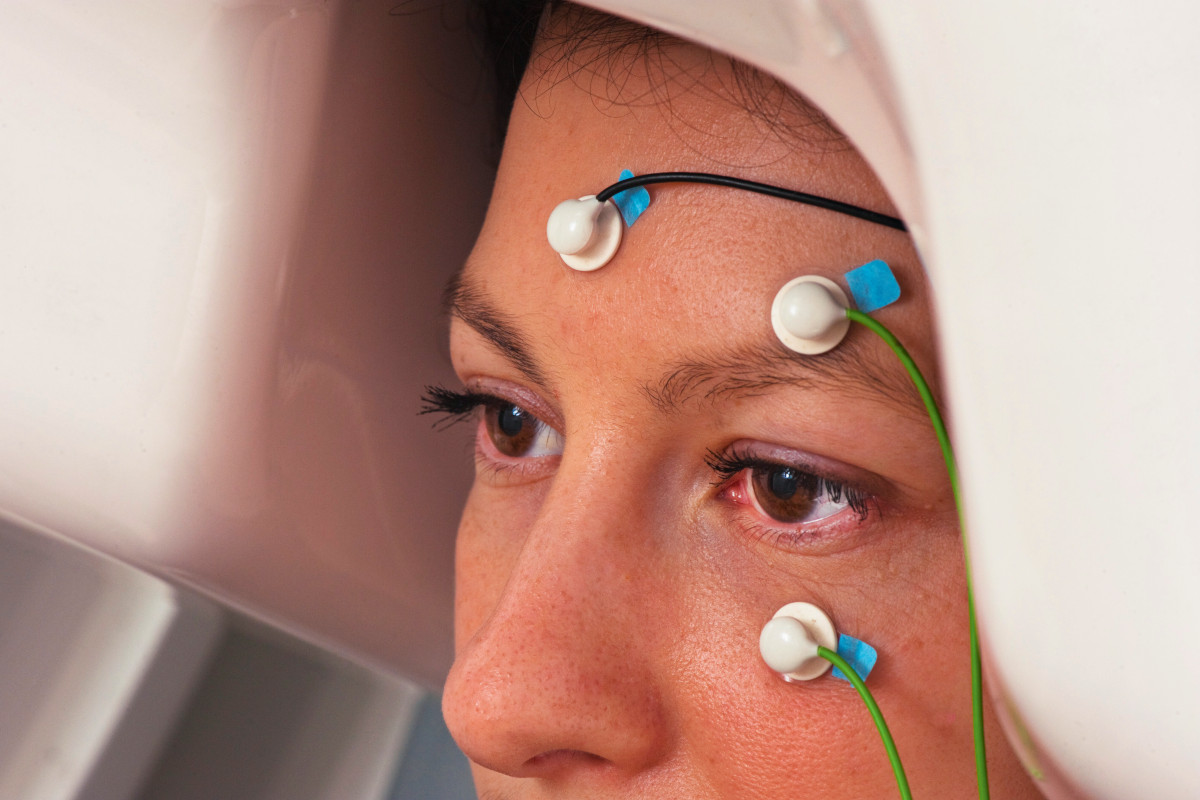
His research has shown remarkable coordination between the heart and lungs, between the brain and respiration, between brain activity and muscles, and between heart rate and eye movements.
This doesn’t mean that the systems are doing the same thing. It means that fluctuations in one system are statistically related to fluctuations in another.
An example we all recognise is the way our heart rate rises and falls when we breathe in and out. But Ivanov has recorded other, less obvious patterns throughout the body.
There’s synchrony between heart rate and eye movements and interaction between brain activity and chin movement.
In one striking example, Ivanov’s team recorded bursts of activity in the brain, lungs, heart and eyes, moving through the body in close succession, each one reliably following the last within a fraction of a second – a kind of relay that shows how seemingly separate systems can synchronise their activity.
These interactions aren’t fixed, though; the network changes as we move between physiological states such as wakefulness, light sleep and deep sleep, with different systems becoming more or less tightly coupled.
And here’s where the link to ageing comes in. “This coupling is also reduced with ageing,” Ivanov says.
He found that as people get older, the link between breathing and heart rate weakens. Something similar happens between muscles that coordinate for specific movements.
In 2024, Ivanov and his colleagues had young and older adults perform bodyweight squats to exhaustion, while tracking the electrical signals passed between different leg and back muscles.
As the younger participants tired, the connections between their muscles continually reorganised, allowing the network to adapt to the growing fatigue.
In the older group, however, those connections were weaker and the network remained much more rigid. In other words, the main problem wasn’t any single muscle failing, but a network less able to keep up.
“Ageing is not a random breakdown,” Ivanov says. “It’s a very structured heterogeneous response of coordination among systems.”
Read more:
- The immune system reboot: How to prime your body's defences to slow ageing
- 7 surprising habits Cambridge experts swear by to slow cognitive decline
Staying alive
If it’s true that widespread coordination between biological systems underpins much of how we live and breathe, then it’s tempting to think there must be some kind of universal communications network that connects it all.
But systems biology is never that straightforward.
Instead of the brain having a single line to the heart or the muscles, there’s a complex knot of biological communication all overlapping in real time.
The ‘crosstalk’ between systems includes neural communication from the brain, hormones and other chemical signals, plus mechanical relationships between organs like the heart and lungs.

As far as we know, there isn’t a single conductor for this mortal orchestra, but maybe there’s a way to understand what powers it.
Because underneath all this communication between our bodily systems is something more fundamental: energy. Every signal in our bodies has an energetic cost. Likewise, every physiological response requires energy to execute.
“Nothing is free in biology,” says Prof Martin Picard, another biologist at Columbia University.
Picard’s work asks us to think about ageing not simply in terms of damaged molecules or malfunctioning organs, but in terms of how energy flows through the living system, and how effectively that energy can be transformed, distributed and used.
“The physical body of an organism is ultimately a massive energy pattern,” he says. “And this energy pattern works really well – if it’s coherent.”
Ageing, he says, comes when that coherence breaks down. It’s not that there isn’t enough energy, more that our body becomes less adept at managing supply and demand through the system.
Picard’s argument is that mitochondria aren’t merely the body’s batteries. They’re part of an energetic and signalling network that helps coordinate the body’s response to the world around it.
Imagine your body has a fixed energy ‘budget’. That budget is constantly being managed and split between the vital costs like growth, maintenance and repair (the anti-ageing mechanisms) and the immediate demands of everyday stresses.
Picard proposes that as we age, the brain and body may become increasingly focused on conserving energy, potentially leaving less available for maintenance and repair. This makes us less resilient.
“Resilience from that perspective is having the ability to expand this growth, maintenance and repair,” Picard says.
Seen this way, ageing may be partly a story of losing the energy and flexibility needed to keep the body’s many moving parts working together. Which sounds all too relatable, doesn’t it?
Your energy budget
Picard’s energy model, Ivanov’s network physiology and Cohen’s coordination theory sound, on the surface, like different layers of the same thing.
The researchers may not quite agree with that, but it’s true that multiple lines of research are now converging on the idea that the reason we age is that something important is happening at the level of relationships between biological processes.
Scientists don’t yet agree on exactly what that thing is. Nor has their work suddenly produced a miracle for ageing.
In fact, we should spare a thought for the billionaires who want to live forever, because Cohen says that such a breakthrough is unlikely.
“Most of this is pretty bleak if your goal is to make humans live forever or even to the age of 200,” he says. “I don’t see how we get there.”
Instead, he thinks this promising corner of research will give us a much better understanding of the basic mechanisms of good health.
“It’s much less headline-shattering than the immortality claims, but it could still have a pretty major effect because it’ll allow us to measure health much more precisely.”
Whether that comes in the form of a health scan, new medicine or the perfect ratio of diet, exercise and lifestyle, perhaps the true pay-off to the new theory of ageing is that simple thing that all of us want: a long and healthy life.
Read more: