
You might have heard of ‘cortisol belly’, one of the latest viral health issues circulating on social media. Those extra pounds around your midline – they’re due to chronic stress, at least according to many wellness content creators.
The culprit, they claim, is cortisol, your body’s main stress hormone. And it’s a big issue, say health influencers. So much so that they often encourage measuring your cortisol levels to see how stressed you are, recommending saliva or urine test kits that can be bought online.
There are hundreds of posts suggesting quick fixes to lower cortisol levels and, in turn, improve your metabolism and make you less prone to gaining weight.
Some have even promoted downing a ‘cortisol cocktail’, a drink containing mostly orange juice, coconut water and sea salt, herbs such as ashwagandha – which is used in traditional Indian medicine for stress relief – or other supplements.
So are the influencers onto something, or is it all a ploy to get you to buy their expensive pills and tests?
The cortisol craze does contain some truth. Studies have shown that the hormone can contribute to weight gain around the abdomen, which is a concern since it’s the most dangerous place for fat to accumulate.
Excess belly fat puts you at risk of several health conditions such as heart disease, high blood pressure and diabetes.
However, the relationship between cortisol and belly fat portrayed on social media is overly simplified, as are the ways to tackle it. So, what is the real link between the two? And what scientifically-proven interventions can help?
What is cortisol?
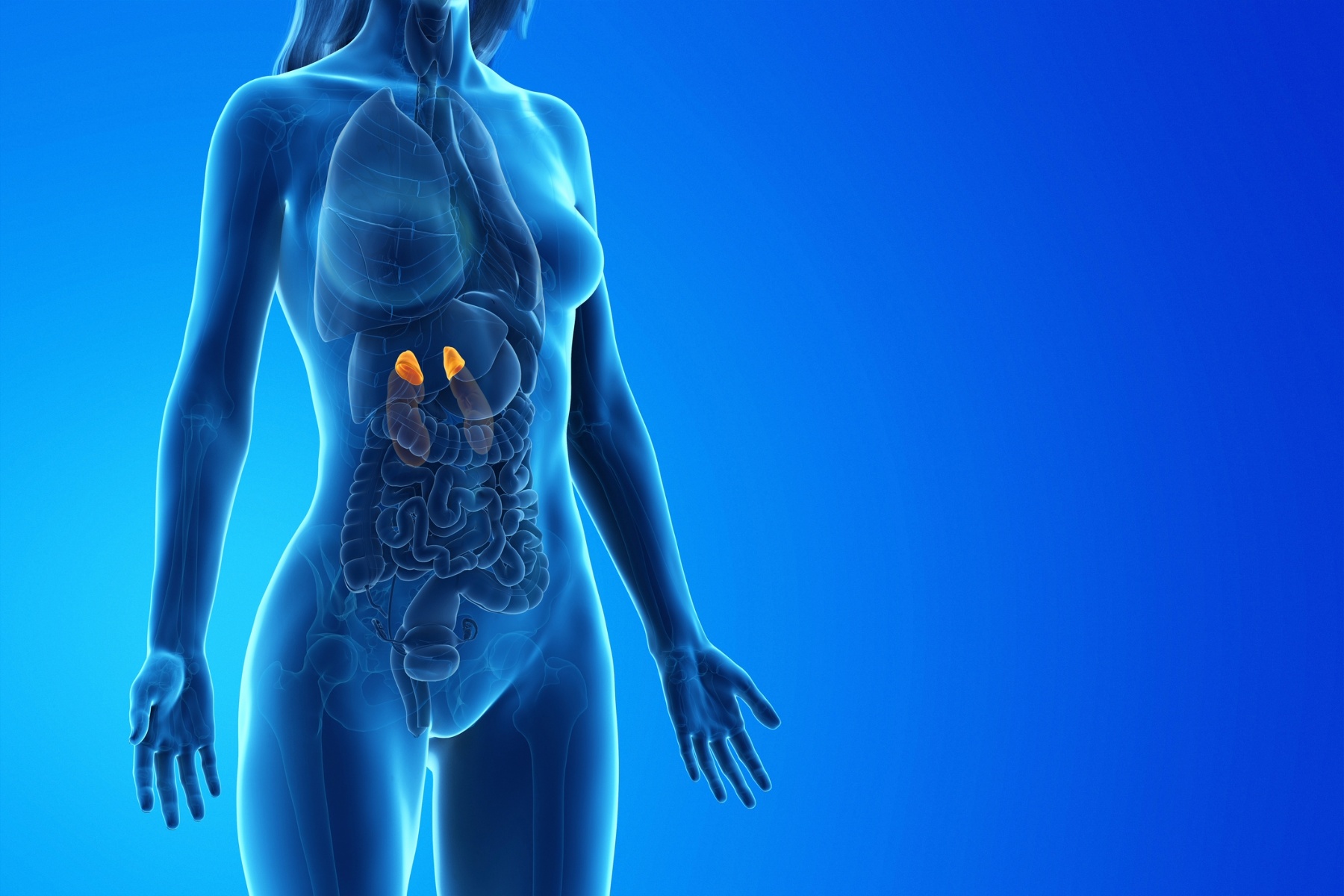
Cortisol is a vital hormone secreted by your adrenal glands, which sit on top of your kidneys. It helps regulate your daily rhythm and behaviour: high levels are released in the morning to boost alertness and make you more energetic, while levels are lower at night to put you in a restful state conducive to sleep.
The hormone is also released as part of your body’s stress management response. It can increase your metabolism, control your heart rate and blood pressure and alter your sleep-wake cycle.
When you encounter something stressful, your body releases cortisol to give you a burst of energy to tackle the stressor, whether you’re facing a hectic period at work or running from a tiger. This is known as a ‘fight or flight’ response.
If you chronically experience a lot of stress, however, your body can be flooded with cortisol. This can disrupt many processes, including where fat accumulates on your body.
The fat surrounding the vital organs in your abdomen has a high concentration of certain cortisol receptors – proteins that the hormone binds to to trigger different responses – compared to fat elsewhere.
When cortisol levels are consistently high it can latch onto these receptors, triggering your body to prioritise fat storage in the belly area. However, research has found that some individuals are more susceptible to this effect than others, partly due to genetics.
Elevated cortisol can also trigger insulin release in the abdominal area, which acts as an additional signal to deposit fat. It can also activate dormant stem cells in fat tissue, called pre-adipocytes, causing them to develop into new fat cells.
“All this increases the likelihood that fat is stored around your belly,” says Daryl O’Connor, a professor of psychology at the University of Leeds in the UK. “There is really clear evidence.”
Stress eating
Chronically elevated cortisol levels due to stress can also lead to abdominal weight gain indirectly. The hormone can stimulate your appetite, particularly by making you seek out high-fat and sugary snacks, causing emotional or stress-induced eating.
“It’s not just big stressors,” says O’Connor. “Small, minor daily hassles can disrupt your habitual food intake in a way which is damaging to your health over time.”
Researchers have recently found that individual differences in stress responses could help explain why only some people are prone to emotional eating.

In their early work, O’Connor and his colleagues conducted a study with fifty women where they were subjected to standard laboratory stress tests – such as public speaking, mental arithmetic or submerging their hand in cold water – to see how it affected their cortisol levels.
For about half the women, their cortisol levels increased in response to the stressors. For the other half, their levels either decreased or remained unchanged.
The researchers then followed the women’s eating behaviour for fourteen days by getting them to keep a journal of when they felt stressed and their eating habits throughout the period.
They found that those who responded to the lab tests with high levels of cortisol were more likely to consume high-fat foods when stressed.
O’Connor and his colleagues wondered whether there was a similar correlation between cortisol levels and food consumption patterns in children when they were under pressure. They followed up with a similar study of twenty children aged between 8 and 11 years old and found the same association.
“It’s alarming to me that you can see evidence of stress-induced eating early in life,” says O’Connor. “We know that when you start engaging in behaviours early in life, they track into adulthood.”
It’s also important to note that abdominal weight gain can occur as a knock-on effect of other disturbances linked to high cortisol.
Some people start consuming more alcohol because they feel stressed, for example, which can raise cortisol levels further and increase belly fat.
Cortisol can also impact your sleep, which can influence how active you are and make you more likely to put on weight.

“You’re less prone to exercise because you’re tired, and you’re longing for comfort rather than challenges,” says Dr Liesbeth van Rossum, an internist-endocrinologist and professor at the Erasmus University Medical Center in Rotterdam, Netherlands.
To complicate things further, the relationship between cortisol and obesity is bidirectional: belly fat itself can also be responsible for increasing cortisol levels.
Fat contains enzymes that can convert an inactive steroid hormone called cortisone into cortisol. As you gain weight, the amount of fat increases along with the quantity of the enzyme. This leads to even more cortisol, creating a vicious cycle.
Being overweight can also stimulate cortisol production indirectly. People who are obese are often discriminated against, for example, by being told they are lazy or lack willpower, which can increase their cortisol levels.
Read more:
- 10 scientifically proven ways to beat stress
- Here's the only science-backed way to lose belly fat
- Is mindfulness good for you?
Medical interventions
In some cases, high cortisol levels can be caused by certain medications. The most common culprit are corticosteroids – one of the most widely-prescribed medicines, with more than one in six adults in England being issued a prescription in 2023.
They can be applied as a cream, inhaled, taken orally or injected to help with different conditions such as allergic asthma or inflammation. The medicine can be thought of as a synthetic version of natural cortisol because it has a similar effect on the body.
“These corticosteroids are much stronger than your own stress hormone cortisol,” says van Rossum. “There’s evidence accumulating that even inhalation corticosteroids can enter blood circulation and exert systemic effects.”
In a recent study with over 80,000 participants, van Rossum and her colleagues examined the effect of corticosteroids over a four-year period and found a strong link between taking corticosteroids and weight gain around the abdomen in the long term.
Van Rossum says that reducing corticosteroid dosage can help get rid of excess weight, but people should consult their doctor before making any changes to their medication.
Of course, weight gain around the belly is not always cortisol-related and many other factors such as diet and exercise habits also play a role.
So, should you have your cortisol levels measured by taking a blood, saliva or urine test if you’re concerned about a growing waistline?
Contrary to what you may have seen on social media, most experts would say no.
“It’s just useless,” says van Rossum. “Regular doctors don’t do it because it’s not reliable and it’s not a good stress test.”
That’s because cortisol levels fluctuate throughout the day and might rise if you are scared of having blood drawn, for example, so a test would only capture your levels in a specific moment.

Furthermore, even if your levels are elevated, they are still likely to be in the normal range.
In rare cases, cortisol levels can be abnormally high due to a condition called Cushing’s syndrome which can be caused by long-term steroid use or a tumour on the pituitary or adrenal gland.
However, a person would usually exhibit a range of symptoms besides an increase in belly fat such as a round and puffy face – often referred to as ‘moon face’ – low mood and abnormal glucose tolerance.
Although cortisol-lowering medications do exist, doctors only prescribe them if someone is diagnosed with Cushing’s.
“They can be very dangerous if you take them on your own and just for stress,” says van Rossum. “You cannot live without cortisol. If levels become really low, you could actually die.”
Mindful eating
If you’re looking to reduce your cortisol in a less dramatic way, then there’s no shortage of internet-friendly ‘hacks’ to follow.
Social media promotes all manner of drinks, herbs and supplements, but there’s no evidence to show that they work. Van Rossum cautions that taking supplements without medical guidance can be harmful.
“[The supplements] can contain other substances that further contribute to hormonal disturbances and can make the problem even worse,” she adds.
There are proven ways to lower cortisol levels and help avoid related weight gain, though. Evidence suggests that moderate-intensity exercise can help reduce cortisol levels, as well as singing or simply interacting with friends.

A recent study has also shown that spontaneous laughter is associated with reduced cortisol levels, suggesting that a healthy bout of laughter could complement other therapies.
Mindfulness and meditation, talking therapies, relaxation exercises such as guided muscle relaxation and mind-body practices such as yoga are often recommended to alleviate stress too.
In a recent review of research in this area, O’Connor and his colleagues analysed these four types of intervention to see how effective they were at changing cortisol levels.
“We’ve got all the evidence that mindfulness and meditation and relaxation are the most robust techniques to help people modify their cortisol levels,” says O’Connor.
O’Connor thinks that these techniques work because they activate the vagus nerve, which is involved in managing our fight or flight reactions, as well as our body’s ability to rest, digest and recover. Activating the vagus nerve can also help to reduce intrusive thoughts and rumination, which can further contribute to stress.
Out of all the techniques they tested, O’Connor is particularly interested in slow-paced breathing. Often used in meditation, this involves controlling the frequency of your breathing so that it is reduced from 12 to 20 in-and-out cycles per minute to 6 cycles per minute.
“We showed in a lab-type experiment for the BBC that cortisol levels are reduced when you engage in slow-paced breathing in response to a stressor,” says O’Connor.
O’Connor and his team didn’t look at whether mindfulness practices can have a knock-on effect on abdominal fat but it has been investigated in other studies.
One study asked 47 overweight or obese women to try a four-month-long mindfulness programme to control stress-induced eating, before comparing the results to a control group.
The team found that the programme helped these obese women to reduce emotional eating and cortisol levels just after waking, which was linked to a decrease in their abdominal fat. Participants who reported the biggest improvements in chronic stress also lost the most belly fat.
The same team thinks that eating most meals mindfully – slowly and intentionally – could help some people lose or maintain a healthier weight.

The cortisol conclusion
Mindfulness and meditation won’t appeal to everyone, though. Van Rossum and her colleagues are currently working on a study that shows that different strategies are effective for different people.
Their results indicate that identifying specific stressors related to weight gain can help hone in on what to try. She and her colleagues recently launched an online tool with a detailed questionnaire that gives insight into why a person might be overweight.
It includes questions related to different stressors that could be contributing – for example, how lonely you are, if you have depressive symptoms, eating disturbances, feelings of hunger and how stressed you are – and recommends personalised interventions.
Researchers are also hunting for new stress-busting interventions to give people more options.
O’Connor and his team are currently investigating whether self-compassion interventions, which involve thinking or writing about how you can be kind to yourself rather than judgmental, can help with stress-induced eating. Instead of feeling shame for failing to eat healthily, participants were encouraged to reframe their thoughts: ‘Everyone makes mistakes, so it’s okay if I make some too.’
They got participants to write a brief disclosure statement online about being compassionate to themselves and found that afterwards, they were less likely to eat unhealthy food on days when they experienced stress.
“There are promising interventions like that,” says O’Connor.
In the future, better ways of measuring long-term cortisol levels, could be key to figuring out if weight gain around the belly is due to stress and how best to tackle it.
Van Rossum and her colleagues are currently working on a project where participants have their stress levels measured in many different ways at the same time, for example with wearable devices, saliva testing and a technique called micro-dialysis to measure cortisol in cells.
They hope to pin down which measures best represent chronic stress levels so that a test can be developed for use in clinical settings.
“We are working on a really good stress measure,” says van Rossum. “We will probably come up with a package of specific parameters because stress is so multidimensional.”
With a better understanding of how cortisol is impacting people’s bodies, scientists will hopefully be able to develop even better ways to beat stress and keep cortisol levels down. In doing so, our entire bodies – including our bellies – should feel the benefits.
Read more:
