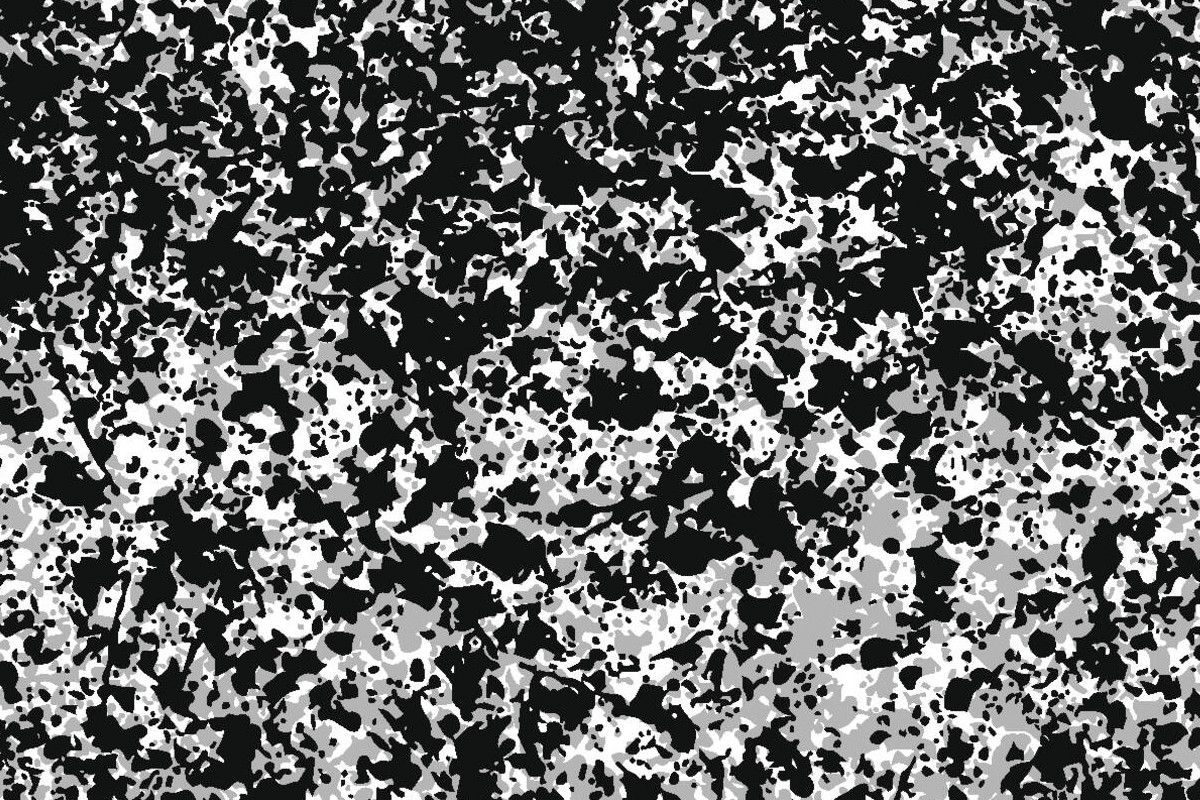
Imagine looking at a clear blue sky or the face of a loved one, only to find your entire field of vision filled with thousands of tiny flickering dots, like the static on an old analogue TV.
An estimated 2 to 3 per cent of people, those who experience visual snow syndrome, don’t have to imagine – for them, the visual noise never switches off.
For years, many patients were told this problem was psychological or that nothing was wrong because their eye examinations showed nothing abnormal.
But researchers now know that visual snow isn’t a disorder of the eyes at all. It’s a disorder of perception, originating in the brain.
In trying to understand why some people see a world permanently overlaid with static, neuroscientists are uncovering new clues about one of the brain’s most fundamental jobs: deciding what is real.
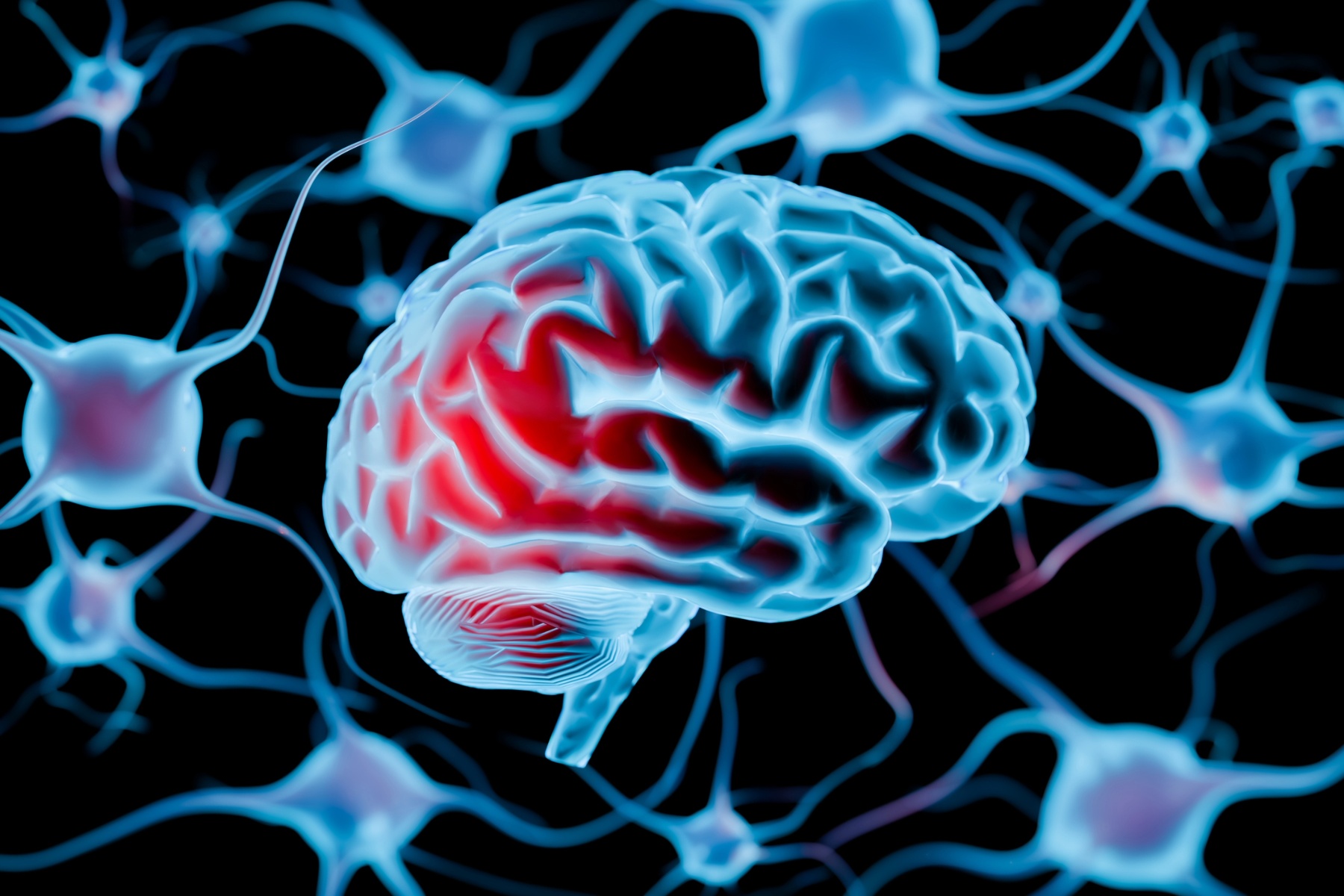
The leading theory centres on the brain’s visual cortex, the region at the back of the brain responsible for processing sight. Studies suggest this area may be unusually ‘hyperexcitable’, meaning its neurons fire too readily.
Instead of quietly waiting for meaningful visual information, the brain may generate activity of its own, effectively filling empty space with what people perceive as speckles of light.
In other words, the brain isn’t just receiving visual information; it’s creating some of its own.
Hyperactivity probably isn’t the whole story, though.
Brain imaging studies have also revealed differences in networks involving serotonin, a neurotransmitter better known for its role in mood, alongside abnormalities in the way different brain regions communicate.
Increasingly, scientists suspect visual snow is less about one faulty brain area and more about a broader problem with how the brain filters sensory information.
This idea has given rise to another explanation known as the ‘visual uncertainty’ hypothesis.
Normally, the brain performs an impressive feat of editing – separating meaningful information from the constant background noise generated by both our senses and the nervous system itself.
According to this theory, people with visual snow struggle to distinguish genuine visual signals from this internal sensory chatter.
If that’s true, visual snow may belong to a wider family of conditions in which the brain generates phantom sensations. Many people with visual snow also experience tinnitus, hearing a persistent ringing despite the absence of external sound.
These conditions may share a common mechanism: the brain’s filtering systems becoming less effective at suppressing the brain’s own background noise.
Another intriguing finding came in 2025, when researchers reported that people with visual snow were more likely to perceive faces in everyday objects – a phenomenon known as pareidolia.
We all occasionally see faces in clouds or electrical sockets, but people with visual snow appear especially sensitive to these illusory patterns.
The finding hints that the condition may not simply affect low-level vision, but also the brain’s tendency to impose meaning on ambiguous sensory information.
Much about visual snow remains mysterious.
There’s no definitive cure, and scientists still don’t know why some brains become locked in this state of sensory static. Yet the condition is proving far more than a neurological curiosity.
By revealing what happens when the brain’s internal filtering systems falter, visual snow is helping researchers understand the remarkable balancing act that underpins everyday perception.
Our experience of reality, it seems, depends as much on what the brain chooses to ignore as on what it allows us to see.
This article is an answer to the question (asked by Owen Porter, Gloucester) 'Why do I have visual snow?'
To submit your questions, email us at questions@sciencefocus.com, or message our Facebook, X, or Instagram pages (don't forget to include your name and location).
Check out our ultimate fun facts page for more mind-blowing science
Read more: