
Your alarm goes off. You jolt awake, but before your feet touch the floor, you reach for your phone. A few minutes of scrolling turns into half an hour. A headline catches your eye, then a video, then another.
Later, you grab a sugary snack you didn’t need, order something online you didn’t want, and binge the latest box set.
Each choice is small. None seems particularly harmful, but together they form a pattern: a relentless search for small bursts of pleasure that never quite deliver lasting satisfaction.
You have just been sucked into the dopamine spiral.
The dopamine spiral – not a scientifically recognised term – describes the idea that modern life can trap us in a relentless cycle of seeking instant gratification.
Activities such as scrolling or gaming can provide quick bursts of reward, but the experience is fleeting. So, we find ourselves constantly looking for the next hit of pleasure.
Pleasure becomes something we endlessly chase rather than something we ever truly find.
If that sounds bleak, the good news is that research is revealing ways to escape the trap. Lasting wellbeing depends less on maximising pleasure than on changing what we pursue in the first place.
The key isn’t to eliminate dopamine or swear off life’s pleasures. It’s to understand what genuinely contributes to happiness and introduce those changes into our lives.
Dopamine is one of the brain’s signalling molecules. In popular culture, we talk about activities giving us ‘dopamine hits’, as though it were a drug that delivers pleasure. But that’s not how dopamine works.
Dopamine is less about the pleasure we get from a reward than the anticipation of getting it. That’s why dopamine activity increases in the brains of gamblers who lose and why some compulsive shoppers never open what they buy.
“The reward is in the chase rather than the acquisition,” says happiness researcher Prof Bruce Hood from the University of Bristol.
From scrollable videos on social media to ultra-processed food, we’re surrounded by an almost unlimited supply of low-effort ‘carrots’. This is very different from the world we evolved in, where such rewards were rare and hard-won.
“The result,” says dopamine researcher Prof Emma Robinson, also from the University of Bristol, “is a fundamental mismatch.”
The systems that once helped us seek out scarce rewards are now being activated over and over again – leaving us overstimulated but not necessarily any happier.
This points to an important distinction: pleasure and happiness are not the same thing. Pleasure is about feeling good in the moment, whereas happiness is a broader sense of wellbeing.
Psychologists and philosophers often describe these two aspects as hedonia, the pursuit of pleasure and positive feelings, and eudaimonia, the sense of meaning, purpose and fulfilment that comes from living a worthwhile life.
So, if happiness is about more than simply feeling good, what can we actually do to increase it? Have you ever considered eating less chocolate or hacking the laundry?
Here are eight evidence-backed activities worth trying.
1. Go with the flow
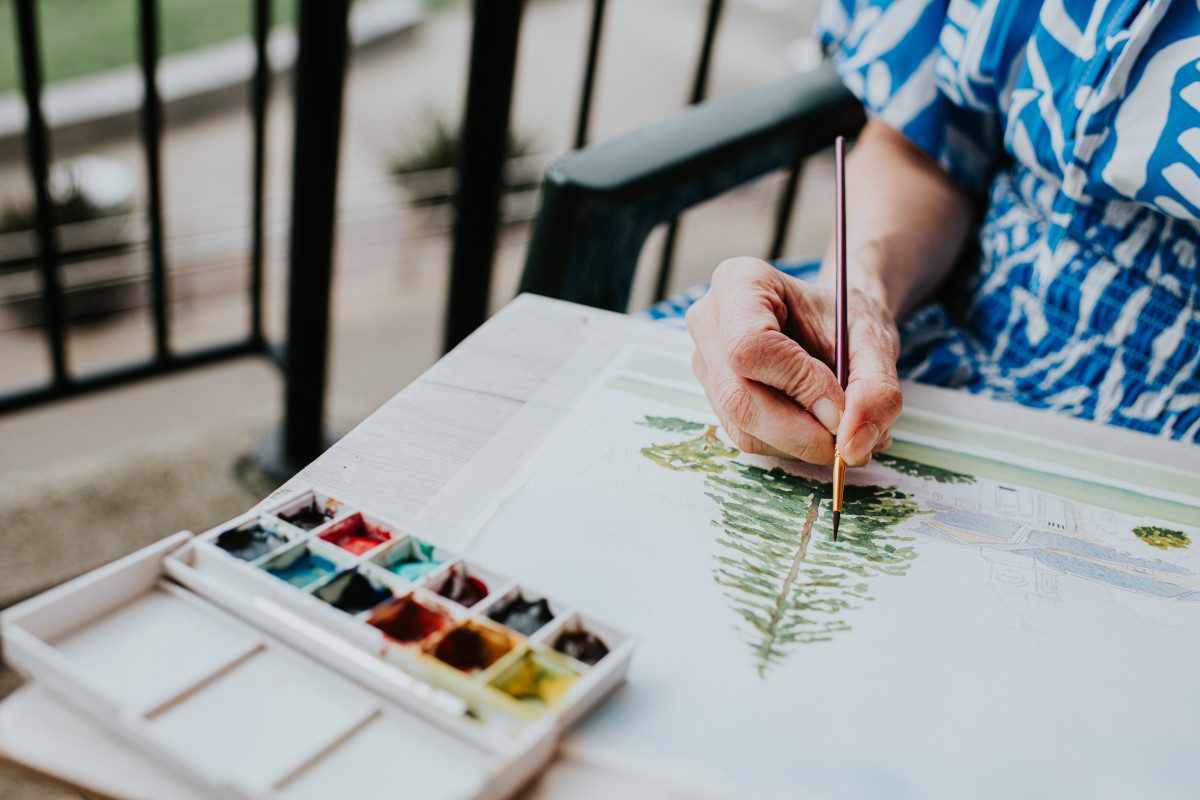
Have you ever been so absorbed in something that the rest of the world seemed to disappear? There was just you and your sudoku, crochet hook or bike.
Psychologist Prof Mihály Csíkszentmihályi called this state ‘flow’ – the feeling of being so immersed in something challenging and enjoyable that you lose track of time.
Csíkszentmihályi, who died in 2021, spent decades studying how everyday experiences affect wellbeing. He found that when people were in a state of flow, they reported feeling more positive.
More recently, a review of 85 studies involving 35,000 people found that individuals who experienced flow more often tended to have higher levels of eudaimonic wellbeing – a sense that life is meaningful and fulfilling.
The problem is, our minds have a habit of wandering. A lot.
A 2010 study by Dr Matthew Killingsworth and Prof Daniel Gilbert from Harvard University found that people’s minds wandered 47 per cent of the time – and that when they did, they felt significantly less happy.
Researchers have since linked mind-wandering to activity in a network of brain regions known as the default mode network.
“It’s like the brain’s rumination network,” says Hood. So, when our minds aren’t actively occupied, it’s easy to start comparing ourselves to others and feeling that we fall short.
The trick is to choose something that stretches you without overwhelming you. Practise a piano piece that’s just a bit harder than the last one. Drive an unfamiliar route in a car you feel confident in.
Find that sweet spot where the challenge demands your attention, and you may discover that happiness comes not from chasing the next quick hit, but from losing yourself in the moment.
2. Hack the laundry
According to the 2025 World Happiness Report, “happiness is fundamentally social”, with supportive relationships linked to greater happiness and wellbeing.
But that doesn’t mean you have to carve out more time for socialising. There are surprising ways to build connection into the time we already have.
The Harvard Study of Adult Development provides some of the strongest evidence for the importance of close relationships. The study tracked the lives, wellbeing and health of more than 2,000 people for over 80 years.
Its most consistent finding is that people who maintain strong, warm relationships tend to be happier and healthier as they age.

But social connection doesn’t have to come from traditionally social activities. Dr Elizabeth Dunn and PhD candidate Dunigan Folk from the University of British Columbia analysed more than 105,000 activity reports from over 40,000 people.
From eating a meal to going for a walk, they found that activities were generally more enjoyable when people did them with others. Surprisingly, this included things we normally think of as solitary, such as reading or cleaning the bathroom.
So, how do you hack the laundry?
“If you are doing a solitary task like laundry, use it as an opportunity to call someone you haven’t spoken to in a while. Transform a solitary activity into a social one,” says Dunn.
Next time you reach for the laundry basket, reach for your phone too. A little connection can go a long way.
Read more:
- The 6 most important questions about anxiety, answered by a psychologist
- 'Mental flexibility' is science's best predictor of lasting willpower. Here's how to improve yours
- The genius tricks that make any new habit actually stick, according to a psychologist
3. Treat people with kindness
Harry Styles’s message to ‘treat people with kindness’ doesn’t just make for a catchy song – his psychology is sound too. Research shows that performing acts of kindness for others can make us feel happier.
In one study, Dr Sonja Lyubomirsky from the University of California, Riverside, had participants perform five acts of kindness per week for six weeks.
The acts could be anything from giving up a seat on a bus to cooking for a friend.
Being kind boosted happiness, but only when the five good deeds were done on the same day. So, try batching your kindness: pick one day each week and look for five small ways to help someone else.
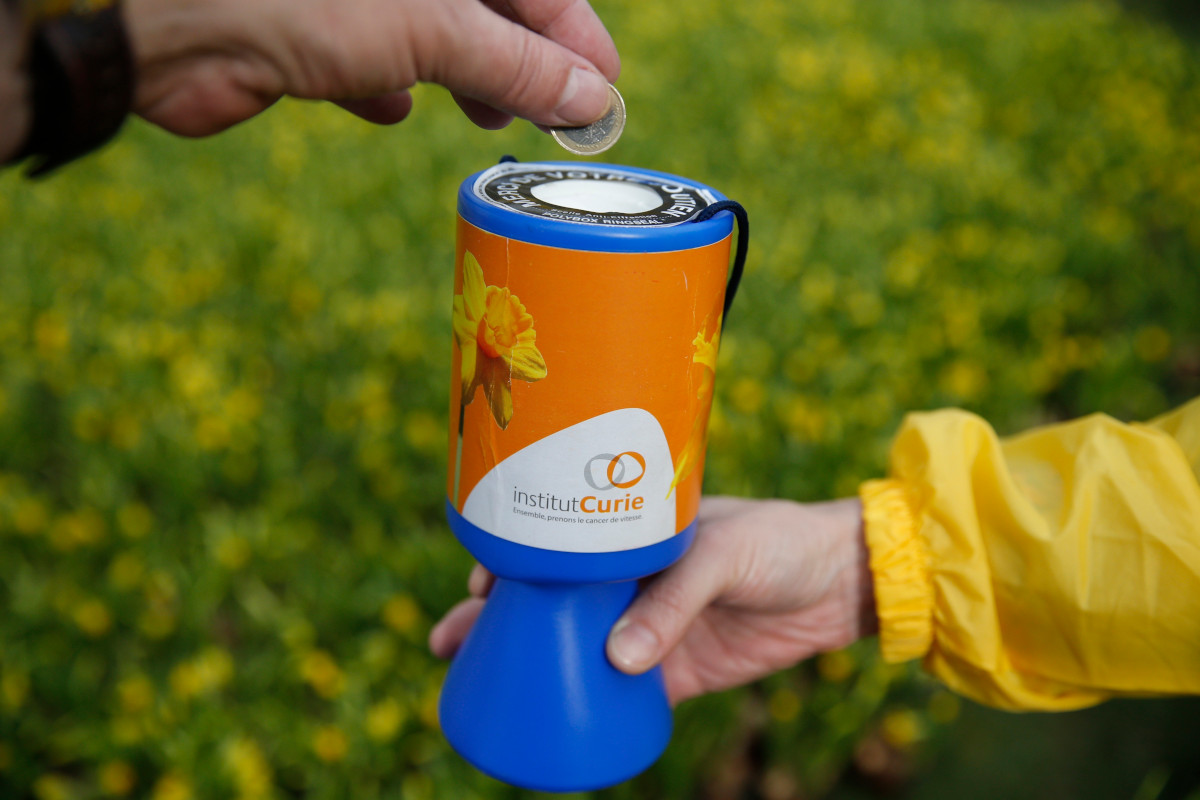
Another option is to give away some money. In a classic study from 2008, Dunn gave 46 students envelopes with $5 or $20 (~£3.80 or £15.10) inside. Half were instructed to spend it on themselves, and half on others.
Those who spent money on others reported feeling happier. The amount didn’t matter either. It was the act of giving that made people feel good.
This was a small study, so when Dunn was approached by TED, offering the chance to give away $10,000 (~£7,560) to each of 200 people, she didn’t hesitate.
“I was like, hell yeah, count me in!” she says. This time, people were allowed to spend the money as they wished.
“They bought iPhones, trips to Disney World, all sorts of things,” says Dunn. But what made them happiest was giving to charity.
Dunn thinks the effect occurs via multiple pathways. Giving money can foster a sense of social connection and make people feel they’re doing something worthwhile.
The critical thing, she says, is not being forced to give money away, and to see or imagine the impact of your donation.
4. Count your blessings
So far, so wholesome. But it’s about to get even more virtuous, because another way to boost happiness is to practise gratitude.
A 2023 meta-analysis of 35 studies involving more than 6,500 people found that practising gratitude can improve life satisfaction and happiness.
The effects may be relatively long-lasting too. When a group of 217 Dutch adults participated in a six-week gratitude programme, the boost to their mental wellbeing was still present six months later.

Gratitude may work in several ways.
Hood, author of The Science of Happiness, points out that practising gratitude shifts our attention away from the negative towards the positive, and away from ourselves towards others. This can strengthen social bonds and reduce rumination.
“We achieve a more balanced, other-focused sense of self,” he says.
So how to do it? According to the Berkeley Greater Good Science Center, we should write down what we are grateful for – 15 minutes per day, at least three times per week for at least two weeks.
The items can be small (“my cup of tea was lovely”) or large (“my mum just reached her 88th birthday”).
The goal is to remember a good experience, person or thing in your life, and enjoy the feelings it brings.
5. Buy experiences
Buying ‘stuff’ is all well and good, but when it comes to happiness, experiences are the better investment.
In a seminal study, Prof Leaf Van Boven from the University of Colorado at Boulder and Prof Thomas Gilovich from Cornell University found that buying experiences, such as camping trips and concerts, makes people happier than buying material items, such as clothes and couches.
But choose wisely: quality matters.
A subsequent study found that people reported greater happiness with positive experiences than with material purchases, while negative experiences – for example, a particularly wet and miserable camping trip – brought no increase in happiness or even reduced it.

But there’s a catch: unlike possessions, which tend to lose their lustre as we get used to them, good experiences can actually become more satisfying with time. They age like fine wine.
So, why are experiences so good for happiness? Experiences contribute to our lives in ways that material purchases rarely do. Toasters don’t become part of our life stories. Travels do.
Experiences also connect us to other people, which boosts happiness, and they’re less likely to leave us playing the comparison game.
A new car can make you wonder whether your neighbour’s is bigger, newer or shinier. But the Joneses will never know how much fun you had in Majorca.
Read more:
- The single cheapest (and most surprising) way to add years to your life, according to a major Harvard study
- Should I be worried about my teenager's moods?
- The everyday nutrient a leading doctor says could help tame an anxious brain
6. Buy grated cheese
Please don’t judge me. I have a confession to make. Sometimes I buy cheese that is already grated. It comes in bags. It’s more expensive. It tastes like candle wax, but I love it because I don’t have to prepare it myself. Or wash up the grater.
Grated cheddar makes me happy, and it seems I’m bang on the money.
In a study of over 6,000 people from the United States, Canada, Denmark and the Netherlands, Dunn and colleagues found that individuals who spend money on time-saving services report greater life satisfaction.
Ask someone to spend money on a time-saving purchase, such as a cleaner, grocery delivery service or takeaway, and they report feeling happier than if they spend their cash on material items, such as clothes or wine. Yes, wine. Really.

The news comes at a good moment. Despite incomes rising in many countries, people report feeling more pressed for time. Time stress, in turn, is linked to lower levels of happiness, increased anxiety and insomnia.
So, if you want to be happier, buy grated cheese – or whatever time-saving purchase works for you.
Dunn has found that people are often reluctant to do this. Sometimes the reason is financial, but often the reason is guilt.
“People feel that if they can do something themselves, they should,” says Dunn.
“So, if guilt is the reason, give yourself permission to recognise that this is actually an available source of happiness. Treat the extra time as a windfall, and then do something nice with it.”
7. Eat less chocolate
Yes, less. Hear me out.
Dr Elizabeth Dunn and Prof Jordi Quoidbach ran a study where they allocated students to one of three groups.
The first group was asked not to eat chocolate for a week. The second group was given a big bag of chocolate and told to eat as much as they liked. The third group was given no chocolate or instructions.
A week later, everyone was given chocolate in the lab. The researchers measured how much they all savoured it and the effect it had on their mood.
Those who had gone without chocolate for a week savoured it more and got a bigger mood boost than participants in either of the other two groups.
This ties in with an idea called hedonic adaptation, where repeated exposure to something pleasurable can make us appreciate it less.
So, counterintuitively, sometimes the best way to keep enjoying the things that bring us joy is to take a break from them.
“Having these things a bit less often can help to turn them back into treats,” says Dunn. If nothing else, it’s an evidence-based justification for parents to book that child-free weekend away.
8. Be like Kermit
Kermit the Frog once famously said, “It’s not easy being green”. But when it comes to happiness, being green might actually make things easier.
We often think of happiness as an individualistic goal that comes at the expense of other people or the planet. But that’s not always the case.
In an experiment involving US undergraduates, students were randomly assigned to incorporate three good things for the planet, or three activities designed to boost their own happiness into their routines, or simply go about their usual activities.
Those who helped the planet reported feeling happier that day – with a mood boost about equal to that of students in the happiness group.

And you don’t have to be an environmentalist to benefit. Surveys in the US and UK suggest that people tend to feel happier when they make more environmentally friendly choices.
In Leave the Lights On, co-written with sustainability scientist Dr Jiaying Zhao, Dunn identifies a raft of “sweet spot” behaviours that are good for the planet and our happiness.
Eating less chocolate, which has a surprisingly high carbon footprint, is one of them. Eating more fruit and veg is another. Long-term studies suggest that when people increase their intake, their happiness increases too.
Dunn also points to commuting. Swapping a solitary, carbon-guzzling car journey for cycling, walking or carsharing is good for wellbeing and the planet.
Working from home part of the week may offer a sweet spot between flexibility and social connection.
So, perhaps the greenest route to happiness isn’t about sacrificing pleasure. It’s about finding pleasures that don’t cost the Earth.
Read more:
