
The Caribbean island of St Kitts has a drinking problem. But it’s not the people who like to overindulge – it’s the island’s vervet monkeys, who’ve become notorious for sipping on cocktails stolen from tourists.
A few years ago, however, Prof Anders Fink-Jensen travelled to St Kitts to see if he could learn something from the monkeys about helping humans to kick the habit. How? By giving them Ozempic.
The University of Copenhagen psychiatrist discovered that, given free access to all the local rum they could guzzle, monkeys on the weight-loss drug drank significantly less than those given a placebo. Ozempic put a stopper in their drinking habits.
Why? The short answer is we don’t know, exactly. But we do know that, like the monkeys, some people on weight-loss jabs report drinking less.
Users of semaglutide (the general name for Ozempic and similar medications) say they also smoke or vape less. And they report having fewer nagging thoughts about food – otherwise known as ‘food noise’.
But some users claim they’ve been left feeling flat, joyless or just a bit ‘meh’ on GLP-1s, a feeling that’s been labelled ‘anhedonia’. This figures if, as scientists suspect, they curb addiction.

At the same time, evidence is building for possible benefits to a broad range of psychiatric and neurological problems, from depression to dementia.
While some of this sounds positive, there’s still so much we don’t know. For a start, semaglutide and other drugs classed as GLP-1s are only really tested in people with diabetes or obesity.
Would they be as safe and effective in those with mental health issues? How exactly do they work? And, crucially, how might they change our moods – and even our personalities?
The race is on to find the answers. And with so many already on the jabs – an estimated ten million in the US alone – there’s a lot of people’s mental health at stake.
Life's great pleasures
Much of the evidence accumulated on weight loss drugs and mental health so far suggests they make us feel better. And, in a sense, that’s exactly what we’d expect.
It seems obvious that those of us who spent years beating ourselves up about our extra baggage are going to feel better when we’re suddenly able to slip into an old pair of jeans.
University of Cambridge neuroendocrinologist Prof Giles Yeo thinks so. “Losing the weight already puts a positive spin on life,” he says, agreeing that much of the benefit probably does come from the weight loss.
But like others in the field, he’s inclined to believe there’s something else going on. Something tied up with the dopamine circuit – the brain’s reward system, which can get out of whack in addictive behaviours – that we don’t quite understand yet.
At the University of Oxford, psychiatrist Dr Riccardo De Giorgi and his team reckon they may be onto that something.
They’ve just finished a small study in which 70 volunteers completed specially designed computer-based tasks one week after getting a jab of semaglutide. The tasks assessed, partly, the jab’s effect on volunteers’ reward processing – their motivation and willingness to put in the effort to ‘win’.
The results aren’t published yet, but De Giorgi says they may offer “quite convincing evidence” of how even a single shot of GLP-1s can affect the brain’s reward system.
Meanwhile, evidence for GLP-1s in action in those plagued by addiction continues to mount beyond monkey studies.
In 2025, for example, a US team showed in a clinical trial that semaglutide reduces alcohol cravings as well as the amount that heavy drinkers consume on their drinking days. And Fink-Jensen is due to publish results from another trial testing Wegovy (semaglutide) in heavy drinkers with obesity.
But none of these studies reveal what GLP-1s are actually doing in the brain.
If studies in lab rats and mice are anything to go by, then the suggestion is that they curb our appetite for addictive substances like alcohol, nicotine and cocaine by essentially reducing the hit – the chemical dopamine reward – that our brains get from them.
As Fink-Jensen points out, though, such studies haven’t been well-replicated in humans. “We thought we figured it out, but when we did it in humans the story [became] much more complicated,” he says.
It now seems unlikely it’s as simple as so-called ‘dopamine dampening’, a phenomenon in which it’s assumed a reduction in dopamine production saps enjoyment from food and, potentially, everything else.
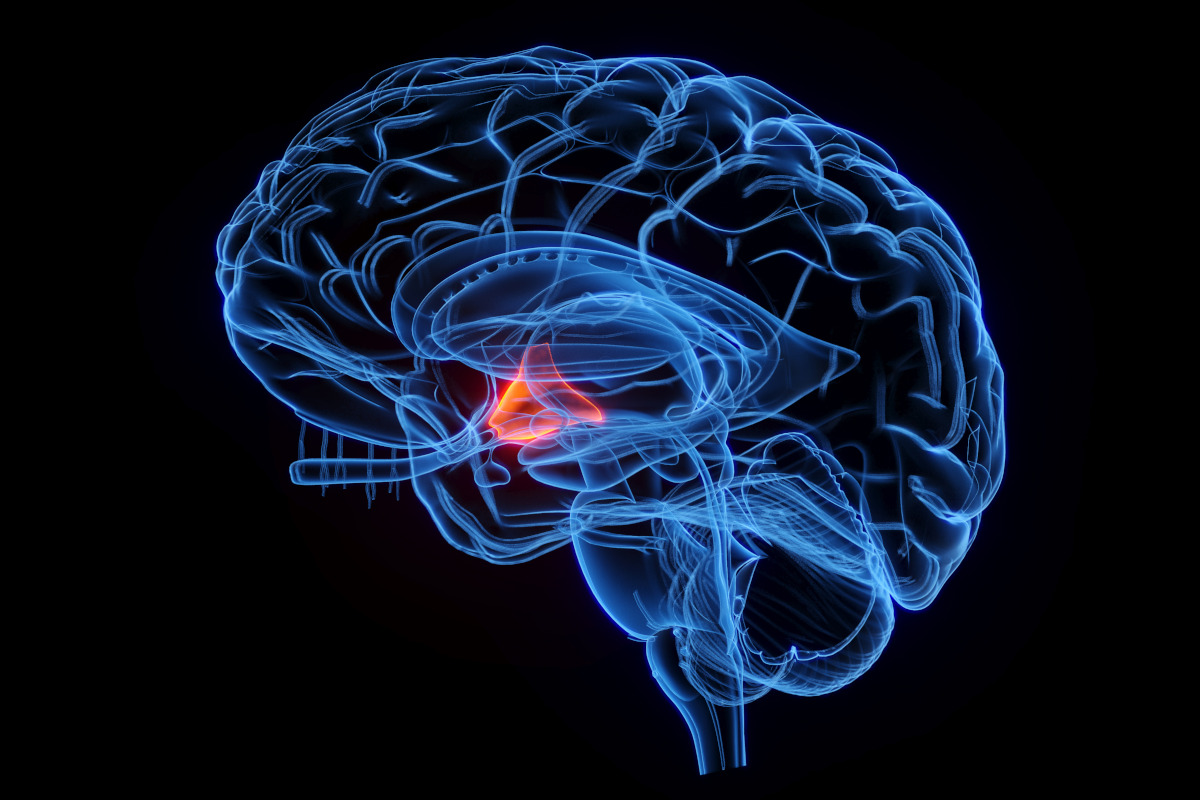
If weight loss drugs are doing anything in the dopamine circuit, it could be a concern because these neurons are considered the centre of our enjoyment in life’s great pleasures, from food and drink to sex.
But while there has been plenty of online chat about anhedonia – that feeling of joylessness, or loss of pleasure that’s speculated to originate from dopamine dampening – Fink-Jensen argues this is all just hearsay.
“I don’t think there’s any evidence,” he says. “There’s been all this [talk] about libido and people’s sex drives. Some people think that you will have these very slim, boring people who don’t have any interest in anything in life. And that would be very sad, but there’s no clinical data on it.”
De Giorgi, meanwhile, is slightly more cautious about dismissing claims of anhedonia and emotional blunting. “If some people are reporting it, then the chances are it’s true. It’s just that we don’t know why person A and person B don’t experience that, but person C does.”
Tentatively translating what seems to be happening with GLP-1s and ‘food noise’ to other things we enjoy, he suggests it’s possible to imagine a full spectrum of responses people might experience.
For example, the average person on Ozempic might say that their food noise becomes quieter. Not quiet enough that they don’t enjoy their meals, but enough that they eat less.
More rarely, people say their food noise is turned off completely, and this could also be true of other cravings, or anything that brings us pleasure. But these people would likely be outliers whose baseline noise level, for whatever vice, is already set very low.
Interestingly, some people with ADHD also report anhedonia as a symptom of their ADHD or medication. Whether this suggests any overlap between the brain circuits targeted by GLP-1s and ADHD medications is impossible to say, though, since – as Yeo emphasises – we don’t know what they are.
“This is why we need to know what’s happening within the brain,” he says.
Read more:
- Inside the radical plan to make weight-loss jabs free for everyone
- This is the easiest weight-loss hack nutrition scientists wish everyone knew
- Doctors keep missing a hidden problem with weight loss drubs, Cambridge professor warns
Drugs on the brain
The main problem, according to Yeo, is that the drug companies have “no freaking clue” what GLP-1s are doing in our brains.
“The more we know about how these drugs work, the more we can predict when something bad happens,” says Yeo. “So, the more we know, the better. But we know very little.”
Yeo is now being funded by pharmaceutical company Amgen to find out how its own GLP-1 works. And his other recent studies involved slicing up human brains to map potential targets for GLP-1s in the brain’s ‘control centre’, the hypothalamus.
We know that receptors for GLP-1s are plentiful in our brain’s reward centre – the dopamine circuit. Though, as Yeo points out, the fact that the receptors are there is only “circumstantial” evidence that GLP-1 drugs act on them.
It could be that they’re there to respond to natural GLP-1s produced locally in the brain, but that they can be hijacked by the synthetic mimics – the drugs.
Right now, we know more about what the drugs do in the rest of our bodies. This includes our guts, where they mimic the natural GLP-1 hormones produced there that tell us we’re full.
Like the ones in our bodies, synthetic GLP-1s hit receptors that help regulate our blood sugar levels by driving up insulin production. It’s insulin that shuffles sugar out of the bloodstream and into our cells. This is what’s made GLP-1s so successful as diabetes drugs.
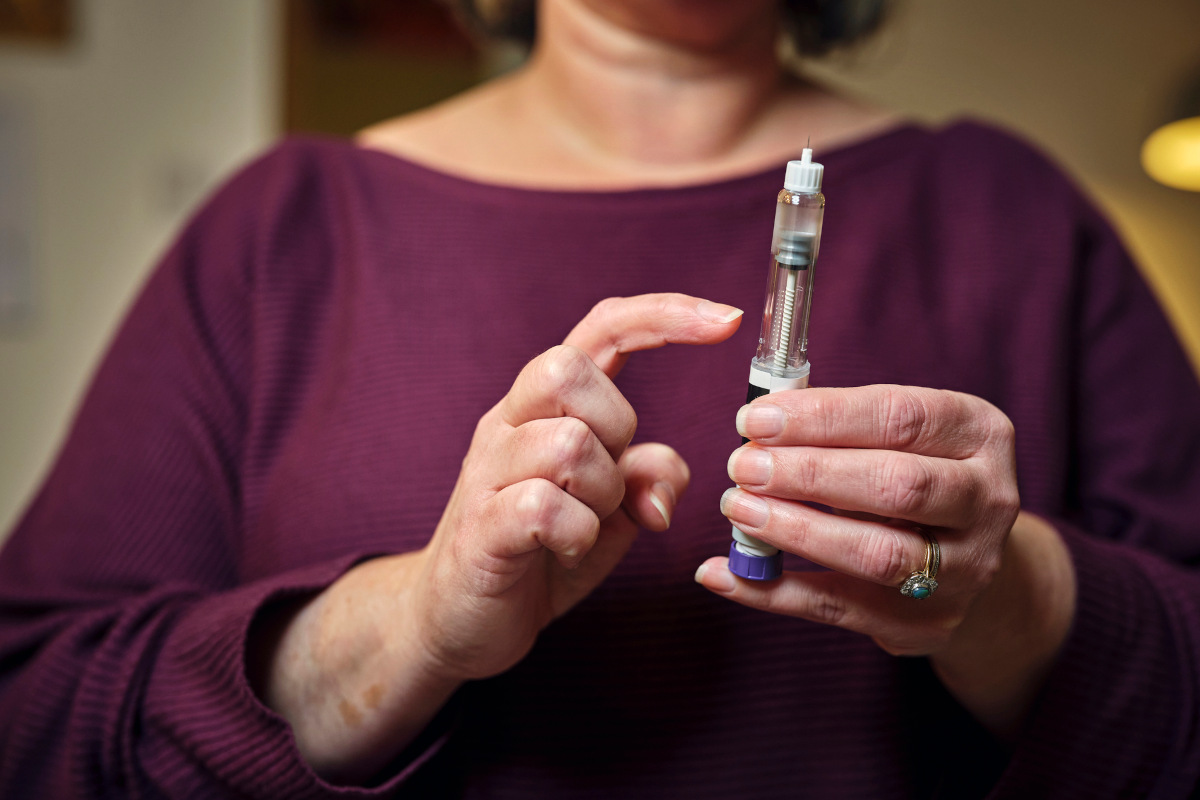
But when it comes to satiety, the natural hormones work a little differently to the synthetic drugs. Natural GLP-1s notify the brain that we’re full – but not by getting into the brain itself, which is relatively shut-off from the rest of the body.
Besides, natural GLP-1s are broken down too quickly for that. “There’s no way that the gut hormone versions of these survive long enough to get anywhere close [to the brain],” says Yeo. Instead, they send messages via nerves in the gut.
Which begs the question: how do synthetic GLP-1 drugs trigger the psychiatric and neurological effects scientists are now uncovering? By shooting up and into the brain somehow? Or by sending messages via the wider nervous system?
It’s an open question, because while it’s not clear whether the drugs can penetrate the brain’s safety systems, they do survive long enough to make it there.
That’s because they’re not based purely on human hormones, but on molecules from Arizona’s infamous Gila monster lizards’ venom.
These monster molecules, which break down in hours rather than minutes, were discovered in the 1990s and became the basis of the first approved GLP-1 drug, exenatide, for diabetes in 2005.
All this time, scientists have largely relied on animal studies to tell them how GLP-1s might work in the brain. And yet, animal work doesn’t necessarily translate into humans that well.
Yeo’s brain-slicing study demonstrated, for example, that we don’t have GLP-1 receptors on all the same neurons as mice do.
Plus, it’s “difficult to access” the human brain when it’s alive, says De Giorgi. And, for most of the time we’ve had GLP-1s, there hasn’t been such a pressing need.
“These medications have been around for a long time for non-psychiatric, non-neurological issues,” he says. “But it’s only now [they’re being studied] with regards to mental health. So, there’s a gap in knowledge.”
More good than harm?
Thanks to the massive hike in use of GLP-1s for weight loss, however, things could change. In fact, US figures for 2023 show the number of non-diabetics using them rising by 700 per cent over just four years.
What that means is scientists are suddenly gathering way more information about their effects on mental health, even if they don’t understand exactly what’s going on in the brain.
Scientists have recently had to dig into all this new data to make sure the drugs aren’t doing more harm than good.
In 2023, the European Medicines Agency (EMA) raised red flags over reports of self-harm and suicidal thoughts in a small number of people taking semaglutide and another GLP-1, liraglutide (also known as Saxenda).
“It ended up that both the EMA and the Food and Drug Administration [in the US] said there was not a signal there,” recalls Fink-Jensen, who himself carried out a study using data from Ozempic-maker Novo Nordisk to look into the issue.
The study found no difference in rates of depression or suicidal thoughts and behaviour in people taking Ozempic versus those taking placebos.

Broadly, what many of these new studies indicated was that the drugs have the opposite effect – that, rather than making mental health worse, GLP-1s improved it.
One non-peer-reviewed study diving into the medical records of four million patients found that those on GLP-1s were less likely to be depressed.
Meanwhile, a recent Swedish study focused on people with diagnosed depression who were taking GLP-1s for their diabetes. Again, it found they felt less depressed at times when they were on semaglutide or liraglutide.
De Giorgi’s own recent review, analysing results from studies involving over 100,000 people on the drugs for diabetes or weight loss, concluded that, overall, they improve quality of life. It also reported reductions in ‘emotional’ eating.
What’s more, in an earlier study, his team already ruled out negative impacts on 22 wide-ranging psychiatric and neurological complaints, from epilepsy to psychosis and obsessive-compulsive disorder to Parkinson’s.
They’ve also picked out positive ‘signals’ in the case of nicotine addiction and dementia. What this means, De Giorgi explains, is that it’s likely worth investigating the use of these medications for those conditions.
That said, while GLP-1s have been consistently pushed as potential dementia drugs for the last two decades, early results from a recent human trial by Novo Nordisk were disappointing.
They showed that semaglutide did nothing to slow the progression of Alzheimer’s disease over a two to three year period.
It’s possible that any dementia benefits may be thanks to the calming effect GLP-1s can have on blood sugar levels. When out of balance, these are associated with increased dementia risk.
Reaping the rewards
All this hints at the clear possibility that GLP-1s could treat a huge range of different conditions. That’s exciting, because clinicians are desperate for new psychiatric treatments.
But it’s also worrying, because doctors may already be starting to take matters into their own hands to treat mental health issues, like depression, against scientists’ advice.
According to De Giorgi, this off-label prescribing is “definitely happening,” although probably more in private prescribing. Like Fink-Jensen, who has previously issued stark warnings about off-label prescribing of GLP-1s for alcohol use, he feels that doctors are jumping the gun and need to tread more carefully.

“Obviously, I’m very excited about these medications,” he says. “I really wish that they could be helpful for a lot of patients, and perhaps for people with depression.
“But, in reality, what we’ve got so far is mainly data from people who are taking them not for depression. That data is reassuring, but we haven’t looked at where risk actually lies.”
In other words, almost all of the data still comes from people with either obesity or diabetes. So, until researchers run bigger trials in people with ‘just’ depression, or ‘just’ addiction problems, we can’t be sure what the psychiatric consequences might be in those groups of people.
In any case, De Giorgi suggests, we still need to gauge whether the whole GLP-1 system – and whatever brain circuits it’s hitting – is even a useful lever to pull on for mental health problems.
If it is, then it won’t be plain old Ozempic but a refined version of it we’ll be using to treat depression. After all, not everyone who has depression, or a drinking problem, wants to lose weight.
Eventually, a new generation of GLP-1 drugs designed with mental health in mind could be developed to hit multiple targets for better effect.
It’s an approach we’re already starting to see with the triple-hitters (drugs that mimic three different hormones, not just GLP-1) that companies – like Mounjaro (tirzepatide)’s maker, pharmaceutical company Eli Lilly – are now developing to enhance weight loss.
Yet, while we lack a proper understanding of what GLP-1s are doing to our brains, we risk using them in ways that could still do serious harm.
Clinical trials and even rum-swilling monkey studies might allow us to observe the behaviours, but they don’t show us what it is in our own grey matter that causes them.
Still, “it’s the best we can do,” Fink-Jensen says, explaining that monkey brains are at least closer to human brains than rodent brains.
“How much do we really know?” he muses. “To my knowledge, there haven’t been any good studies in human brains.”
The question is, he says: what’s happening with the dopamine system? Let’s hope we find out.
Read more:
