
What do you get if you cross an emotional support animal with a robot vacuum cleaner? You probably get something like the furry, freckled creation you see here.
It's called a Familiar and at first glance, you'd be forgiven for thinking it's simply a new and improved robo-pet – a more plush, more advanced successor to Sony's Aibo.
But its creators – a group that includes robotics engineers from Disney, Boston Dynamics and iRobot (the company behind the Roomba robo-vac) – say it’s more than that. They say a Familiar is a “physically embodied AI system designed to adapt and interact with people in ways that feel natural”.
Put another way, it’s an AI companion whose personality develops as your relationship with it deepens. In short, it’s a bot you can bond with.
Learning to care
Colin Angle, former CEO of iRobot, unveiled the prototype in May 2026 at the Future of Everything conference in New York, saying Familiars represent a step forward in robotics.
“The next era of robotics is not just about dexterity or humanoid form – it’s about machines that can build and sustain human connection.”
But is building a bot you can bond with really such a big deal?
After all, people can and do form attachments with almost anything, from teddy bears to home appliances – robo-vacs, for example (users have been known to name them, decorate them and even mourn them when they stop working).
Aside from its appearance, then, how is a Familiar different from any other object someone could grow attached to?
According to Ira Renfrew, co-founder of the company that makes them, a Familiar is different primarily because it can learn.
“We wanted something that becomes part of your world over time, not a gadget or an appliance. Familiars perceive their environment, develop distinct personalities, and respond in ways that evolve through life alongside the people around them.”
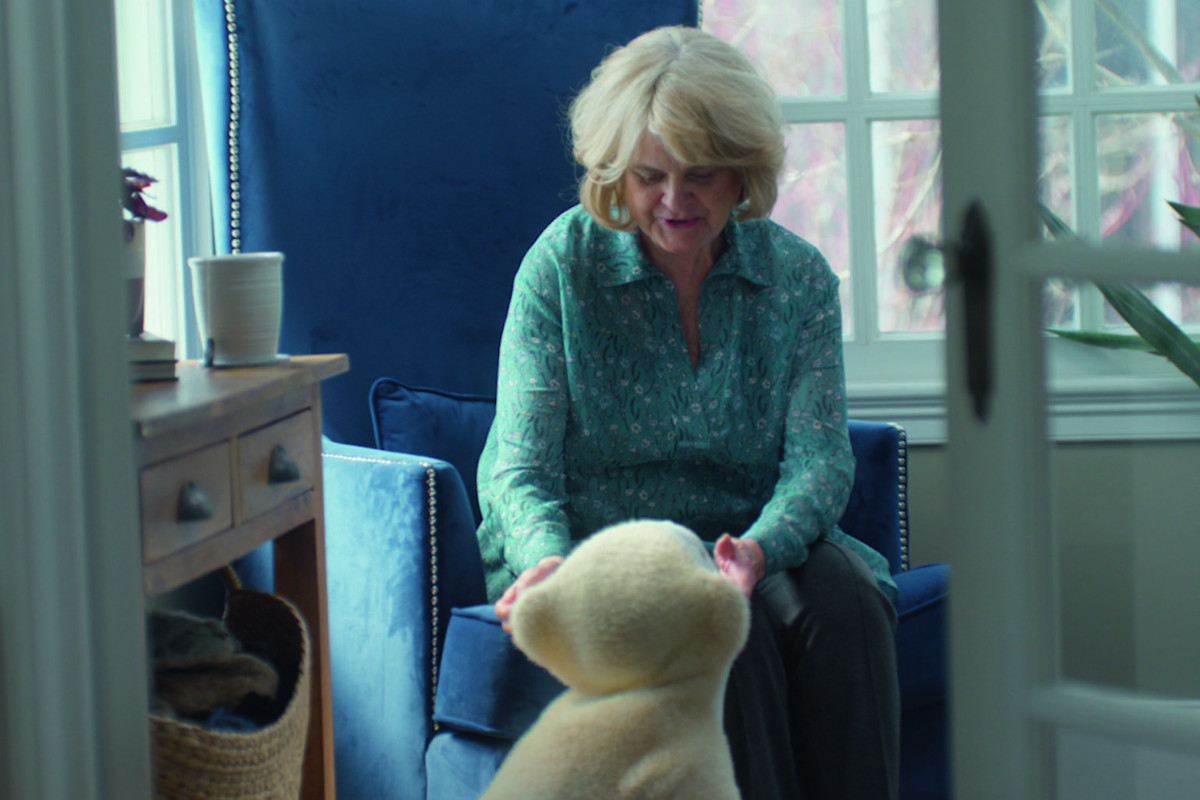
Learning alone isn’t always enough to form a lasting bond, though. After all, a robo-pet will learn to do tricks and navigate your home, but that won’t necessarily make you cherish it once the novelty has worn off.
What marks a Familiar out from a robo-pet is that it learns about its ‘guardians’ (the people it shares a home with). It learns to recognise their routines, their feelings, their moods and how to respond appropriately to each of them.
To all intents and purposes, it learns how to care.
“Familiars are designed for anyone who would like a positive, caring presence in their household,” says Renfrew. “They’re for the moments when you could use some company, comfort or even gentle coaching.”
That comfort could be a nuzzle when you’re feeling stressed. The “gentle coaching”, meanwhile, might come in the form of a nudge if you’ve been staring at your phone for too long.
“A Familiar will notice if you’ve been settled and disengaged for a long time, the way another person would. Then it does something about it. It comes over and invites you to get up, move around, step outside or engage with it directly,” Renfrew says.
It’s this ability to recognise and respond to behavioural cues – this ‘emotional intelligence’ – that may allow a Familiar to form a lasting connection with its guardian.
Connecting to your life
So, who is a Familiar for? Well, anyone, essentially.
Renfrew says the company is “focused on serving the general public, not a specific niche, though we do have very specific target segments that have shown particularly strong interest in the concept.”
One of those target segments could be the elderly (there are already several robotic animals built to provide company and stimulation for seniors). But equally, it could be anyone who’s lonely and, now and again, could use a friendly reminder to get up off the sofa.
It’s an ambitious project and, if Familiars are genuinely capable of everything their makers claim when they go on sale (expected 2027), an admirable one.
But questions remain, the most obvious being: how much will they cost? Prices are expected to “resemble those of typical pet ownership,” even though as Renfrew points out, “a Familiar is not a pet replacement”.
And he’s right – a Familiar is, ultimately, a machine. One you might bond with and even care for, but a machine nevertheless.
Even if it can spot when you need a nudge to stop doomscrolling, isn’t interacting with its AI just swapping one digital distraction for another?
“If we had built something that captures your attention, we would just have made a screen in a different shape,” says Renfrew.
“We did the opposite. There’s no screen, no feed, no notifications, and no business model that profits from your time and engagement with the Familiar.
“The honest measure of whether we’ve succeeded isn’t how much time you spend with your Familiar; it’s whether you end up more connected to your life, not more attached to the machine.
“The closest comparison I’d make is to an Apple Watch or Oura ring, as these are tools that help you live a little better without taking over your life.”
Read more:
